
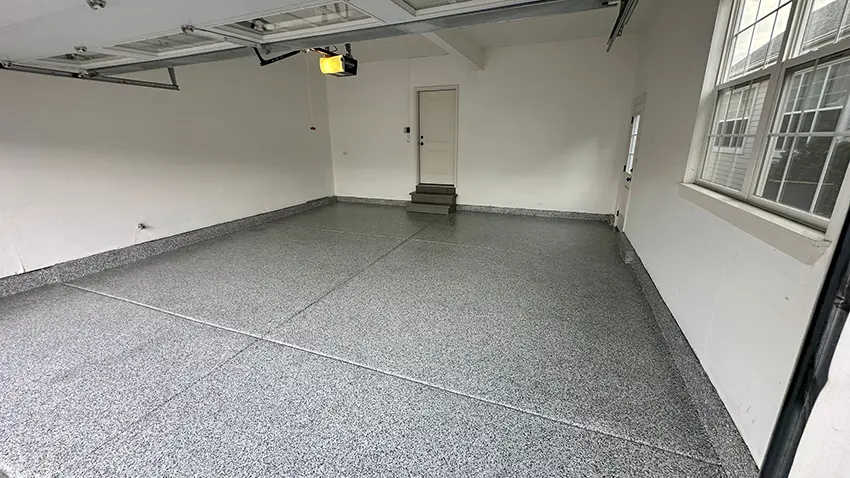
“Can you still get my garage done before winter?”
We take some version of that call every September, usually from a homeowner who meant to do this in spring and just watched the forecast drop into the fifties. Most of the time the answer is yes. Not always — and the honest answer is more useful than the sales one.
Plenty of Chicagoland contractors say they coat floors in any weather, year-round. That's technically true and practically misleading: some systems really do run all winter, others stop working in October and you find out eighteen months later. So here is our actual fall cutoff at Concrete Shield Coatings — what we'll still book, what we tell people to wait on, and why.
Key Takeaways
- Slab temperature decides, not air. A 60°F afternoon over a 44°F slab is still a no-go for epoxy.
- Polyurea runs year-round down to a 35°F slab. Epoxy needs the slab above 55°F, which practically ends epoxy season here in October.
- Exterior sealing closes first. Sealers need a slab above 50°F and a dry forecast, so driveways and patios are the first thing we stop booking.
- We turn down work every fall — new pours, wet slabs, and floors needing repair we can't cure in the cold.
- Free fixes come first. Cleaning, drainage and a drip mat do more for a bare slab than a rushed coating will.
“Can You Still Get My Garage Done Before Winter?”
The call spikes in September because people are thinking about road salt. Melted snow soaks into open concrete, refreezes overnight, expands roughly nine percent as it turns to ice, and pushes the surface apart from the inside. A few dozen cycles a season is how older Chicago garage floors end up pitted and flaking.
So the instinct to get it sealed before November is a good one, and garage floor coatings are easier to schedule in fall than in the June rush. The question isn't whether fall works — it's which product, and whether your slab is ready.
Slab Temperature Is the Only Number That Matters
Here's what most homeowners get wrong, and some contractors too: your weather app measures air. Resin doesn't cure against air. It cures against concrete.
A slab is a big thermal mass; it lags the air by days, not hours. A sunny 62°F October afternoon in an unheated detached garage can sit over a slab still holding 46°F from last week's cold snap. Roll epoxy onto that and it doesn't cure — it thickens, skins over, never reaches full hardness. Looks fine on day three, starts letting go by spring.
That's why we put a probe on the slab, not a thermometer in the air, before we mix anything. It's also why our fall calendar shifts toward polyurea garage coatings as the season goes: polyurea keeps curing down to a 35°F slab, which buys months of working window that epoxy simply doesn't have.
As a planning anchor, the National Weather Service Chicago office puts the normal first autumn freeze at October 19 at O'Hare and October 13 at Rockford, on 1991–2020 normals. Slab temperatures start falling well before that date, not after.
Our Actual Fall Cutoff Calendar
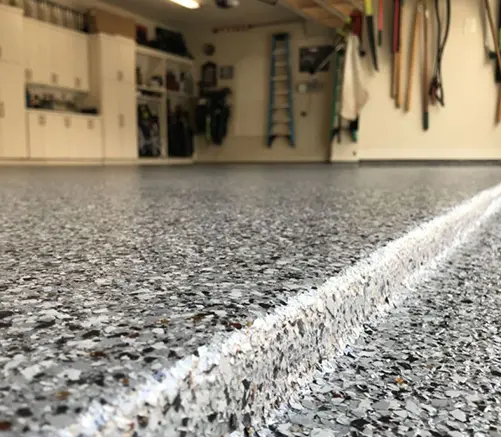
What we'll actually put on the schedule as the season closes:
| Work | Minimum slab temp | Realistic Chicago window |
|---|---|---|
| Polyurea / polyaspartic garage floors | 35°F | Year-round, including winter |
| Heated garage or basement, any system | Controlled indoors | Year-round |
| Epoxy systems, unheated space | 55°F | Roughly April–October |
| Exterior concrete sealing | 50°F + dry forecast | Roughly April–October |
| New concrete (pour to seal) | — | 28–30 day cure first |
The practical read: want an epoxy floor coating in an unheated detached garage? Call in September, not November. Attached and heated, or happy with polyurea? The calendar is wide open and we install all winter. And concrete sealing on a driveway or patio closes first — it's what we start declining earliest each year.
What We Make You Wait For Until Spring
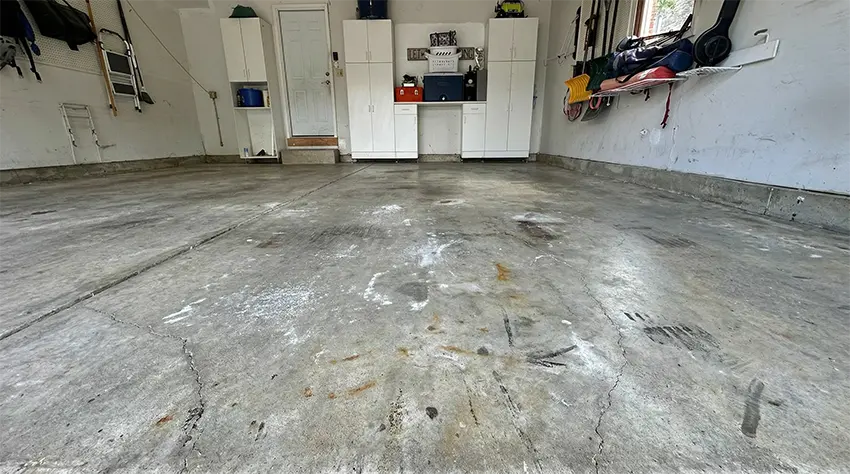
Four situations where we say no in the fall, even when you'd rather we didn't:
- Concrete poured this season. Fresh slabs need 28–30 days to cure before anything goes on them, and cold slows that further. The American Concrete Institute's guidance on cold weather concreting defines cold weather as starting when air temperature falls to or below 40°F during the protection period — so a late-fall pour isn't ready for us this year.
- Active moisture coming up through the slab. If water is moving through the concrete, no coating bonds in any season — and cold slabs dry slower.
- Floors needing real structural work first. Deep spalling and failed joints need patching compounds that themselves need warmth to cure. That's a garage floor repair job, and it belongs in spring, not under a tarp in November.
- Exterior work with rain or a freeze in the ten-day forecast. We'd rather move your date than gamble your driveway.
We've pushed plenty of Northbrook garage floors into April for these reasons. Nobody enjoys that conversation. It's still cheaper than doing the job twice.
Free Things to Do First — Before You Call Anyone
On the fence, or already told to wait until spring? These cost nothing and genuinely help, in this order:
- Fix where the water goes. Clear the downspout that dumps next to the garage apron. Standing water at the slab edge does more damage in one winter than a season of salt.
- Sweep and rinse before the first freeze. Salt already ground into bare concrete keeps working all winter; a broom and a hose in October removes most of it.
- Put a containment mat under the car. A twenty-dollar drip mat catches the brine melting off your tires and wheel wells — the highest-return thing an uncoated garage owner can do.
- Stop stacking wet gear against the wall. Snow blowers and bags of ice melt on bare concrete pull moisture into the slab edge.
None of that makes us money, and all of it buys your slab time whether you hire us or not. If you'd rather someone look in person, a free estimate costs nothing either.
When You Genuinely Don't Need Us This Fall
Not every floor needs a coating before winter, and we'd rather say so than sell one.
If your slab is under about five years old, shows no pitting or cracking beyond hairline shrinkage, and holds one car, it will get through winter fine on the mat-and-broom routine above. Coat it next spring, when you can pick your date and product without the calendar pressuring you. Same if you're renovating or re-slabbing within a couple of years — coat it after the dust. We tell homeowners in Deerfield concrete coatings consultations to wait fairly often.
What We Charge, and What Stands Behind It
Our pricing doesn't change in the fall, and we don't run a "beat the freeze" discount — that's the pressure that gets floors installed in bad conditions.
- Epoxy flake: $5–$7 per square foot installed.
- Polyurea-polyaspartic flake: $5.50–$7 per square foot installed.
- Two-car garage (400–500 sq ft): typically $2,000–$3,500.
- One-car garage: roughly $1,250–$2,100.
- Concrete sealing: $1.25–$1.75 per square foot; a 500 sq ft driveway lands around $625–$950.
- Repair and resurfacing: generally $2,000–$4,500 depending on slab condition.
Every one of those prices includes the part nobody sees. We've coated Chicagoland concrete since 2010, we're licensed and insured in Illinois, we run our own crews out of Northbrook, Lombard and Mundelein, and every residential system carries a lifetime warranty. That warranty is why we're strict about conditions: we're the ones who come back if a floor fails, so a slab that isn't ready isn't a slab we'll coat. Same reason we use diamond grinding prep on every floor instead of acid etching, and check slab moisture before coating rather than after. The industry reference method for that is ASTM F2170, the in-situ humidity probe test, which exists because trapped slab moisture debonds coatings.
DIY kits run $1–$2 per square foot. In our experience they rarely survive a full Chicago winter, and stripping a failed one costs more than the kit saved.
Your Pre-Freeze Floor Checklist
- Walk the slab in daylight; look for pitting, flaking and cracks wider than a credit card.
- Check whether the downspout nearest the garage drains away from the apron.
- Sweep, degrease and rinse the floor before temperatures drop.
- Tape plastic sheeting to the slab overnight — condensation underneath means moisture is moving through.
- Put a drip mat under each parked vehicle.
- Decide your system: polyurea to go this season, epoxy if you can wait for spring.
- Weighing exterior work? Review concrete sealing costs before that window closes.
- Book the on-site estimate before the slab drops below your product's minimum.
Frequently Asked Questions
Can you coat a garage floor in Chicago in October?
Usually yes, but the product matters. Polyurea and polyaspartic systems cure down to a 35°F slab, so we install them through October and into winter. Epoxy needs the slab above 55°F, which in an unheated Chicago garage means epoxy season ends sometime in October. We measure your slab on site before recommending either.
Why does slab temperature matter more than air temperature?
Because resin cures against concrete, not air. A slab lags air temperature by days, so a mild afternoon can sit over a slab that's still far too cold. Coating it produces an under-cured film that looks fine at first and fails later. We probe the slab before mixing, every time.
Is it too late to seal my driveway before winter?
Sealers need a slab above roughly 50°F and a dry forecast on both sides of application, so exterior sealing is the first thing to close each fall in Chicagoland — typically April through October. An already-sealed driveway showing wear will get through winter and can be resealed in spring. If it's bare and pitting, call early rather than late.
Should I just wait until spring for everything?
Not necessarily. Interior garage and basement work with polyurea runs fine all winter, and cold-season scheduling beats the spring rush. Waiting makes sense for new concrete still curing, slabs with active moisture, floors needing structural repair, and exterior sealing once the window closes.
Ready to Beat the Cutoff?
If you want your floor done before salt season, the next step is a slab reading, not a guess. We'll measure your concrete, check moisture, tell you honestly whether it should happen this fall or next spring, and quote it either way.
Use the "Get Free Quote" button above, or call (847) 999-6330 to book your on-site estimate.
Serving homeowners and businesses in Mundelein and Lombard and across Chicagoland — request a free on-site estimate from your local Concrete Shield Coatings branch.