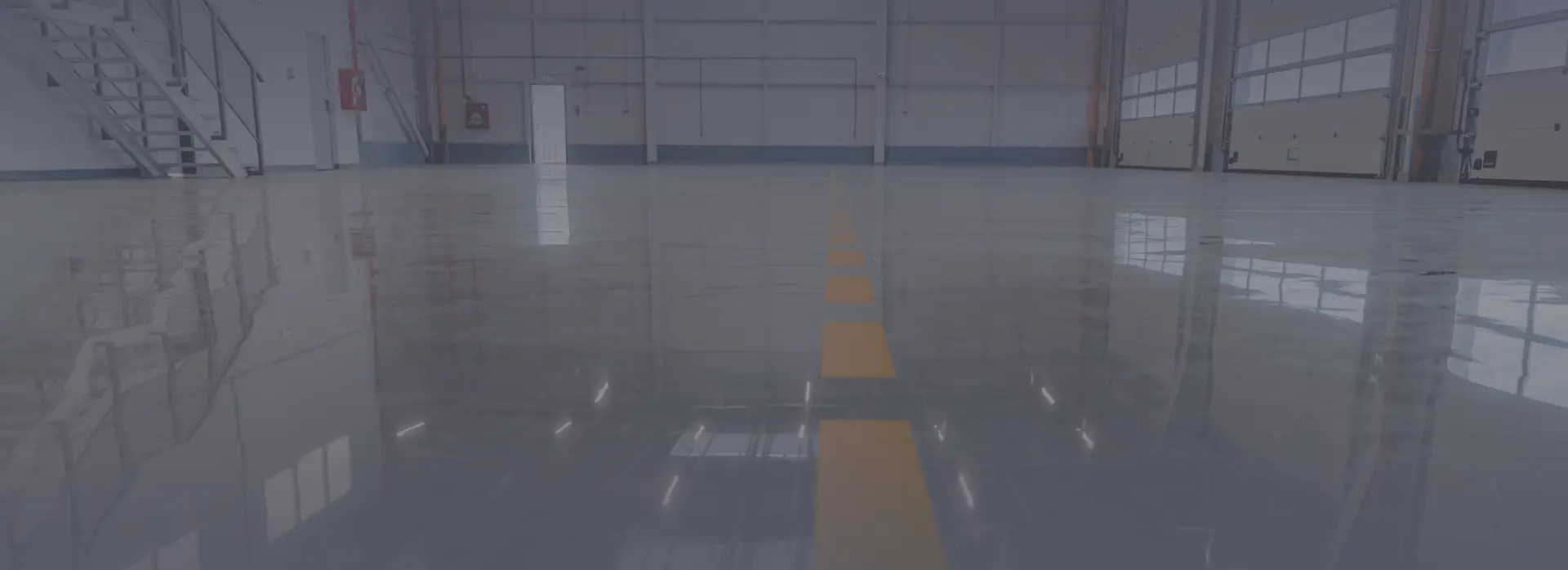
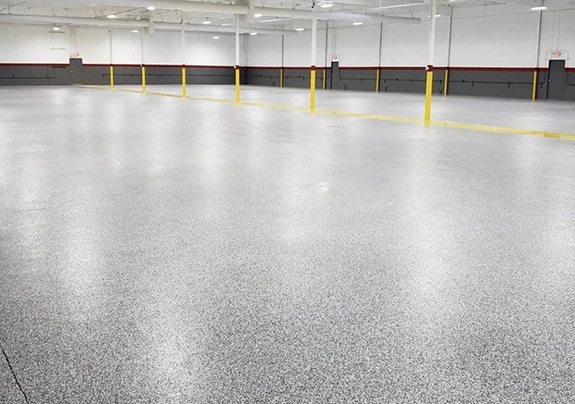
Industrial floor coatings built for forklift traffic, pallet jacks, dropped impact and
chemical spills — quartz broadcast, full polyaspartic and epoxy systems. 24-hour
return-to-service options. Phased installs around your operations.
Warehouse, distribution and manufacturing floors take the hardest abuse of any commercial
slab — forklift wheels grinding through pivot turns, dropped pallets, hydraulic fluid and
oil spills, battery acid in the charging area, and constant fine cement dust from bare
concrete that ends up on every shelf and SKU in the building.
An industrial coating turns that bare slab into a sealed, durable, dust-free surface that
takes the chemical hit at the topcoat instead of soaking it into the concrete. We install
three commercial systems — quartz broadcast
(our best for heavy-traffic zones), full polyaspartic (fastest return-to-service), and
pigmented epoxy with a polyaspartic
topcoat — and we phase installs around your operations so the dock keeps shipping.
Forklift & pallet-jack rated Resists oil, fluids & battery acid Suppresses concrete dust OSHA lane striping available
Transparent Pricing
What Does a Warehouse Floor Coating Cost?
Honest per-square-foot ranges for Chicago warehouses, distribution centers and industrial facilities — including diamond-ground prep, joint repair, materials and labor. Volume pricing kicks in above 10,000 sq ft.
Epoxy + Polyaspartic
$5–8 / sqft
Storage & lower-traffic warehouses
Diamond-ground prep
Joint & crack repair
Pigmented epoxy basecoat
Polyaspartic topcoat
Dust suppression
7–12 yr realistic lifespan
Fastest Return
Full Polyaspartic
$7–10 / sqft
Active warehouses · 24-hr forklift return
Diamond-ground prep
Joint & crack repair
Polyaspartic basecoat
Polyaspartic topcoat
24-hr return to forklift traffic
10–15 yr realistic lifespan
Quartz Broadcast
$9–14 / sqft
Heaviest-duty zones · 15–25 yr lifespan
Diamond-ground prep
Joint & crack repair
Epoxy primer
Double quartz aggregate broadcast
ASTM-rated slip resistance
Polyaspartic topcoat
OSHA Striping & Add-Ons
Itemized
Lane striping · safety zones · color-coding
OSHA-compliant lane striping
Forklift & pedestrian zones
Color-coded hazard markings
Coved-up edges (chemical rooms)
Anti-slip in dock zones
Volume / multi-zone pricing
Per-square-foot ranges include surface prep, materials and labor for the base system. Volume pricing kicks in above 10,000 sq ft. Heavy oil saturation, structural concrete repair, after-hours phasing and OSHA striping are itemized separately so you know exactly what you're paying for. Need a written warehouse quote? Call (847) 999-6330 →
Optional Color & Texture
Flake Options for Office, Mezzanine & Retail Zones
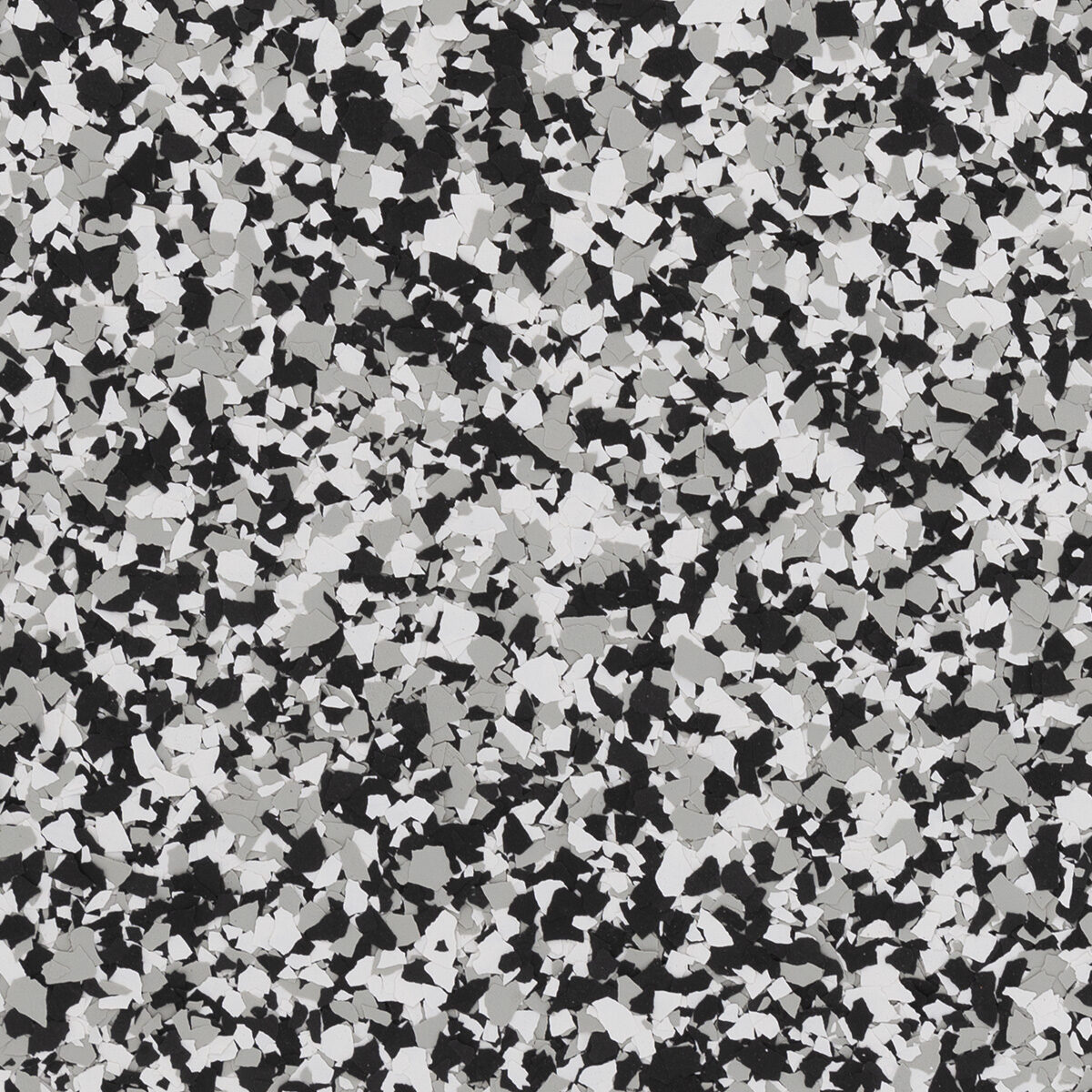
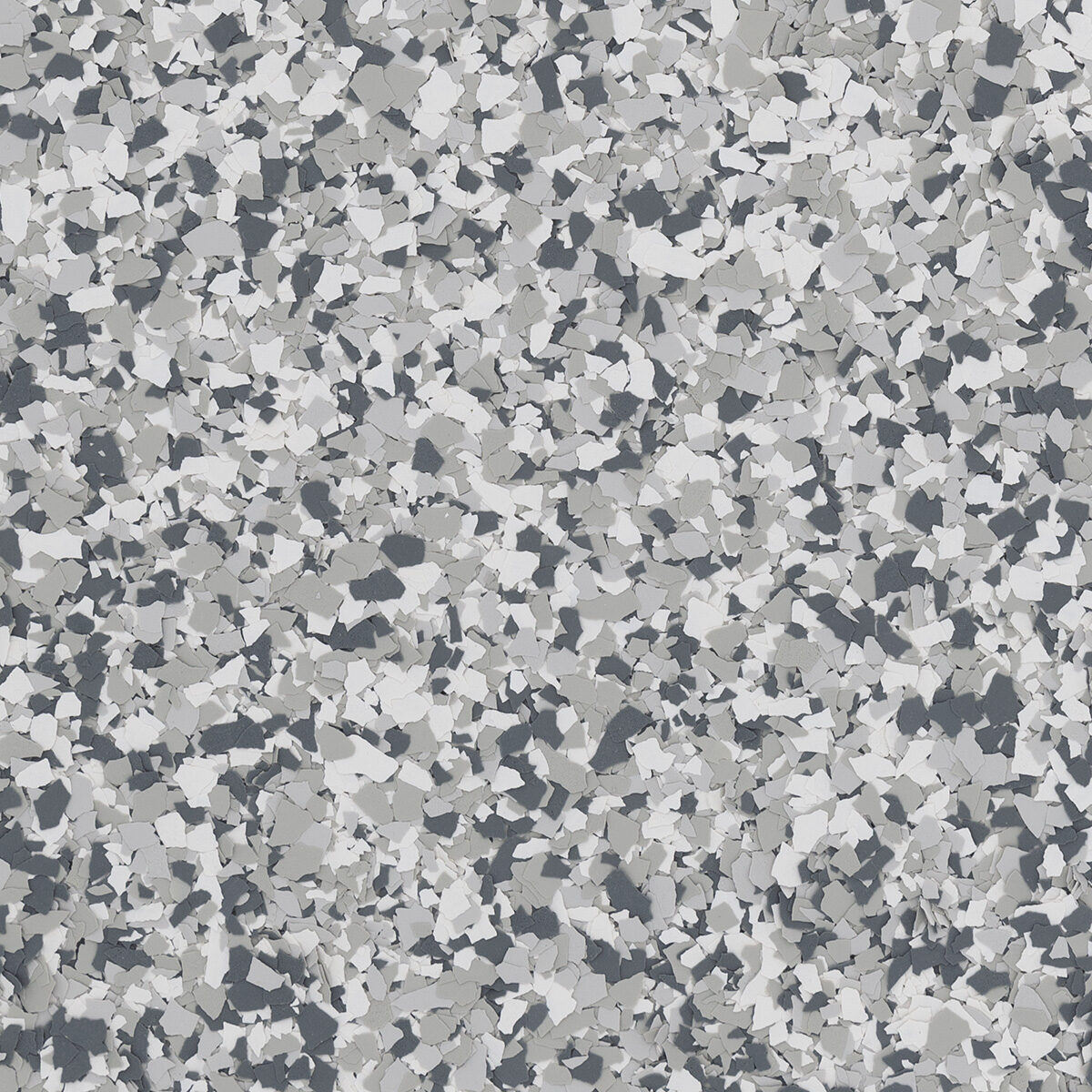
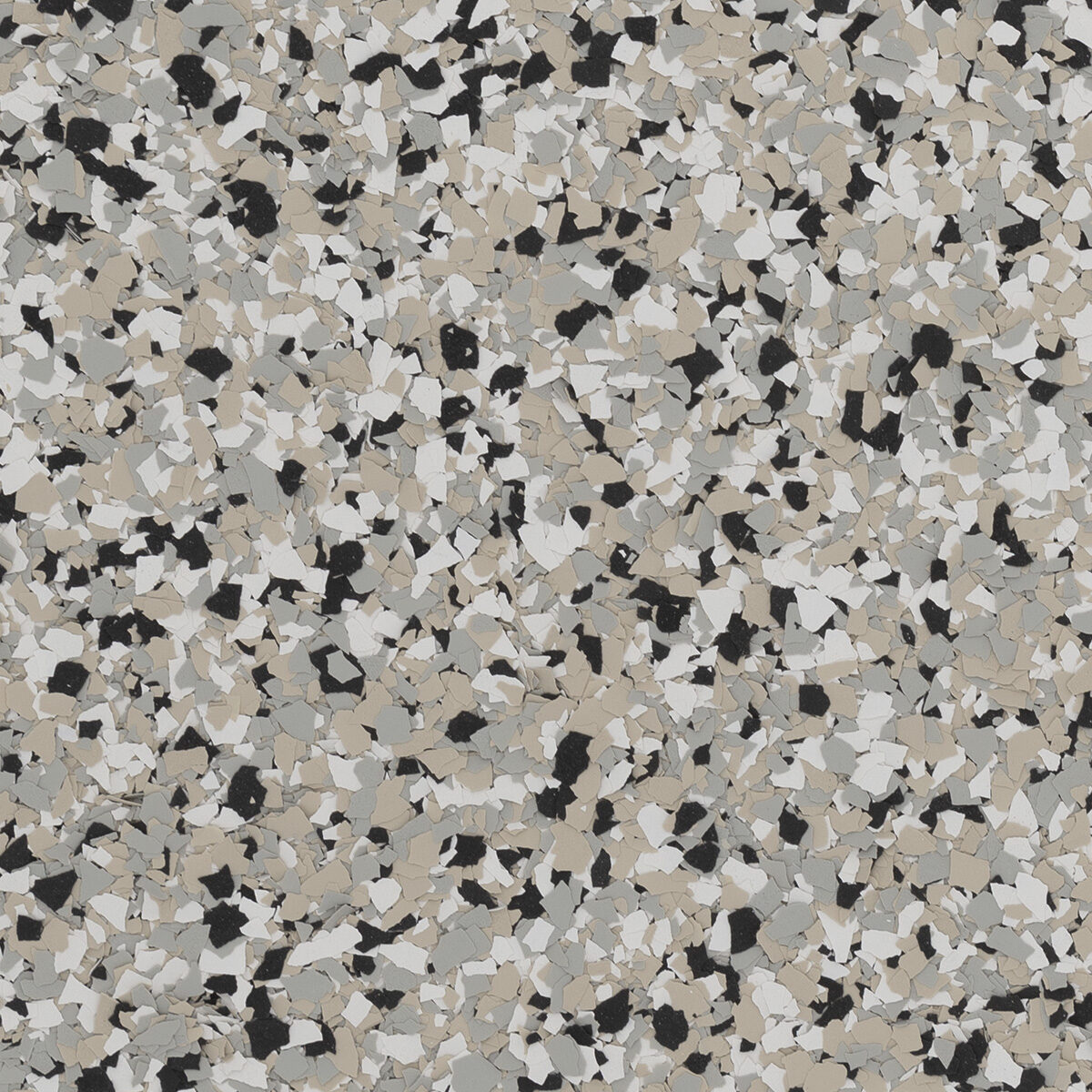
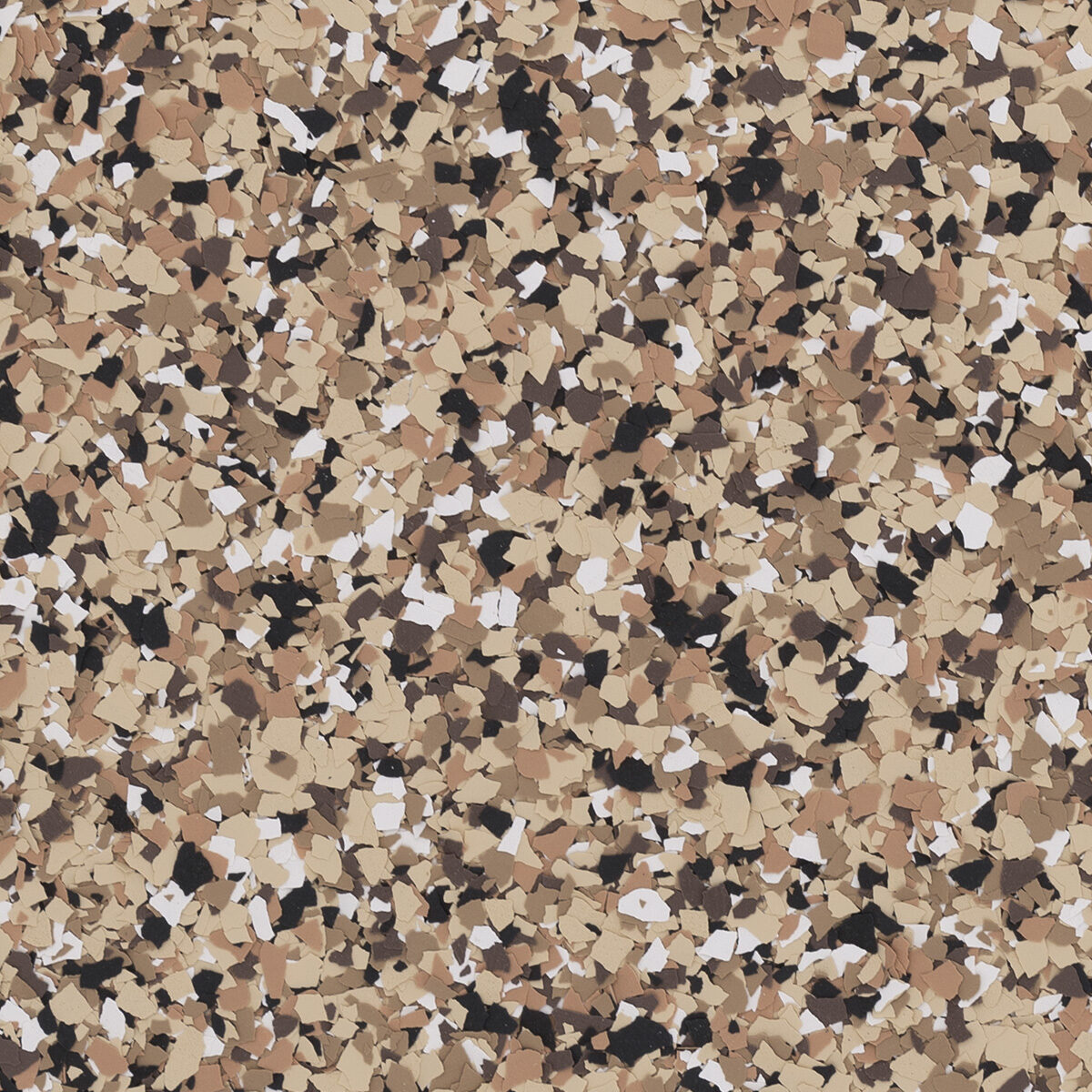
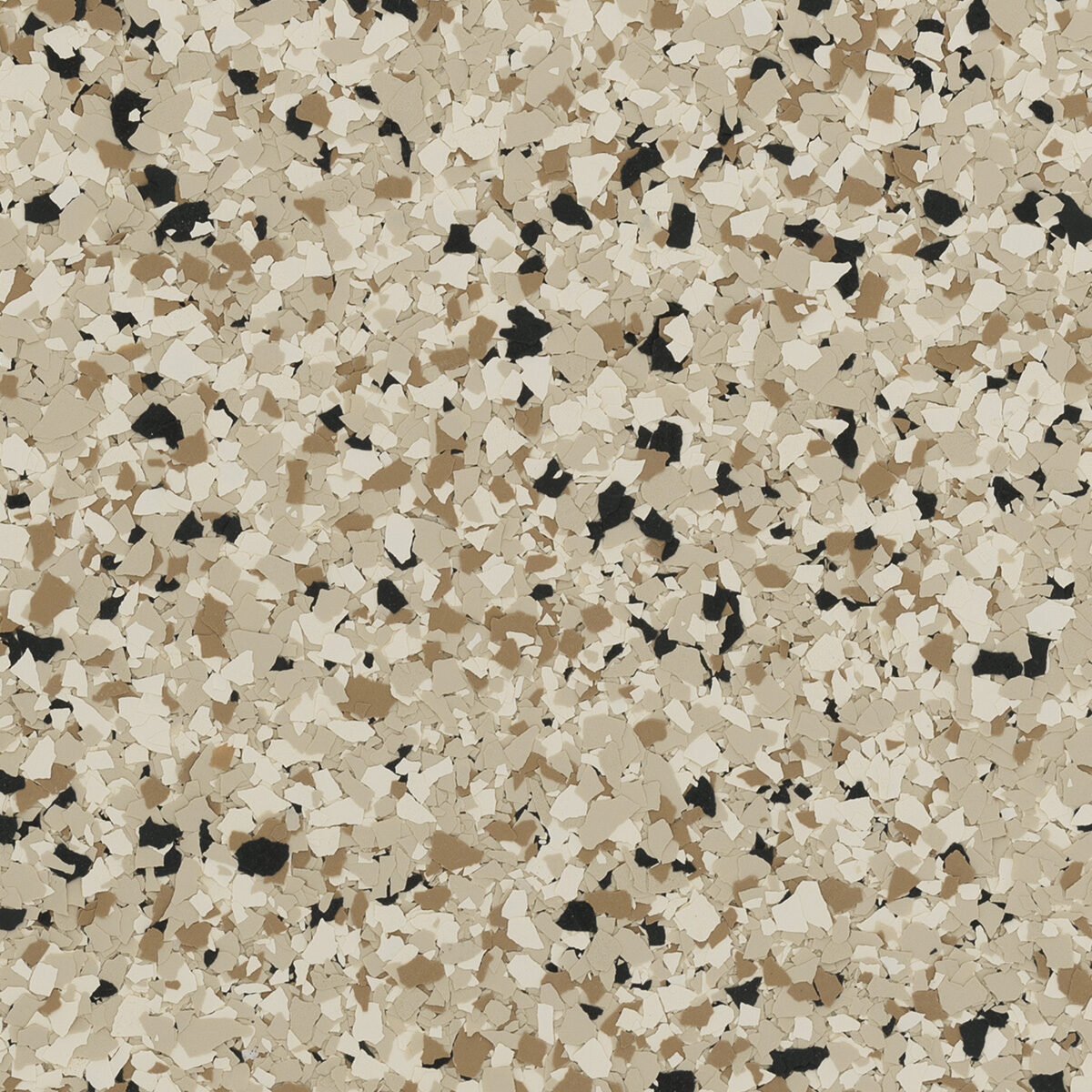
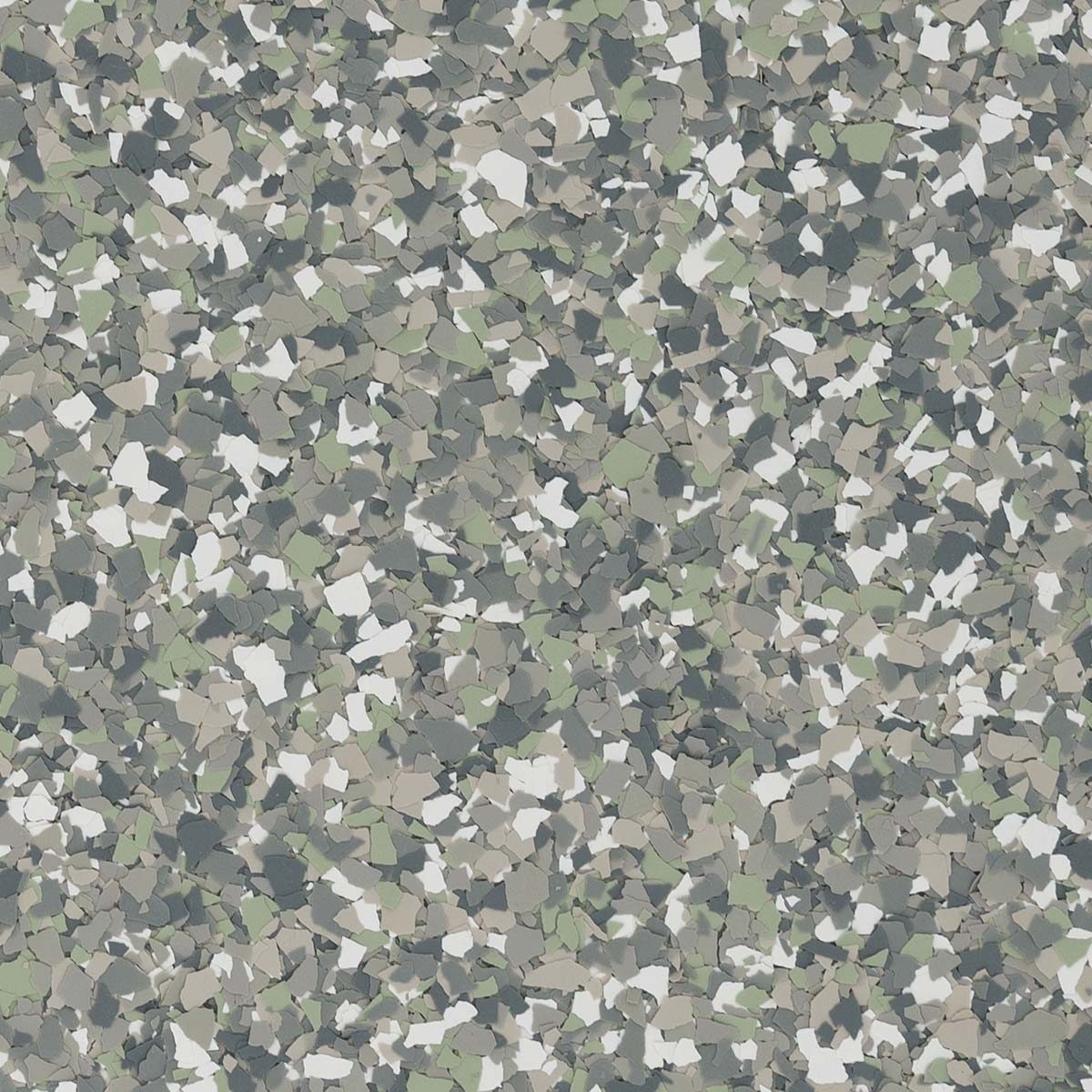
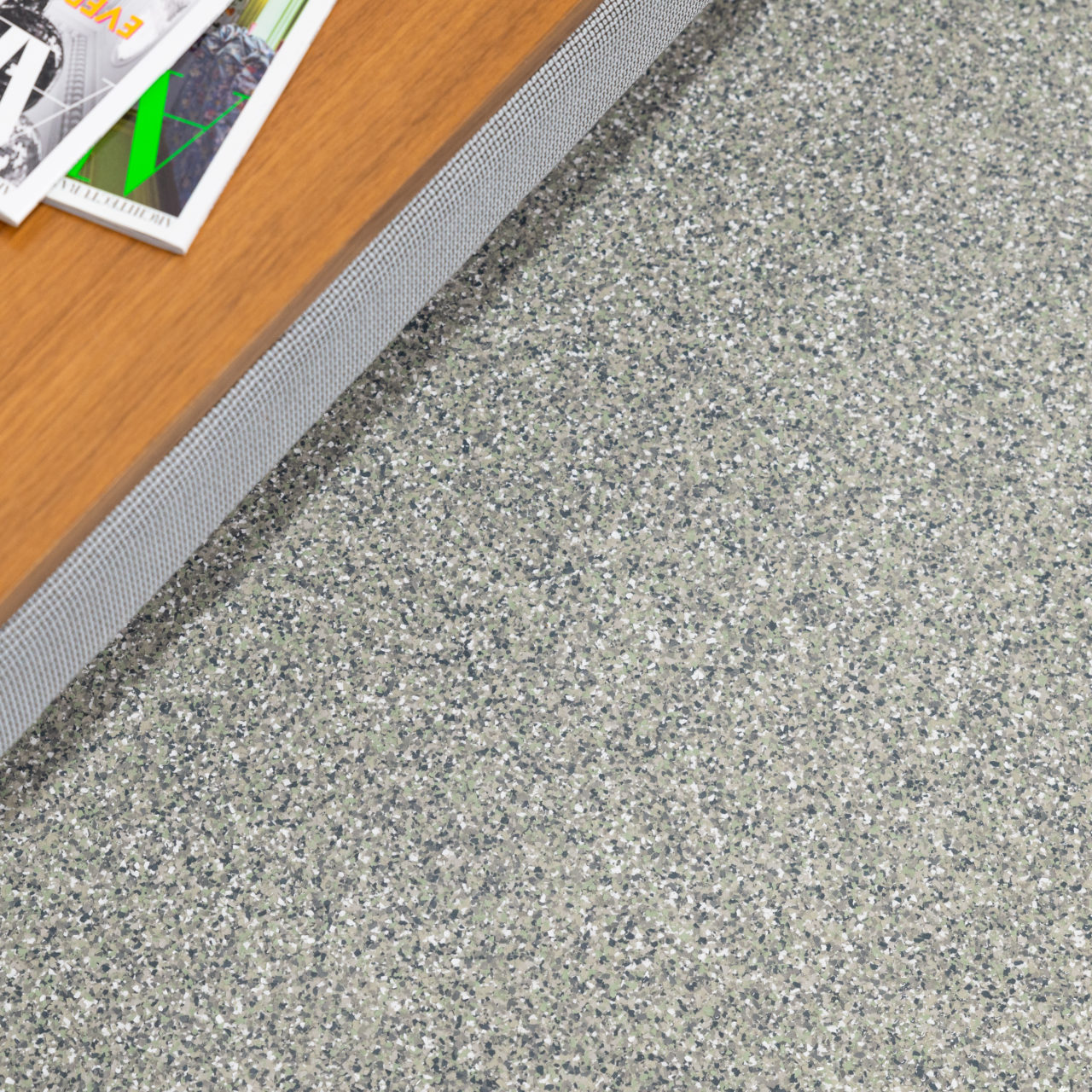
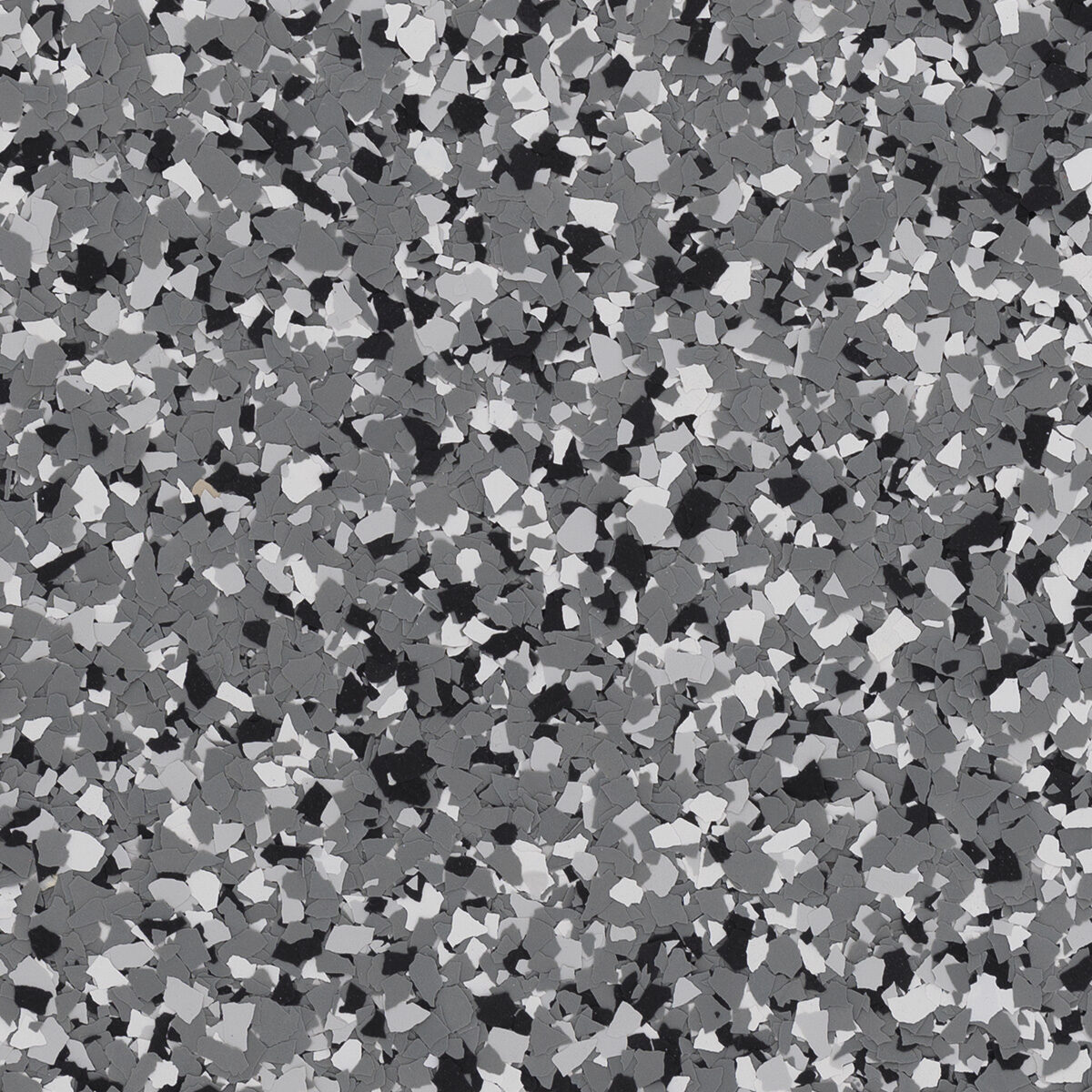
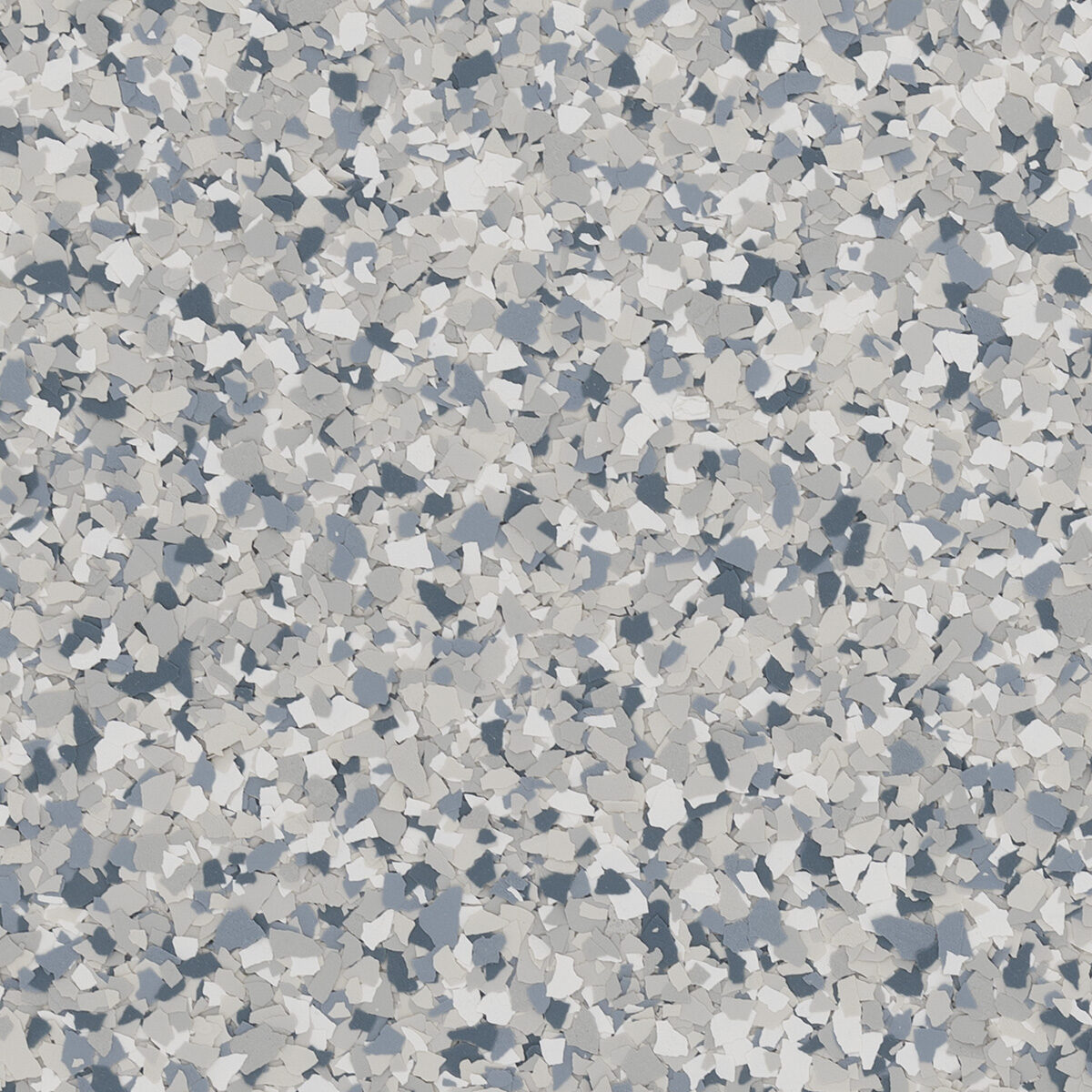
Most warehouse floors are spec'd in solid colors or quartz, but flake is a useful option for office, mezzanine, retail-facing and lighter-traffic zones inside the facility — it adds slip resistance and visually hides scuffs between cleanings. Hover or tap any swatch to preview the blend.
Preview
Domino
Preview
Gravel
Preview
Cabin Fever
Preview
Outback
Preview
Shoreline
Preview
Thyme
Preview
Wombat
Preview
Tidalwave
Warehouse Coating Options
Three Industrial Systems — All Forklift-Rated
Quartz broadcast is the heaviest-duty option. Full polyaspartic is the fastest return-to-service. Epoxy + polyaspartic is the cost-effective choice for lighter-traffic warehouses and storage. Every system is finished with a low-VOC polyaspartic topcoat.
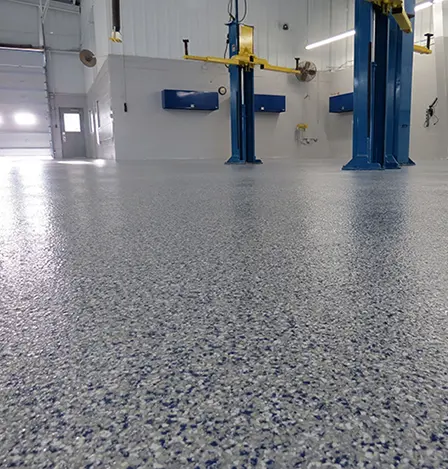
The most abrasion- and chemical-resistant industrial system we install. Colored quartz aggregate double-broadcast into an epoxy primer, sealed with a polyaspartic topcoat:
ASTM-rated slip resistance — built into the quartz aggregate
Handles forklift pivot wear, dropped impact and pallet jack abuse
Strongest chemical resistance against oil, hydraulic fluid, battery acid & cleaners
15–25 year realistic lifespan under industrial traffic
Volume pricing available for facilities above 10,000 sq ft
What we recommend for facilities staying long-term
All three industrial systems share the same prep — diamond grinding, joint repair and a polyaspartic topcoat that takes the chemical hit. The difference is the basecoat build, how fast you're back to forklift traffic, and how long the floor lasts under industrial load.
Epoxy + polyaspartic topcoat
The cost-effective warehouse build:
Pigmented epoxy basecoat with polyaspartic topcoat
Stops concrete dust at the source
Best for storage warehouses, mezzanines and lower-traffic zones
Recent Warehouse & Industrial Floors Across Chicagoland
A sample of commercial warehouse, distribution and industrial floors we've finished — diamond-ground, joint-repaired and phased around operations so the dock kept shipping.
We recently had our laundry room floor done with epoxy, and I couldn't be happier with the results. Professional, punctual, and clearly experienced. They took the time to properly prepare the surface, which really shows in the final outcome. The finish is smooth, durable, and looks absolutely amazing.
Laundry Room · Epoxy
LJ
Lukas J
Naperville, IL
★★★★★September 2025
"
The basement and steps were done beautifully — clean, smooth, and very professional. The team worked efficiently and paid close attention to detail. Highly recommend.
Basement & Stairs · Epoxy
DK
Danny Kostas
Lombard, IL
★★★★★February 2026
"
These guys are honest and do a great job. I would recommend them to anyone. They really know what they are doing.
Floor Refinishing
Warehouse & Industrial Floor Coatings Across Chicagoland
We coat warehouses, distribution centers, manufacturing plants and mechanic shops across the entire Chicago metro — from the city to the far suburbs.
We also travel for select projects in southern Wisconsin and northwest Indiana — contact us to discuss your location.
Our Process
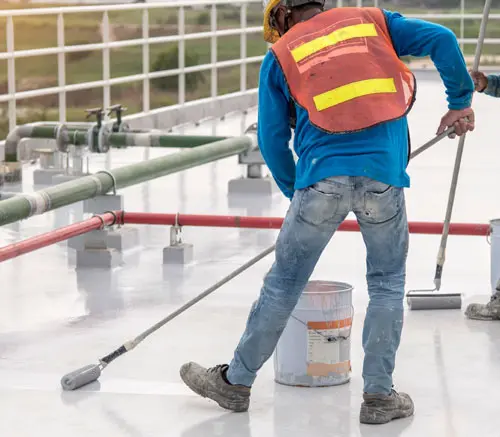
How We Install a Warehouse Floor
The same sequence on every commercial warehouse — assess, zone & protect, grind, repair, prime, basecoat with quartz or flake, polyaspartic topcoat and OSHA striping. Phased around your operations so the dock keeps shipping.
1
On-site assessment & install plan
We walk your facility, inspect the slab for cracks, joint deterioration, oil saturation and previous coatings, look at forklift routes, racking layouts and chemical exposure, then build a phased install plan that keeps your operations moving. You get a written estimate with system, square-footage breakdown and timeline.
2
Zone setup & protection
Racking, machinery and inventory are masked or sectioned off as we phase the work. We isolate the active install zone with plastic sheeting so dust and primer overspray don't reach product or production lines.
3
Diamond grinding & shot blasting
We mechanically prep with diamond grinders (and shot blast on heavily oil-saturated or large floors) to open the concrete pores and remove old paint, sealer, hardener or contamination. Acid-etch alone can't remove paint or oil — mechanical prep is what makes industrial coatings last.
4
Joint & crack repair
Control joints, expansion joints, cracks, spalls and pits are filled with industrial-grade flexible filler so forklift wheels don't chip them open. Joints stay honored or get re-cut depending on slab movement.
5
Primer & basecoat
Primer matched to slab condition goes down first, then the basecoat for the chosen system — pigmented epoxy, polyaspartic, or epoxy primer for quartz. We can build film thickness up in heavy-impact zones (loading docks, racking lanes) on the same install.
6
Broadcast — quartz or flake
For quartz floors (our recommended warehouse system) we double-broadcast colored quartz aggregate to refusal — that's what gives the floor its ASTM slip rating and 15–25 year industrial life. For flake floors we broadcast vinyl flake into the wet basecoat. Solid-color floors skip the broadcast.
7
Polyaspartic topcoat, OSHA striping & walkthrough
A clear, low-VOC polyaspartic topcoat is rolled over the cured basecoat — that's the layer that takes the chemical hit from hydraulic fluid, battery acid, oils and industrial cleaners. We then lay OSHA-compliant lane striping, safety zones and color-coded markings where you've requested, walk the finished floor with you, and leave a written maintenance plan.
Direct answers to the questions Chicago warehouse owners and facility managers ask us most before scheduling a recoat.
Yes. All three commercial systems we install are rated for forklift, pallet jack and rolling-load traffic when specified at the right film thickness. Quartz broadcast is the most durable — the aggregate handles point loads, pivot wear and dropped impact better than any other system we offer.
For loading dock zones with the heaviest traffic we can build film thickness up further on the same install.
Polyaspartic systems are usually back to light foot traffic in 8–12 hours and back to forklift traffic in 24 hours. Epoxy systems need 24–72 hours depending on temperature.
We schedule large warehouses in phases or zones so you almost never have to fully shut down — we close one section, return that zone, then move to the next.
Most Chicago-area warehouse coatings run $5–$8 per square foot for an epoxy-with-polyaspartic-topcoat system, $7–$10 per square foot for a full polyaspartic system, and $9–$14 per square foot for a quartz broadcast system.
Volume pricing kicks in above 10,000 sq ft. Lane striping, color-coded safety zones and heavy joint repair are itemized separately so you know exactly what you're paying for.
Yes. Polyaspartic topcoats are highly resistant to motor oil, hydraulic fluid, transmission fluid, antifreeze, battery acid and most industrial cleaners when properly cured. The topcoat is the chemical barrier.
Quartz broadcast systems have the strongest chemical resistance because there's more polyaspartic mass between the chemicals and the concrete — that's why we recommend quartz for mechanic shops, battery rooms and chemical storage areas.
Three reasons. First, the quartz aggregate is the most abrasion- and impact-resistant surface we install — exactly what's needed under forklift wheels, dropped pallets and pivot turns. Second, it has the strongest chemical resistance. Third, it has the longest realistic industrial lifespan — 15–25 years under commercial traffic.
The downside is upfront cost, but on a $/year basis it usually wins for warehouses that plan to occupy the space long-term.
Yes — that's one of the biggest gains warehouse owners see. Bare concrete continuously sheds fine cement dust as it gets walked and driven on. The dust coats inventory, fouls equipment and forces extra HVAC filtration.
A sealed, non-porous coating stops the dusting at the source. Most warehouse owners notice cleaner racking and inventory within a week of install.
Yes. We lay OSHA-compliant safety striping (forklift lanes, pedestrian walkways, hazard zones, fire-lane access, equipment-zero zones) as part of the topcoat process. Colors and widths are matched to your site safety plan. Markings are recessed into the coating, not painted on top — so they don't wear off under traffic.
Yes. We diamond-grind (and shot blast where needed) to mechanically remove old paint, sealer, surface hardener and contamination so the new coating bonds directly to clean concrete.
Most failed warehouse coatings we get called to redo failed because the previous installer chemically etched instead of mechanically prepping — the coating bonded to the residue, not the slab.
Yes. Phased zone-by-zone installs, weekend installs, and overnight starts are standard for active warehouses, manufacturing plants and distribution centers. We coordinate with your operations team on which zones to close in what sequence so the facility keeps shipping.
Under normal industrial traffic with proper maintenance: epoxy + polyaspartic systems last 7–12 years; full polyaspartic systems last 10–15 years; quartz broadcast systems last 15–25 years.
The single biggest factor is surface prep — coatings applied over inadequately ground or oil-saturated concrete will fail no matter what product is on top. The second factor is matching the system to the actual traffic the floor will see.