Cracks & Control Joints
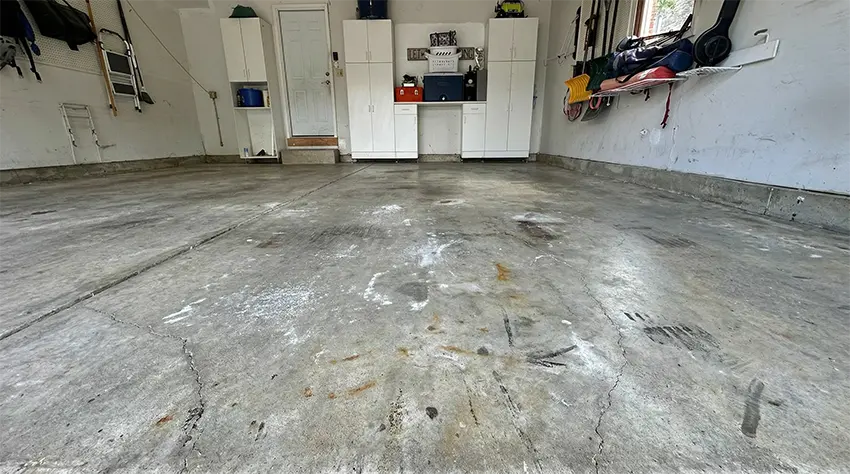
Hairline shrinkage cracks and wider settlement cracks let water in and spread every winter. We chase them out and fill them with a rigid polymer, then grind flush so they disappear under the finish.
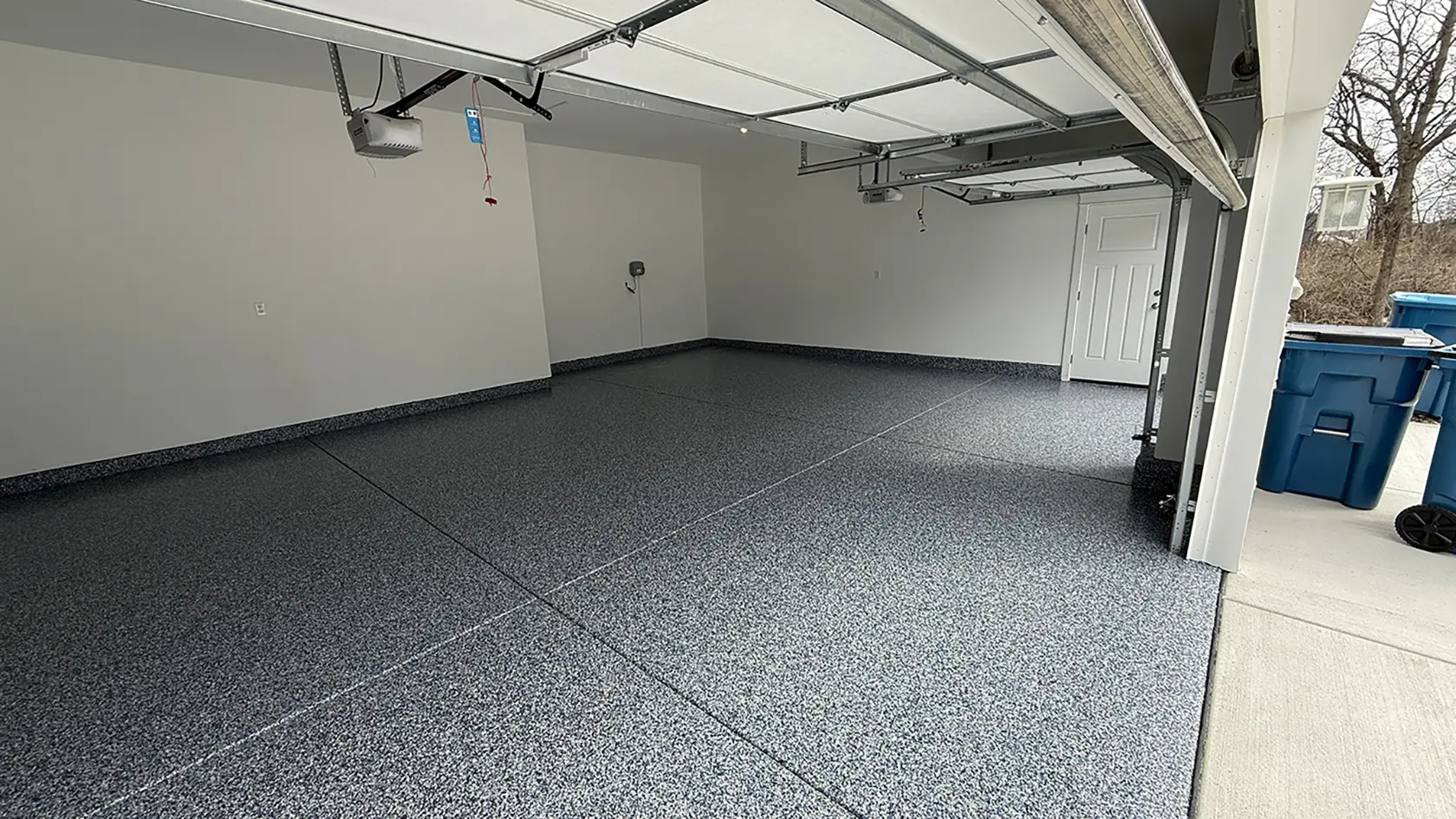
Chicago winters, road salt and hot tires chew up garage concrete — cracks, spalling, pits and failed old coatings. We repair and resurface the slab back to a sound, level surface, then finish it with a coating built to last, not just patch over the damage.
Same-week on-site visits
Garage floor repair and resurfacing is the process of bringing a damaged concrete slab back to a sound, level, coat-ready surface — without tearing it out and pouring a new one. It's the step that sits underneath every great-looking garage floor coating, and the one budget installers love to skip.
Chicago slabs take a beating: freeze-thaw cracks, road-salt spalling, hot-tire pits and old coatings that never bonded. We chase and fill the cracks, patch the spalls, grind everything flush, and resurface where the wear is broad — so the finished floor reads smooth instead of highlighting the damage underneath.
Scoped to your slab after a free on-site inspection.
Chicago's freeze-thaw winters and road salt are hard on concrete. These are the issues we see most — and each one is fixable when it's caught in time.
Hairline shrinkage cracks and wider settlement cracks let water in and spread every winter. We chase them out and fill them with a rigid polymer, then grind flush so they disappear under the finish.
Small craters and popped aggregate leave a rough, uneven surface that no coating can hide. We patch each pit with a bonded repair mortar and re-profile the area so it reads smooth.
When the top surface flakes and sheets off, the slab is losing its wear layer. We remove the loose concrete, resurface the area, and seal it so the scaling stops spreading.
De-icing salt dragged in on tires soaks in, freezes and expands — the number-one cause of Chicago garage floor deterioration. We repair the scaling and lock the slab away from salt for good.
Old epoxy that's peeling, bubbling or lifting under hot tires has to come off — coating over it never lasts. We grind the failed coating down to sound concrete before rebuilding.
Slabs that have settled, ponded water or been poorly finished need re-leveling. We resurface and re-profile so the floor drains toward the door and gives the coating a consistent base.
A repaired floor only lasts if the slab underneath is sound. Here's exactly how we take a damaged garage floor back to coat-ready — and beyond.
We inspect the slab for cracks, pitting, spalling, moisture and failed coatings, and sound out any hollow or delaminating areas. You get a clear written quote — including an honest call on whether repair-and-coat or full replacement makes sense.
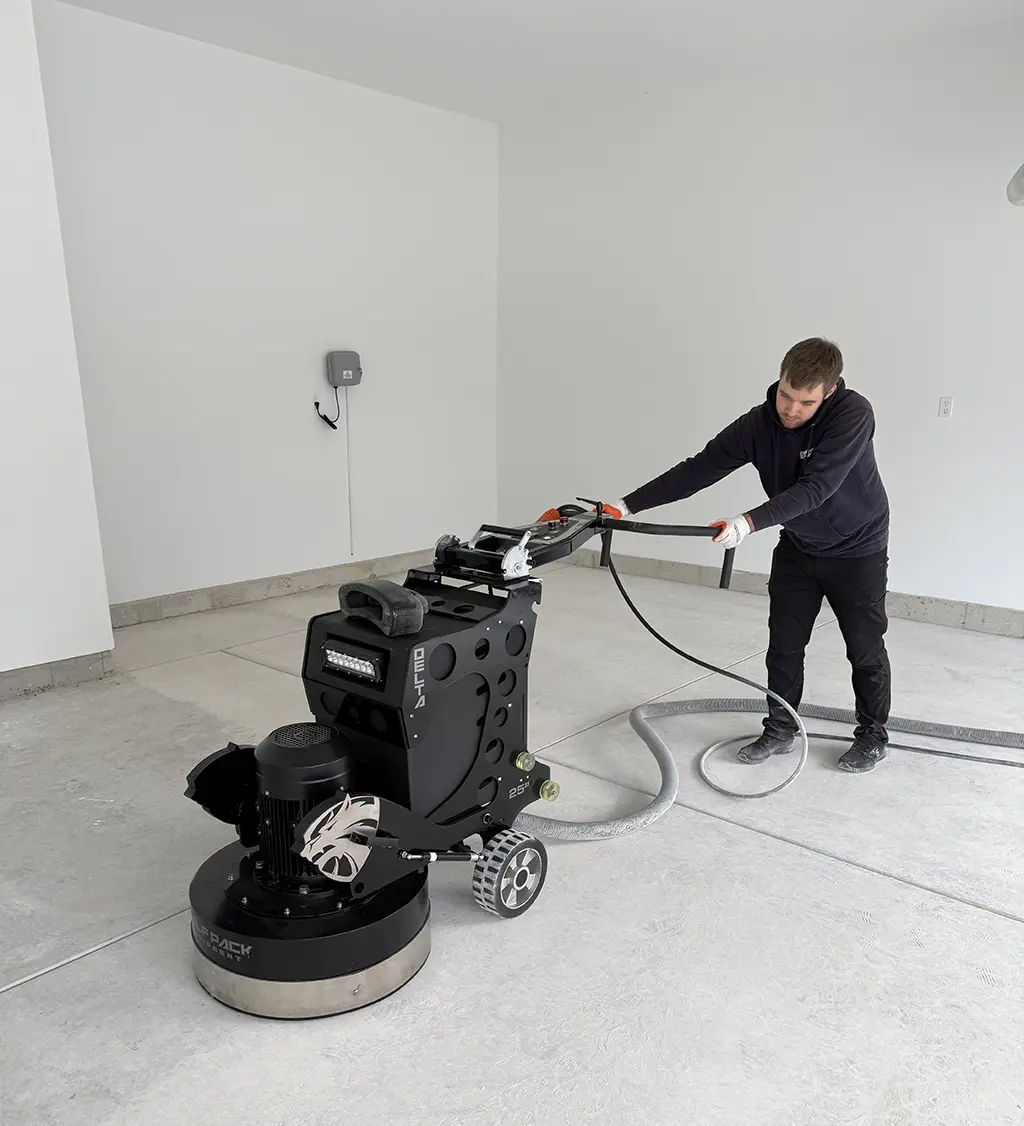
Free on-site · no obligationWe diamond-grind the slab to open the pores and mechanically strip any old paint, sealer or failed coating — removing weak and contaminated material down to sound concrete. This is the prep step DIY kits and budget crews skip, and the main reason their floors fail.
Required · never acid etchCracks and control joints are chased out and filled with a rigid polymer; spalls, pits and pop-outs are patched with a bonded resurfacing mortar. Everything is ground flush so the finished surface reads smooth instead of highlighting the old damage.
The heart of the jobWhere wear is broad or the slab is uneven, we apply a resurfacing overlay and re-profile the floor so it drains correctly and gives the new coating one consistent surface to bond to. Skipped when the slab is already sound.
As needed · for worn or uneven slabsWe finish the repaired slab with a penetrating sealer or a full flake, solid-color or polyaspartic coating, then review cure times for Chicago temperatures and share simple care tips so the floor stays sound.
Every damaged slab is different, so your price depends on how much of the floor needs repair and whether an old coating has to come off. These ranges give you a realistic starting point before your free on-site quote.
A light crack-and-spall repair can start near $300, while stripping a failed coating, resurfacing and recoating a larger garage runs higher. Prices reflect Chicago-area labor and materials and are confirmed after inspection — no hidden fees. Get your exact price →
Most damaged garage slabs can be repaired for a fraction of replacement cost. Here's how we tell the difference during your inspection.
Not sure which camp your floor is in? We'll tell you straight at the inspection. Book a free inspection →
Every coating system, every neighborhood. From the city itself out to the far suburbs.
We also travel to select projects in southern Wisconsin and northwest Indiana — contact us to discuss your location.
The questions Chicago homeowners ask us most when their garage floor is cracked, pitted, spalling or peeling.
The large majority of damaged garage slabs can be repaired and resurfaced rather than replaced. Cracks, control joints, spalls and pits are cut out, filled and ground flush, and broadly worn surfaces get a resurfacing overlay.
We only recommend replacing the slab when the concrete is structurally failing — heaving, sinking, or crumbling through its full depth — which we confirm during the free on-site inspection before any work begins. See how we decide →
Spalling and pitting are mostly caused by Chicago's freeze-thaw cycles and road salt. Water and de-icing salt soak into the concrete, then freeze and expand, popping small craters and flaking the top surface off the slab.
Uncoated or previously sealed floors are the most vulnerable. Repairing the damage and sealing or coating the slab is what stops it from spreading each winter.
Yes — crack and joint repair is a standard part of every install. Static cracks are chased out and filled with a rigid polymer, spalls and pits are patched with a bonded repair mortar, and everything is ground flush so the finished floor looks smooth instead of highlighting old damage.
Moving control joints can be honored or filled depending on how the floor is used.
Yes. Failed, peeling or hot-tire-damaged coatings are one of the most common repairs we handle. We mechanically grind off the old coating down to sound concrete, repair any damage underneath, then reprofile and apply a new bonded system.
Coating over a failing coating never lasts — removing it first is what makes the new floor stick.
Small crack and spall repairs typically run a few hundred dollars, while full resurfacing before a coating is usually quoted per square foot on top of the coating price.
Because cost depends on how much of the slab is damaged and whether an old coating has to be removed, we confirm an exact price with a free on-site inspection. Most repair-and-coat projects for a two-car garage land between roughly $2,000 and $4,500. See the cost breakdown →
Most repair-and-coat projects are completed in one to two days. Simple crack and spall repairs can be done in a few hours, while stripping a failed coating, resurfacing and applying a new polyaspartic system runs closer to the full window.
We build in the right cure time between repair and coating so everything bonds and lasts.
With a flake or metallic coating, repairs disappear completely — the decorative layer hides any patching underneath. Under a solid-color or clear-sealed finish, well-executed repairs are ground flush and blended, but very large patches can still be faintly visible up close.
If a flawless look matters, a full flake system over the repaired slab is the surest way to get it.
© Concrete Shield Coatings Inc. All rights reserved. | Terms & Conditions | Privacy Policy