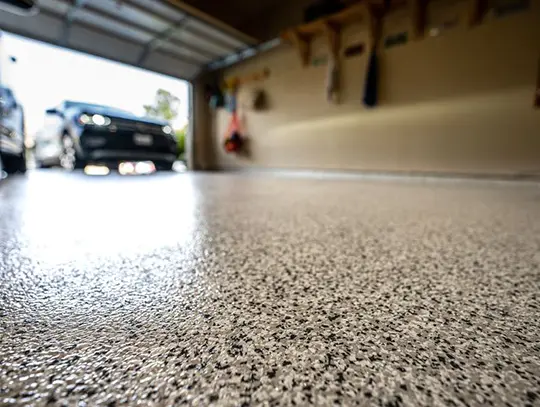
1
On-site inspection & written estimate
We come out, identify the surface type and condition, check moisture and existing sealer, and recommend the right product. Written quote before any work starts.
Penetrating silane-siloxane, polyurethane and acrylic sealers that stop freeze-thaw spalling, road-salt corrosion and stain damage — sized to your surface, your finish preference and how often you want to maintain it.
Same-week on-site visits
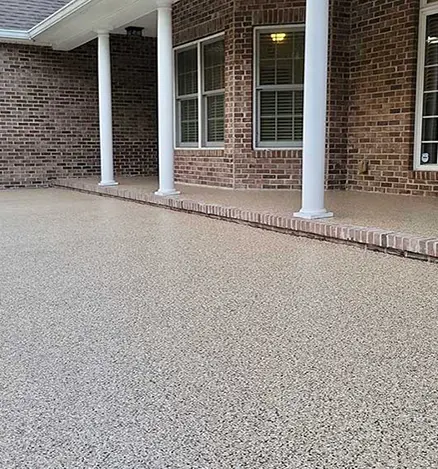
Chicago concrete takes a beating most of the country never sees. Eighty to a hundred freeze-thaw cycles a year. Five months of road salt. Summer UV that bleaches stamped and decorative finishes. Bare or unsealed concrete starts pitting, scaling and spalling after three to five winters — and replacement runs $8–$22 per square foot. Road salt is the harshest part of that cycle — here is what it actually does to concrete and coated floors.
The right sealer keeps water, salt and oil out of the slab. Penetrating silane/siloxane for driveways and walkways. Acrylic for stamped and decorative. Polyurethane or polyaspartic for high-wear surfaces. We match the chemistry to your surface, not the other way around.
Residential and commercial concrete, indoor and outdoor, plain and decorative — we match the sealer chemistry to the surface and how it's used.
Penetrating silane/siloxane
The workhorse for Chicago driveways — invisible finish, stops salt and freeze-thaw damage, lasts 7–10 years.
Plain or stamped
Solvent-based acrylic for stamped or colored patios (enhances color, wet-look gloss); silane/siloxane for plain poured slabs.
Acrylic + anti-slip
Acrylic with fine anti-slip aggregate — protects against chlorinated water, prevents efflorescence, keeps slip resistance when wet.
Penetrating sealer
Stops the micro-cracking that starts at every freeze cycle. Preserves the surface without changing its look.
Penetrating + polyurethane
If you don't need a full coating, a penetrating sealer plus polyurethane topcoat protects against road salt and oil at a fraction of the cost.
Acrylic or epoxy sealer
Prevents moisture migration and dusting on interior basement slabs — quick application, fast cure, lower cost than a full coating.
Solvent acrylic
Resealing every 2–3 years preserves the color and pattern. We use the exact sealer type the original installer specified.
Silane/siloxane
Penetrating silane/siloxane locks aggregate in place without changing the look or making the surface slippery.
Five sealer chemistries we install — picked by surface, climate exposure and the finish you want.
| Sealer | Best For | Lifespan & Finish |
|---|---|---|
| Silane / Siloxane Penetrating | Driveways, walkways, exposed aggregate — any outdoor slab in freeze-thaw climate | 7–10 yr · invisible, natural look $1.25–$1.75/sqft |
| Acrylic Film-forming | Stamped, stained, decorative concrete; basement floors; pool decks | 1–3 yr · satin to high gloss, wet-look $1.25–$1.75/sqft |
| Polyurethane Film-forming | High-traffic interior, garage floors, commercial floors | 5–10 yr · transparent, non-yellowing, glossy $1.45–$2.00/sqft |
| Polyaspartic Film-forming | Garage floors, high-wear walkways, cold-weather installs | 10–20 yr · high-gloss, UV-stable $2.00–$2.50/sqft |
| Epoxy Film-forming | Indoor warehouses, basements, labs — interior only | 5–10 yr · glossy, may yellow if exterior $3–$7/sqft |
Pricing is installed and all-in (prep, washing, sealer, labor). Heavy crack repair, old sealer stripping, stamped concrete or oil-stained driveways add to these ranges. Every job is quoted on-site after we see the slab.
Real installed price ranges by project type — not a generic "starting at" number.
Penetrating Silane/Siloxane — Our Most-Installed System
Installed, all-in, sealer + prep + labor
Premium polyurethane and polyaspartic systems: $1.75–$2.50/sqft installed. Heavy crack repair, old sealer stripping, or oil-stained driveways add to the price — we’ll lay it out clearly in the written estimate.
The same workflow on every job — small patio or big commercial slab. Prep is what makes a sealer last.
We come out, identify the surface type and condition, check moisture and existing sealer, and recommend the right product. Written quote before any work starts.
Cracks, spalls and damaged joints repaired with polymer-modified compound and re-caulked with self-leveling sealant. Skipping this is the #1 cause of premature sealer failure.
Commercial pressure washing removes dirt, oil, efflorescence and any remaining old sealer. Oil stains get a degreaser pre-treat; old acrylic gets stripped or chemically removed.
24–48 hours of drying time before sealer goes down. Sealing damp concrete locks moisture in and causes peeling, blushing or hazing.
Siding, landscaping, drains and adjacent hardscape covered with poly sheeting and tape. Plants rinsed or covered; pool equipment masked.
Two thin coats applied perpendicular to each other with low-pressure sprayer and back-rolled with a thin-nap roller. Calibrated to manufacturer spec — no puddling, no over-application.
Foot traffic in 24 hours, vehicles in 48–72 hours. Final walk with you, plus a one-page care sheet so you know how to keep it looking right.
Depends on the product and how hard your surface gets used. The signs are obvious — water stops beading, color looks washed out, you see micro-cracks or scaling start. We track each customer's install year so we can ring you when it's time.
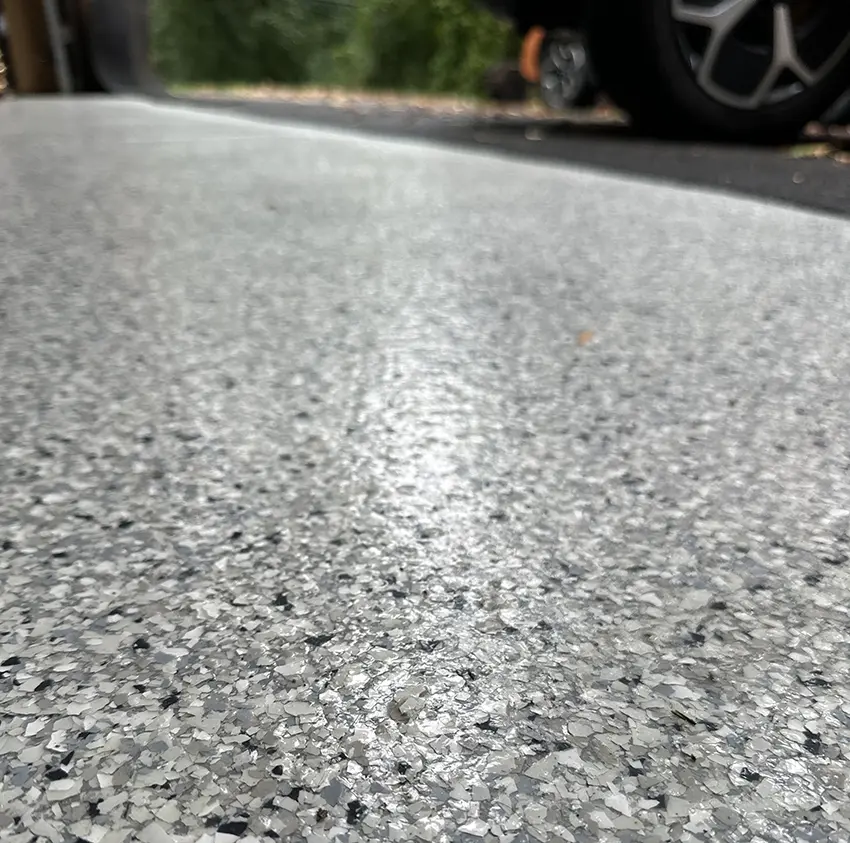
Four Chicagoland locations, 1,000+ projects sealed and coated, written warranty on every job.
Google Rating
100+ Chicagoland homeowners rate us 5 stars on Google. Reviews from real driveway, patio and garage installs — not stock photos.
Projects Completed
Driveways, patios, pool decks, garage floors, basement floors — sealed and coated across Chicago & the suburbs.
Local Offices
Northbrook, Lombard and Mundelein. Local crews, local trucks, local response times — not a national brand subcontracting your job.
Licensed & Insured
Illinois-bonded concrete contractor with full general liability and worker's comp. Every job carries a written warranty.
Free On-Site Quote
We come out, look at the slab, recommend the right sealer and give you a written estimate. No obligation, no pressure.
Sealer Chemistries
Silane/siloxane, acrylic, polyurethane, polyaspartic, epoxy — we install the chemistry your surface actually needs, not whatever's on the truck.
Same crews on every job — we don't subcontract sealing work.
The questions Chicago-area homeowners ask us most on sealing estimates.
Depends on the sealer chemistry. Acrylic: 1–3 years. Silane/siloxane (the right choice for most Chicago driveways): 7–10 years. Polyurethane and polyaspartic: 5–20 years on high-traffic surfaces.
We size the sealer to your surface and how often you actually want to maintain it. Most homeowners pick silane/siloxane and forget about it for a decade.
Most jobs run $1.25–$1.75 per square foot installed. A 500 sqft driveway lands around $625–$950; a 2-car driveway around $720–$1,150.
Premium polyurethane or polyaspartic topcoats: $1.75–$2.50/sqft. Heavy crack repair or old sealer stripping adds to the price — we lay it out clearly on the written estimate.
Silane/siloxane penetrating sealers are invisible — same look, just doesn't absorb water or salt. You won't see the sealer at all.
Acrylic and polyurethane sealers leave a visible film: satin to high gloss, enhances color on stamped or stained concrete. We confirm the exact finish before applying.
Foot traffic in 24 hours, vehicles in 48–72 hours for most sealers.
Faster for polyaspartics (24-hour drive-on), slower for film-forming acrylics in cool weather. You get a specific timeline at the walkthrough based on the product and forecast.
Penetrating sealers don't change surface texture at all — grip is identical to bare concrete.
Film-forming acrylics and polyurethanes can be slippery when wet. We add fine anti-slip aggregate to the topcoat on pool decks and walkways where this matters.
Yes — stamped concrete should be resealed every 2–3 years to preserve the color and pattern.
We use solvent-based acrylic for stamped work because it enhances color and produces the signature wet-look gloss. Penetrating sealers are not appropriate for stamped surfaces — they don't deliver the visual finish people expect.
No — fresh concrete needs 28–30 days to cure before sealing. The high pH and trapped moisture interfere with sealer adhesion.
A curing compound is different (applied within hours by the original concrete contractor) and isn't a long-term sealer. We can come back at day 30 to apply the actual sealer.
In Chicago specifically: yes, eventually. After 3–5 winters of road salt and freeze-thaw, unsealed driveways start pitting, scaling and spalling.
A $700–$1,000 sealing job every 7–10 years adds decades to a slab that costs $8–$22 per sqft to replace. The math is in favor of sealing every time.
Most sealers need slab temperatures above 50°F. Some polyaspartics cure down to 35°F and can be installed in early spring or late fall.
Mid-winter exterior sealing isn't typically done in Chicago. Interior work (basement floors, garage floors with heated slabs) runs year-round.
Three questions: where is it, what do you want it to look like, and how often do you want to maintain it.
From there we land on silane/siloxane for exterior driveways and walkways, solvent-based acrylic for stamped patios and pool decks, polyurethane or polyaspartic for garage floors and high-wear surfaces. We confirm everything in writing before any work starts.
We'll inspect the slab, recommend the right sealer chemistry and give you a written quote — no obligation, no pressure. Free across Chicagoland.
© Concrete Shield Coatings Inc. All rights reserved. | Terms & Conditions | Privacy Policy