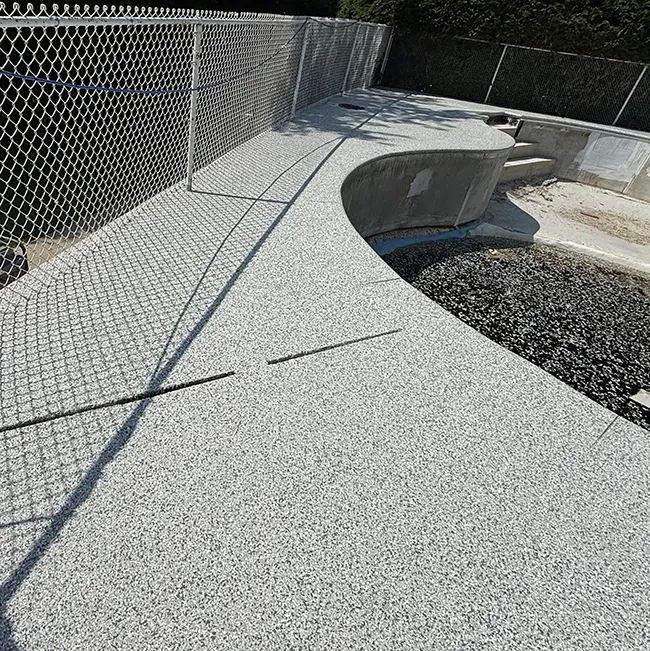
When summer hits Chicagoland, your pool deck and patio become the center of backyard life. Bare concrete looks tired fast: it absorbs heat, gets slick when wet, stains from sunscreen and pool chemicals, and shows every crack from last winter’s freeze-thaw cycles. The right outdoor coating fixes all of that in one professional install.
Key Takeaways
- Cooler underfoot: Lighter flake colors and quartz finishes reflect more heat than raw gray concrete, making barefoot summer use more comfortable.
- Slip resistance: Silica or quartz broadcast in the topcoat adds grip around splash zones without a rough, sandpaper feel.
- UV-stable finish: Polyaspartic coatings resist yellowing and chalking in full sun — a must for outdoor slabs that epoxy alone cannot deliver long-term.
- Fast return to use: Most polyaspartic systems cure in one day, so you are not locked out of the backyard during peak season.
- 2026 Chicago pricing: Pool decks run $7–$11/sq ft (polyaspartic flake) and $10–$15/sq ft (quartz). Patios run $6–$10/sq ft and $9–$14/sq ft for the same system types.
Below is what to look for in a summer-ready outdoor coating and how the main system options compare for Chicago homes.
Why Bare Concrete Struggles in a Chicago Summer
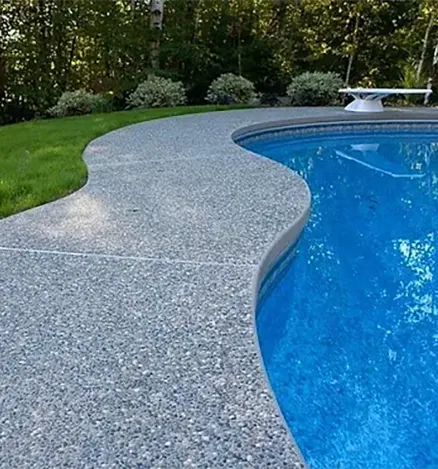
Unprotected concrete around pools and patios takes a beating from June through September. Intense UV bleaches color and breaks down weak sealers. Chlorine, sunscreen, and food spills leave permanent stains on porous slab. Wet surfaces around the pool become a slip hazard — especially for kids and guests stepping out of the water.
Heat is another issue homeowners underestimate. Dark, untreated concrete can feel painfully hot under bare feet on a 90°F afternoon. And while summer damage is visible, winter is when the real structural stress happens: freeze-thaw cycles widen cracks that then show up every spring. A quality coating seals the surface, bridges minor movement, and gives you a finish built for both seasons.
Cool, Slip-Resistant, UV-Stable: What the Right Coating Delivers
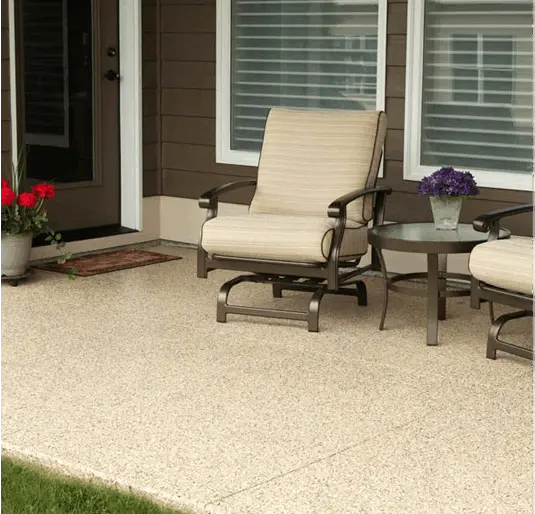
Not every floor coating belongs outdoors. Interior epoxy yellows and chalks under sunlight within one to three years. Outdoor systems need chemistry and texture designed for UV, water, and foot traffic.
Cooler Underfoot
Lighter decorative blends — tans, grays, and shoreline tones — reflect more solar energy than bare dark concrete. While no coating eliminates summer warmth entirely, the right color and finish noticeably improves barefoot comfort compared to an untreated slab baking in direct sun.
Slip Resistance
Professional outdoor systems embed silica sand or a quartz broadcast into the wear layer. This creates micro-texture that grips wet shoes and bare feet around pool edges and downspout runoff areas. Installers balance traction with comfort so the surface is safe without scraping skin.
UV Stability
Aliphatic polyaspartic topcoats are formulated to resist UV degradation. Unlike standard epoxy, they do not yellow or chalk when exposed to daily sunlight. That matters for any slab with partial or full sun exposure — pool decks, patios, and walkouts included. Proper surface profile and prep remain essential for adhesion regardless of product type.
Best Coating Systems for Pool Decks & Patios
We install three primary outdoor builds across Chicagoland. Each pairs durability with the look you want for your backyard.
Polyaspartic Flake System
Our most popular option for residential pool deck coatings and patio coatings. A polyaspartic base and UV-stable flake broadcast deliver a seamless, decorative finish that cures fast and handles Chicago weather. Choose from dozens of blend options to match your home and landscape.
Quartz Broadcast System
When maximum slip resistance and texture matter — think busy pool parties or sloped patio sections — a full quartz broadcast build is the premium choice. Quartz particles lock into the coating for aggressive wet traction and long-term abrasion resistance.
Epoxy Base + Polyaspartic Topcoat
A hybrid approach uses epoxy for build and adhesion, then a polyaspartic clear or flake topcoat for UV protection and chemical resistance. This is a strong value option within our concrete coating systems lineup when budget and performance both matter.
What Pool Deck & Patio Coatings Cost in Chicago (2026)
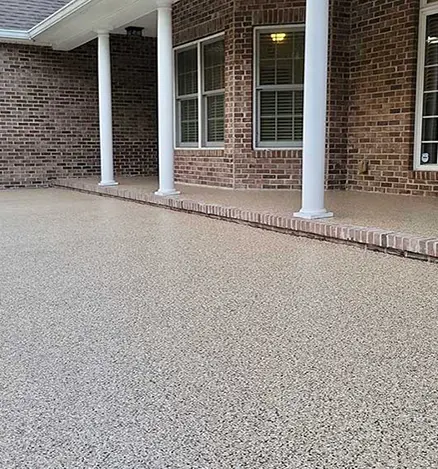
Pricing depends on slab condition, square footage, system choice, and any concrete repair needed. These ranges reflect what we quote for typical Chicagoland projects in 2026:
| Surface | System | Cost per Sq Ft | Typical Project Range |
|---|---|---|---|
| Pool deck | Polyaspartic flake | $7–$11 | $4,200–$6,600 (600 sq ft) |
| Pool deck | Quartz broadcast | $10–$15 | From ~$6,000 (600 sq ft) |
| Patio | Polyaspartic flake | $6–$10 | $2,400–$4,000 (400 sq ft) |
| Patio | Quartz broadcast | $9–$14 | From ~$3,600 (400 sq ft) |
Final price varies with crack repair, moisture mitigation, removal of failed prior coatings, and decorative options. We assess your slab on-site before you commit so pricing reflects actual conditions.
Why Summer Is a Smart Time to Coat in Chicagoland
Unlike desert climates where extreme afternoon heat limits installs, Chicago summers offer a practical coating window. Slab and air temperatures typically sit in the ideal 60°F–85°F range for proper cure, and lower humidity compared to Gulf Coast regions reduces bubbling risk.
Polyaspartic systems cure in hours, not days — meaning your pool deck or patio is often walkable the same day and ready for furniture within 24 hours. That matters when you are trying to enjoy the season, not wait a week to use your backyard. We schedule summer jobs for early-morning starts to avoid peak afternoon heat on the slab, ensuring a smooth, even finish.
Book early in the season: June through August is our busiest window for outdoor work across the North Shore and western suburbs.
Frequently Asked Questions
Are coated pool decks slippery when wet?
Smooth coatings can be slick when wet, which is why professional outdoor systems include silica or quartz broadcast for texture. A properly specified slip-resistant topcoat gives you grip around splash zones without feeling like sandpaper under bare feet.
Do patio coatings get hot in the summer sun?
Lighter flake and quartz finishes reflect more heat than bare dark concrete. While no coating eliminates summer warmth entirely, a UV-stable polyaspartic system with lighter color blends stays noticeably cooler and more comfortable for barefoot traffic than untreated gray slab.
How long do pool deck and patio coatings last?
Professionally installed polyaspartic and quartz broadcast systems typically last 15–20 years outdoors when the slab is properly prepared and maintained. Lifespan shortens if moisture, poor prep, or interior-grade epoxy is used in full sun.
Can you coat an existing or older pool deck?
Yes, in most cases. Existing concrete must be structurally sound, cleaned, profiled, and tested for moisture before coating. Cracks, spalling, and failed prior coatings are repaired or removed first so the new system bonds correctly.
Ready to Upgrade Your Pool Deck or Patio?
Whether you are refreshing a faded pool surround or transforming a plain patio into a finished outdoor living space, the right coating makes summer more comfortable, safer, and easier to maintain. Request a free quote from Concrete Shield Coatings and our team will walk you through system options, realistic timelines, and on-site pricing for your slab.
Visit us on Google Maps to see our reviews and service area, or call (847) 999-6330 to schedule your estimate.
Serving homeowners in Northbrook, Lake Forest, and Winnetka and across Chicagoland — request a free on-site estimate from your local Concrete Shield Coatings branch.