Epoxy floor coatings have become the go-to solution for homeowners and facility managers seeking durable, attractive protection for concrete floors. These two-part resinous coatings cure into a seamless, chemical-resistant surface that outperforms standard paint by years — sometimes decades. This guide covers everything you need to know about epoxy types, benefits, installation steps, and realistic costs for 2026.
Key Takeaways
- Long-lasting protection: Correctly installed 100% solids epoxy systems in residential garages achieve lifespans of 20+ years, far exceeding standard garage floor paint.
- Chemical and heat resistance: Quality epoxy floor coating resists hot tire pickup, motor oil, brake fluid, road salt, and common garage chemicals without staining or lifting.
- 2026 cost ranges: DIY materials run approximately $3–$5 per square foot, while professional installation typically costs $4–$12 per square foot depending on prep requirements and decorative finishes.
- Installation timeline: Most residential projects span 2–3 days including surface preparation, coating application, and initial curing before foot traffic.
- Maintenance simplicity: Routine sweeping and occasional mopping with neutral-pH cleaners keeps epoxy floors looking new for years.
- Slab requirements: Epoxy works best over sound, dry concrete and is not recommended over floors with active moisture problems, major structural cracks, or untreated vapor transmission issues.
With these fundamentals in mind, let's explore what makes epoxy coatings such a popular choice for concrete surfaces.
What Are Epoxy Floor Coatings?
Epoxy floor coatings are two-part systems consisting of resin and hardener that chemically react to form a rigid, plastic-like surface bonded directly to the concrete substrate. Unlike standard floor paint, this thermoset polymer creates a dense, impermeable barrier with excellent durability and chemical resistance.
Key Characteristics of Professional-Grade Epoxy
- 100% solids formulations contain no water or fillers, resulting in a thicker coating that requires fewer applications — typically 10–30 mils per coat versus 2–5 mils for retail paint.
- Multi-coat systems build total film thickness of 20–40 mils for maximum longevity.
- Self-leveling properties create smooth, seamless surfaces that eliminate joints and cracks where dirt collects.
Common installation locations include residential garages, basements, workshops, warehouses, showrooms, and light industrial facilities. Modern 2026 systems often incorporate decorative flakes, quartz aggregates, or metallic pigments that blend aesthetics with performance.
The critical distinction: “epoxy paint” from big-box stores typically contains 20–50% solids and lasts 2–5 years. Professional-grade epoxy floor coatings at 90–100% solids deliver 10–25 years of service.
Benefits of Epoxy Coatings for Concrete Floors
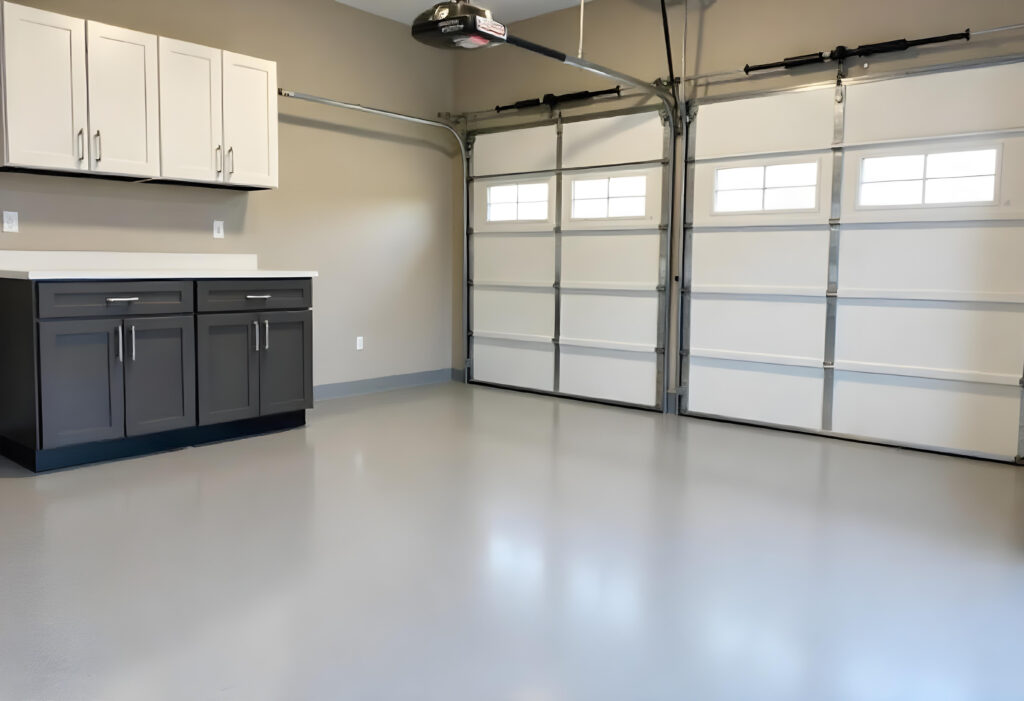
Epoxy coatings for floors deliver a combination of durability, appearance, and easier maintenance that bare concrete simply cannot match. A well-installed system stands up to daily foot and vehicle traffic, making it ideal for garages, warehouses, and commercial spaces. That is why most Chicago-area homeowners eventually choose a professional epoxy floor coating over paint or sealers when they want a finish that actually lasts.
Durability and Protection
- High abrasion resistance handles vehicles, machinery, pallet jacks, and constant foot traffic without easily cracking or chipping.
- The impermeable surface resists oil, grease, solvents, and harsh cleaning chemicals, making it ideal for garages, auto shops, and labs.
- Stain and spill resistance helps maintain the appearance and structural integrity of the floor for years.
Aesthetic Versatility
- Numerous colors, patterns, and high-gloss finishes can dramatically enhance the look of a concrete floor.
- High-gloss surfaces can increase light reflectivity by up to 300%, improving visibility in workspaces and showrooms.
- Decorative flakes and metallic pigments hide minor imperfections while letting you customize the color to match your home or brand.
Hygiene and Safety
- Seamless surfaces minimize bacterial harbors and dust traps.
- Low maintenance — grime, germs, and bacteria can be wiped away with a damp mop.
- Non-slip additives can be broadcast into the topcoat for added safety in wet or sloped areas.
Long-Term Value
- Reduced concrete dusting and spalling protection over the floor's lifetime.
- Lower repair costs over a 20+ year service life.
- More cost-effective than tile or hardwood, particularly because it can be applied directly over existing concrete.
Types of Epoxy Floor Coatings
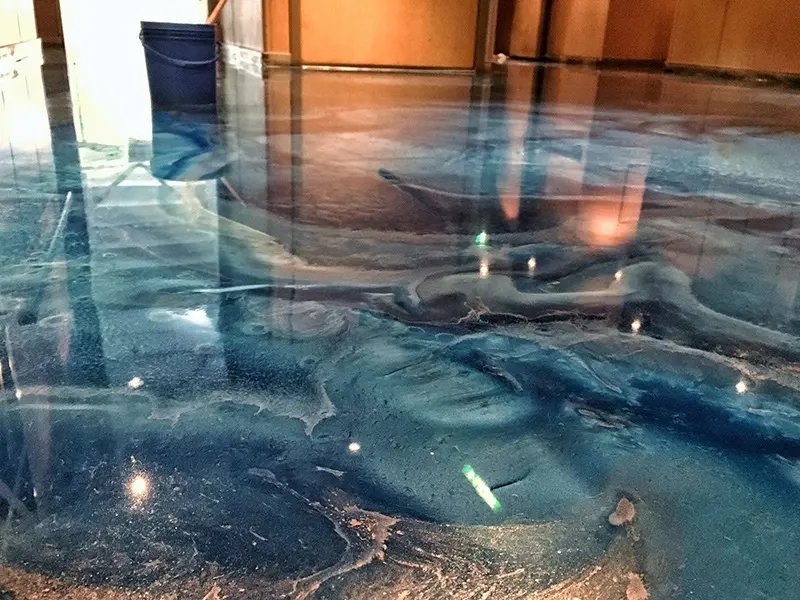
Not all epoxies perform identically. Choosing the right type for your floor, usage level, and installation schedule determines long-term success.
Main Formulation Categories
- 100% solids epoxy: Thick, highly durable, zero-VOC systems preferred for garage floors and commercial applications. Requires fewer coats and produces a thicker film.
- Solvent-based epoxy: Excellent penetration into porous concrete, stronger odor, higher VOCs — suited for older slabs needing deep primer penetration.
- Water-based epoxy: Thinner film builds (5–15 mils), easier cleanup, lower odor — better for beginners but with reduced longevity.
Cure Time Options
- Fast-set systems (20–30 minute pot life) enable overnight turnarounds in active facilities.
- Slow-set formulations (2–4 hour pot life) allow more working time for large DIY pours.
System Layers
- Base coats establish vapor barriers and adhesion to the concrete surface.
- Pigmented mid-coats provide selected color and build thickness.
- Clear topcoats add UV protection, chemical resistance, and the wear layer.
- Multi-layer systems offer roughly 3x better wear resistance than single-coat installations.
Decorative Options
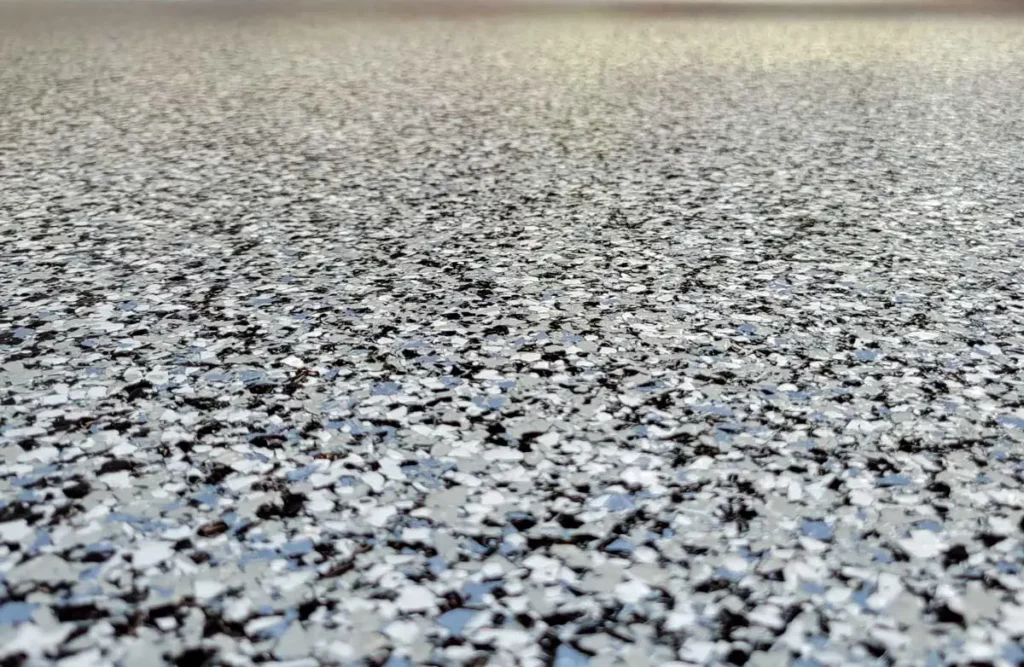
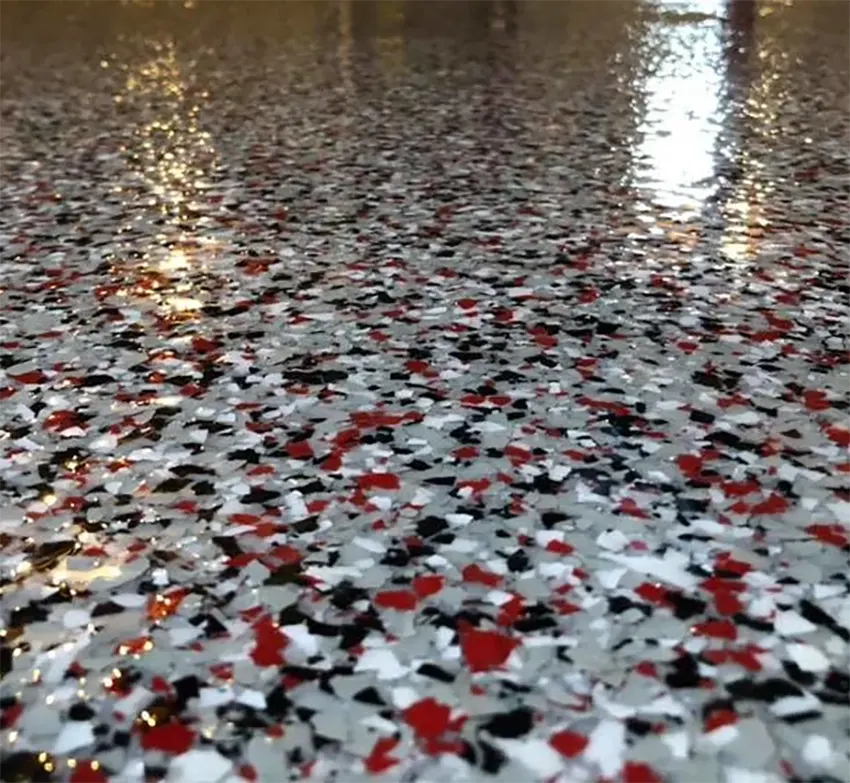
- Flake systems range from partial coverage (10–20%) to full broadcast (100% coverage).
- Quartz broadcast systems provide non-slip texture for commercial kitchens and wet areas.
- Metallic epoxy creates pearlescent, three-dimensional effects for showrooms and high-end interiors.
- High-build epoxy provides a thicker layer for enhanced durability in demanding environments.
2026 Specialty Products
- UV-resistant topcoats reduce yellowing in sunlit garages and entryways.
- Cold-cure epoxies activate down to 40°F for winter installation in cold climates.
Where Epoxy Floor Coatings Work Best
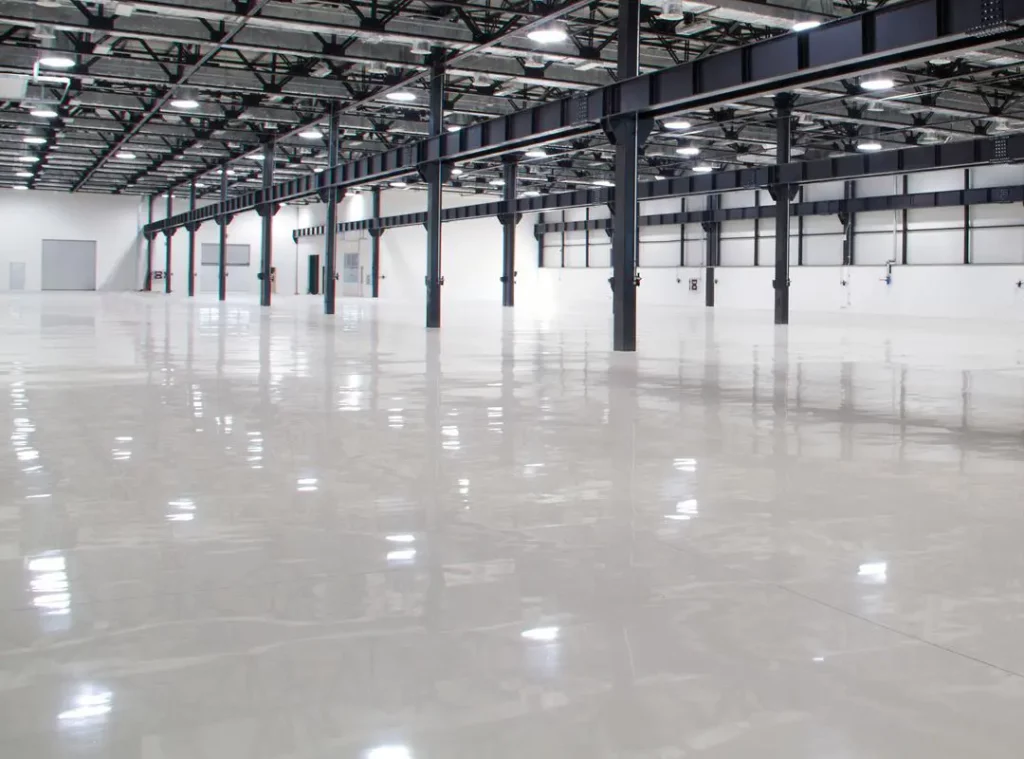
Floor use, traffic level, and environmental conditions determine whether epoxy delivers optimal performance. Understanding these factors helps you select the right system.
Residential Applications
- Single, double, and 3–4 car garage floor coatings handling daily vehicle traffic.
- Basements where moisture resistance prevents efflorescence and reduces radon infiltration.
- Mudrooms, laundry rooms, and home workshops exposed to chemicals and heavy traffic.
Commercial and Light Industrial Uses
- Auto repair shops requiring resistance to brake fluid and solvents.
- Warehouses with forklift and pallet jack traffic.
- Manufacturing lines and storage areas needing seamless, cleanable surfaces.
- Aircraft hangars with light to moderate traffic.
Retail and Public Spaces
- Gyms, clinics, and schools where clean, uniform, easily sanitized floors are essential.
- Showrooms using metallic finishes to create visual impact.
Where Epoxy Is Not Ideal Without Extensive Preparation
- Exterior driveways fully exposed to UV radiation.
- Damp or constantly wet slabs.
- Concrete with ongoing moisture vapor transmission exceeding 3–4 lbs per 1,000 sq ft per 24 hours.
- Previously coated floors with unknown or failing coatings.
Before purchasing materials, evaluate your existing slab condition — age, cracks, moisture, and previous coating status. A simple plastic-sheet moisture test (tape polyethylene to the floor for 18 hours; darkening underneath indicates excessive moisture) is a fast first check.
How to Prepare Concrete for Epoxy Coatings
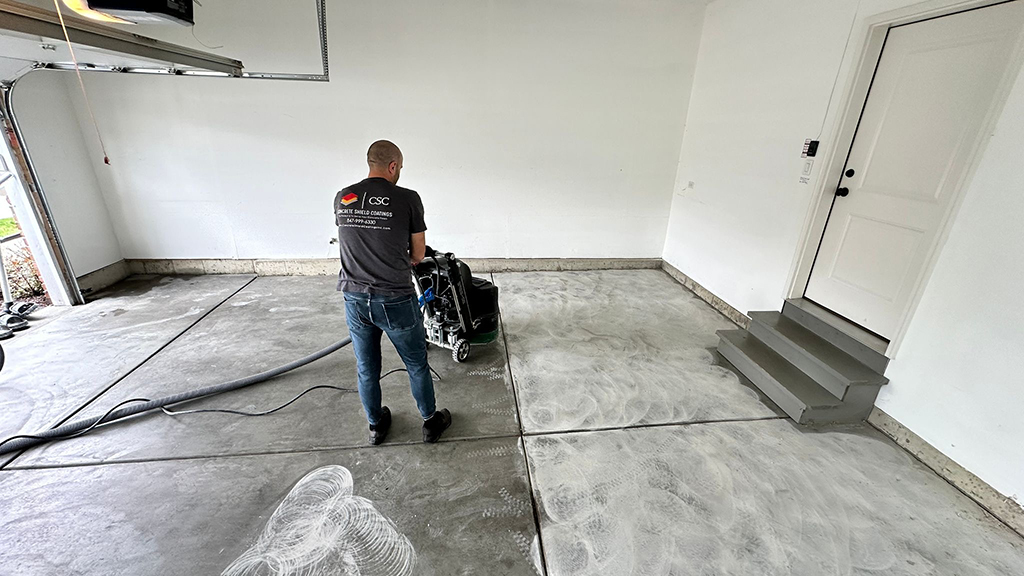
Surface preparation accounts for 70–80% of coating success. Poor prep leads directly to peeling, bubbles, and coating failure within months of installation. Understanding how prep fits into the broader picture of coating systems helps you plan a project that holds up for years.
Cleaning the Concrete
- Remove all dust, dirt, debris, paint, curing compounds, and contaminants using a stiff broom and vacuum.
- Use concrete-safe cleaners and scrubbing to eliminate surface contamination.
- Degrease oil spots in garages with dedicated concrete degreaser, allowing 15-minute dwell time, then rinse thoroughly and let the slab dry completely.
Creating Surface Profile
- Light acid etching works for bare new concrete (muriatic acid diluted 1:4, neutralize after etching).
- Mechanical diamond grinding or shot blasting is required for older or previously coated floors to achieve the proper ICRI CSP 2–3 profile.
- Previously painted surfaces require grinding to expose sound concrete for proper adhesion.
Repairing Damage
- Fill cracks exceeding 1/16-inch with epoxy crack fillers or patching compounds.
- Address spalls and voids with low-modulus epoxy mortars.
- Sand or grind repairs smooth so the final coat lays evenly.
Moisture Testing
- Basic plastic-sheet test reveals surface moisture in under a day.
- Check for efflorescence (white salt deposits) indicating vapor transmission.
- Large commercial projects may require professional calcium chloride or in-situ relative humidity testing.
Pre-Application Conditions
- Most epoxy coatings require slab and air temperatures between 50°F and 90°F for optimal application.
- Humidity should remain below 85%.
- Allow 72 hours of dry conditions after rain before coating.
Step-by-Step Epoxy Floor Installation Process
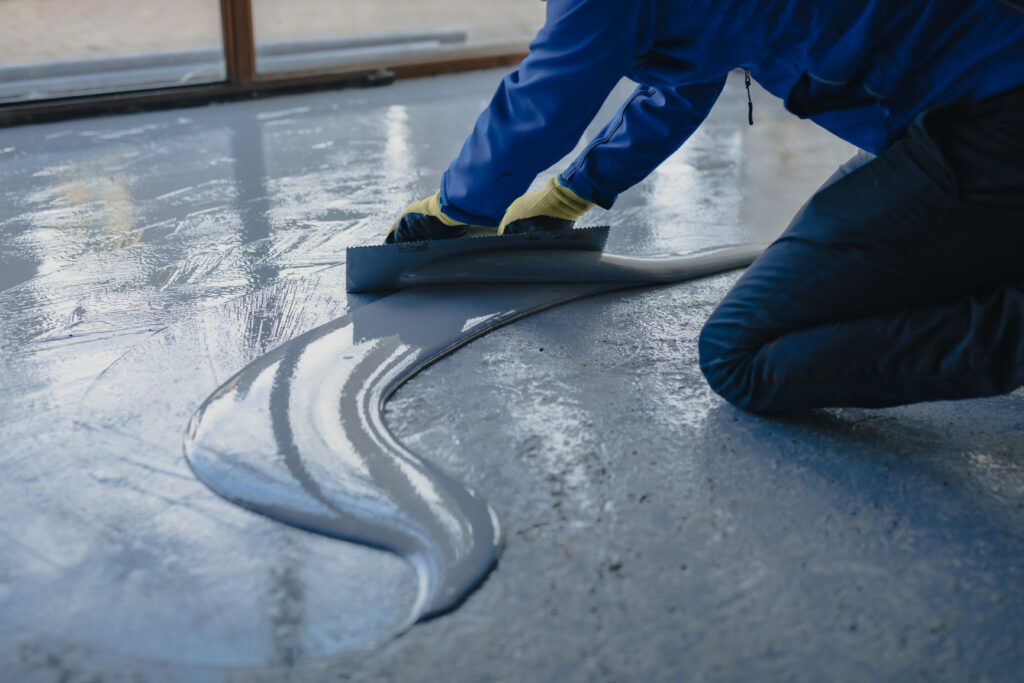
A typical residential or small commercial epoxy installation spans 2–3 days when following proper application instructions. Here is what to expect.
Day-by-Day Timeline
| Day | Tasks |
|---|---|
| Day 1 | Cleaning, degreasing, grinding/etching, crack repair, primer application |
| Day 2 | Epoxy base coat application, decorative flake broadcast |
| Day 3 | Clear topcoat application, beginning of cure period |
Mixing the Epoxy
- Combine resin and hardener at the exact specified ratio (typically 1:1 or 2:1).
- Mix thoroughly for 2–3 minutes using a drill mixer.
- Apply the mixture within the product's working time, typically 15–20 minutes — heat shortens this dramatically.
Application Tools
- Notched squeegee for spreading base coat at consistent thickness.
- Lint-free 3/8″ or 1/2″ roller covers designed for epoxies.
- Chip brush for cutting in edges and corners.
- Spiked shoes for walking on wet coating during flake broadcast.
Broadcasting Decorative Flakes
- Light broadcast: 1 lb per 10 sq ft for subtle texture.
- Full broadcast: 4–6 lbs per 10 sq ft for complete coverage.
- Apply flakes while the base coat reaches proper tack — tacky enough to hold chips but not fully cured.
Applying Clear Topcoat
- Apply within the manufacturer's recoat window (typically 12–24 hours after base).
- Use even, thin coats at 100–150 sq ft per gallon coverage.
- Mix non-slip additive into the final coat for areas needing added safety.
Cure Times
- Light foot traffic: 24 hours minimum.
- Heavy foot traffic: 48–72 hours.
- Vehicle traffic: 3–7 days depending on temperature and product.
Costs of Epoxy Floor Coatings in 2026

Cost depends on floor size, slab condition, product type, and whether you are tackling DIY installation or hiring professionals.
DIY Material Costs (2026)
| System Type | Cost per Square Foot |
|---|---|
| Water-based epoxy | $1.50–$3.00 |
| 100% solids epoxy kit | $2.50–$5.00 |
| Full-flake decorative system | $3.50–$5.50 |
Professional Installation Costs
- Residential garages: $4–$8 per square foot.
- Commercial spaces: $6–$12 per square foot.
- Full-flake broadcast and thick-build systems command premium pricing.
Factors That Increase Price
- Extensive crack repair and concrete restoration.
- Heavy grinding or shot blasting for previously coated floors.
- Moisture mitigation primer systems (add 30%+).
- Premium metallic or quartz decorative finishes.
Comparison With Alternatives
| Flooring Type | Cost per Sq Ft | Typical Lifespan |
|---|---|---|
| Epoxy coating | $3–$12 | 10–25 years |
| Polished concrete | $3–$6 | 5–10 years |
| Interlocking tiles | $8–$15 | 5–10 years |
For larger commercial projects, collect multiple quotes and ask installers to specify the exact epoxy system, total thickness, and warranty terms in writing.
Maintenance and Longevity of Epoxy Floors
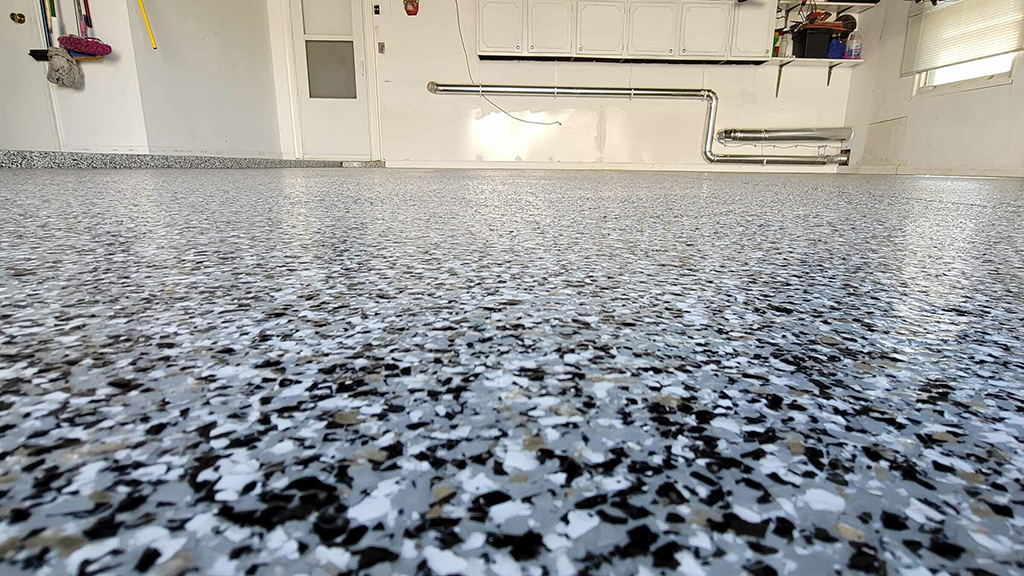
Epoxy floors are low-maintenance but not maintenance-free. Proper care significantly extends service life and appearance.
Basic Cleaning Routine
- Sweep or dust mop daily to remove abrasive grit.
- Mop weekly with a neutral-pH cleaner (avoid harsh ammonia above 5%).
- Wipe chemical spills promptly — do not let oil or grease sit overnight.
Protection Practices
- Use soft poly wheels on tool boxes and rolling equipment.
- Place protective pads under heavy equipment legs.
- Scrape away stuck debris carefully rather than dragging sharp metal objects.
Expected Lifespan
- Residential garages: 10–20 years with quality systems.
- Commercial and industrial: 5–10 years before major recoating is needed.
- High-traffic lanes may show wear earlier than parking areas.
Touch-Up and Recoat Options
- Spot repairs address chips or gouges with matching epoxy material.
- Full recoat requires light sanding and thorough cleaning of the existing surface.
- Apply new topcoat over a properly prepared previous coating when gloss diminishes.
Inspect high-traffic lanes and vehicle parking spots once or twice yearly to catch wear before it reaches the concrete.
Common Problems and How to Avoid Them
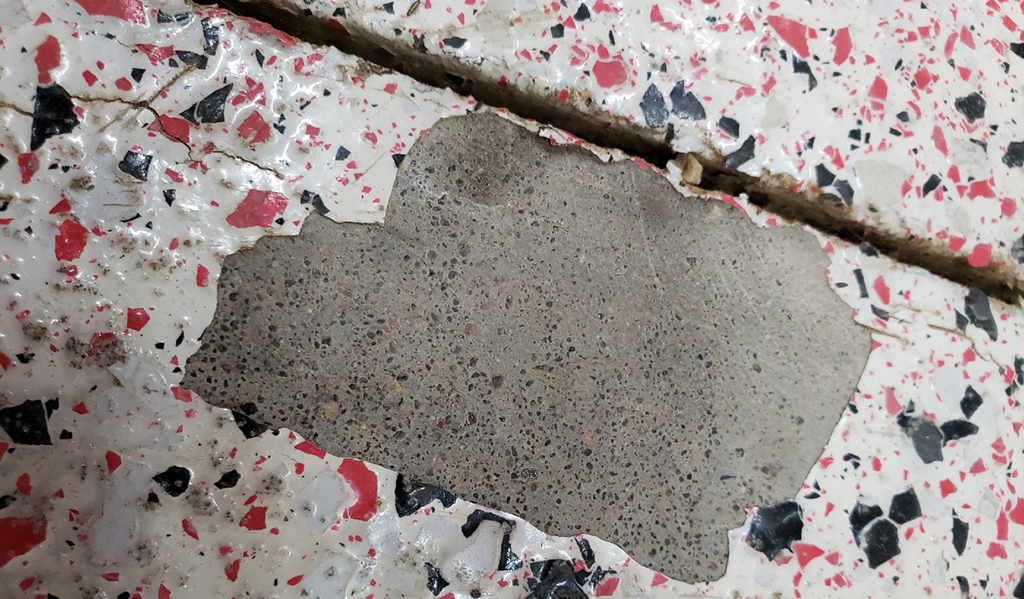
Most epoxy failures trace back to poor surface preparation, moisture issues, or incorrect application conditions. Industry organizations like the American Concrete Institute publish detailed guidance on slab moisture, surface profile, and coating compatibility — understanding these standards helps you avoid the failures below.
Peeling and Delamination
- Caused by inadequate grinding/etching below CSP 2 profile.
- Oil-contaminated or sealed concrete prevents proper adhesion.
- Test adhesion with a cross-hatch tape pull before full application.
Bubbles and Pinholes
- Outgassing occurs when concrete releases air during coating — common above 80°F.
- High humidity during cure causes amine blush (a waxy surface).
- Mitigate with proper primer coats and stable temperature conditions.
Hot Tire Pickup
- Parking vehicles on thin or under-cured epoxy causes lifting.
- Systems under 20 mils total thickness or cured less than 7 days are vulnerable.
- Allow a full cure period (7+ days at 70°F) before vehicle contact.
Discoloration and Yellowing
- Traditional epoxy can yellow or chalk when exposed to direct sunlight, making it less suitable for outdoor use without a UV-resistant topcoat.
- Aliphatic polyurethane or polyaspartic topcoats reduce yellowing by roughly 80%.
Soft Spots and Uneven Gloss
- Caused by incorrect mixing ratios or contaminated containers.
- Follow manufacturer ratios exactly — never estimate.
- Use clean tools and blend thoroughly throughout the entire batch.
Frequently Asked Questions
How long do epoxy floor coatings really last in a home garage?
A properly prepared slab with a quality 100% solids epoxy system and clear topcoat realistically lasts 10–20 years in a typical 1–3 car residential garage with normal vehicle and foot traffic. Longevity decreases if the slab has moisture issues, heavy mechanical abuse, or regular exposure to harsh chemicals without prompt cleanup. Cosmetic wear in high-traffic areas can often be resolved with light sanding and a new topcoat rather than full system replacement.
Can epoxy be installed over previously painted or coated concrete floors?
Sometimes, but only if the existing layer is firmly bonded, not peeling, and chemically compatible with the new product. Adhesion testing and grinding off weak or unknown coatings to expose sound concrete is usually required for best results. Many professional systems include primer options specifically formulated to bond to previously painted or very smooth concrete.
Is epoxy flooring slippery when wet?
Without anti-slip additives, smooth epoxy can be slippery in wet conditions. Installers can mix non-slip additives such as aluminum oxide or polymer grit into the clear topcoat to create a slip-resistant surface. Choose higher texture levels near exterior doors, sloped garage entries, and areas likely to get wet frequently.
Can I install an epoxy floor in winter or in a cold climate?
Most epoxy systems require slab and air temperatures around 50–60°F to cure properly, and curing slows significantly in cold environments. Specialized cold-cure or winter-grade systems exist that work down to about 40°F, but they still require careful planning, heated space, and stable humidity. Avoid installation during periods of high humidity or rapid temperature swings.
What is the difference between epoxy and polyaspartic or polyurethane floor coatings?
Epoxy commonly serves as a high-build base coat providing strength and thickness, while polyaspartic topcoats and polyurethane products function as UV-resistant, highly durable wear layers. Polyaspartics cure faster and resist yellowing in sunlight, making them popular for one-day garage floor installations and areas with UV exposure. Hybrid systems pairing an epoxy base with a polyaspartic or polyurethane topcoat offer an excellent balance of cost, working time, and long-term performance.
Ready for a Floor That Actually Lasts?
Whether you are upgrading a Chicago-area garage, a basement, or a commercial facility, the right epoxy system — installed over properly prepared concrete — can deliver decades of clean, durable, attractive performance. If you would like a professional opinion on your slab, request a free quote and our team will walk you through realistic options, costs, and timelines for your space.
Serving homeowners in Northbrook, Wilmette, and Lake Forest and across Chicagoland — request a free on-site estimate from your local Concrete Shield Coatings branch.