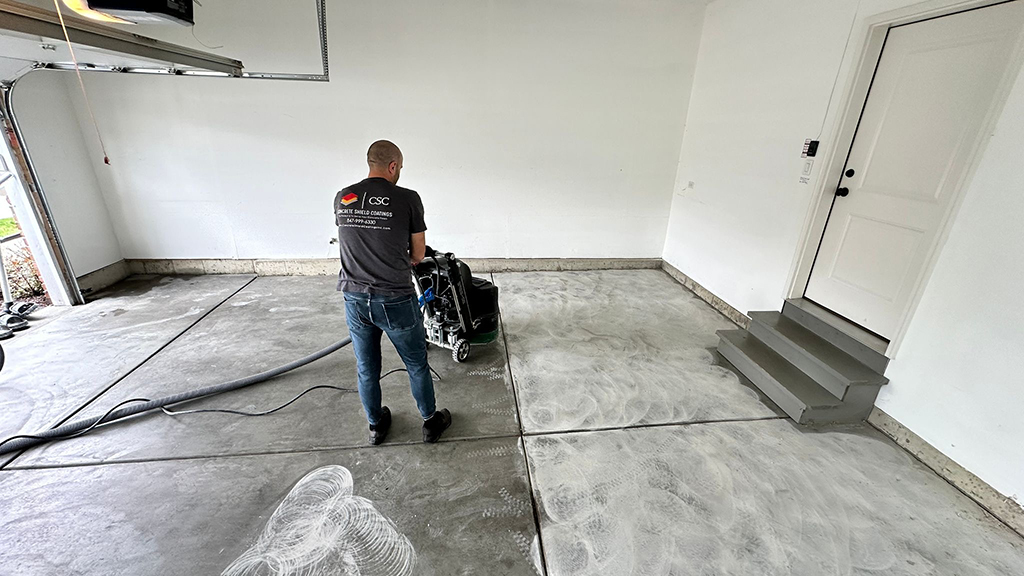
Ask ten contractors how they prep a concrete floor before coating it and you'll get two very different answers. Some pour acid on the slab, scrub it, rinse it, and start rolling. We don't. At Concrete Shield Coatings, every single floor we coat is diamond-ground first — no exceptions, on a garage slab or a warehouse floor. It's the least glamorous step of the whole job, and it's the one that decides whether your coating lasts 15–20 years or peels off in one Chicago winter.
This post explains what diamond grinding actually does, how it compares to acid etching, and why we made grinding a non-negotiable part of the way we work.
Key Takeaways
- Prep is the coating. A coating is only as good as its bond to the concrete — and that bond is created during prep, not application.
- Diamond grinding beats acid etching because it creates a consistent, measurable surface profile and works on hard, dense, sealed, or previously coated concrete.
- Acid etching is the #1 cause of peeling. Uneven reaction, leftover residue, and no ability to remove old coatings make it unreliable in a freeze-thaw climate.
- We grind every floor with HEPA dust extraction, then repair, then coat — the same process on every job, backed by a written warranty.
- It's how you avoid a redo. Proper mechanical prep is the difference between a floor you never think about again and one you're stripping off in a few years.
Prep Is the Coating: Why the Bond Is Everything
People shop for coatings by the top layer — the flake color, the gloss, the polyaspartic topcoat. But none of that matters if the whole system isn't locked to the slab underneath. A concrete coating isn't paint that dries on the surface; it's a bonded stack of coating layers that has to grip bare, open concrete to stay put.
Bare concrete looks solid, but the top skin of a troweled slab is a weak, dusty layer called laitance, often sealed over with curing compounds. Roll a coating onto that skin and you've glued your floor to a layer that's already ready to let go. The entire purpose of surface prep is to remove that weak skin and open the pores so the resin basecoat and polyaspartic topcoat can bite in. Get the prep right and the coating becomes part of the floor. Get it wrong and it's a sticker waiting to peel.
What Diamond Grinding Actually Does
Diamond grinding uses a heavy, multi-head machine fitted with industrial diamond tooling to abrade the top of the slab. In a single process it does three things acid can't do together:
- Strips everything off the surface — old paint, failed coatings, glue, sealers, and contaminants come off, back to sound concrete.
- Removes the weak laitance layer so the coating bonds to strong concrete, not the dusty skin on top.
- Opens a consistent surface profile — a uniform texture (contractors reference the ICRI concrete surface profile standards) that gives resin thousands of tiny anchor points to grip.
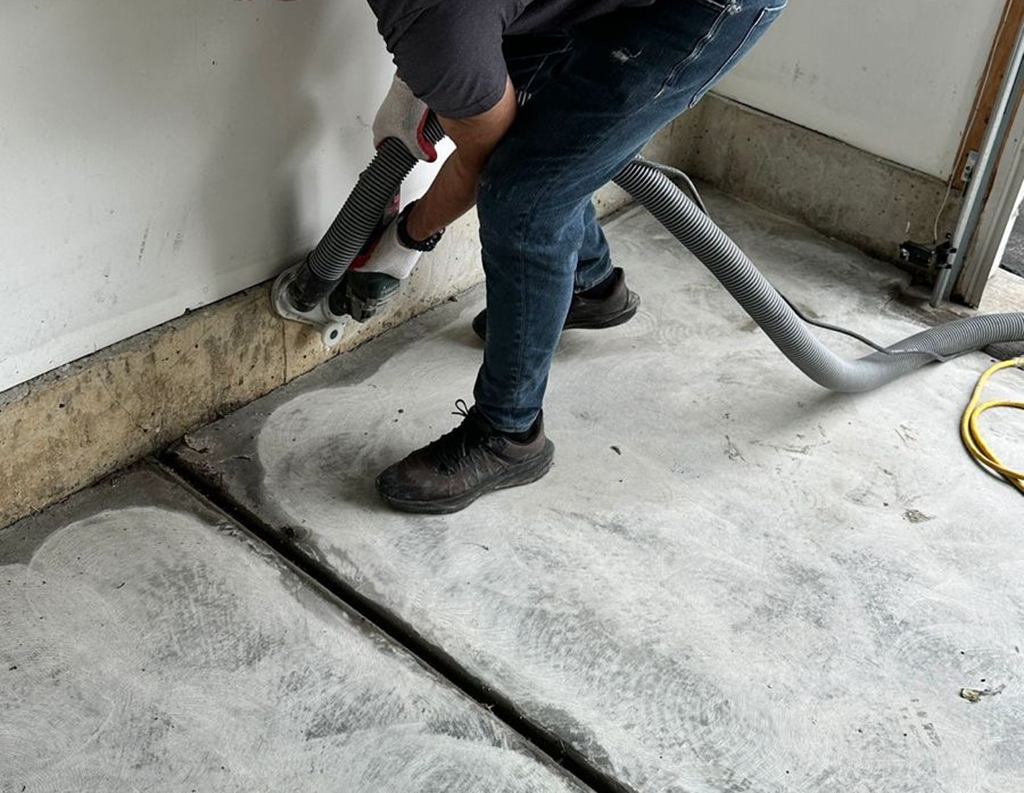
The result is a mechanical bond: the coating physically keys into the concrete rather than relying on a chemical handshake. We run our grinders with HEPA-filtered dust extraction connected right at the head, so prep on your garage or basement stays nearly dust-free instead of coating the whole house in silica.
Why Acid Etching Falls Short in Chicago
Acid etching means spreading a muriatic or citric acid solution over the slab to chemically roughen it. On paper it's cheaper and faster, which is why some crews and every DIY kit rely on it. In practice it has real problems, especially here:
- The reaction is uneven. Acid bites hard in porous spots and barely touches dense or power-troweled concrete, leaving an inconsistent profile the coating can't grip evenly.
- It can't remove old coatings, oil, or sealers. If the floor was ever painted, sealed, or oil-stained, acid just runs off the top and does nothing.
- Residue is left behind. Etching leaves acidic salts and dust that must be fully neutralized and rinsed; skip a step and the coating bonds to contamination.
- Moisture and rinse water get trapped. A slab that's still damp from rinsing is a recipe for bubbling and peeling — a real risk in Chicago basements and garages.
In our freeze-thaw climate, any weak spot in the bond becomes a failure point: water works into the edge of a poorly prepped coating, freezes, expands, and lifts it — the same freeze-thaw damage the Portland Cement Association documents in exposed concrete. That's why the most common repair call we get is stripping off someone else's acid-etched floor that started peeling after a winter or two.
Diamond Grinding vs. Acid Etching, Side by Side
| Factor | Diamond Grinding | Acid Etching |
|---|---|---|
| Surface profile | Consistent & measurable | Uneven, unpredictable |
| Removes old coatings/paint | Yes | No |
| Works on dense/sealed concrete | Yes | Barely reacts |
| Residue left behind | None (HEPA vacuumed) | Acidic salts & dust |
| Moisture risk | Dry process | Wet — needs full drying |
| Reliability in freeze-thaw | Excellent | Poor |
| Best for | Every professional coating | Small DIY touch-ups |
Why We Grind Every Floor — Not Just the Hard Ones
Concrete Shield Coatings is a coatings-only contractor. We don't lay tile, pour concrete, or do general remodeling — surface prep and the concrete coating systems we install are the craft, and we run our own crews out of three Chicagoland branches in Northbrook, Lombard, and Mundelein. Because we live and die by how our floors hold up, we made diamond grinding standard on every project years ago.
That means we don't skip prep to hit a lower price, and we don't guess whether a slab is "clean enough" to coat. Every floor gets ground to bare, sound concrete, checked, and repaired before a drop of resin goes down. It's more work up front, but it's the reason we can put a written, project-specific warranty on every system we install — from a single-car garage floor to a warehouse. You can read more about how our crews work on our About page.
What Proper Prep Looks Like on Our Jobs
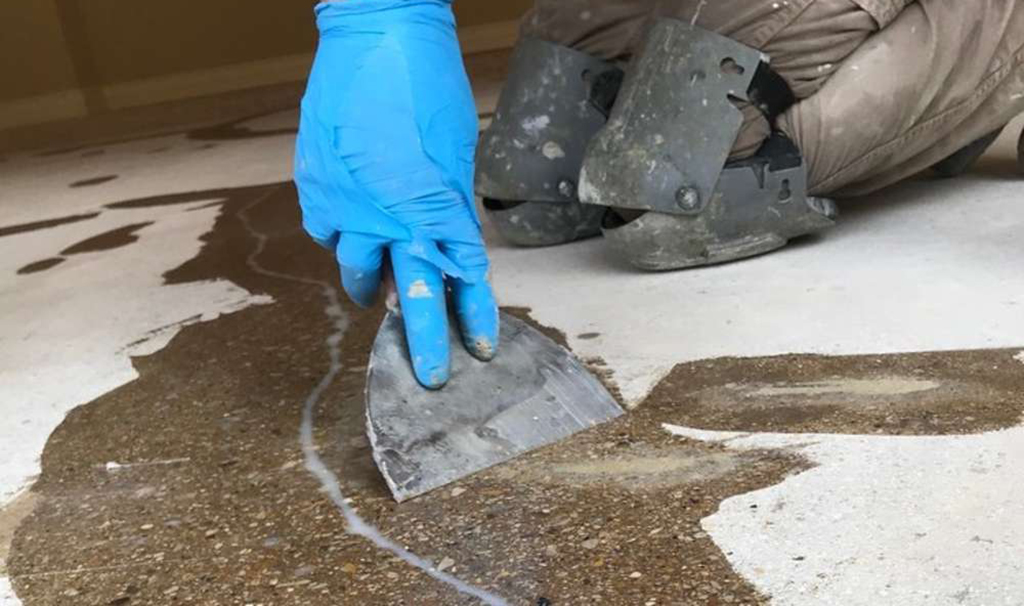
Here's the sequence we follow on every install, whether it's an epoxy floor coating or a polyurea/polyaspartic system:
- Move out and mask. We clear the space and protect walls, trim, and fixtures.
- Diamond-grind the full slab with HEPA dust extraction until the concrete is open and uniform.
- Repair cracks, pits, and spalls with structural fillers so the finished floor is smooth and sound.
- Vacuum and inspect the profile before any resin is mixed.
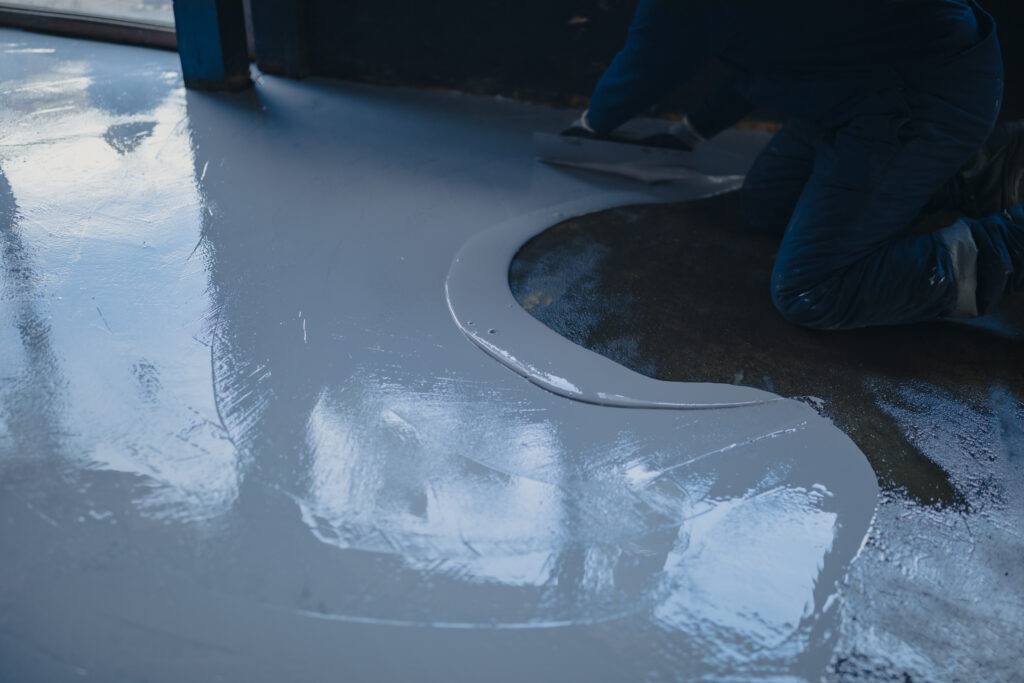
- Build the coating stack — basecoat, decorative flake or quartz if selected, then a durable topcoat.
- Walkthrough & warranty with care instructions and cure times for Chicago temperatures.
Notice that three of the six steps happen before the coating even goes on — the same disciplined prep sits under every garage floor coating we install. That ratio is the whole point.
Signs a Floor Was Never Properly Prepped
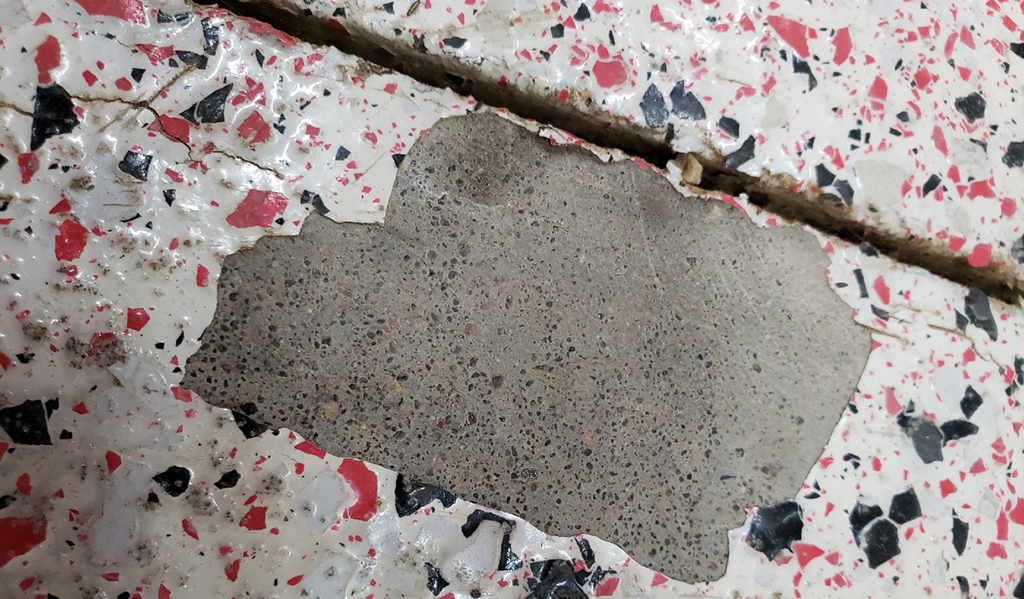
If you already have a coated floor that's failing, bad prep is almost always the culprit. Watch for:
- Coating peeling in sheets or flakes, especially near doors and edges.
- Bubbling or hollow spots that sound different when you tap them.
- A layer that lifts cleanly off the concrete — a sure sign it never bonded.
- Peeling that started within a year or two, often after a winter.
The good news: diamond grinding can fix it. We grind the failed coating right off, re-profile the slab, and start over with a proper bond. Our guide to the top epoxy garage floor mistakes to avoid covers the prep shortcuts that cause most of these failures in the first place. Either way, proper mechanical prep is what separates a floor that lasts from one you redo in a few years. And before you rent a grinder yourself, it's worth reading whether a DIY concrete coating saves money or risks disaster.
Frequently Asked Questions
What is diamond grinding for concrete floors?
Diamond grinding uses a heavy walk-behind or ride-on machine fitted with industrial diamond-segment tooling to abrade the top layer of a concrete slab. It removes old coatings, glue, laitance, and surface contaminants and opens the concrete's pores, creating a clean, textured profile that a coating can mechanically lock into. It's the surface-prep method we use on every project.
Why is diamond grinding better than acid etching?
Diamond grinding produces a consistent, measurable surface profile across the whole slab and works on hard, dense, or previously sealed concrete where acid barely reacts. Acid etching relies on a chemical reaction that's uneven, leaves behind residue that must be fully neutralized and rinsed, and can't remove old coatings or oil. In a freeze-thaw climate like Chicago's, a poorly etched floor is the most common reason a coating peels.
Does diamond grinding create a lot of dust?
Done properly, no. We grind with HEPA-filtered dust extraction connected directly to the grinder, which captures the silica dust at the source. That keeps your garage, basement, or business nearly dust-free during prep and is far cleaner and safer than the acid fumes and rinse water that come with etching.
Can you coat a floor that was previously acid-etched or painted?
Yes. Diamond grinding removes old paint, failed coatings, sealers, and etching residue and re-profiles the slab back to bare, sound concrete. That's exactly why we grind rather than etch — it gives us a clean, bondable surface no matter what was on the floor before, so the new coating starts from a proper foundation.
Ready for a Floor That's Prepped the Right Way?
If you want a coating that's engineered to stay stuck — not just painted on and hoped for — start with a crew that grinds every floor. Request a free quote from Concrete Shield Coatings and we'll inspect your slab, explain the prep it needs, and give you honest, on-site pricing before any work begins.
Use the "Get Free Quote" button above to schedule online, or call (847) 999-6330 to book your on-site estimate.
Serving homeowners and businesses in Mundelein, Northbrook, and Lombard and across Chicagoland — request a free on-site estimate from your local Concrete Shield Coatings branch.