1
Garage assessment & written estimate
We inspect your concrete, look for cracks, moisture and previous coatings, and talk through how you use the garage. You get a clear written estimate and timeline before any work starts.
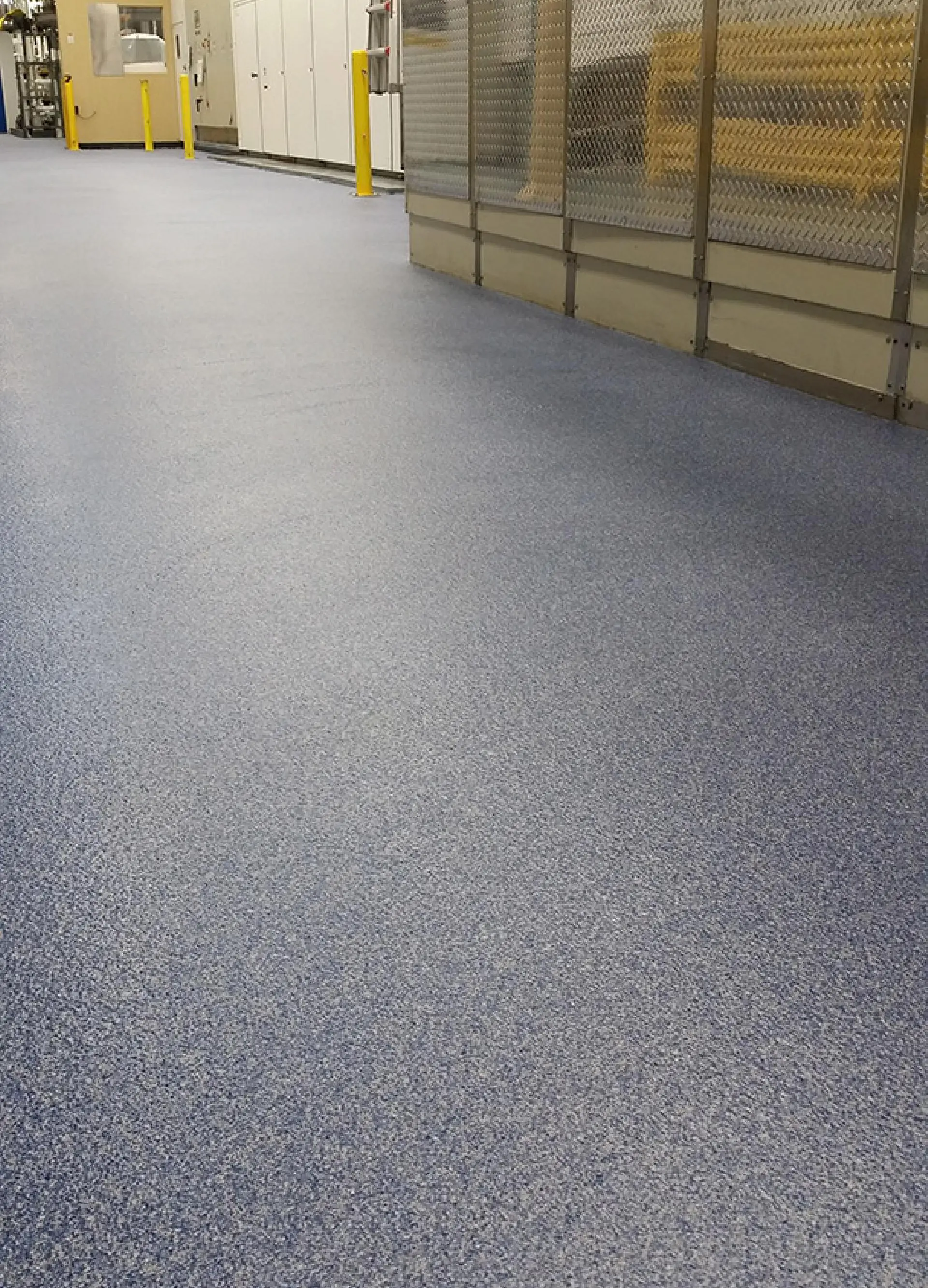
Coloured quartz aggregate broadcast into epoxy or polyaspartic resin, sealed with a chemical-resistant topcoat. The go-to spec for commercial kitchens, healthcare, manufacturing, locker rooms and any floor that needs built-in slip resistance.
Same-week on-site visits
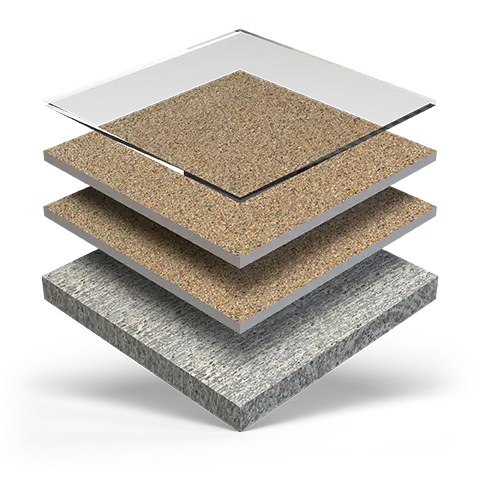
Quartz broadcast is the system you walk on in commercial kitchens, hospitals, food plants and locker rooms. Coloured quartz aggregate gets broadcast into a wet epoxy or polyaspartic basecoat, then sealed with a chemical-resistant topcoat. The finished floor is roughly 1/8" thick on a double-broadcast system, with built-in slip resistance that you can't get from a smooth coating.
Where it shines is anywhere the floor needs to survive heavy traffic, dropped tools, harsh cleaners, frequent washdowns and wet conditions — all at once. For residential garages and basements, the cheaper polyurea or epoxy systems are usually a better fit.
Quartz broadcast costs more than flake or solid epoxy — and it's worth every dollar in commercial environments where slip safety, sanitation and impact resistance are non-negotiable. Here's how it stacks up side by side.
| Feature | Solid Epoxy Light commercial | Flake Epoxy Residential | Quartz Broadcast Heavy commercial |
|---|---|---|---|
| Slip resistance | Low–Medium | Medium | High — built in |
| Impact resistance | Medium | Medium–High | Excellent |
| Chemical resistance | Good | Good | Excellent |
| System thickness | ~10–20 mils | ~40–60 mils | ~125+ mils (1/8") |
| Realistic lifespan | 8–12 years | 10–15 years | 15–25+ years |
| Best for | Light commercial, indoor | Garages, basements | Heavy commercial / industrial |
| Cost (installed) | $6–7 / sqft | $5–7 / sqft | $8–12 / sqft |
Of Built-In Floor
Double-broadcast systems are ~125+ mils thick — 3× a flake floor, 6× solid epoxy. Built for impact.
Year Lifespan
Realistic commercial-grade lifespan. Healthcare and food-plant floors routinely reach the upper end.
/ FDA Compliant
Seamless, non-porous surface that meets food-processing facility requirements. Spec sheets on request.
Square-foot pricing depends on single vs double broadcast and the topcoat spec. We quote every commercial project on-site after walking the slab.
Quartz Broadcast System
Installed, all-in, written warranty
Commercial jobs get a real on-site walkthrough before quoting — we look at slab condition, moisture, drainage, downtime constraints and chemical exposure before committing to a number. Comparing systems? See all 5 →
A typical double-broadcast install runs 3–5 working days. We schedule around your operation — nights, weekends and phased work are all on the table when downtime matters.
Diamond grinding to open the slab pores, vacuum, then crack/joint/spall repair. Once everything's flush we apply a penetrating primer that chemically bonds with the basecoat. Day ends with a sealed, profiled slab ready for quartz.
Pigmented epoxy or polyaspartic basecoat goes down. While it's wet we broadcast coloured quartz to rejection — until the resin can't accept any more. Cure overnight. (Single-broadcast systems end the install here with topcoat the following day.)
On double-broadcast systems: scrape and vacuum loose quartz, apply a grout coat to lock the first layer in, broadcast a second layer of quartz. This is what brings the system to 1/8"+ thick and unlocks the 15–25 year lifespan.
Final scrape, vacuum, and the topcoat goes down — clear polyaspartic for most jobs, urethane or novolac for aggressive chemical environments. Cove base and integral coving (if specified) gets installed today.
Light foot traffic OK after the topcoat cures. We walk the finished floor with your facility lead, document anything notable, hand over the warranty paperwork and care sheet, and you're back in business.
Topcoat hits full chemical resistance at 7 days — schedule any aggressive washdowns or chemical exposure after that. Auto-scrubbers and routine cleaning are fine from Day 5.
Realistic commercial lifespan with routine maintenance. Heavy industrial floors stay in service 15–20 years; healthcare and locker rooms routinely make it past 20. We can recoat the topcoat layer at any point to refresh the floor without redoing the whole stack.
A sample of recent commercial-grade floors we've completed across Chicagoland — quartz broadcast and similar high-performance systems.
 Chicago, IL 60618
Polyurea / Flake
Chicago, IL 60618
Polyurea / Flake
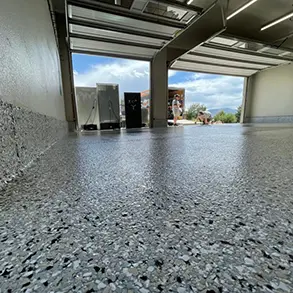
Polyurea basecoat with Wombat vinyl flakes and UV-stable polyaspartic topcoat — the benchmark system for Chicago garage floors.
View Project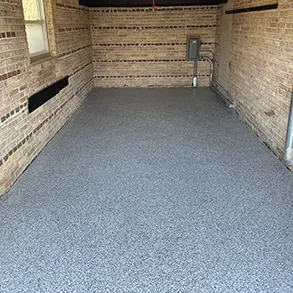 Deerfield, IL
Polyurea / Flake
Deerfield, IL
Polyurea / Flake
Polyurea basecoat with Gravel flakes and UV-stable polyaspartic topcoat — built for Deerfield's heavy winter salt exposure.
View Project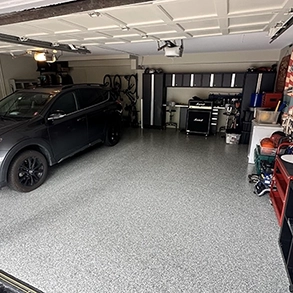 Lombard, IL
Epoxy / Polyaspartic
Lombard, IL
Epoxy / Polyaspartic
Epoxy base with Thyme color flakes and glossy polyaspartic finish — clean, bright result that transforms the entire garage feel.
View ProjectReal reviews from homeowners whose garage floors we've coated — posted directly on Google.
We recently had our laundry room floor done with epoxy, and I couldn't be happier with the results. From start to finish, the company was professional, punctual, and clearly experienced. They took the time to properly prepare the surface, which really shows in the final outcome. The finish is smooth, durable, and looks absolutely amazing.
Laundry Room · Epoxy CoatingReally happy with the job Concrete Shield Coatings did on my garage floor. The guys showed up on time, worked quickly, and made the whole process easy. Price was fair and the floor turned out even better than I expected — looks awesome! Definitely recommend them.
Garage Floor · Epoxy CoatingThese guys are honest and do a great job! I would recommend them to anyone. They really know what they are doing!
Floor RefinishingThree locations let us respond quickly to commercial bids across the entire Chicago metro — from the city to the far suburbs.
We also travel to select projects in southern Wisconsin and northwest Indiana — contact us to discuss your location.
Same five steps on every quartz job — surface prep, primer, quartz broadcast, optional second broadcast, chemical-resistant topcoat.
We inspect your concrete, look for cracks, moisture and previous coatings, and talk through how you use the garage. You get a clear written estimate and timeline before any work starts.
We diamond-grind the concrete to open the pores and remove weak or contaminated material. Proper grinding is the most important step — it's what lets the coating bond tightly and last for years in Chicago's climate.
Pits, cracks and spalls are repaired so the finished floor looks smooth and consistent instead of highlighting existing damage.
Based on the system you chose, we apply a primer or basecoat, broadcast decorative flakes if selected, scrape and vacuum, then finish with a durable polyaspartic topcoat.
We review the finished floor with you, explain cure times for Chicago temperatures, and share simple cleaning and maintenance tips so your coating keeps looking great.
The questions facility managers and commercial customers ask us most before specifying a quartz system.
Coloured quartz granules are spread into a wet epoxy or polyaspartic basecoat, then sealed with a clear chemical-resistant topcoat. The result is a thick, seamless, slip-resistant floor that's roughly 1/8" thick on a double-broadcast system.
It's the commercial-grade flooring system you see in commercial kitchens, healthcare facilities and manufacturing plants — built for environments where slip safety, sanitation and impact resistance are non-negotiable.
Most commercial quartz broadcast installs run $8–12 per square foot installed, all-in. Single broadcast systems start around $8/sqft for moderate-traffic spaces; double broadcast systems for commercial kitchens, healthcare and high-impact floors run $10–12/sqft.
Chemical-resistant topcoat upgrades add roughly $1–2/sqft. Volume pricing is available on jobs above ~5,000 sqft.
A typical double-broadcast quartz install takes 3–5 working days. Single broadcast systems install in 2–3 days.
With polyaspartic-based systems we can compress the timeline further — useful when downtime is expensive (kitchens, healthcare). We coordinate the schedule around your operation: nights, weekends and phased work are all options.
Yes. Properly installed quartz broadcast flooring meets the requirements for USDA and FDA-regulated food processing facilities. The seamless, non-porous surface is easy to sanitise and free of grout lines or seams where bacteria can hide.
We can provide the specific spec sheet on request for your auditor or compliance officer.
Realistic commercial lifespan is 15–25+ years with proper installation and routine maintenance. Heavy industrial floors (manufacturing, breweries) often hit 15–20 years; lower-traffic spaces (vet clinics, locker rooms) routinely make it past 20.
The single biggest factor is the diamond-ground prep — same as every other coating system. We back every install with a written project warranty.
Yes, with a UV-stable polyaspartic or urethane topcoat. Quartz broadcast works well for exterior walkways, patios, breezeways and pool decks because the texture provides reliable slip resistance when wet.
For pool areas specifically, see our pool deck coatings page.
Single broadcast is one layer of quartz into one epoxy basecoat, sealed with a topcoat. Total build is around 60–80 mils — fine for moderate-traffic spaces with tighter budgets.
Double broadcast adds a grout coat plus a second quartz layer, bringing total thickness to ~125+ mils. Double is the spec we recommend for any commercial kitchen, healthcare facility, manufacturing plant or high-impact space — it doubles the impact resistance and lifespan.
For a residential garage, flake epoxy or polyurea is almost always the better fit — cheaper, plenty of grip from the flake texture, and designed for vehicle/foot traffic.
Quartz broadcast is built for commercial environments that need built-in slip resistance, chemical exposure tolerance and 1/8"+ thickness to absorb impact. Quartz is overkill in a typical garage and the cost reflects that. See the side-by-side comparison above.
Yes — chemical resistance is one of the main reasons commercial facilities pick quartz. Cleaners, degreasers, oils, mild acids and bases are all handled.
For aggressive industrial chemistry (concentrated acids, solvents, fuels) we spec a specific chemical-resistant urethane or novolac topcoat. Tell us what chemicals the floor will see and we'll match the topcoat to the exposure.
Daily: sweep or auto-scrub with a neutral cleaner. Weekly: hose down or auto-scrub for a deeper clean.
The textured surface holds onto dirt slightly more than a smooth coating, so commercial facilities typically use auto-scrubbers — but the trade-off is the slip resistance that smooth floors don't have. Avoid acidic cleaners (vinegar, citrus, descalers) on standard polyaspartic topcoats; on chemical-resistant topcoats they're fine.
© Concrete Shield Coatings Inc. All rights reserved. | Terms & Conditions | Privacy Policy