What we did
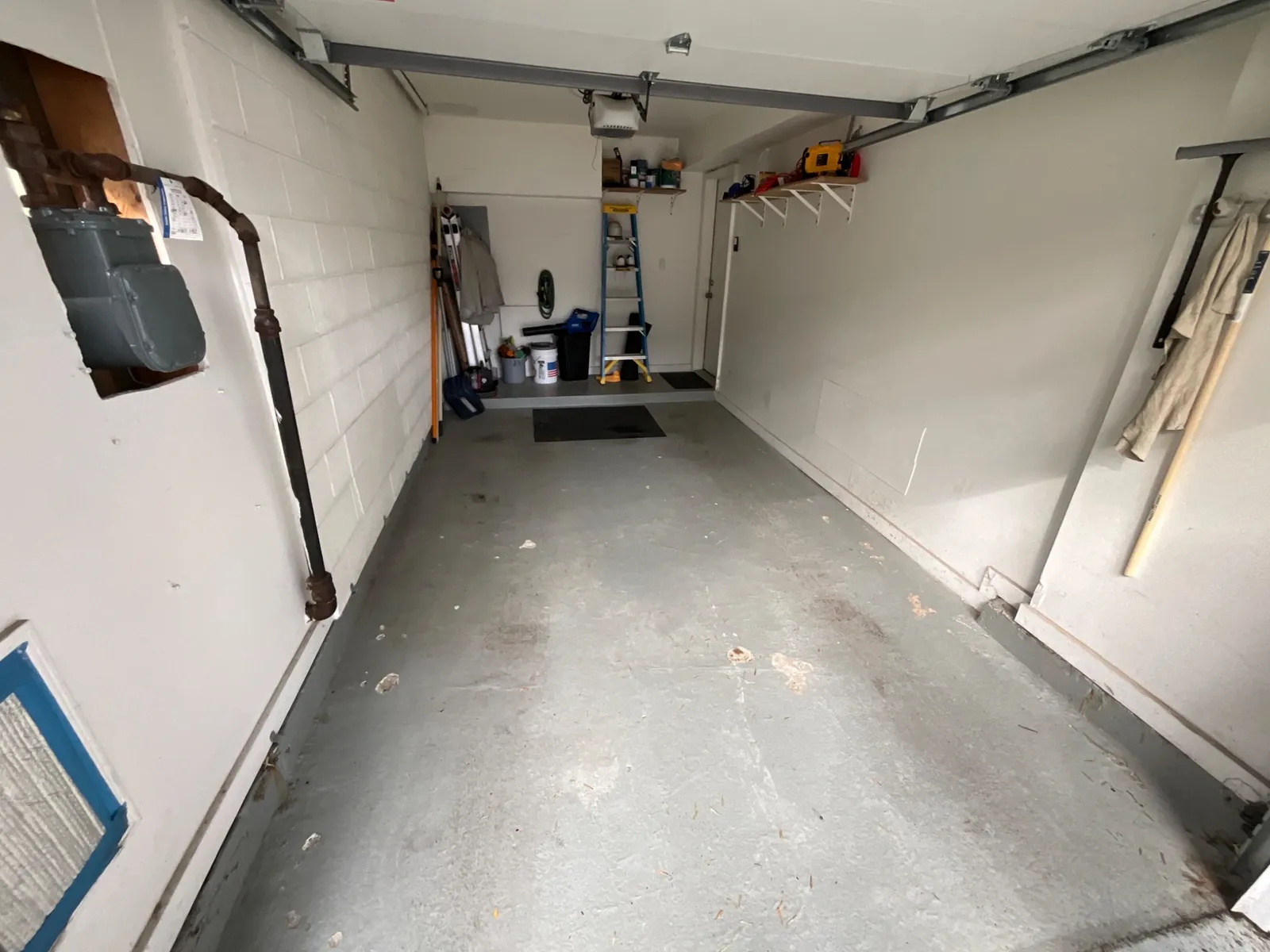
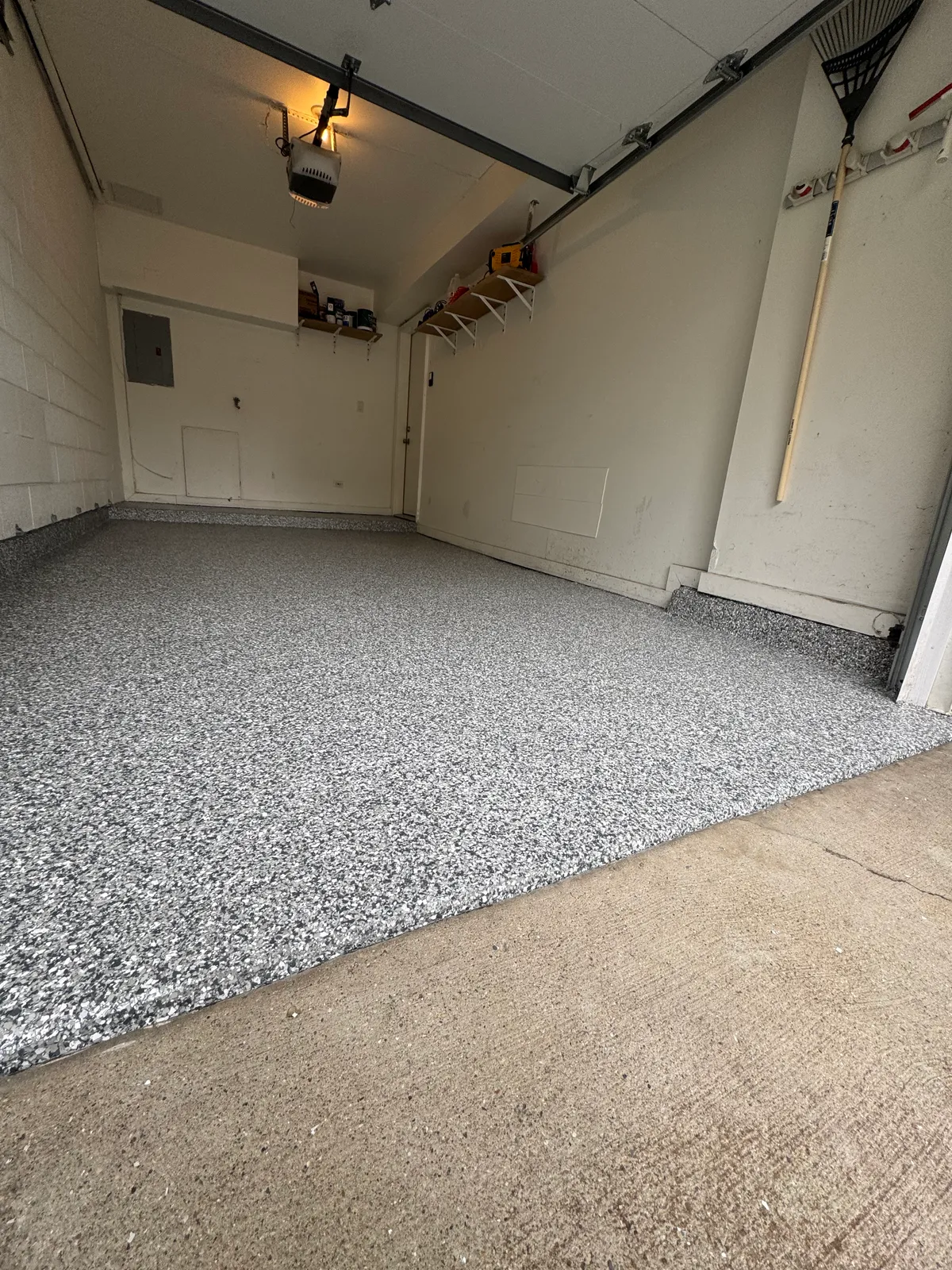
This was a one-car garage, about 250 square feet once we counted the outside edge, and the floor already had a coating on it. That shaped the first part of the day. A new floor is only as strong as what it's bonded to, so laying fresh material over the old coat would have tied the new system to whatever grip the old one still had. Our plan was to get back down to clean, bare concrete before anything new went on.
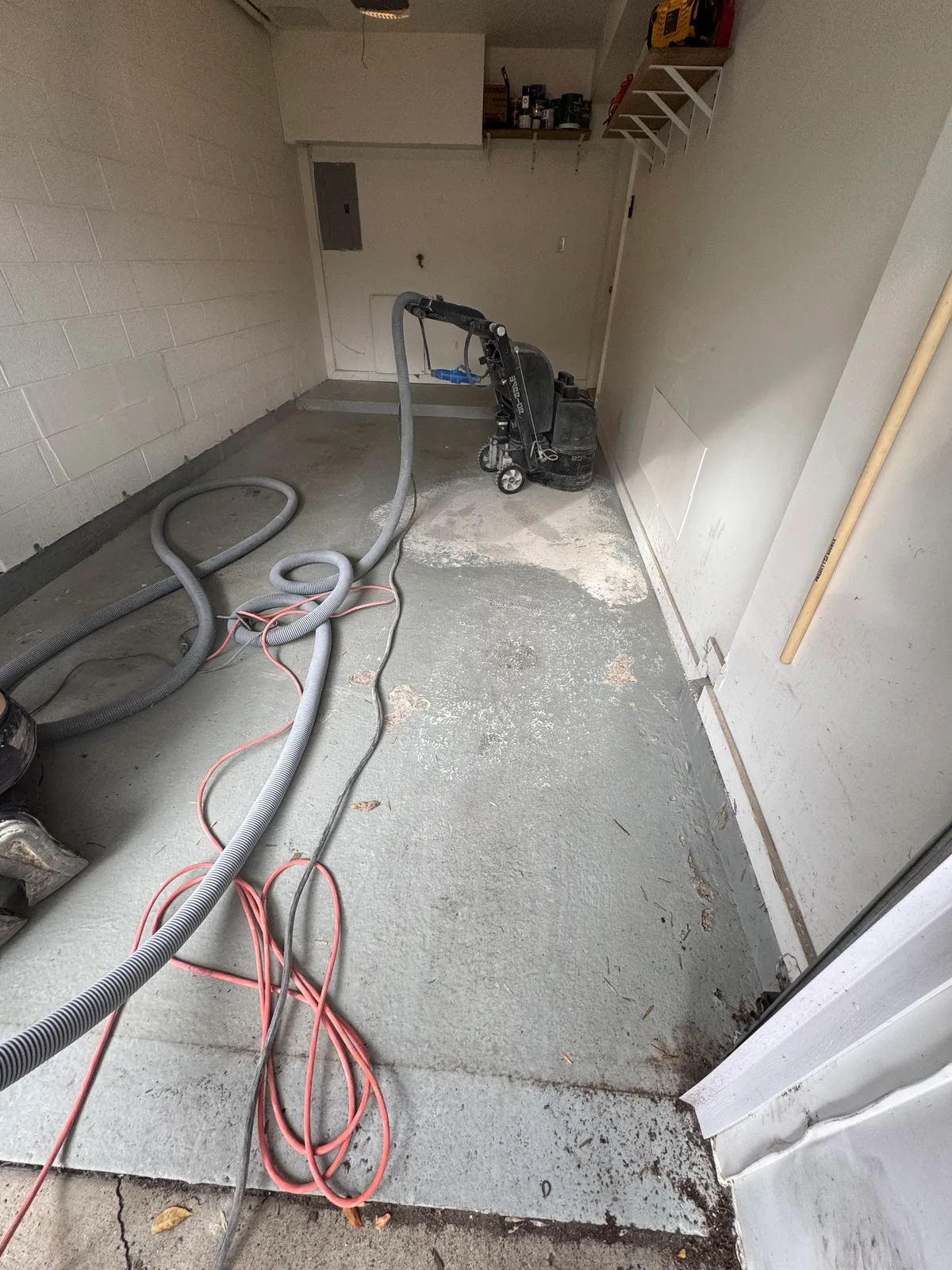
Prep started with diamond grinding. We ground away the existing coat along with the surface sheen and any contaminants, which also leaves the concrete with a rough profile, a bit like fine sandpaper, for the base coat to grab onto. Acid etching can't cut through an old coating and doesn't give that even texture, which is why we grind. We also mechanically profiled the vertical concrete at the edges of the floor so it would take the coating the same way the slab does.
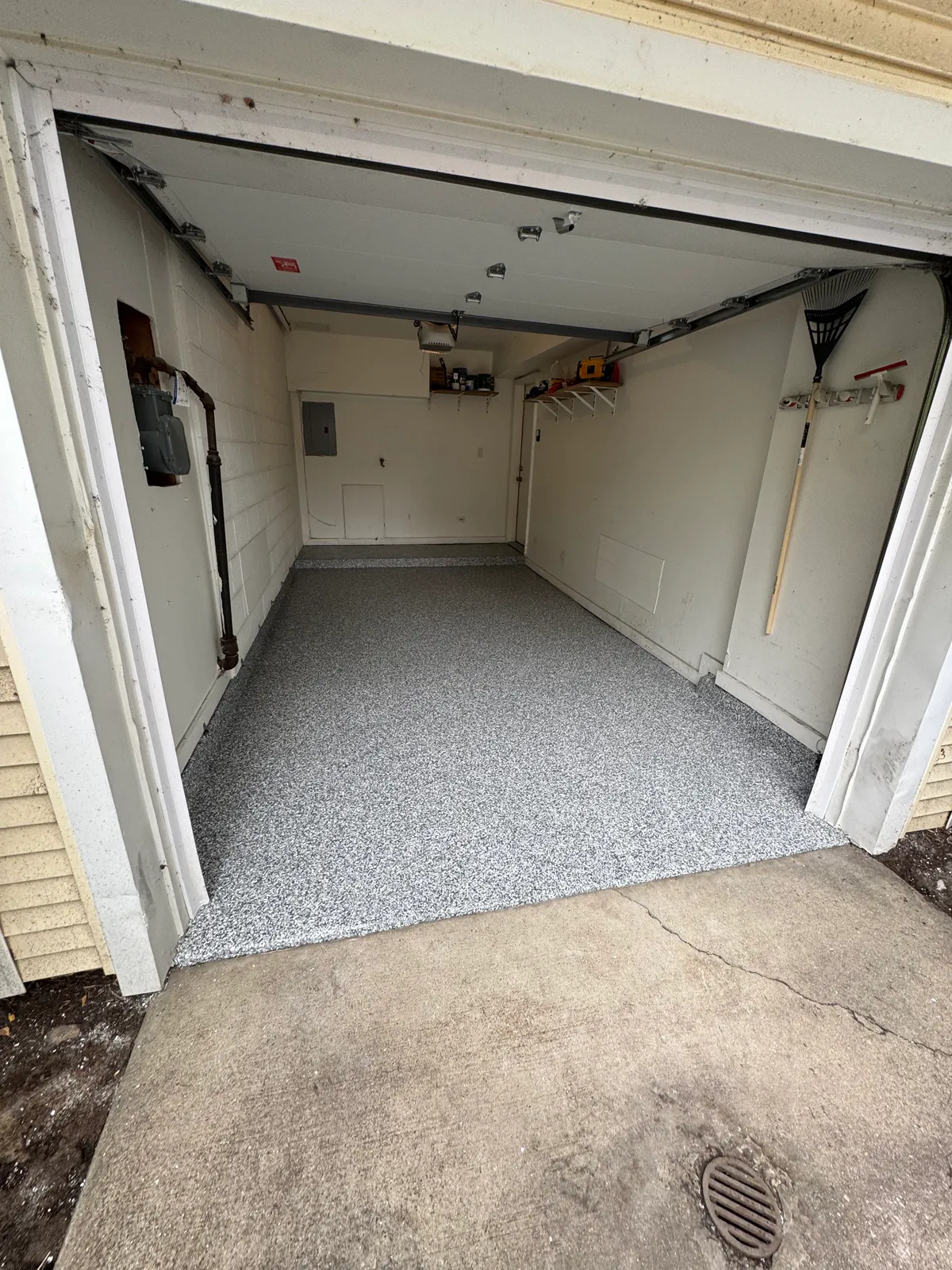
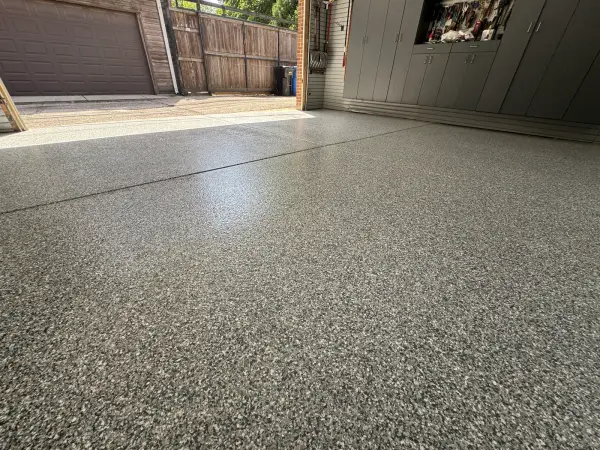
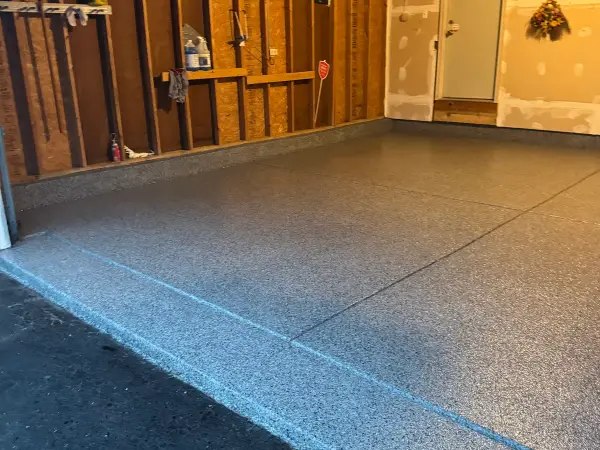
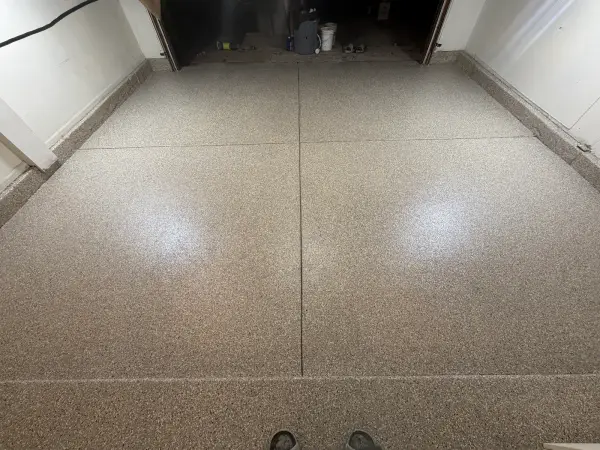
Then the coating itself went down, a polyurea garage floor system. The polyurea base coat came first, and we broadcast the Gravel flake blend into it until the floor wouldn't hold any more, which installers call broadcasting to rejection. We carried the same system up 30 linear feet of vertical concrete, so the floor and its edges form one continuous seal instead of a seam where water and dirt can get in. After scraping and vacuuming the loose flake, we applied the clear polyaspartic topcoat.
The whole install took one day. The floor was walkable after about 12 hours and ready for full use, car included, after about 48 hours. If you've got a smaller garage with a tired old coating on it, this job shows how it usually goes: the old layer comes off, the new system goes on in a day, and you're parking on it two days later.