What we did
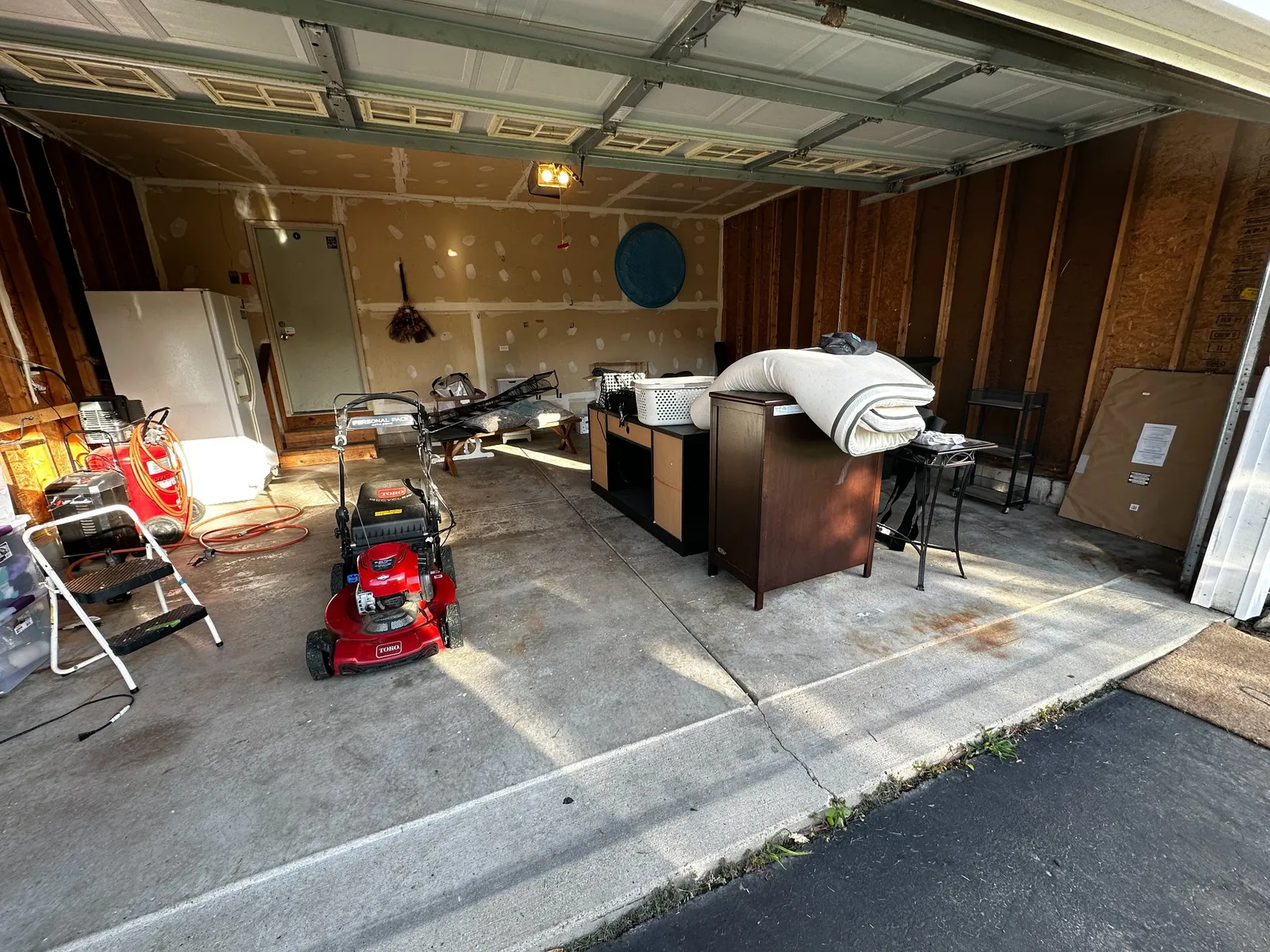
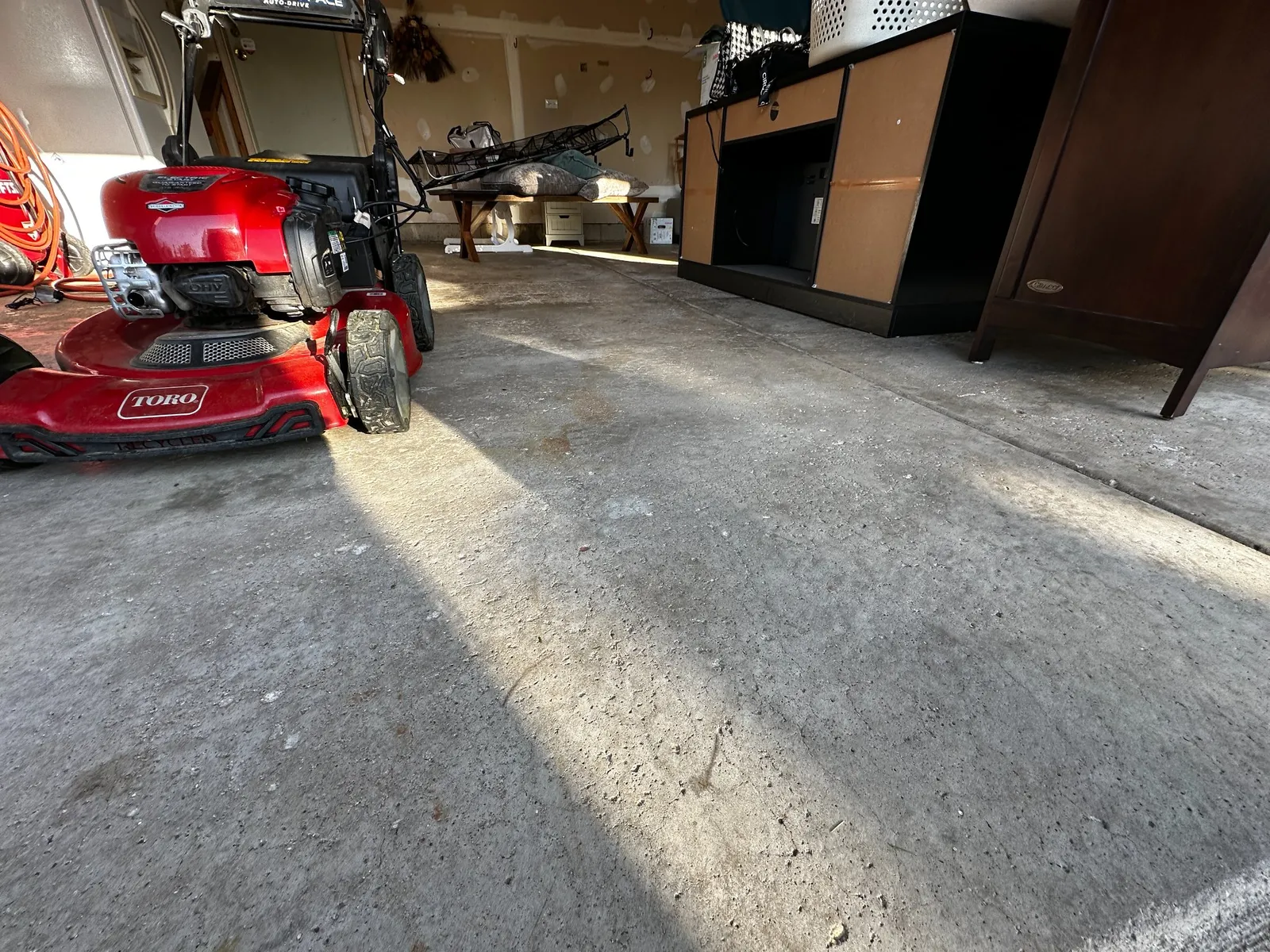
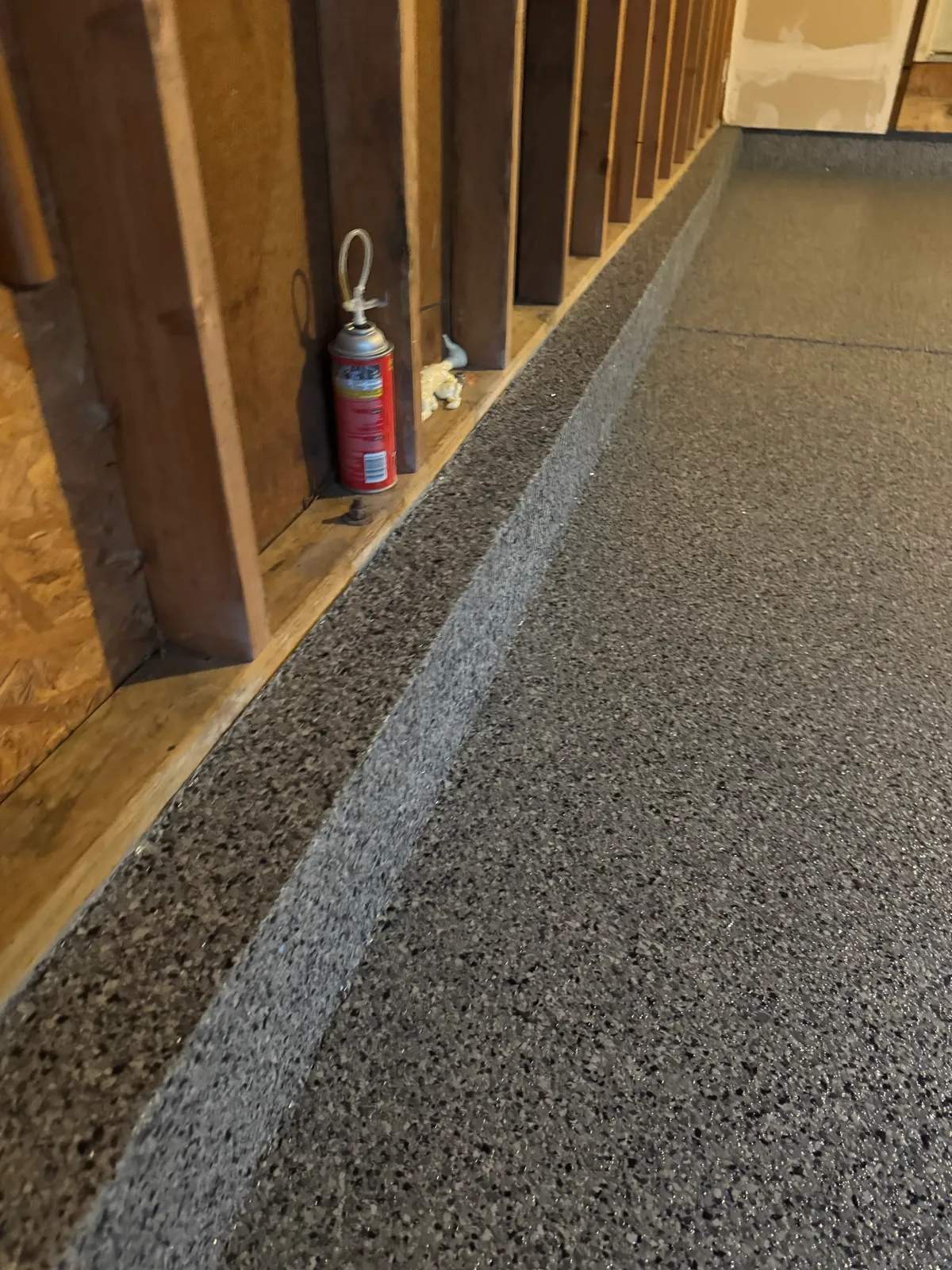
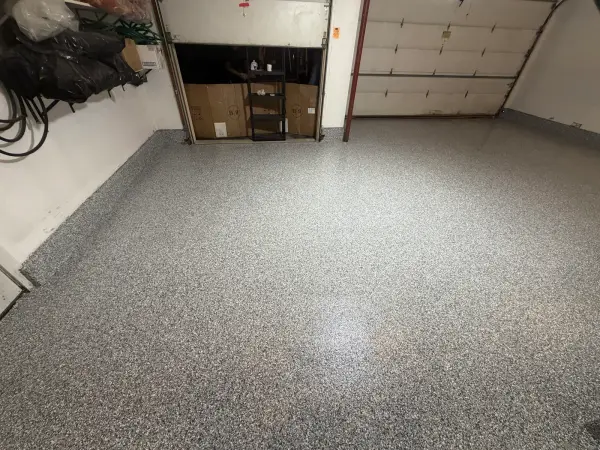
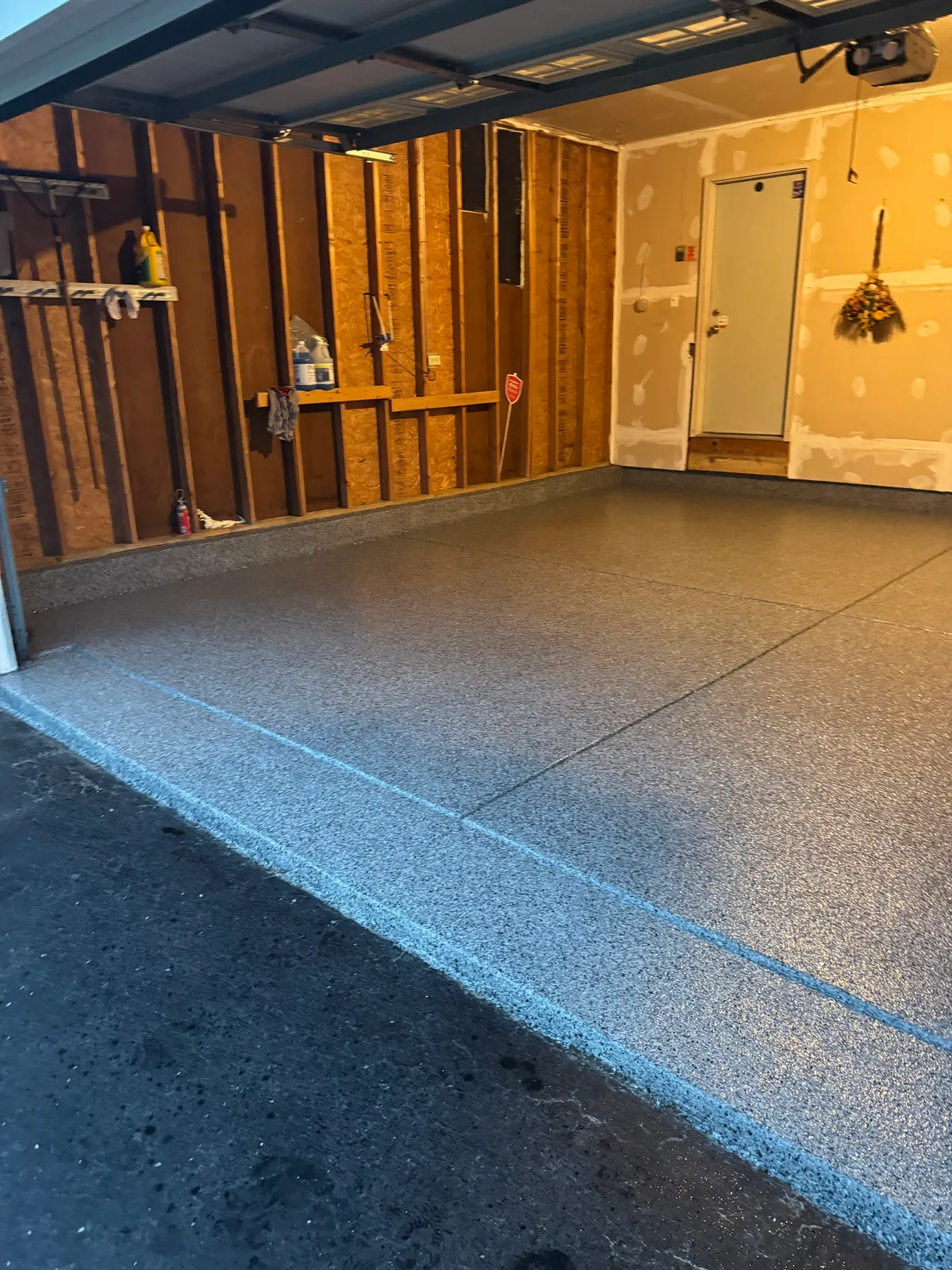
This was a 2-car garage on new concrete, and that made our starting point simple. There were no cracks, no old coating to strip, and nothing patched over the years. We measured 443 square feet of floor, including the outside edge, plus 68 linear feet of vertical concrete where the slab meets the walls. With a clean slab like this, the job came down to two things: getting the surface ready to grip and putting the full system down in a single day.
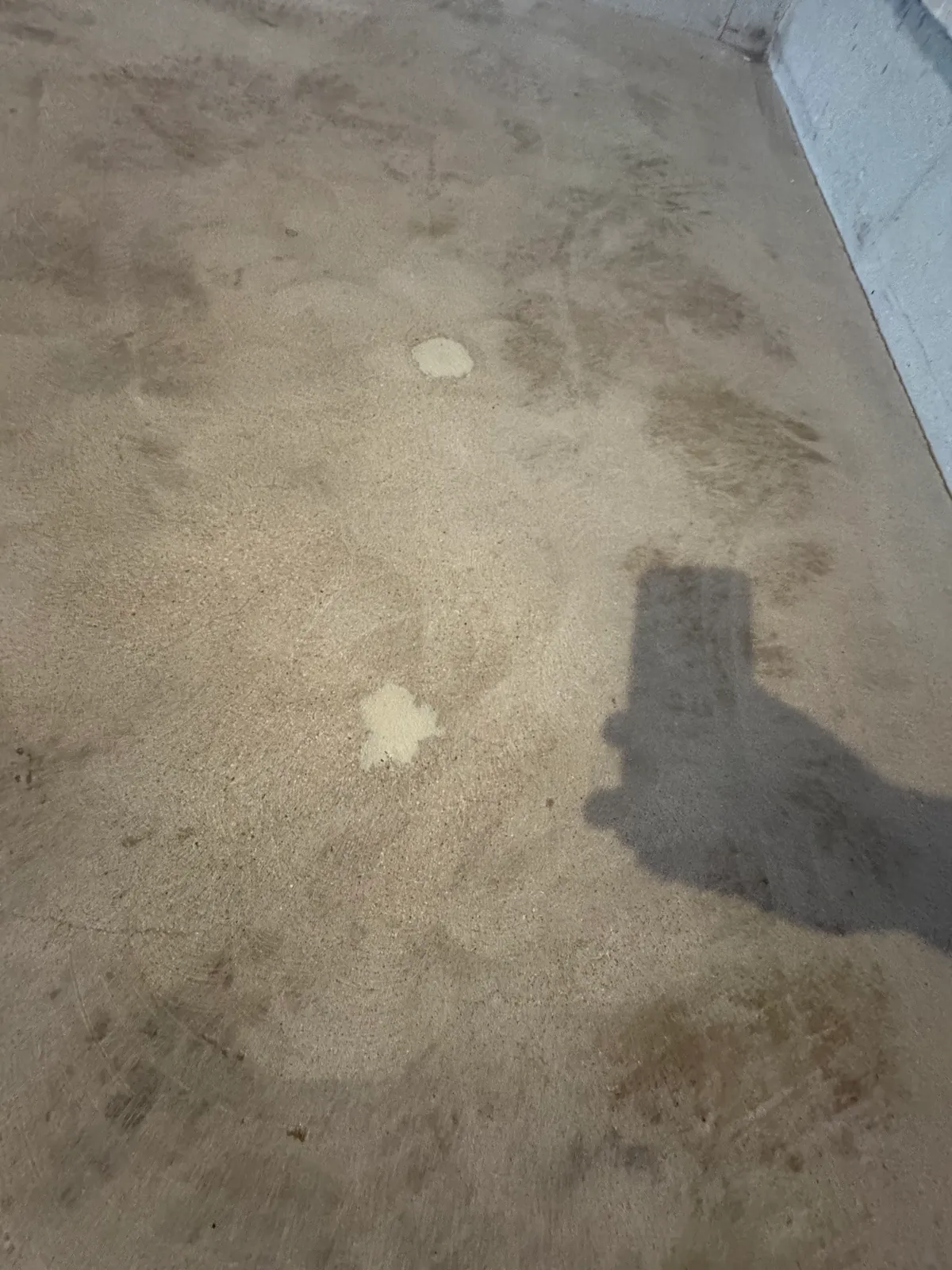
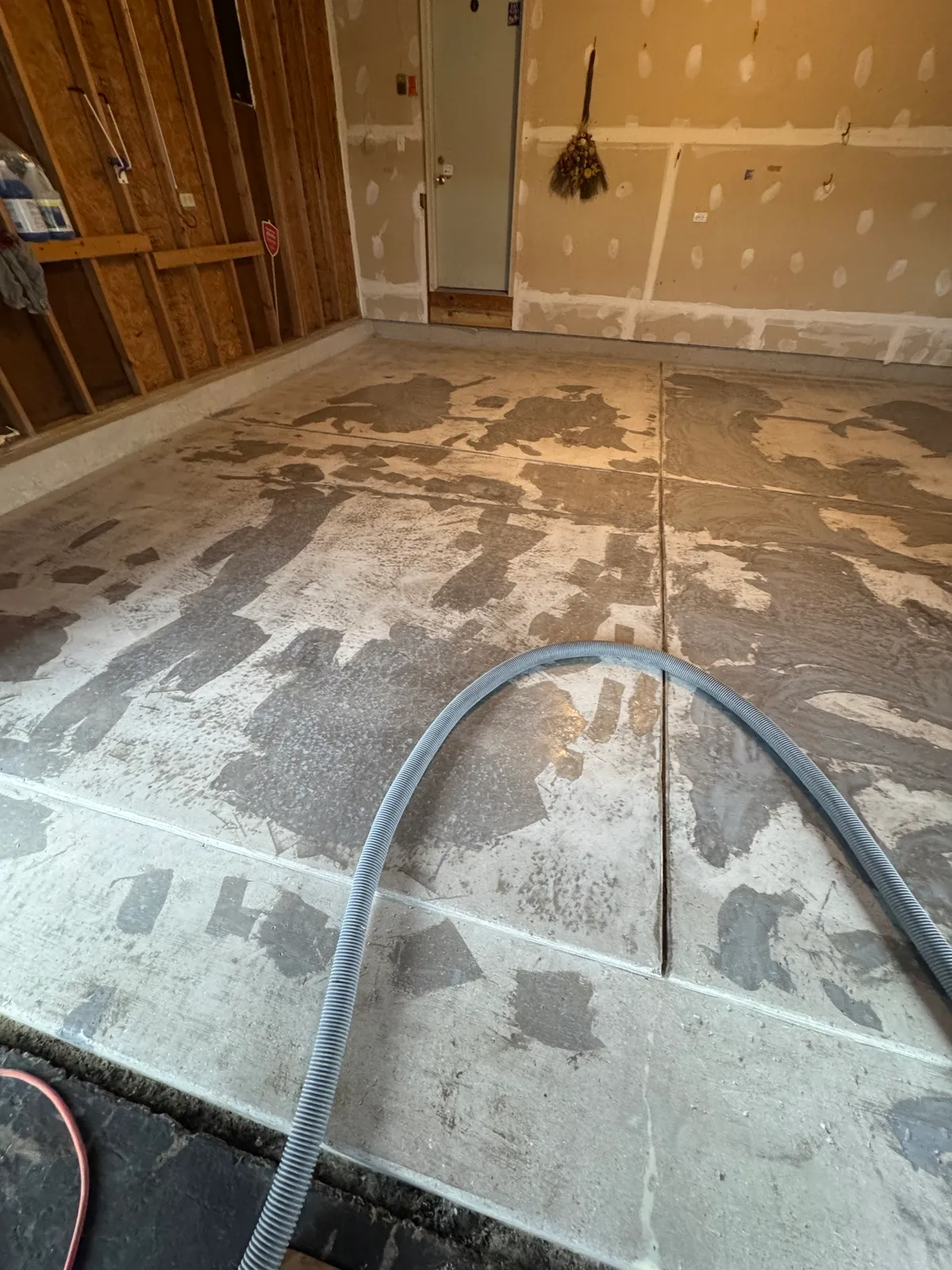
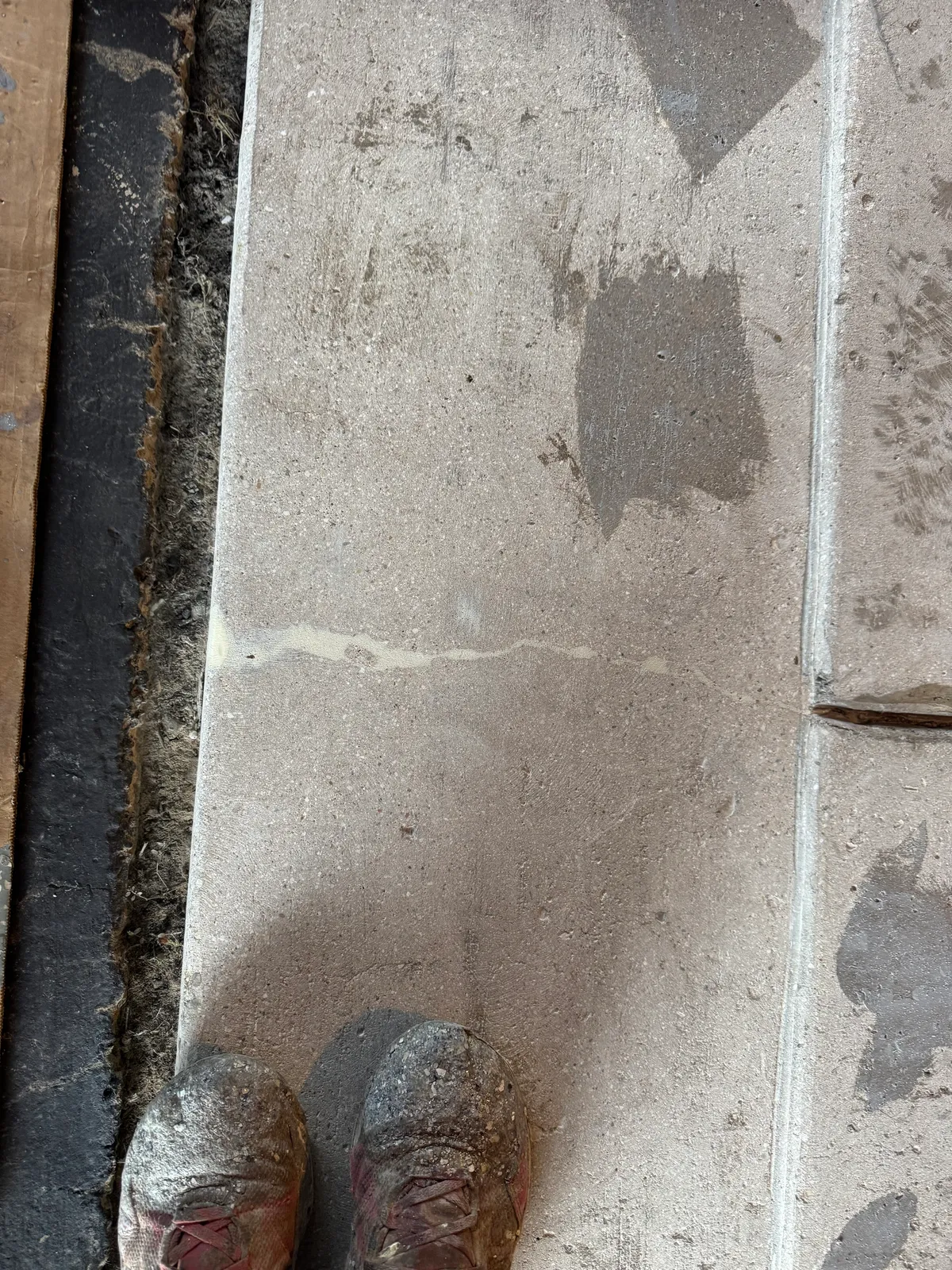
New concrete still needs prep. Fresh slabs typically have a smooth, slick finish on top, and a coating can't bite into that well. We took off the surface sheen and any contaminants, then went over the floor with diamond grinding, which opens up the concrete and leaves a light texture called a profile. We grind instead of acid-etching because grinding gives an even profile across the whole slab and doesn't leave acid residue behind. Our post on diamond grinding vs. acid etching covers the difference in more detail.
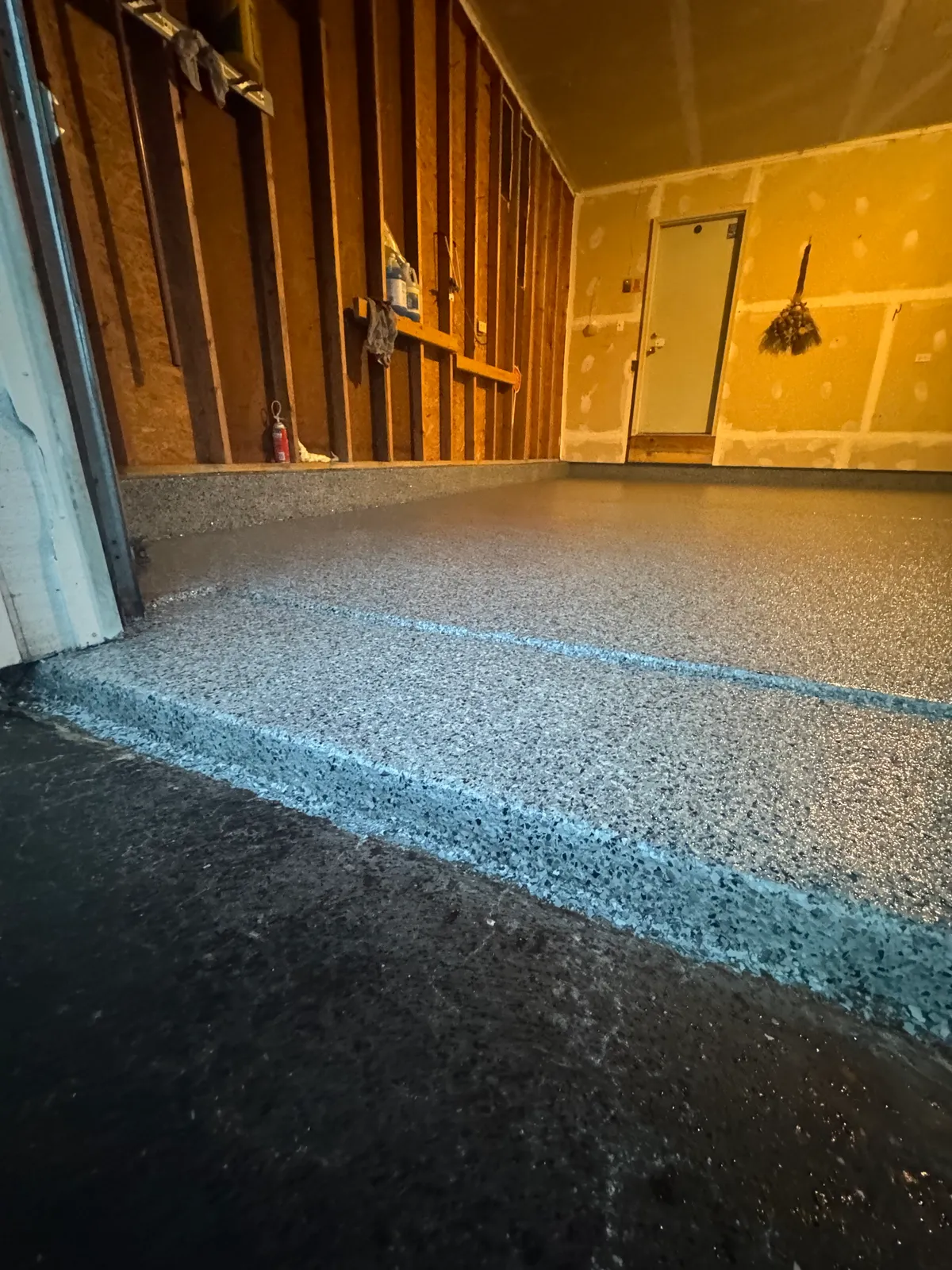
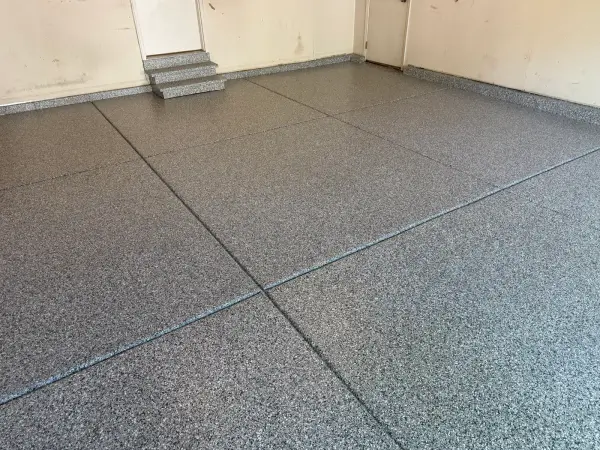
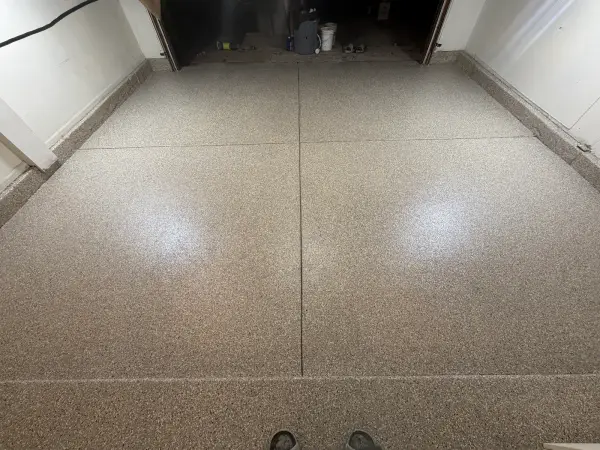
Next came the polyurea base coat, and we broadcast the Nightfall flake into it to rejection, which means we kept adding chips until the base couldn't take any more. Once the loose flake was scraped and vacuumed off, the clear polyaspartic topcoat went on, with aluminum oxide grit broadcast into it across all 443 square feet for better traction. We ran the same system up the 68 linear feet of vertical edges, so the floor and walls meet in one continuous seal. It's the same polyurea garage coating system we use on most garages.
The whole install took 1 day. The floor was walkable after about 12 hours and ready for full use after about 48 hours. The homeowner ended up with a Nightfall flake floor that has grip built into the topcoat and coated edges sealed right at the wall line. If your garage slab is new and in good shape like this one, the effort goes into prep and the coating rather than repairs, and the work can wrap up in a day.