What we did
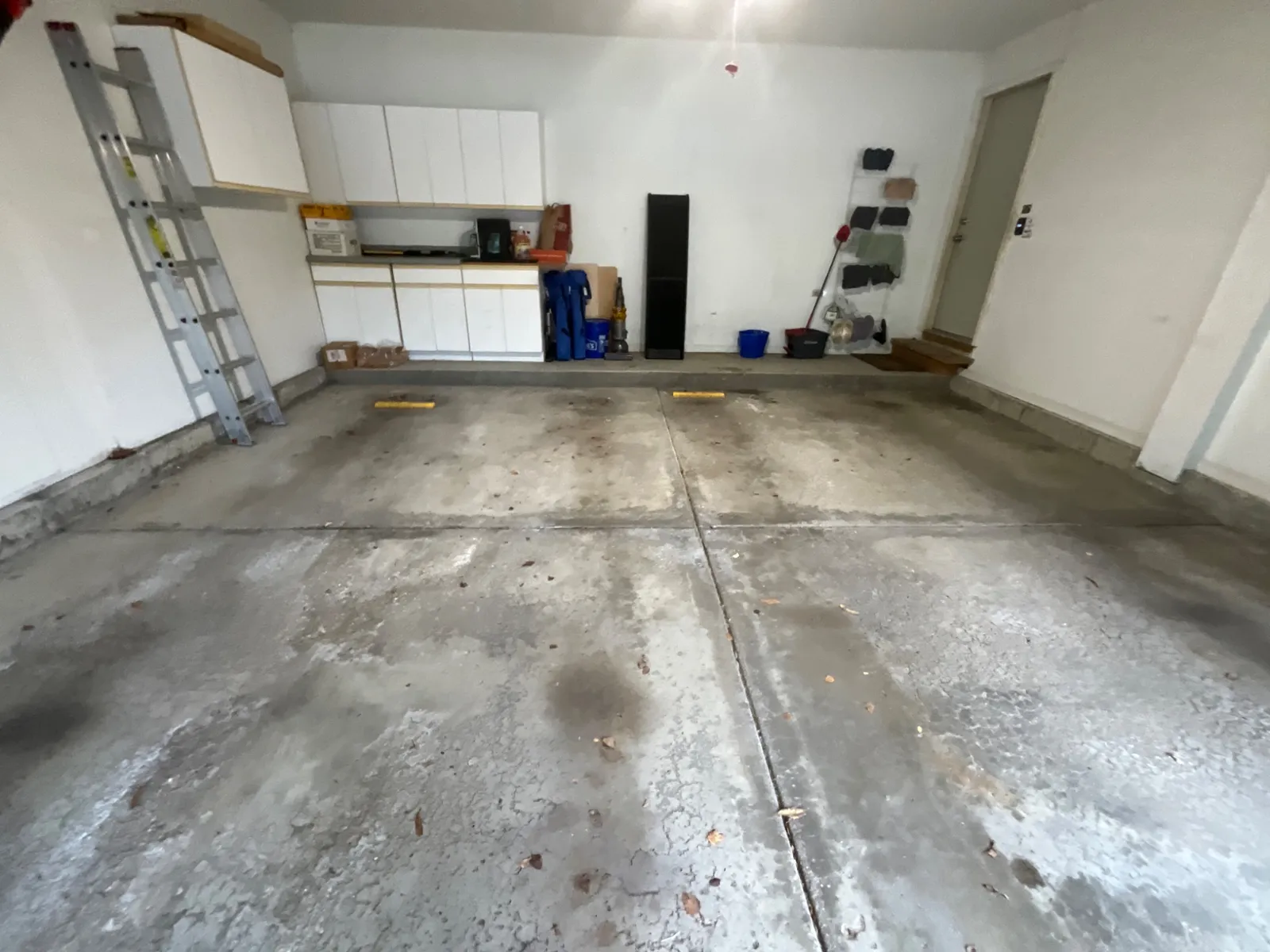
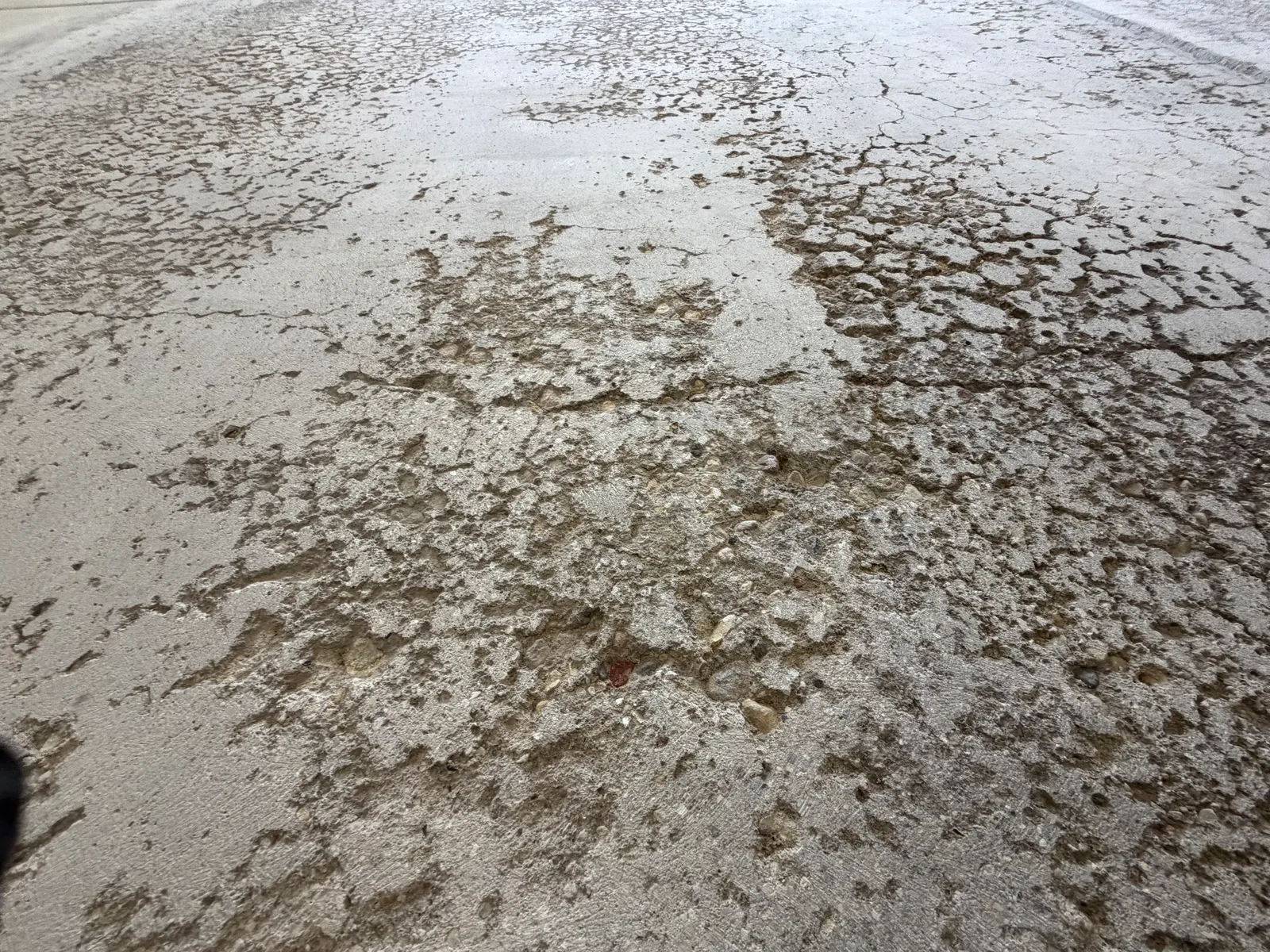
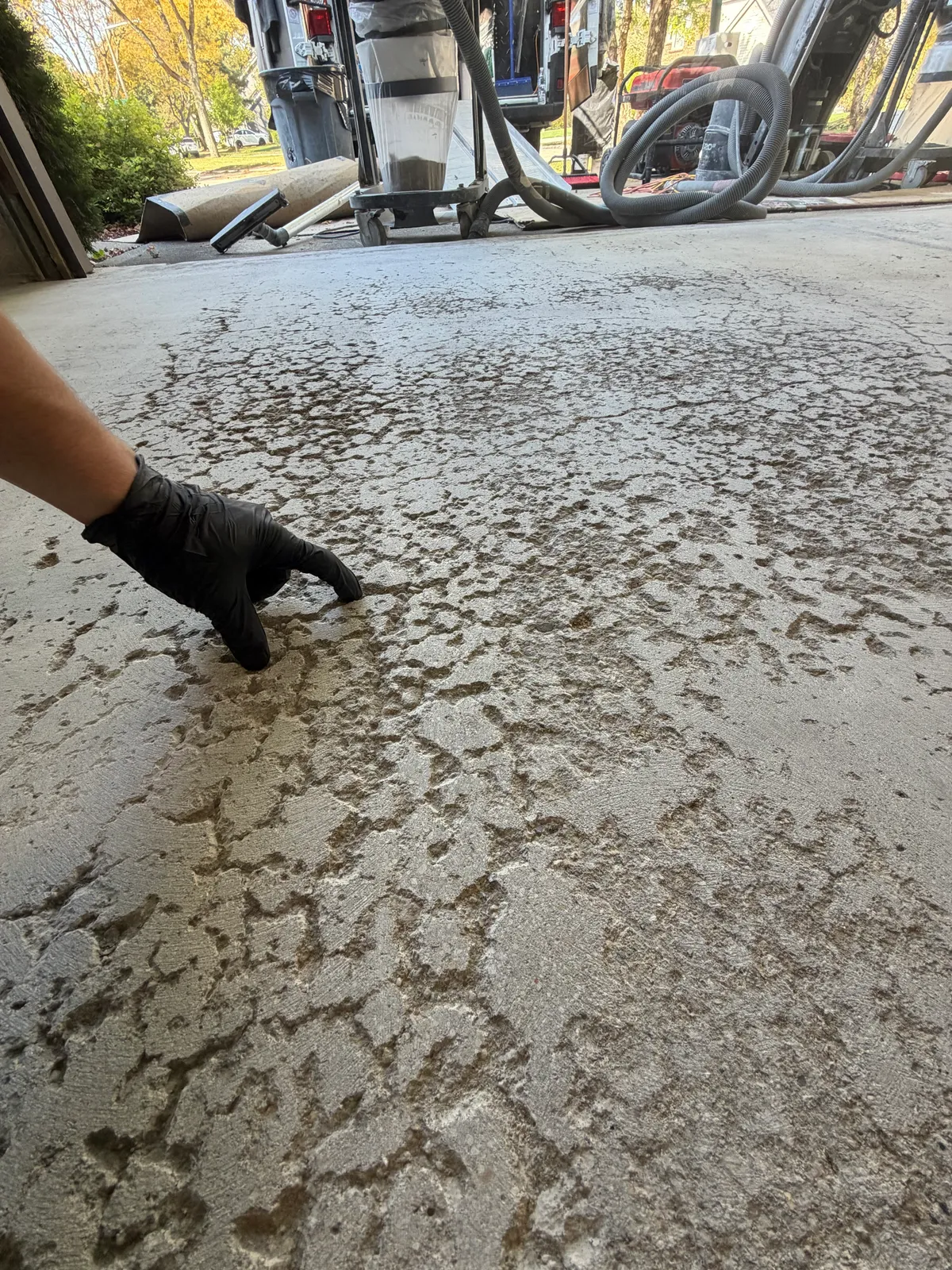
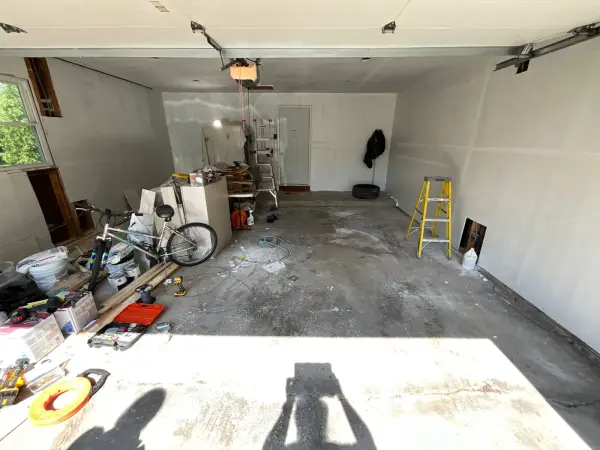
This was a 2-car garage on older concrete that had never been coated. We found a few cracks and some etching, which is where the top layer of the slab has worn or pitted away over the years. With no old coating on it, there was nothing to strip off. The job came down to opening up that tired surface, fixing the cracks and building a new floor across all 400 square feet, right out to the outside edge.
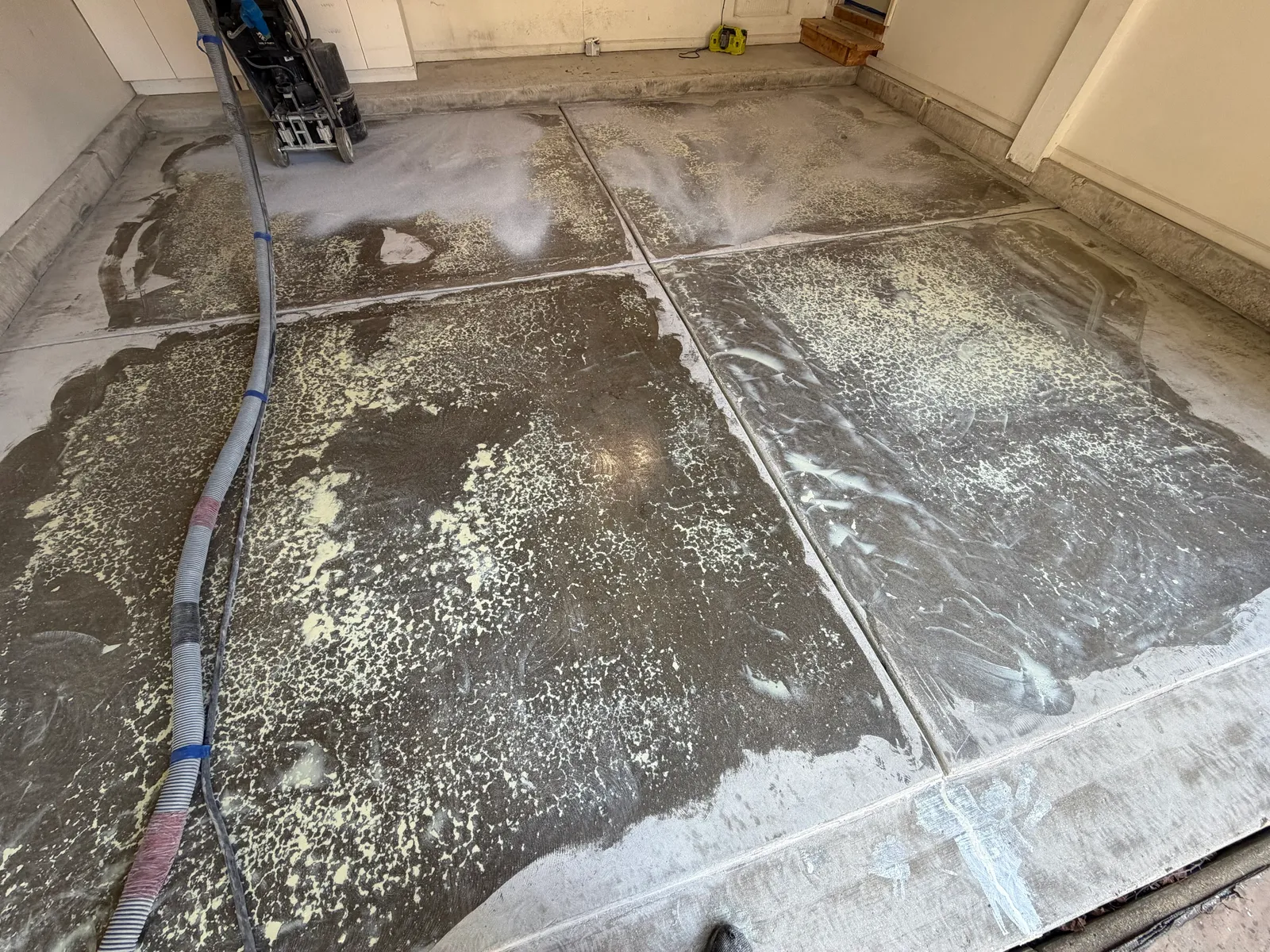
Prep started with diamond grinding the whole slab. Grinding takes off the surface sheen and contaminants and leaves a rough, even profile the base coat can really bite into, which an acid wash doesn't do reliably on worn concrete. Then we cleaned the loose concrete out of the cracks and filled them. That step matters because a coating laid over an open crack tends to show it and can let go there later. We also profiled the 40 linear feet of vertical concrete along the edges so the coating would grab there too.
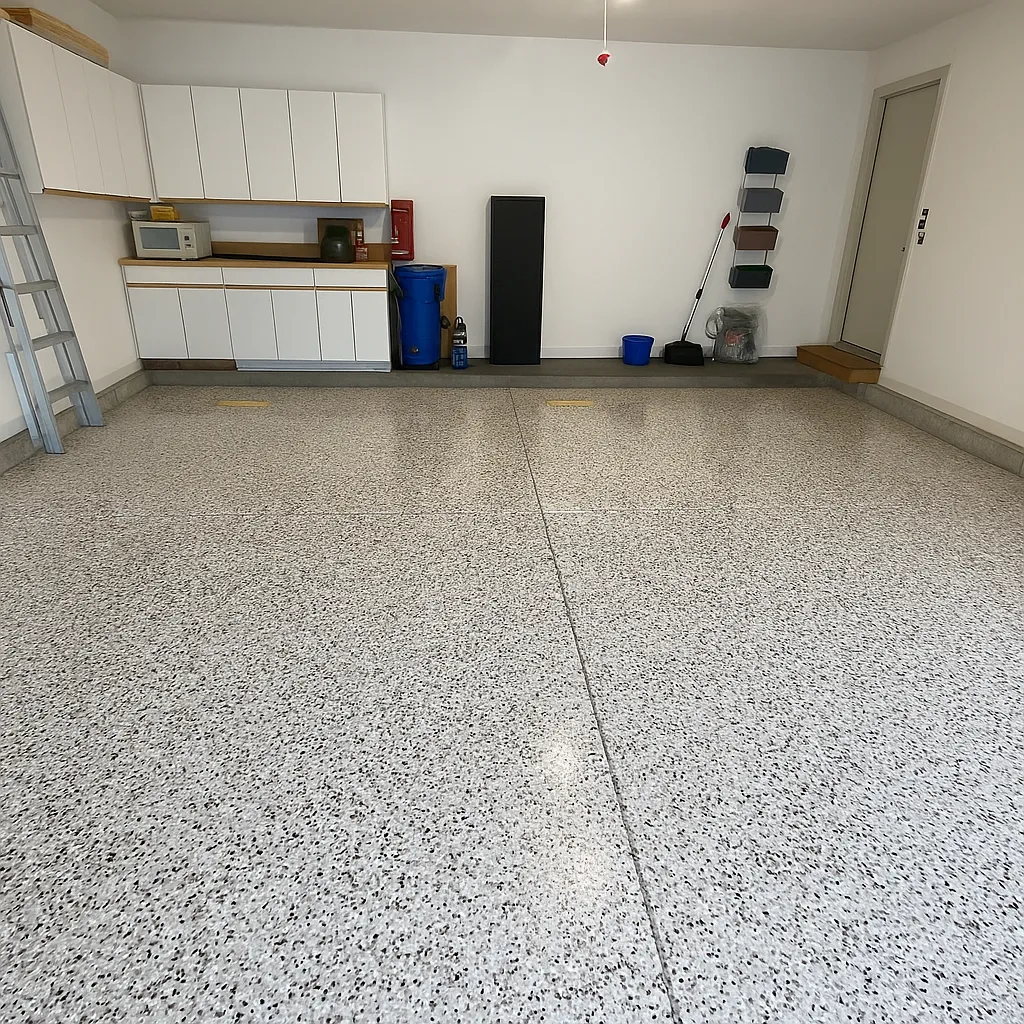
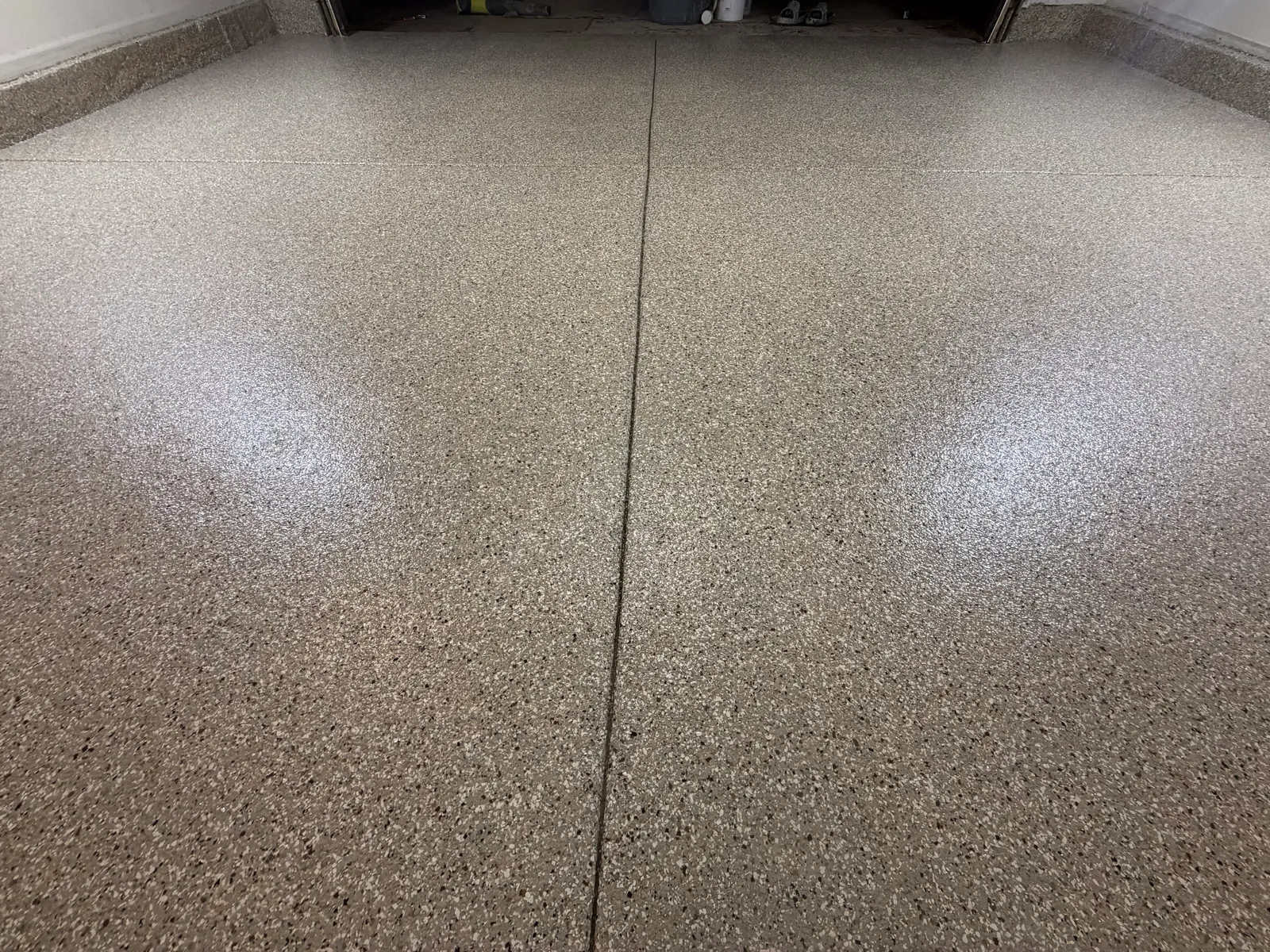
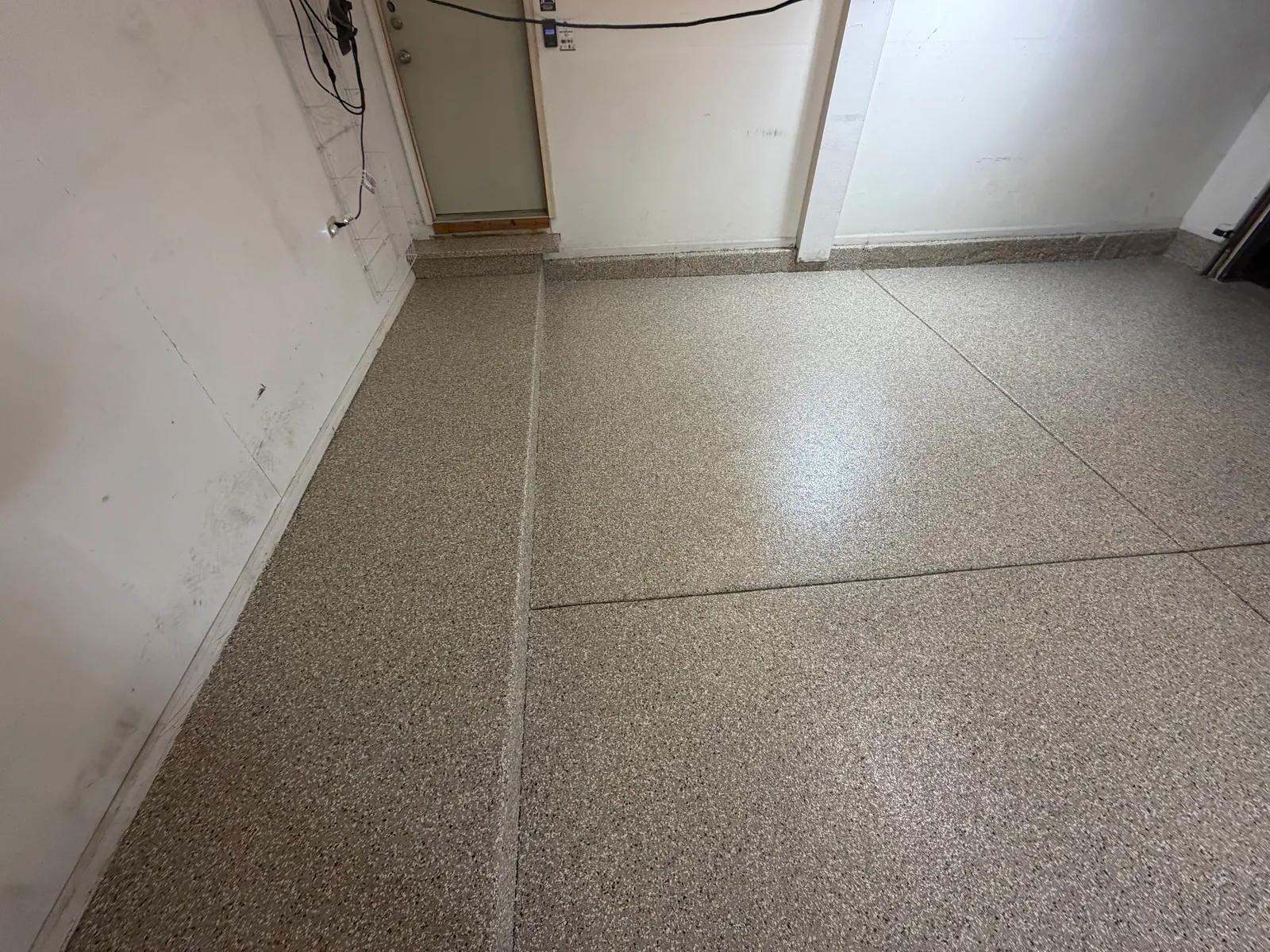
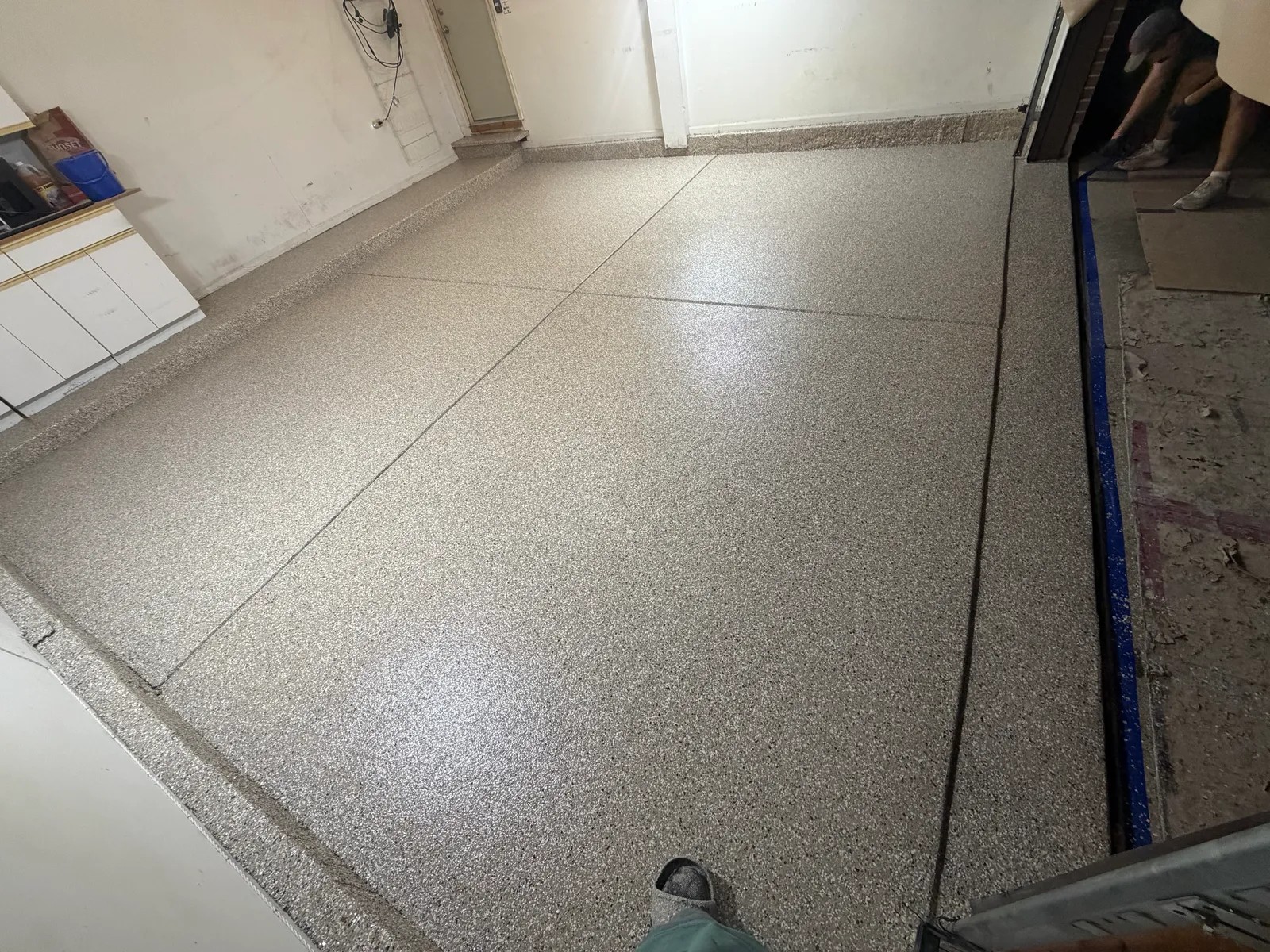
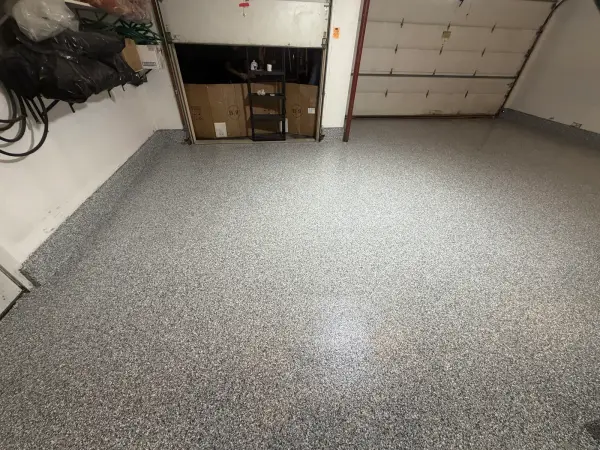
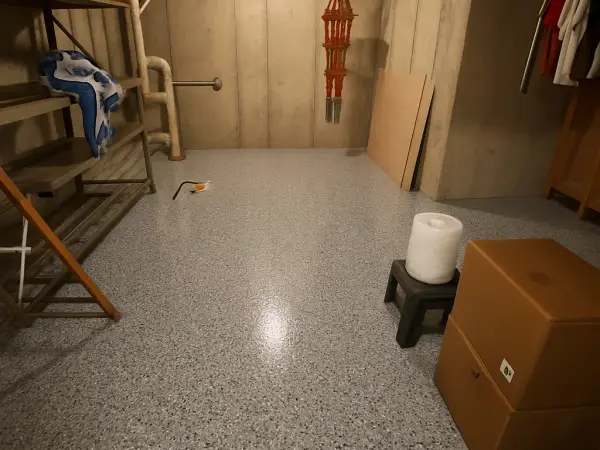
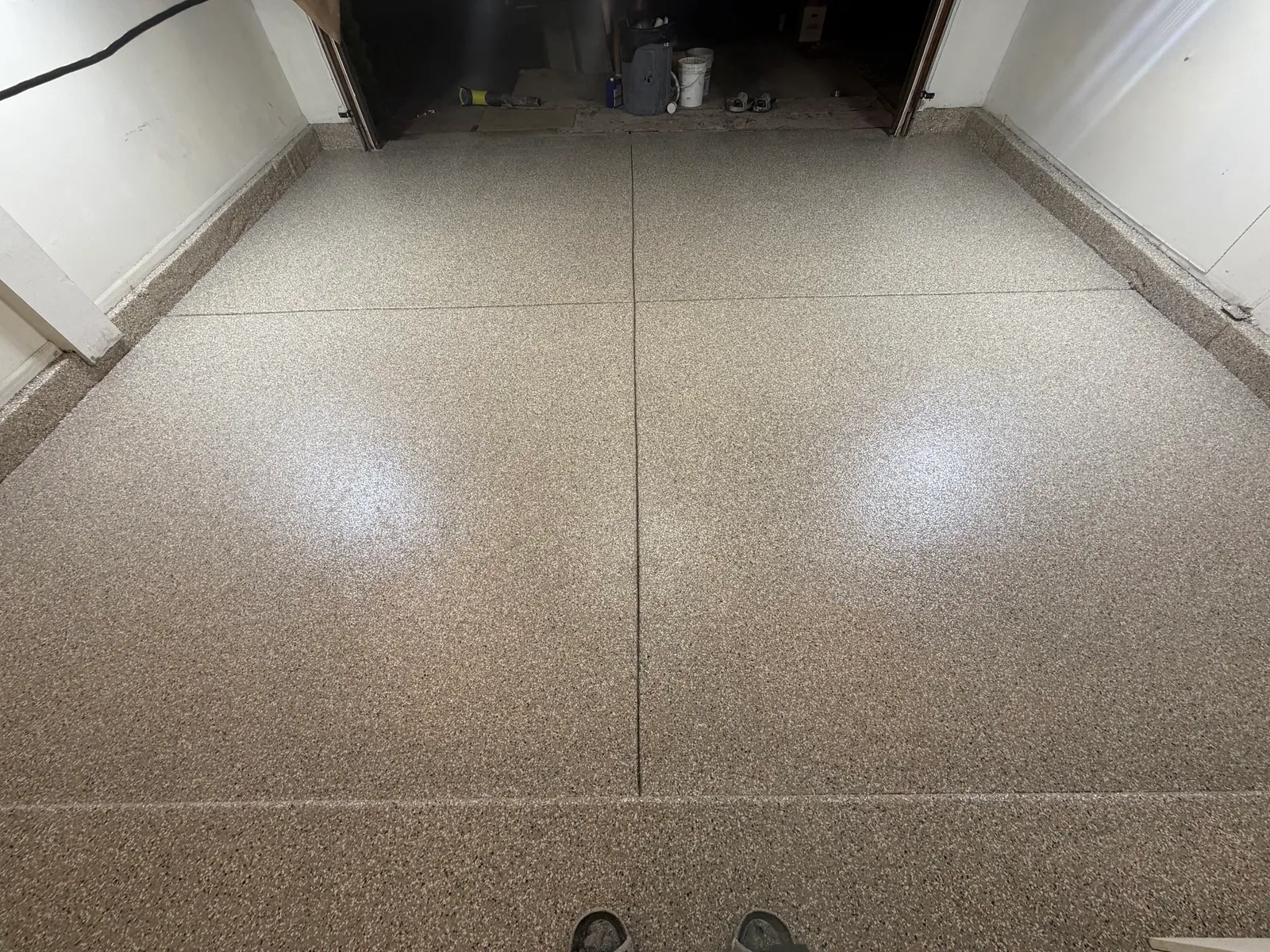
With the slab ready, our polyurea garage coating system went down. First came the polyurea base coat, then Creekbed flake broadcast to rejection, meaning we kept throwing flake until the wet base couldn't hold any more. Once it set, we scraped and vacuumed off the loose flake. The same system ran up those 40 feet of vertical edges and over the step, so floor and walls meet in one continuous seal. The clear polyaspartic topcoat went on last, with aluminum oxide grit broadcast into it for better traction underfoot.
The whole install took one day. The floor was walkable after about 12 hours and ready for full use, cars included, after about 48 hours. The homeowner ended up with a Creekbed flake floor, sealed edges and a little extra grip, all on concrete that had some years and wear on it. If your garage slab has a few cracks and a worn surface but has never been coated, this is a good picture of what that job looks like from start to finish.