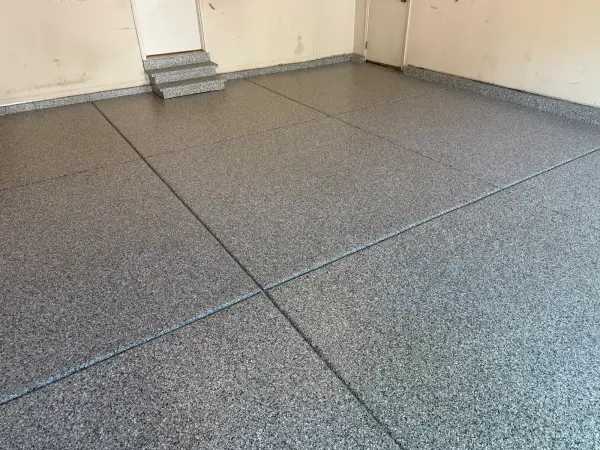
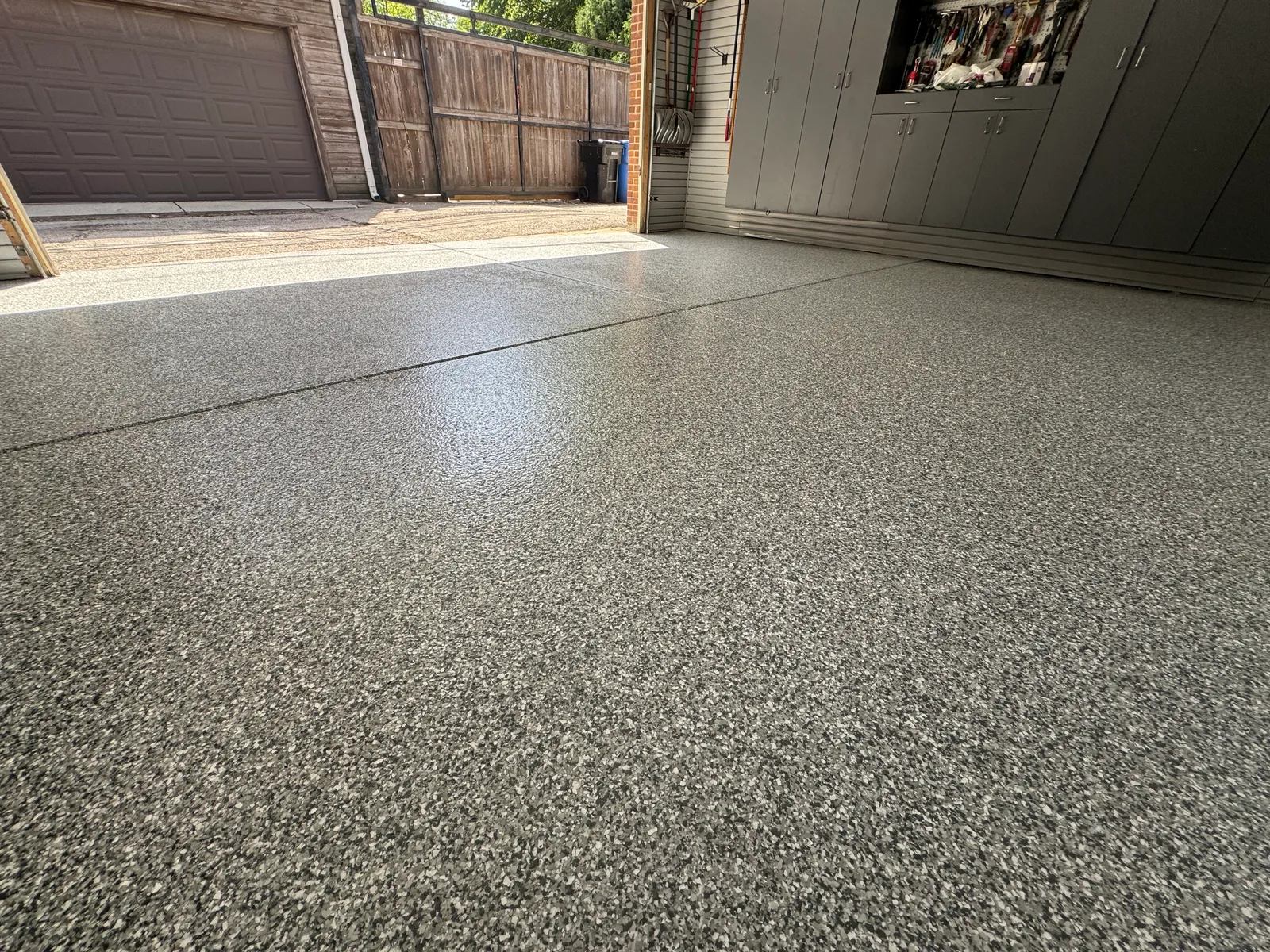
What we did
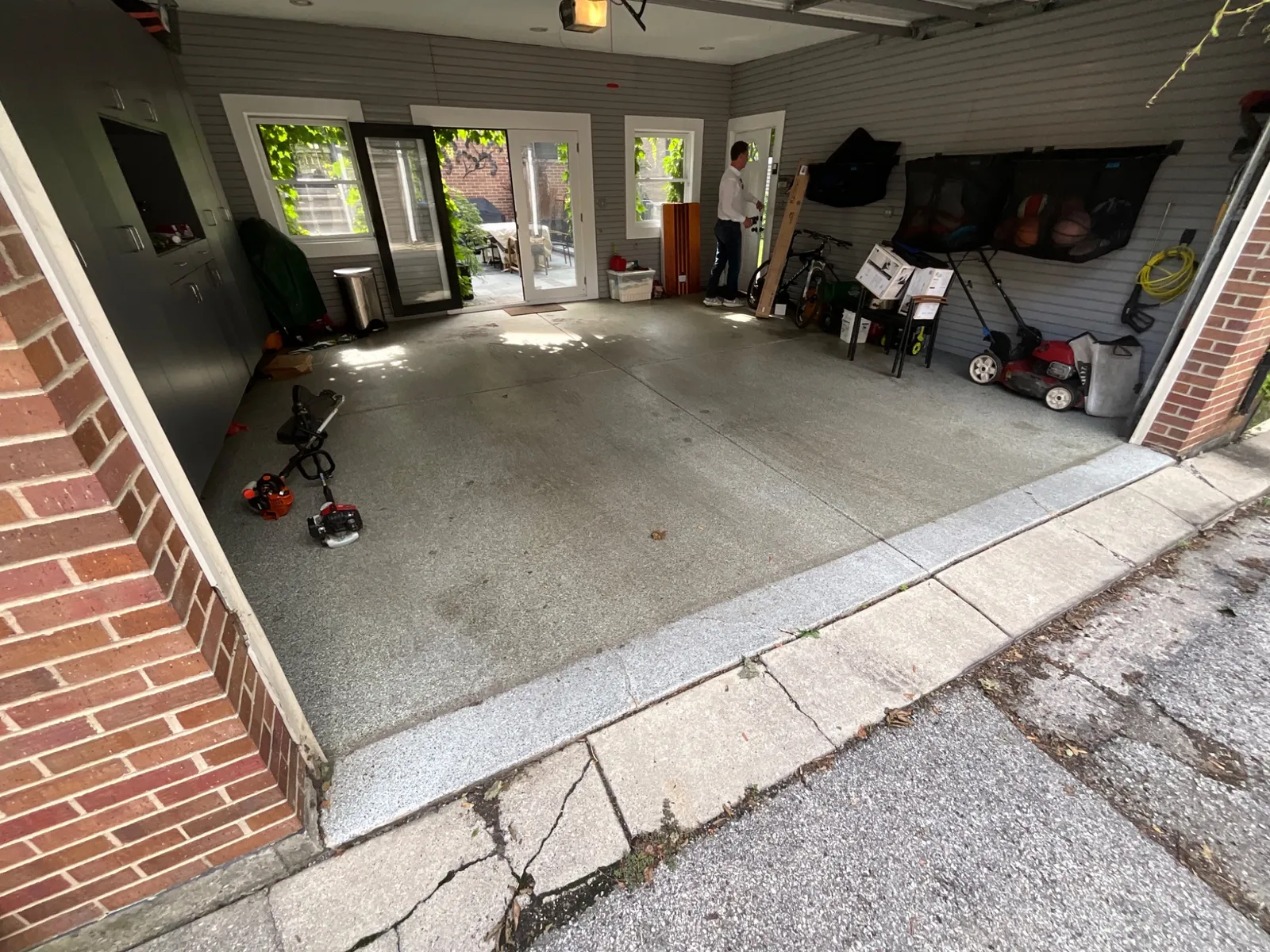
When our crew pulled up, we found a standard two-car garage with a coating already on the concrete. That changes how you start. A new system can only hold as well as the surface under it, and an older coating's glossy face, plus whatever dirt and residue has built up on it over the years, gives fresh material very little to grab. So the first job wasn't laying anything down. It was getting that old surface ready to accept a new floor across all 420 square feet, including the outside edge at the door.
We started with diamond grinding, which means running a machine with diamond-studded heads over the floor to knock off the sheen and contaminants and leave a slightly rough texture, what we call a profile. That texture is what the base coat locks into. We grind instead of using an acid wash because grinding actually cuts the surface open to a consistent profile, and acid does very little to a floor that's already coated. If you're curious about the difference, we've written up diamond grinding vs. acid etching in more detail.
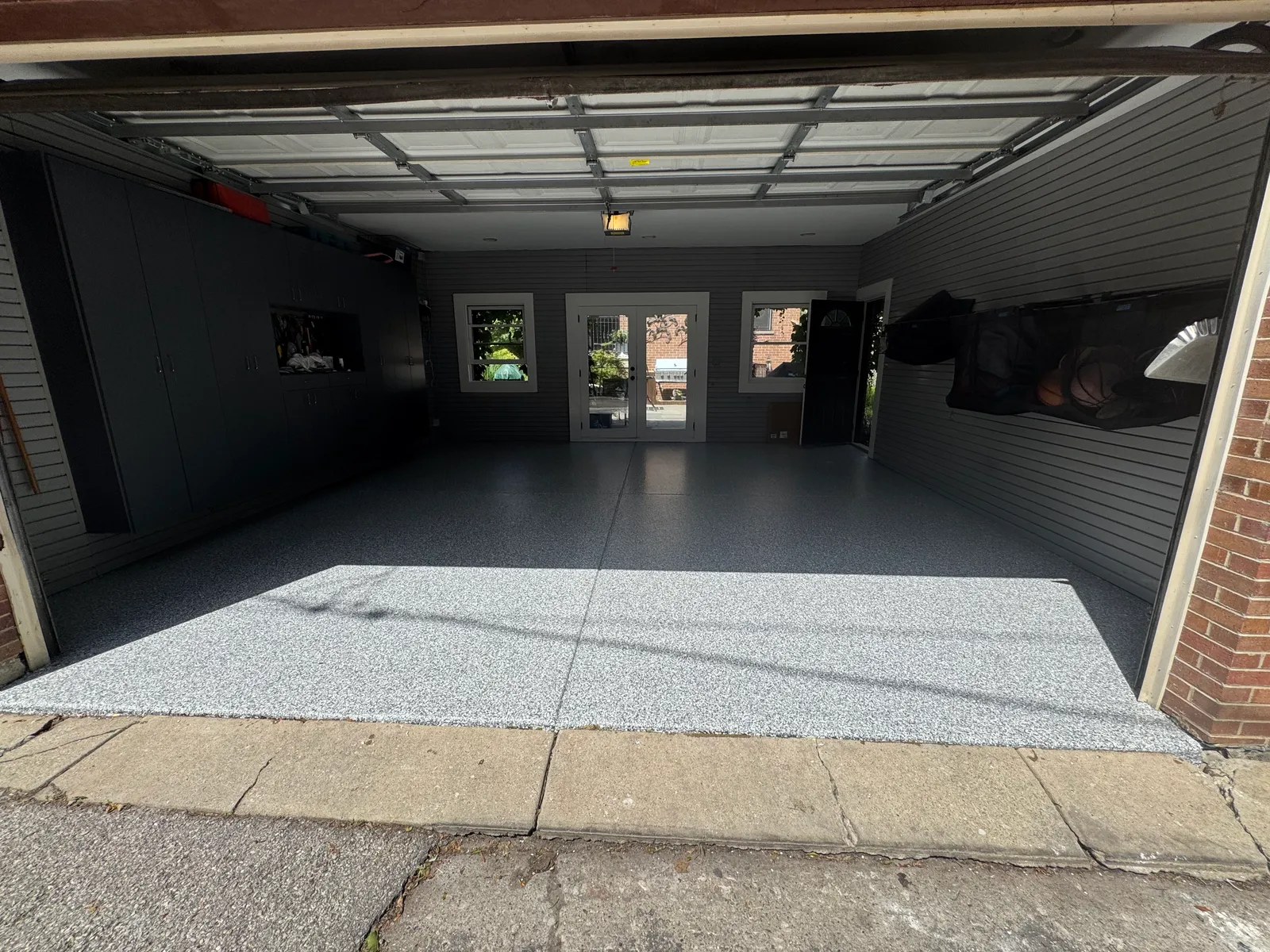
With the floor prepped and cleaned, we rolled out the polyurea base coat and broadcast the Gravel flake blend into it until the base couldn't take any more. That's called broadcasting to rejection, and it gives full, even coverage with no thin spots. Once it set, we scraped and vacuumed off the loose flake. The clear polyaspartic topcoat went on last, and we broadcast aluminum oxide grit into it over the full 420 square feet, which adds some grip underfoot. It's the same layered build we use on every polyurea garage coating we install.
The whole install took one day. The homeowner could walk on the floor after about 12 hours, and it was ready for full use, cars included, after about 48 hours. Gravel is a practical blend for a garage like this one, since it hides dust and tire marks well between cleanings. If your garage already has a tired coating on it, this job shows it doesn't have to stay that way, as long as the prep is done properly before anything new goes down.