What we did
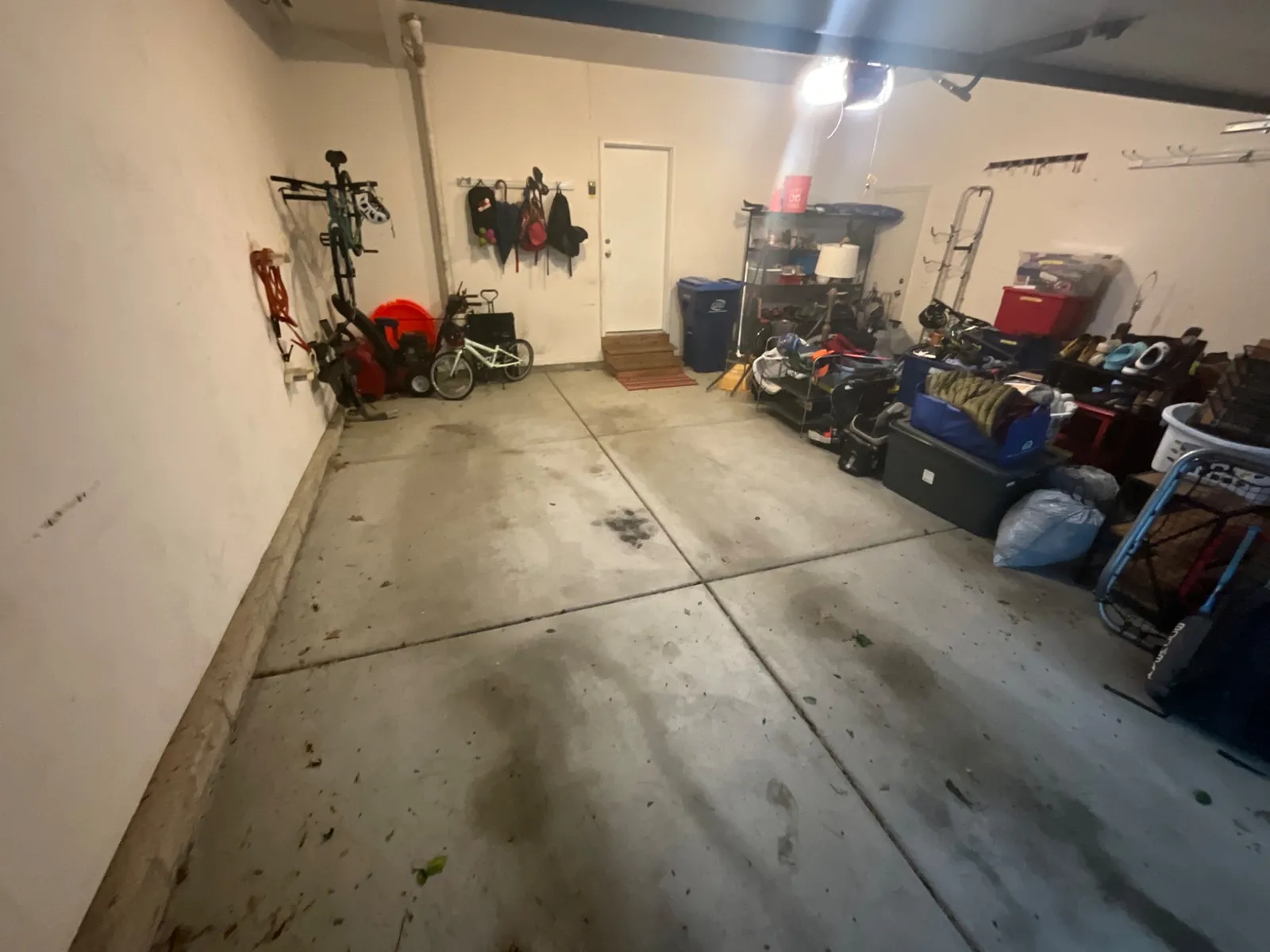
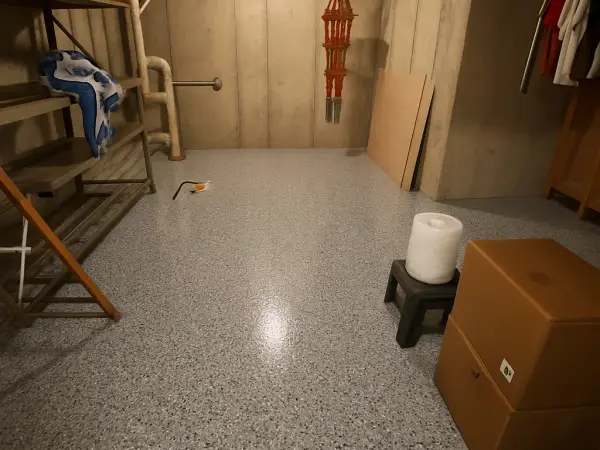
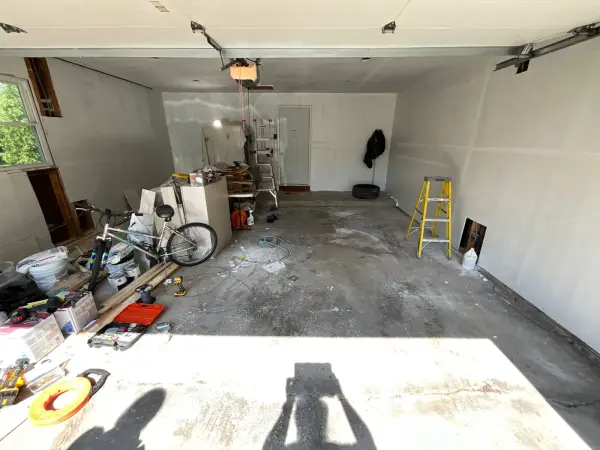
The slab in this two-car garage was new concrete, with no cracks and no old coating on it. That's about as good a starting point as we get. There was nothing to strip off and nothing to patch, so our time could go straight into prep and coating. The homeowner wanted more than the open floor, though. We also had 55 linear feet of vertical concrete to coat, the low curbs and slab edges along the walls, plus a 193 sq ft basement floor that would get the same system.
New concrete still needs prep. Fresh slabs often have a smooth, dense top layer and a light sheen, and a coating can't grip that well. We diamond ground the garage and basement floors, which means running a grinder with diamond-studded heads to open up the surface and leave an even, slightly rough profile. We chose diamond grinding over acid etching because grinding gives a consistent result you can see and check. The vertical faces along the walls were mechanically profiled too, so the coating would bond there as well as it does on the floor.
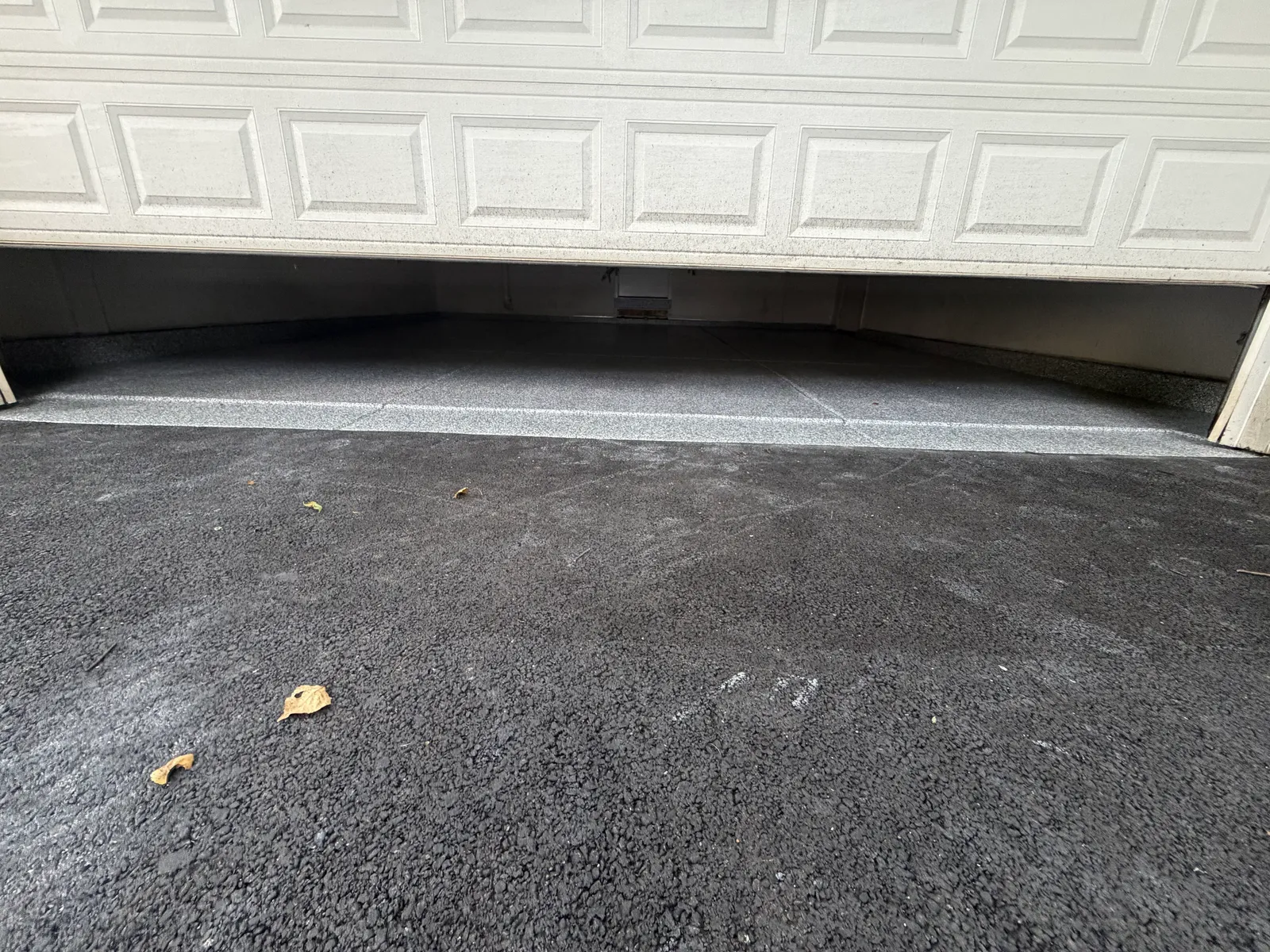
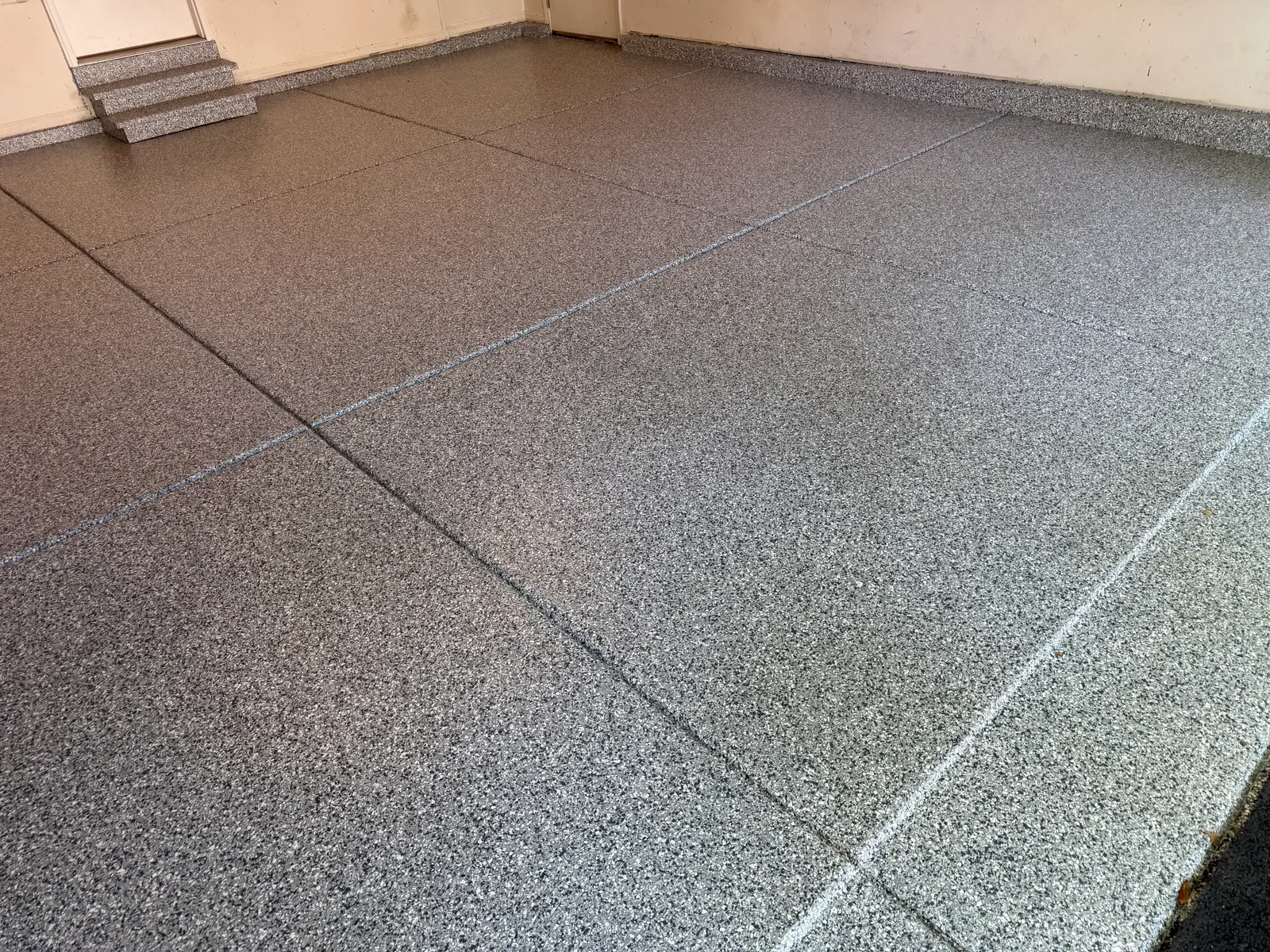
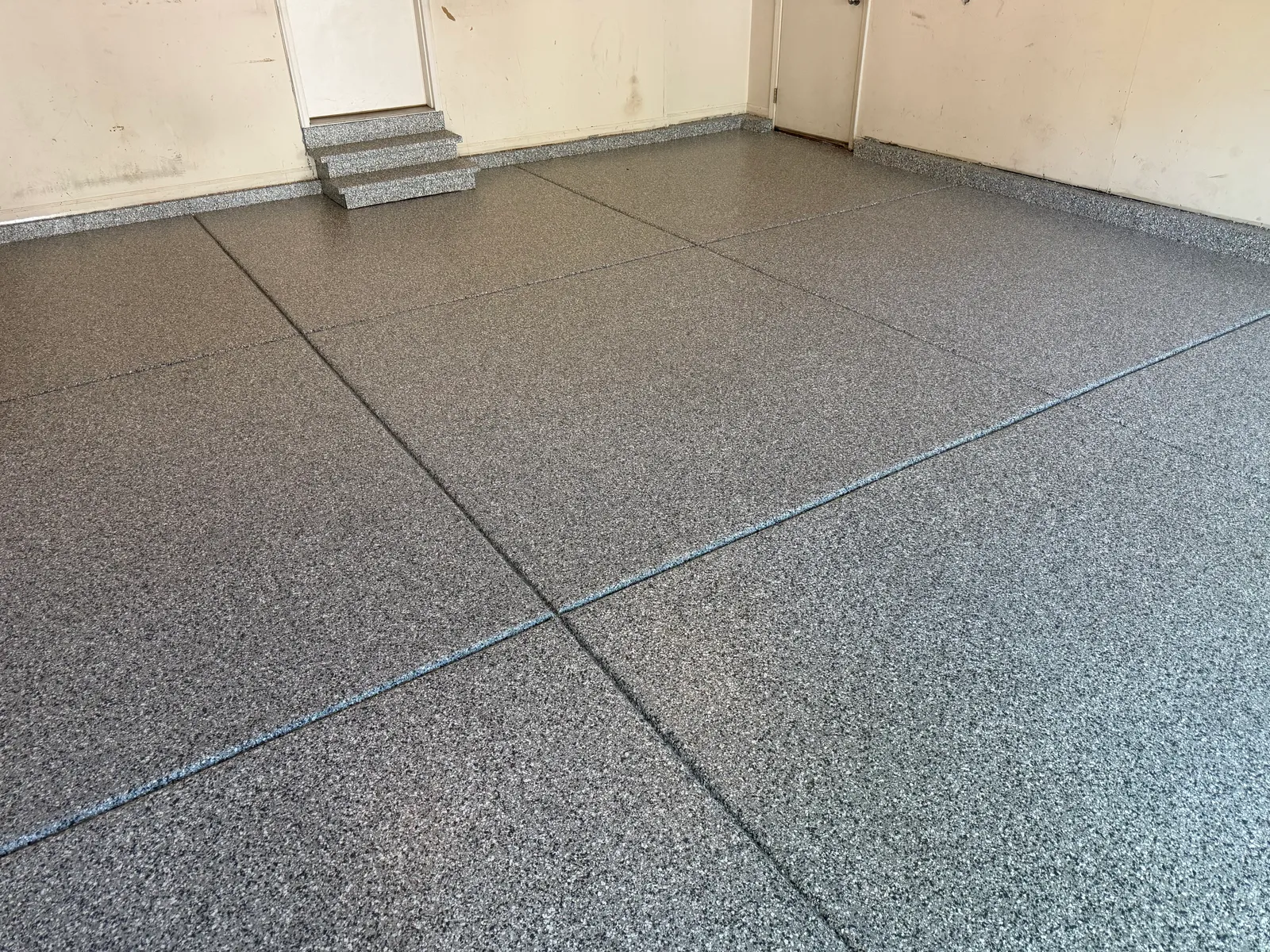
With the surfaces ready, we put down the polyurea base coat and broadcast Gravel flake to full rejection, meaning we kept adding flake until the wet base couldn't hold any more. Once it set, we scraped and vacuumed off the loose flake. The clear polyaspartic topcoat went on next, with aluminum oxide grit mixed into it across all 450 sq ft of the garage for better traction underfoot. The walls got the same polyurea garage coating system, so the floor and edges are sealed as one continuous surface. The basement got the same system and Gravel blend.
The whole install took us one day. The floors were walkable after about 12 hours and ready for full use, cars included, after about 48 hours. The Gravel blend gives both spaces a matching look from the garage down to the basement. If you've got a newer home with a clean slab like this one, prep is simpler, but grinding still matters, and coating the wall edges and adding grit to the topcoat are worth thinking about up front.