What we did
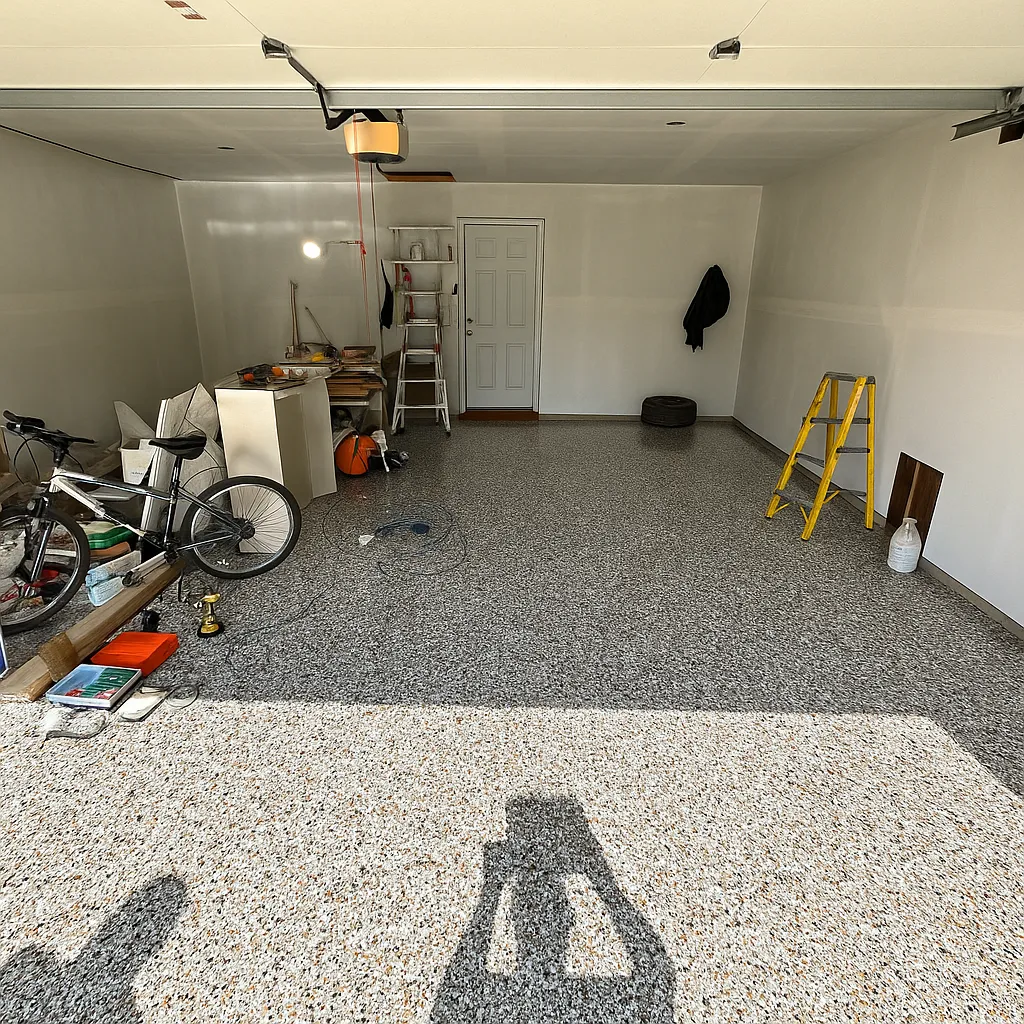
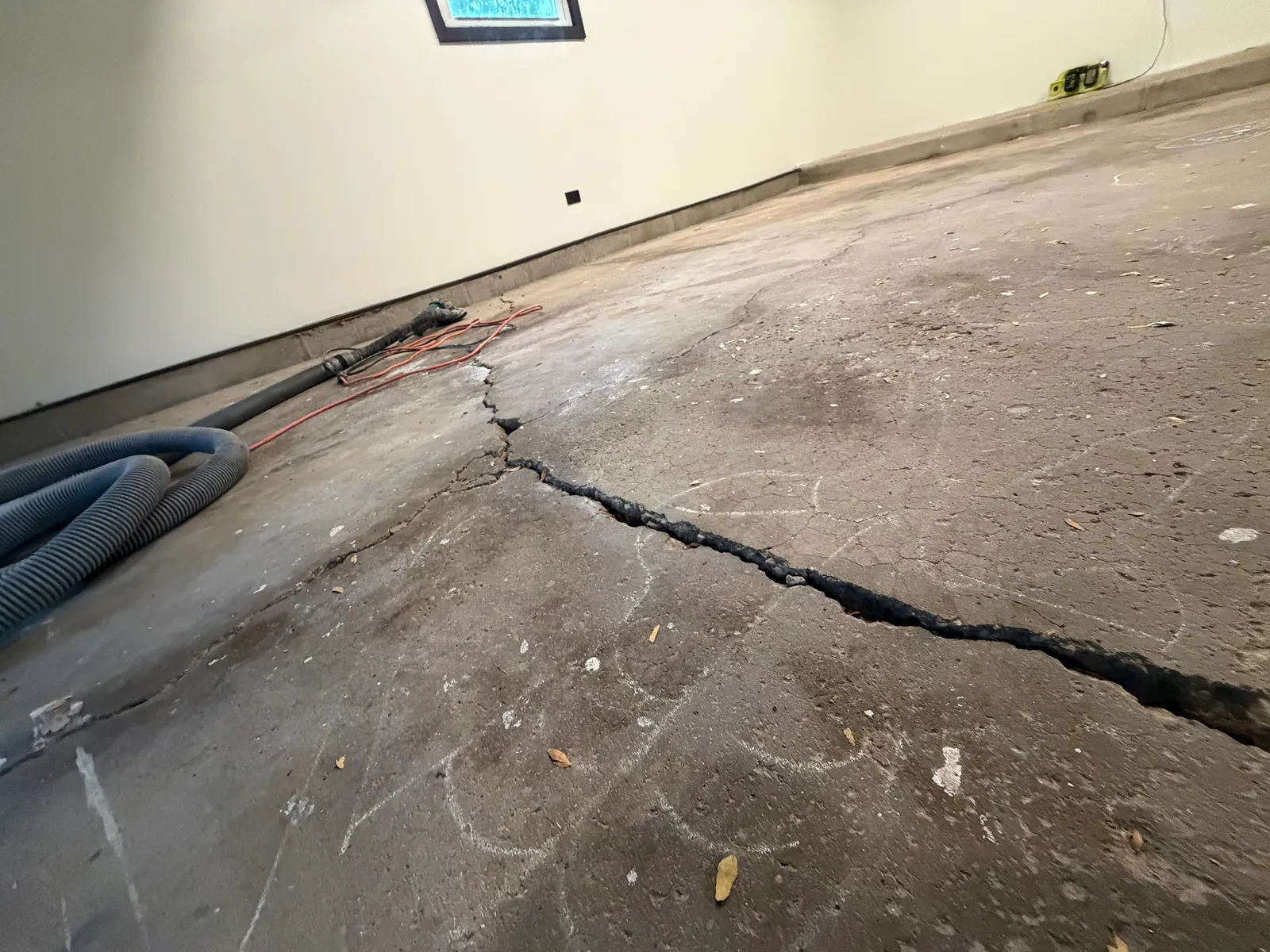
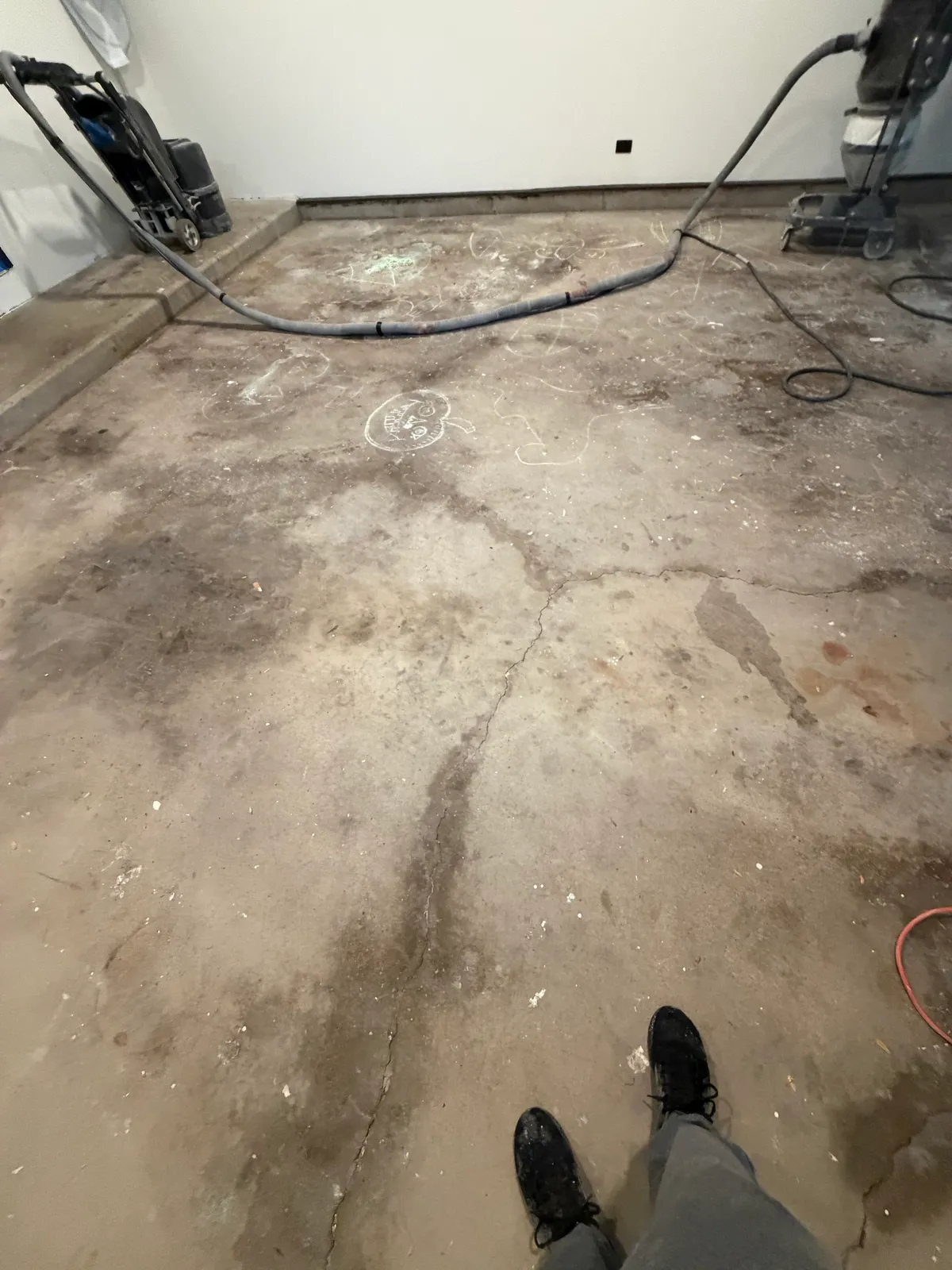
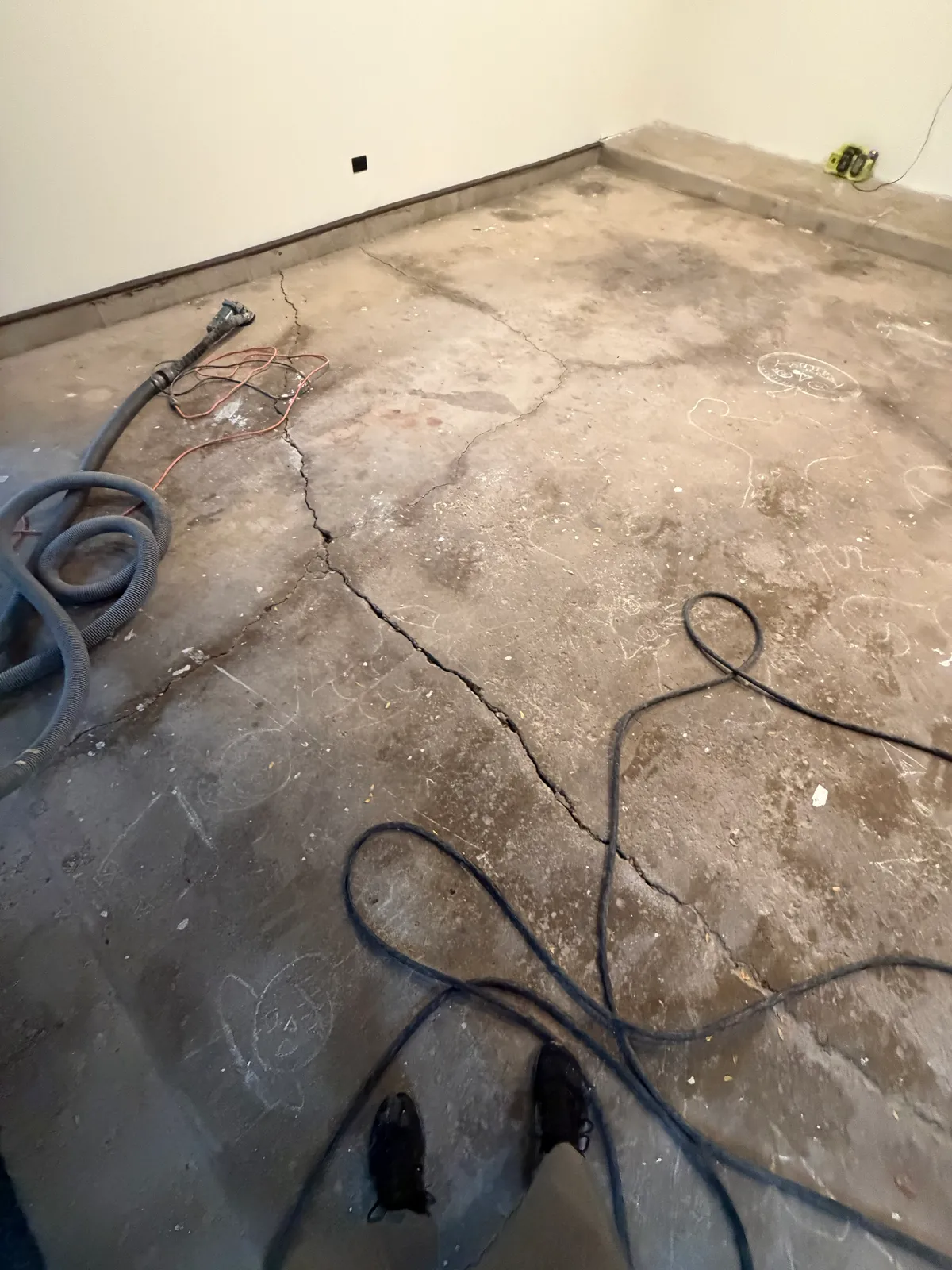
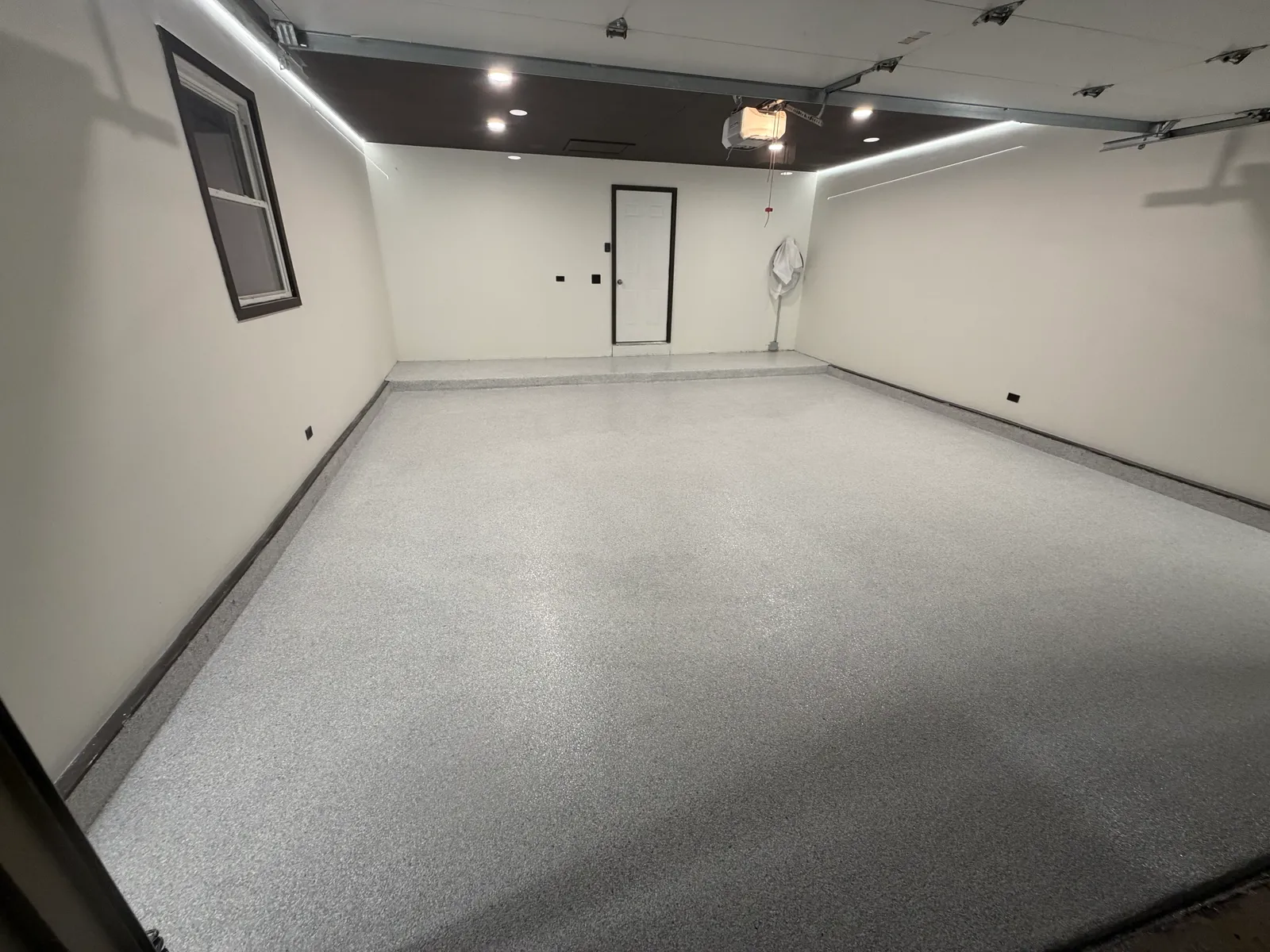
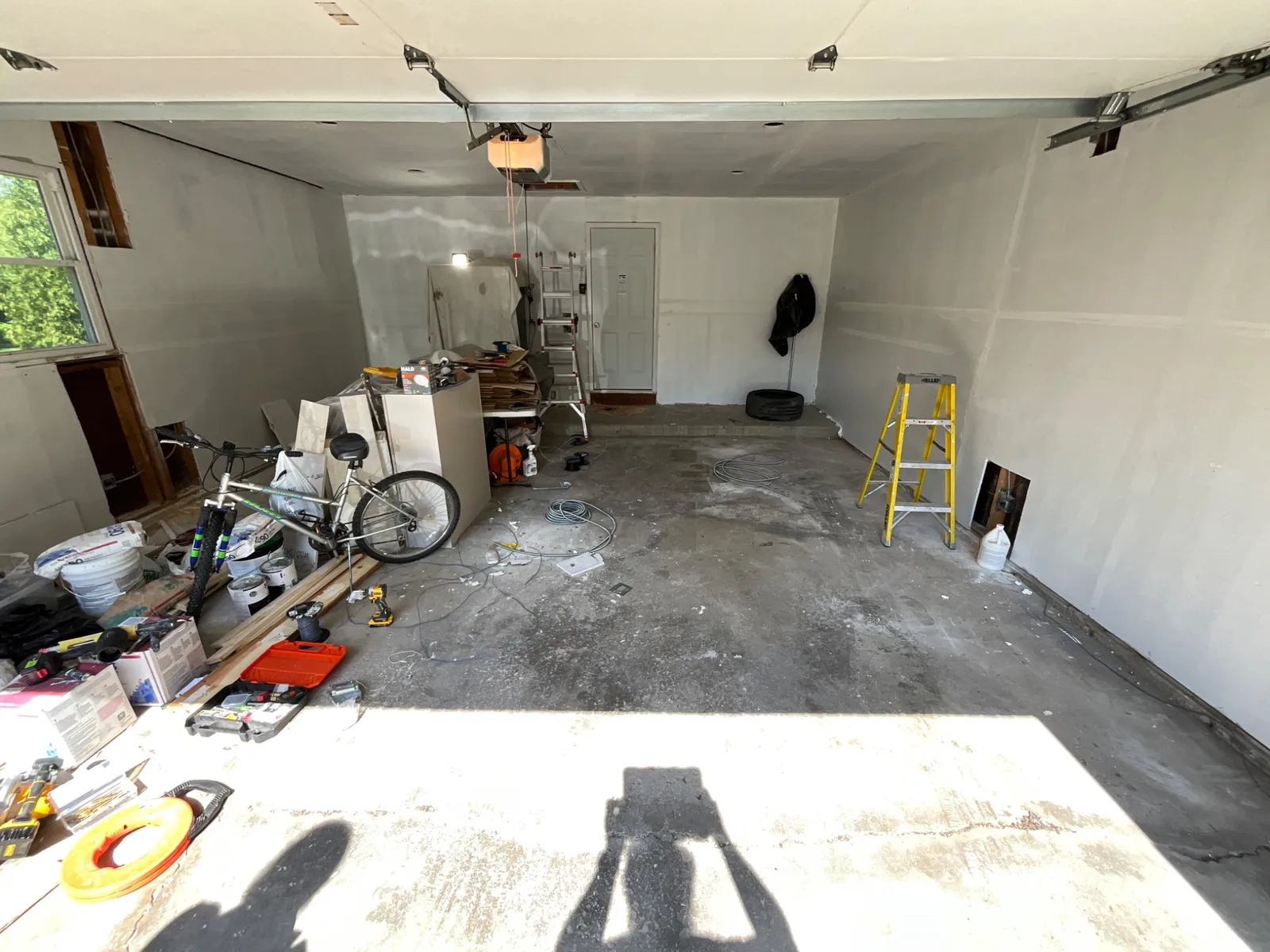
This was older concrete that had never been coated, so there was no old product to strip off first. That's always a good start. The slab did have a few cracks and some etching, which is the rough, worn look concrete gets when its top layer starts breaking down. None of it was serious, but it told us the surface needed real prep before anything went on it. We measured 470 square feet, including the outside edge at the door.
We diamond ground the whole floor to take off the surface sheen and any contaminants and open up the concrete. Grinding gives the coating a consistent profile to grab onto, which acid-etching just can't match. Then we cleaned the loose concrete out of the cracks and filled them. Cracks get filled before the base coat because coating over an open crack only hides it for a while, and it tends to show back through.
The base coat was polyurea, and we broadcast the owner's custom Schist flake into it until the surface wouldn't take any more, which is what the trade calls broadcasting to rejection. We also coated 40 linear feet of vertical concrete where the slab meets the walls, using the same system as the floor so there's one continuous seal at that joint. After scraping and vacuuming the loose flake, we rolled on a clear polyaspartic topcoat with aluminum oxide grit mixed in for better traction underfoot.
The whole install took one day. The floor was walkable after about 12 hours and ready for full use, cars included, after about 48 hours. If your garage has older concrete with a few cracks and some surface wear, this job is a good picture of what's possible without tearing anything out. A thorough grind and proper crack repair did most of the heavy lifting here.