What we did
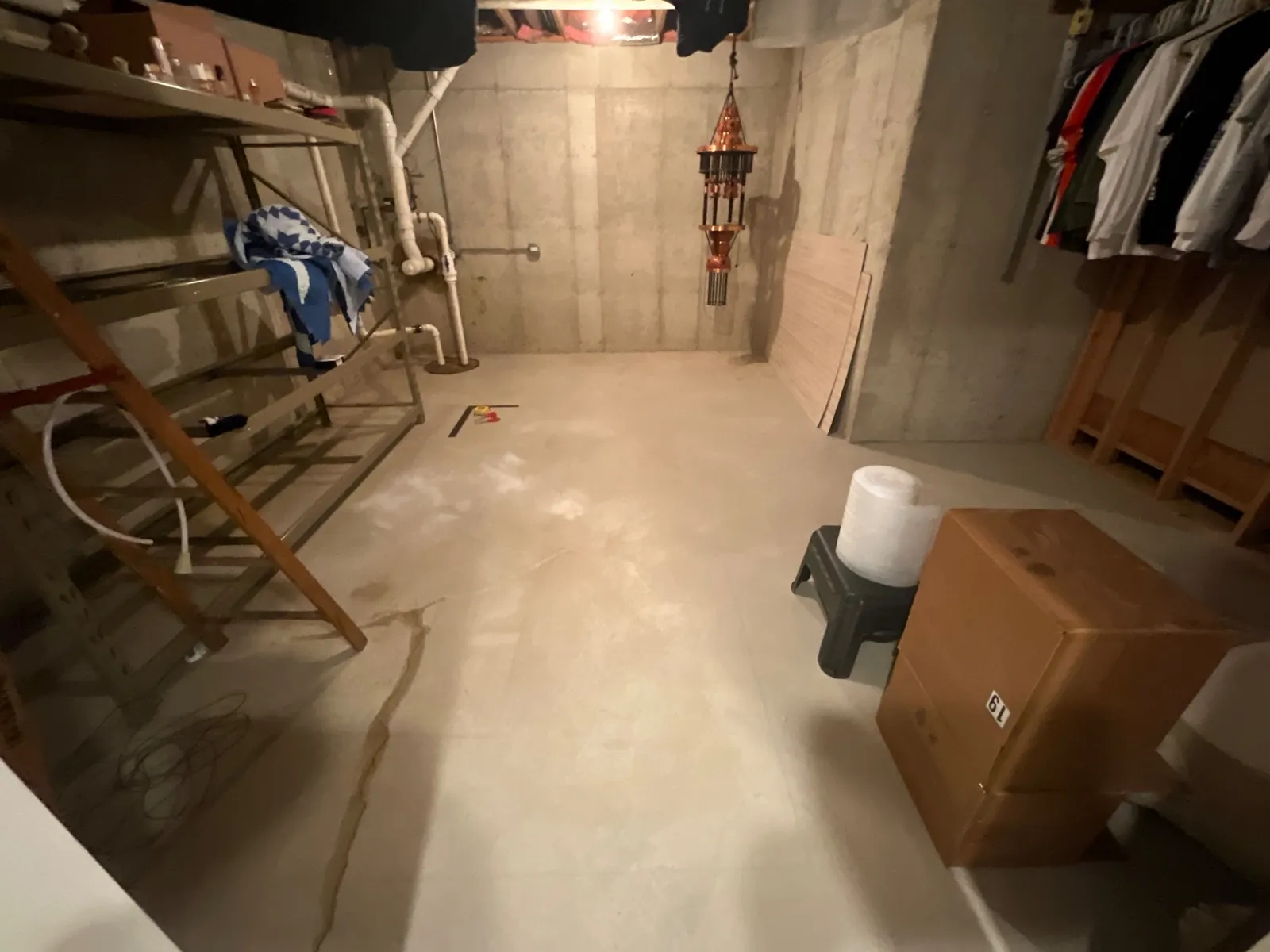
The basement gave us 1,300 square feet to work with, and the floor already had a coating on it. That changes the plan. A new coating is only as strong as whatever it's bonded to, so we weren't going to roll fresh material over a slick old finish and hope it held. Before any polyurea went down, the surface had to be opened up so the new system would grip the floor itself.
We started by taking the sheen off and clearing away contaminants, then diamond ground the whole floor. Grinding uses spinning heads set with diamond segments to cut a fine, rough texture into the surface, a little like sanding wood before you stain it. That texture, called the profile, is what the base coat locks into. We grind instead of acid-etching because grinding gives an even, predictable profile across a big floor and doesn't leave chemical residue behind.
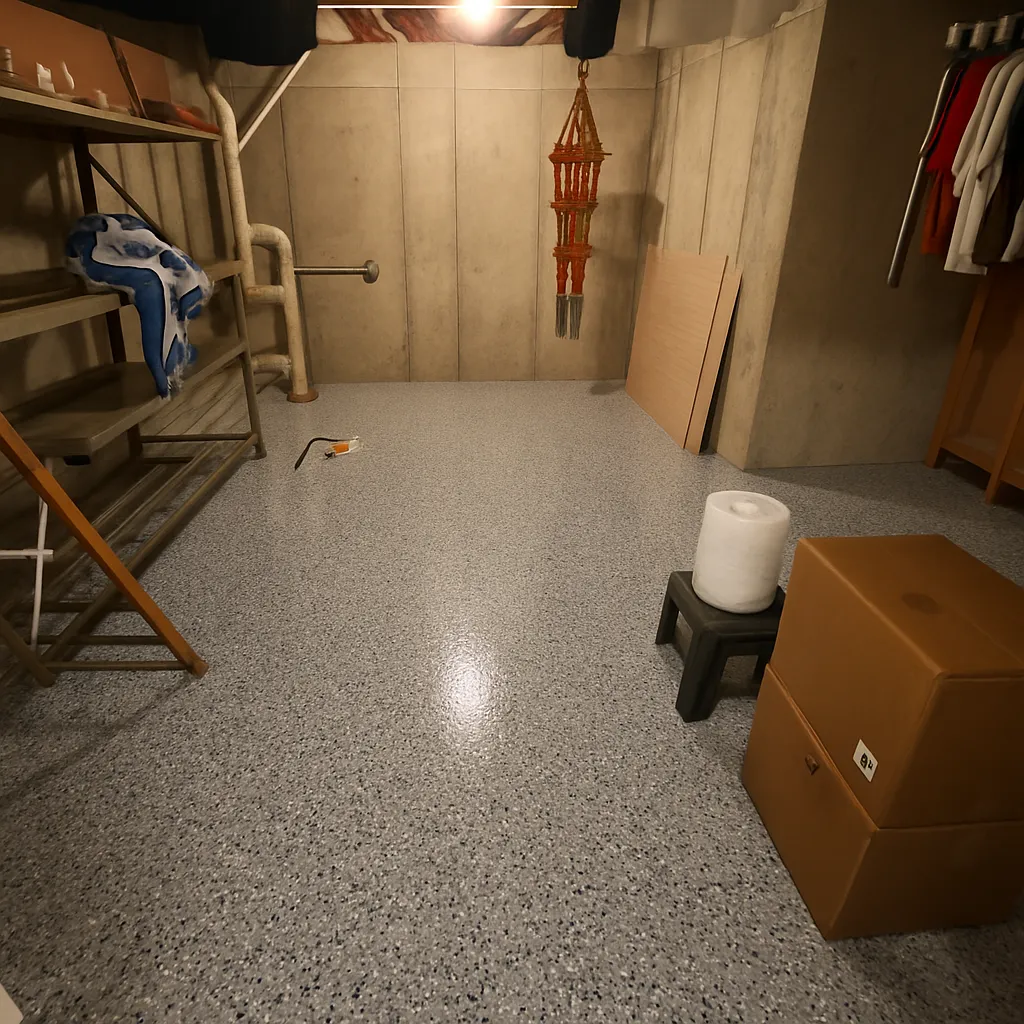
With the floor profiled, we applied the polyurea base coat, the layer that bonds to the concrete, and broadcast FB-901 Opal flakes in the 1/8-inch size into it while it was wet. We broadcast to rejection, which means we kept adding flakes until the base coat couldn't hold any more and none of it showed through. After that we scraped and vacuumed off the loose flakes, applied a clear polyaspartic topcoat to seal everything in, and cleaned up the space.
The install took 2 days from start to finish. The homeowner could walk on the floor after about 12 hours, and it was ready for full use after about 48 hours. If your basement has an old coating that's dull or worn, this job is a good example of how it goes: the old finish gets ground so the new one has something real to hold, and a large floor can still be done in a couple of days.