What we did
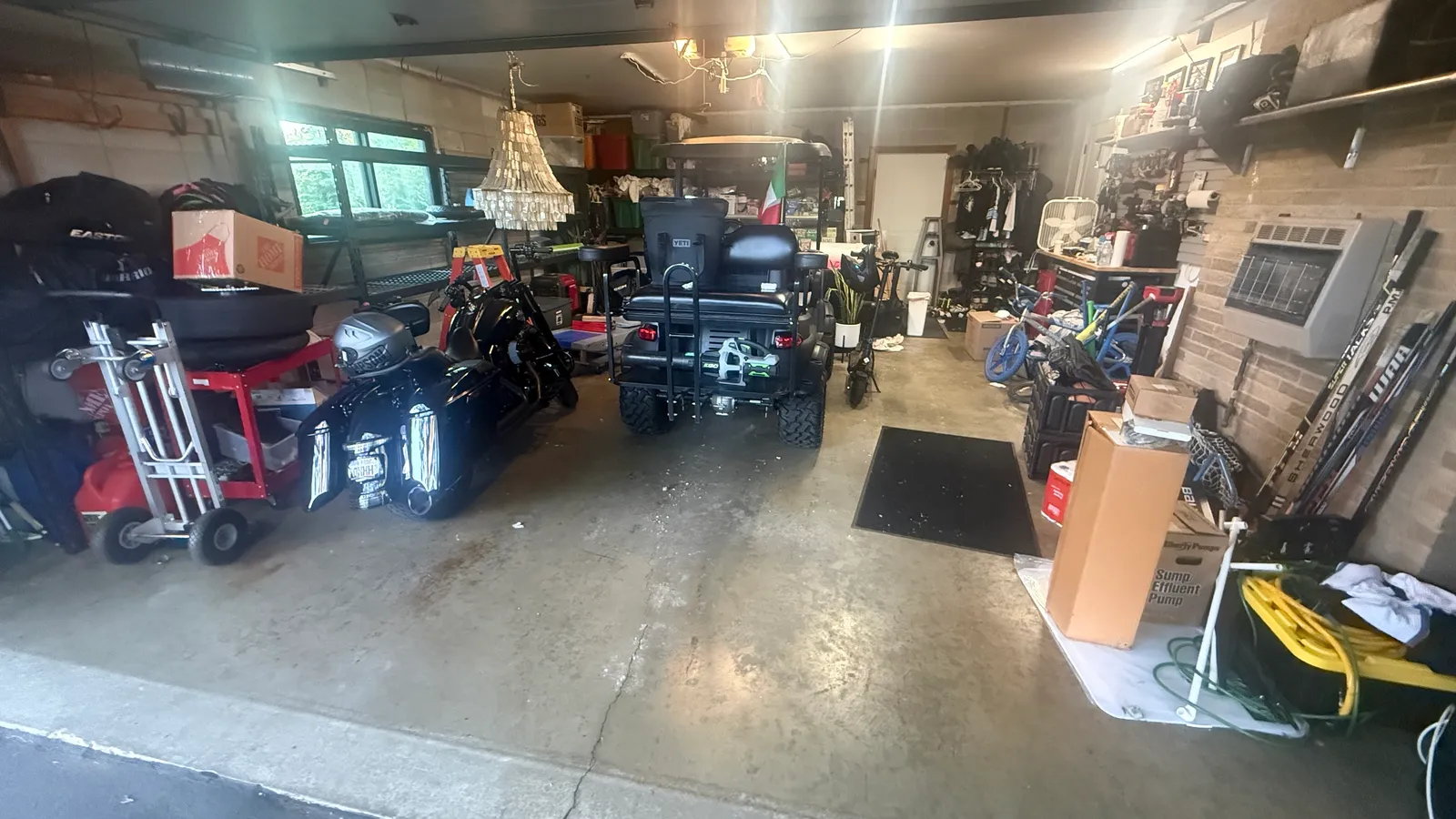
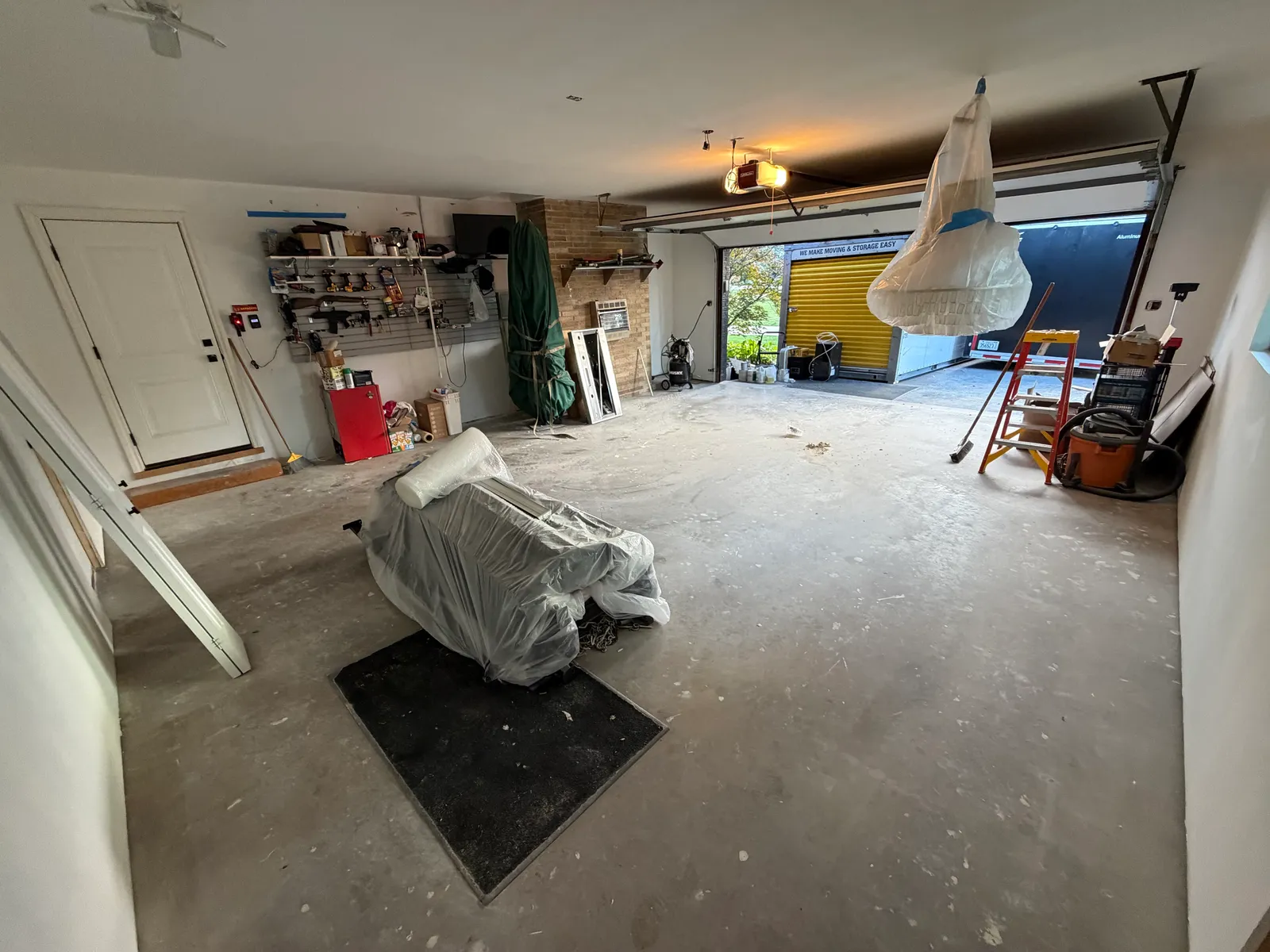
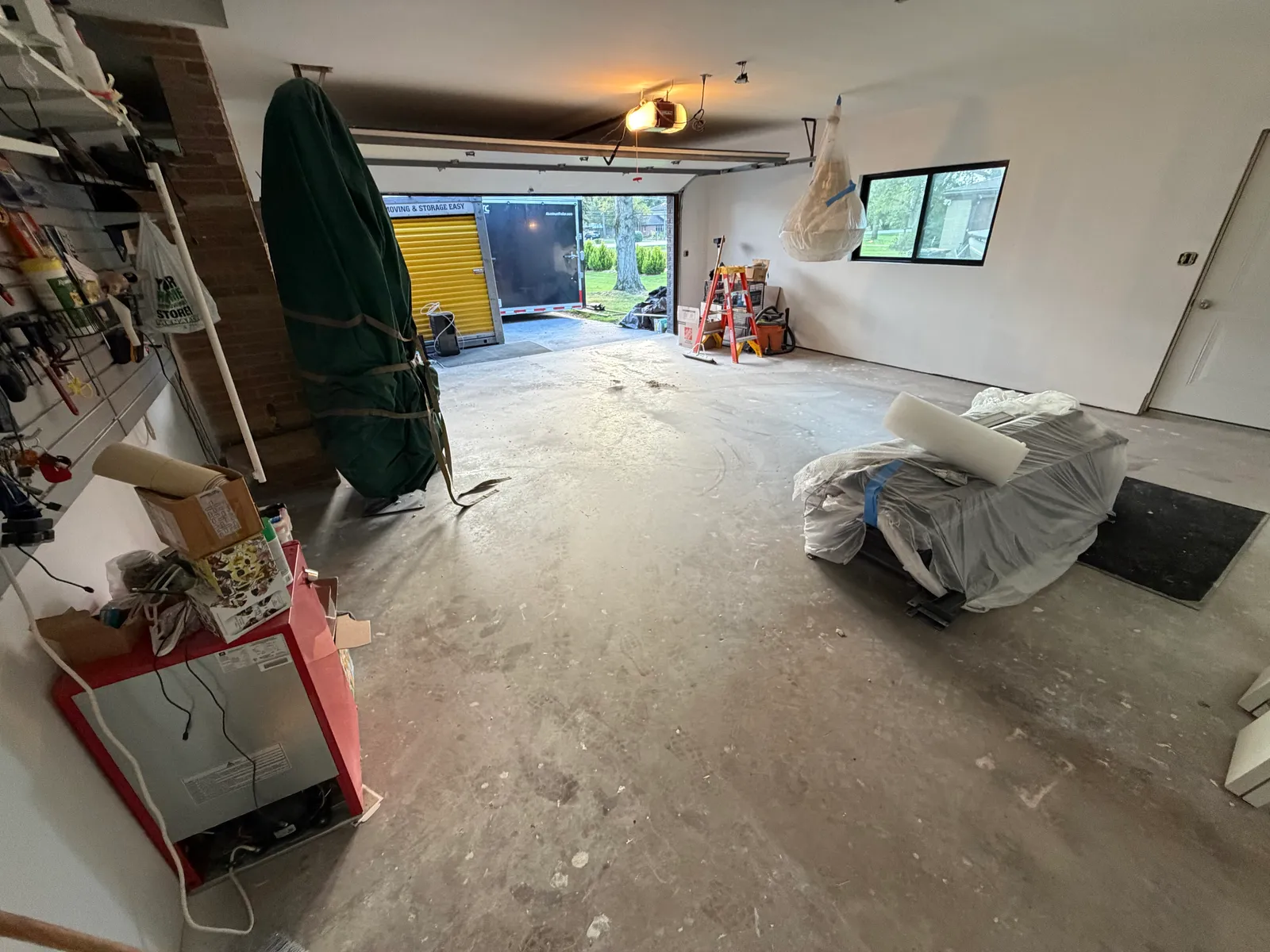
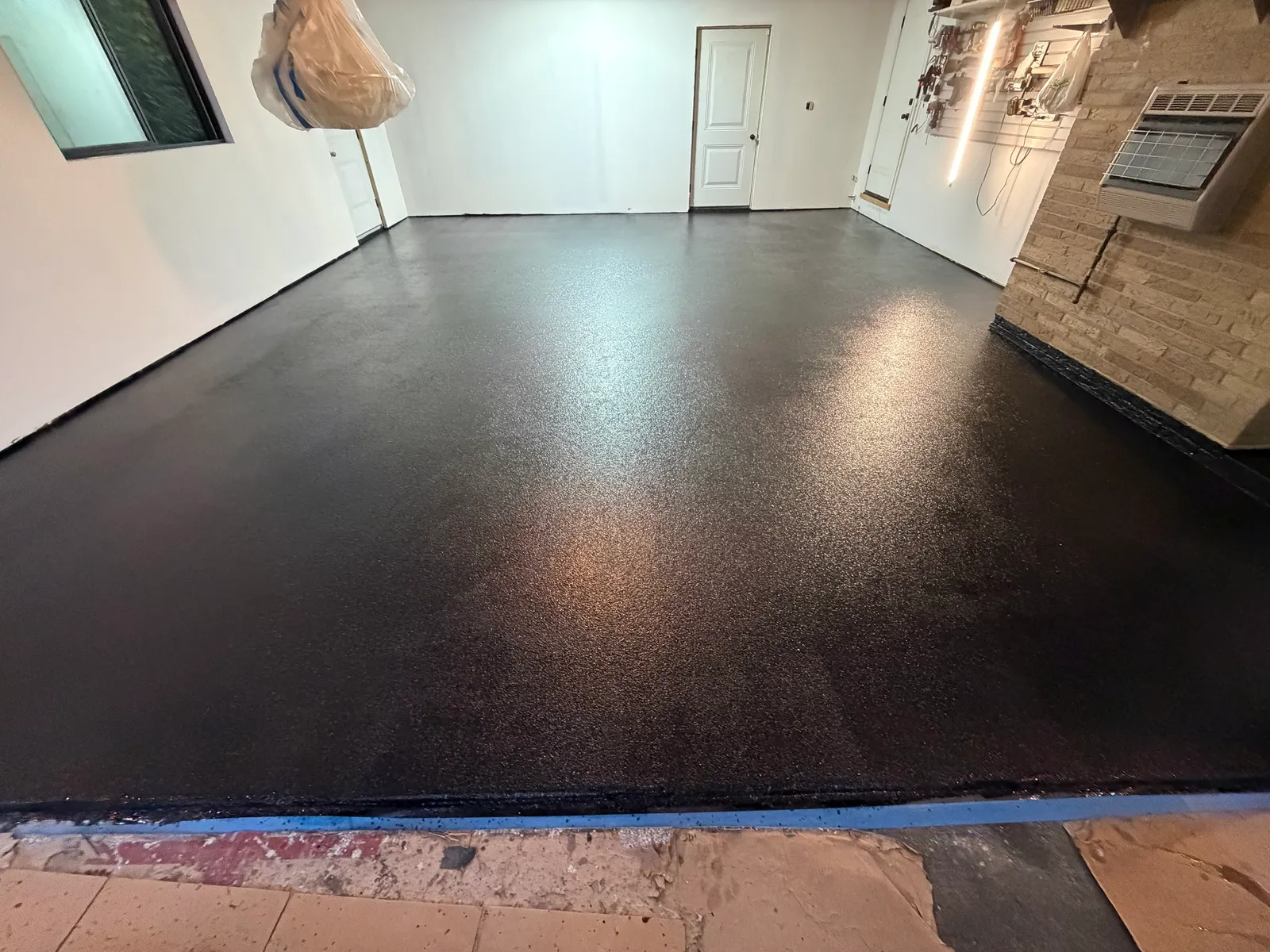
This was a 2-car garage with new concrete: no cracks, no old coating, nothing to strip off. That's about as good a starting point as we get. The area came to 400 square feet, and that number includes the outside edge of the slab, so the coating covers that edge too instead of stopping short of it. With no repairs needed, our crew could spend the day on prep and coating.
New concrete still needs prep. Fresh slabs tend to have a smooth, dense top layer that coatings don't grip well, so we removed the surface sheen and any contaminants with diamond grinding. Grinding opens the surface to an even profile, a bit like fine sandpaper, which gives the base coat something to bite into. We choose it over acid etching because the result is consistent and there's no acid residue left behind to get in the way of the bond.
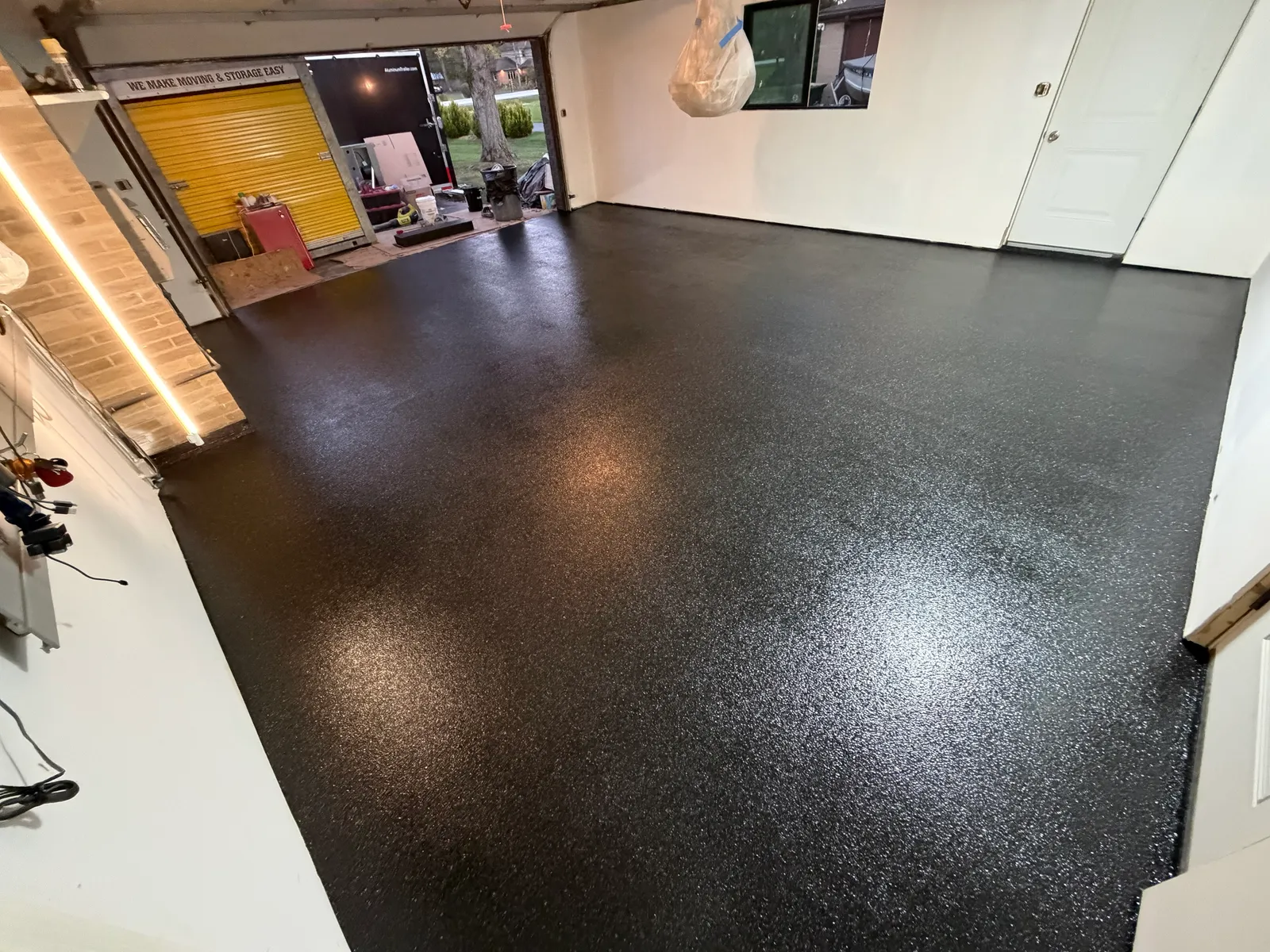
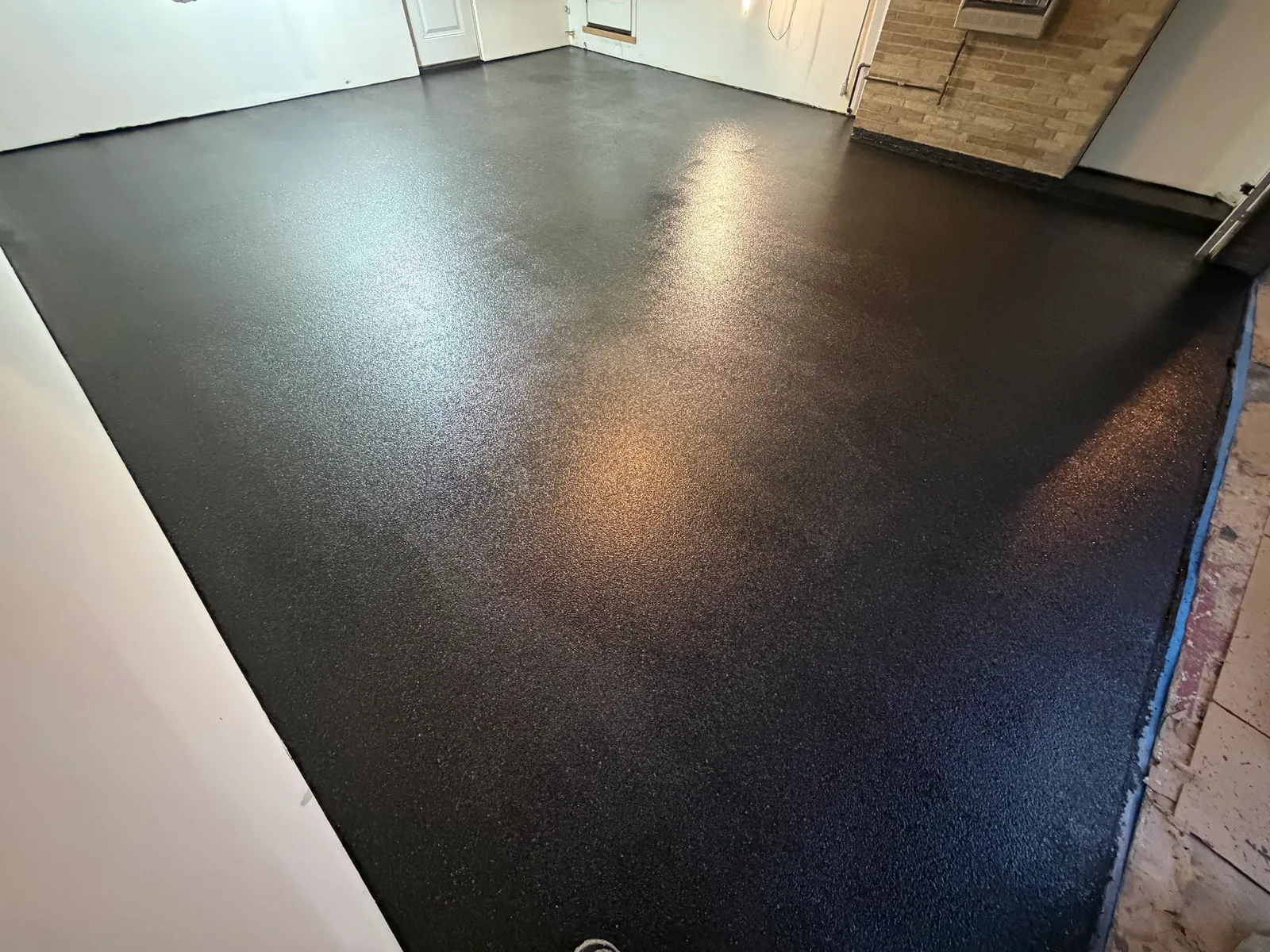
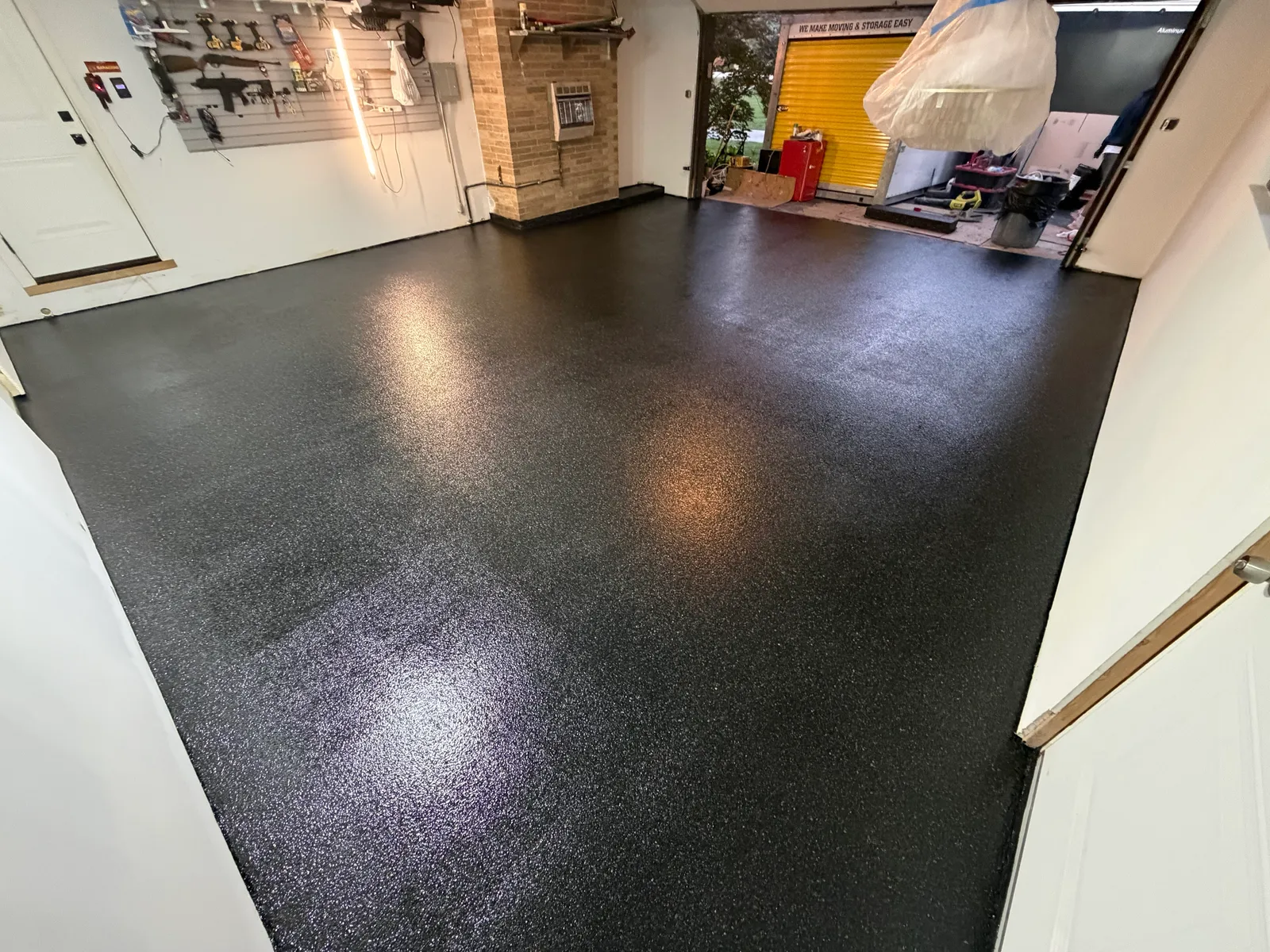
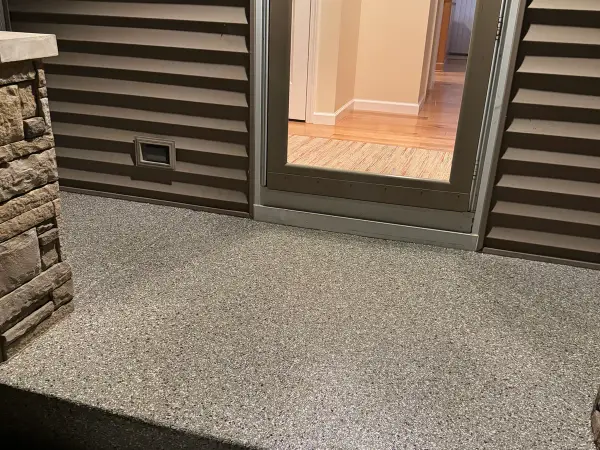
Next came the polyurea base coat, and then the flakes. We broadcast them to rejection, which means we kept adding flakes until the wet base wouldn't hold any more, and this floor got a custom color blend. It's the same polyurea garage coating system we use on most garages. After scraping and vacuuming the loose flakes, we applied the clear polyaspartic topcoat with aluminum oxide, a fine gritty aggregate, broadcast into it across all 400 square feet for better footing. We coated the step as well.
The whole install took one day. The floor was walkable after about 12 hours and ready for full use, cars included, after about 48 hours. The aluminum oxide adds traction, though a wet or oily floor can still get slick, so it's worth keeping it clean and dry. If your garage slab is newer and in good shape like this one, you're starting ahead: there's no repair work to do, and most of the effort goes into the coating itself.