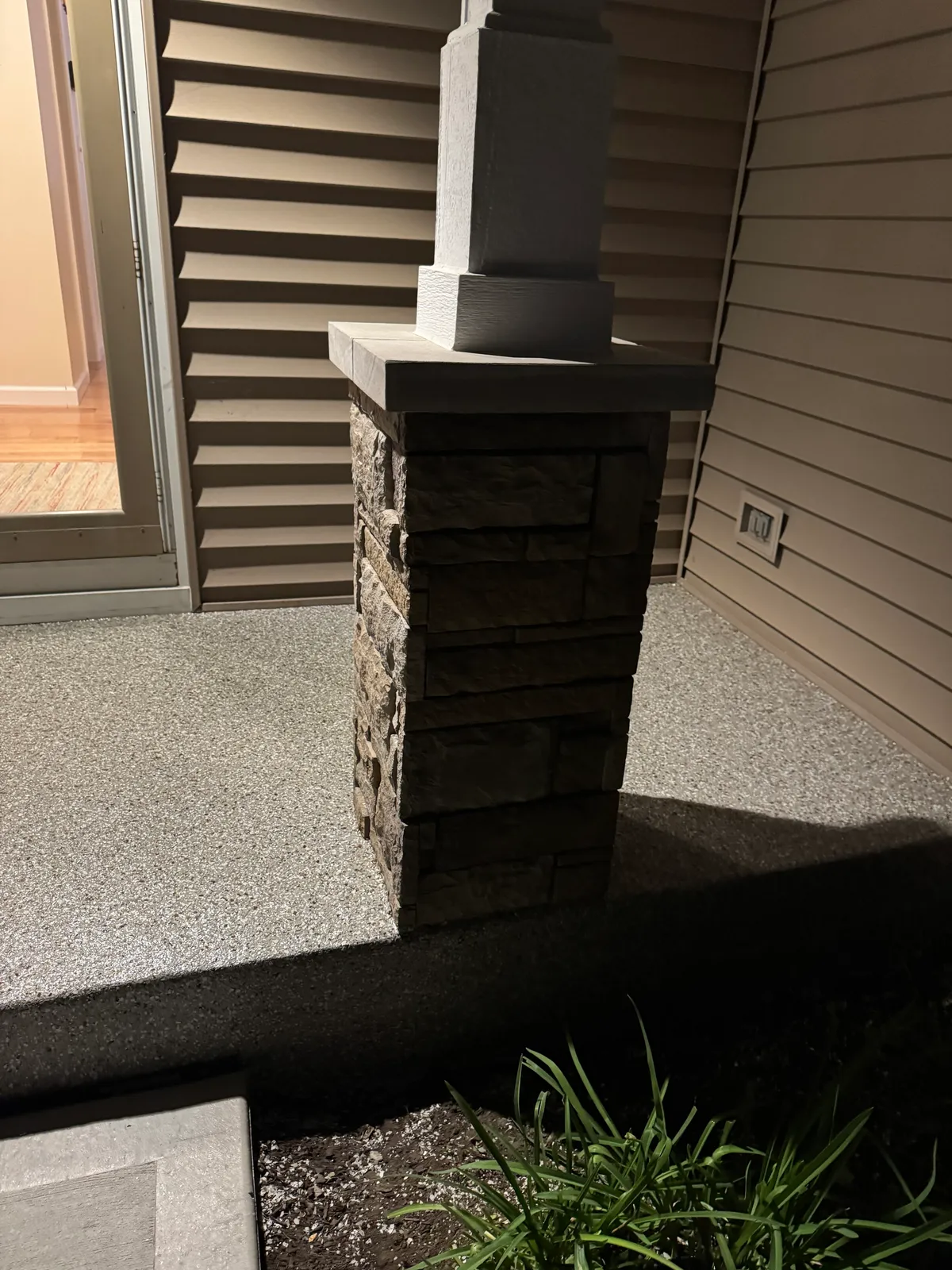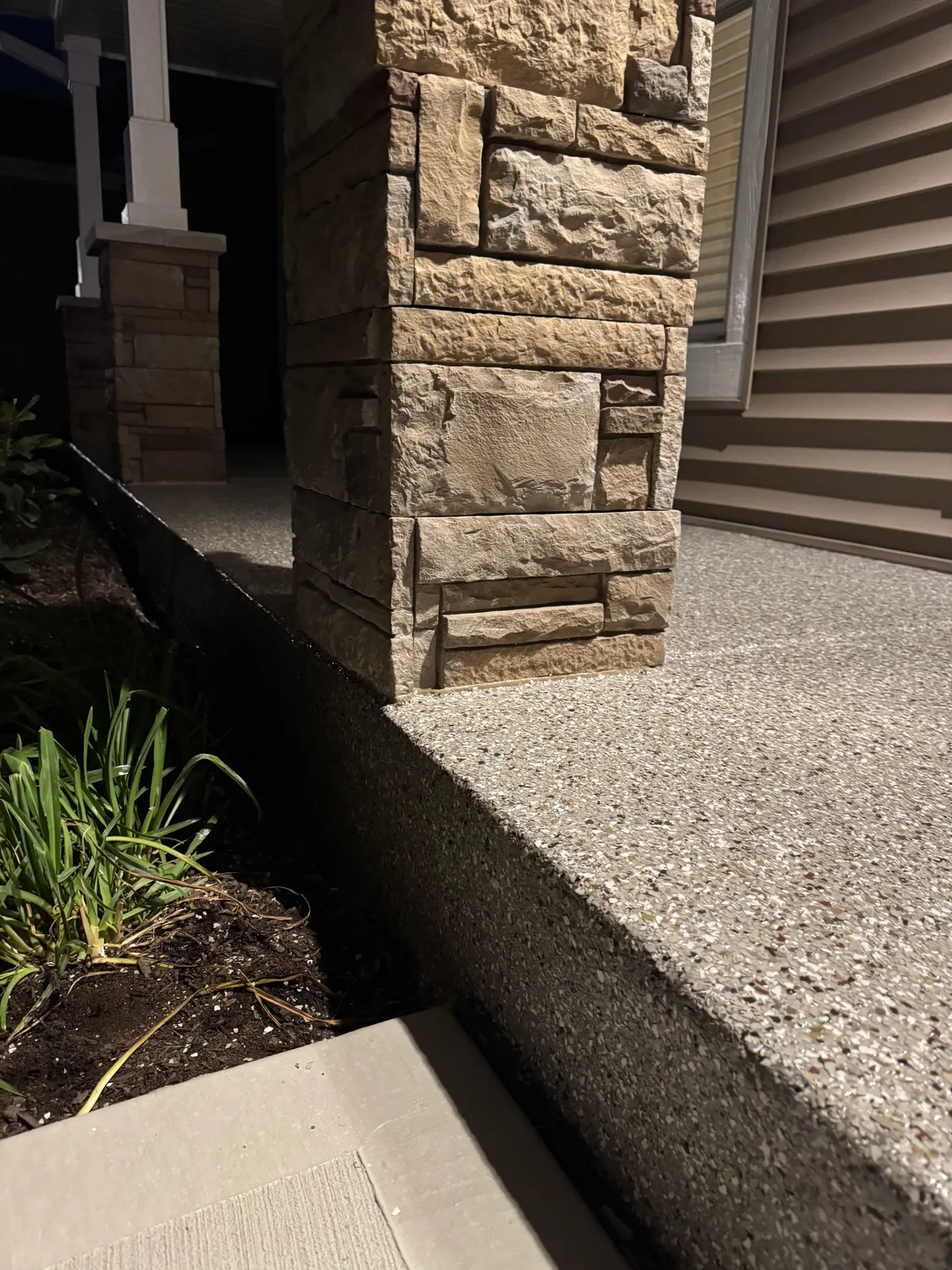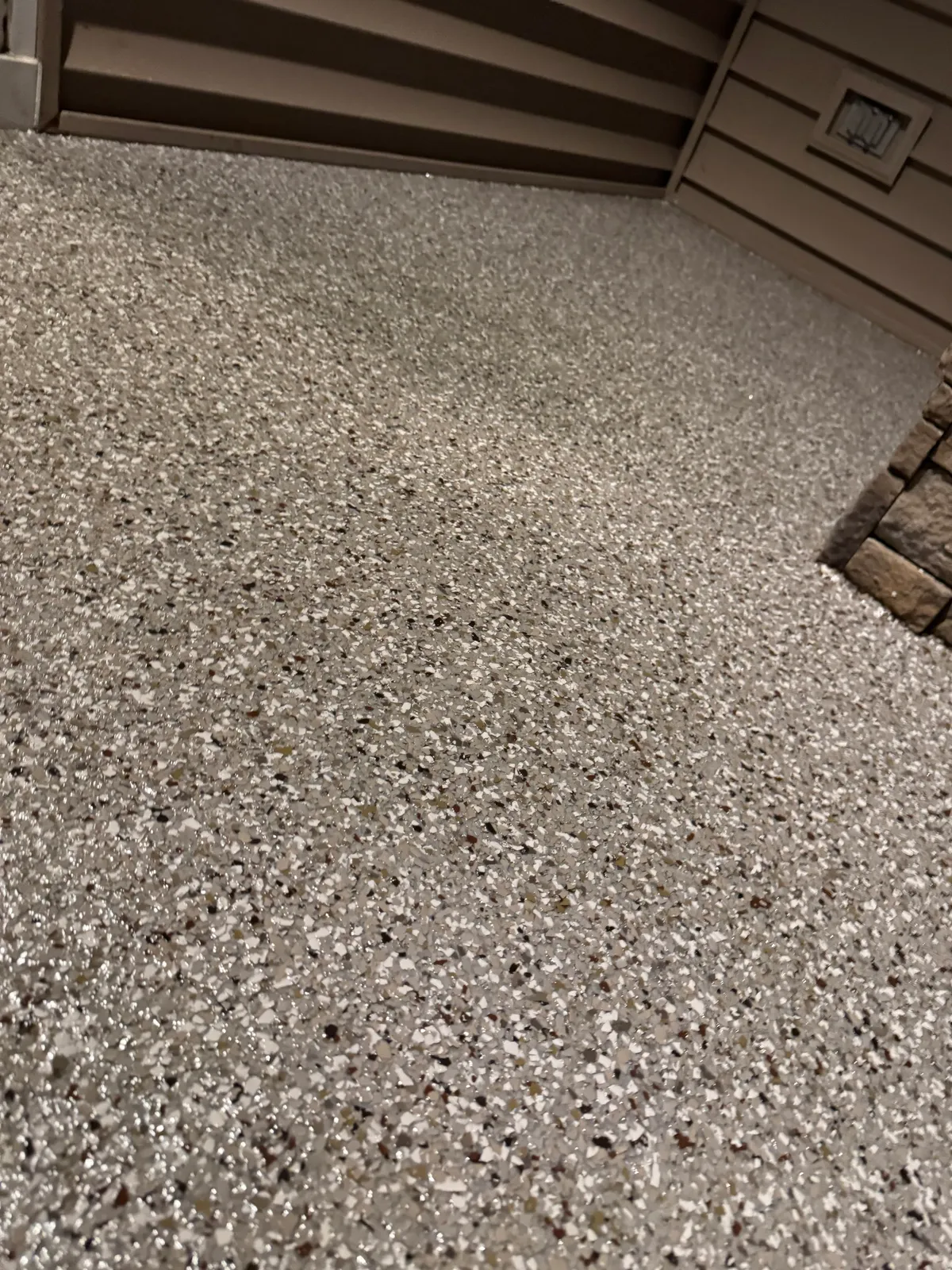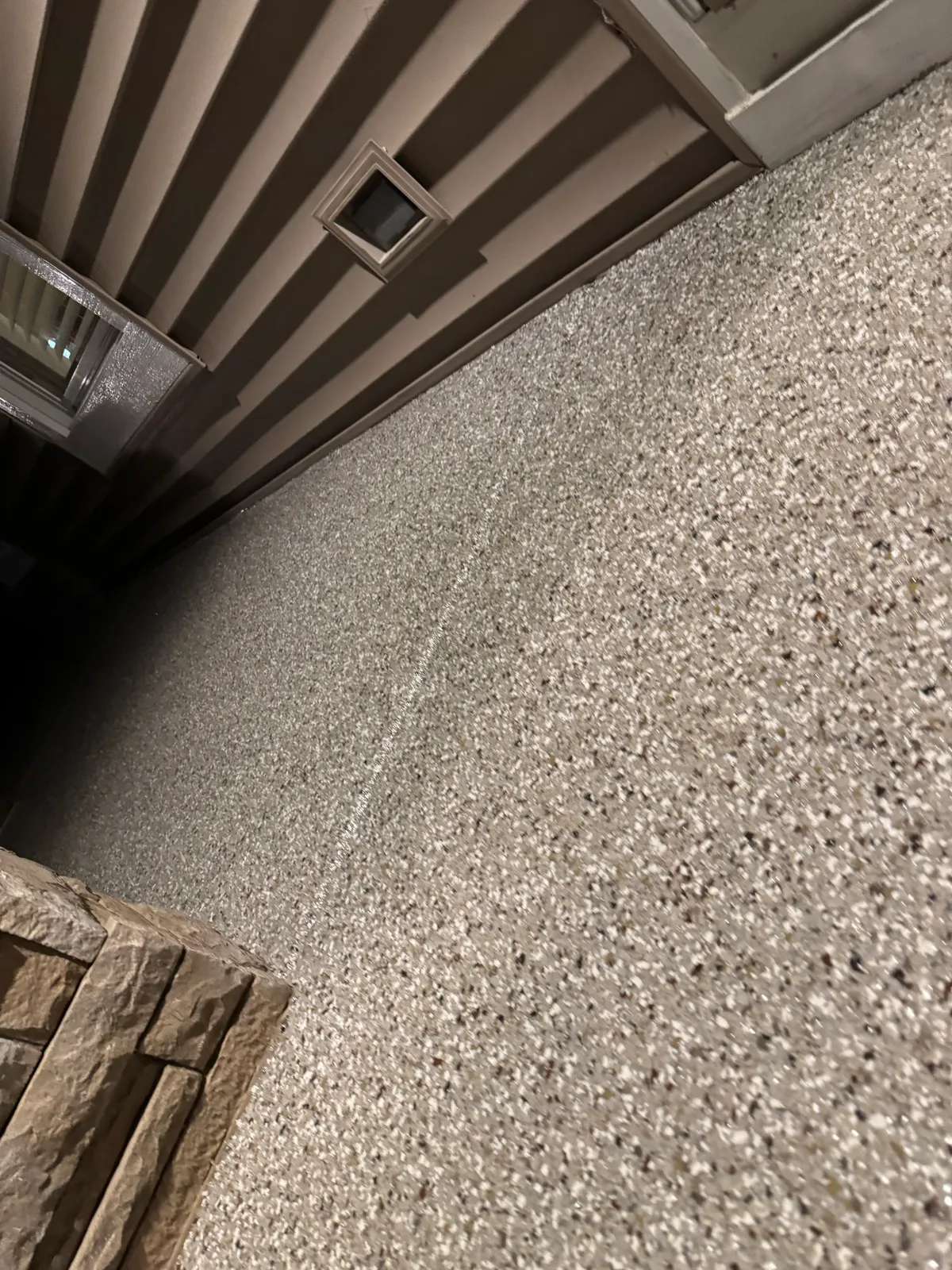
What we did
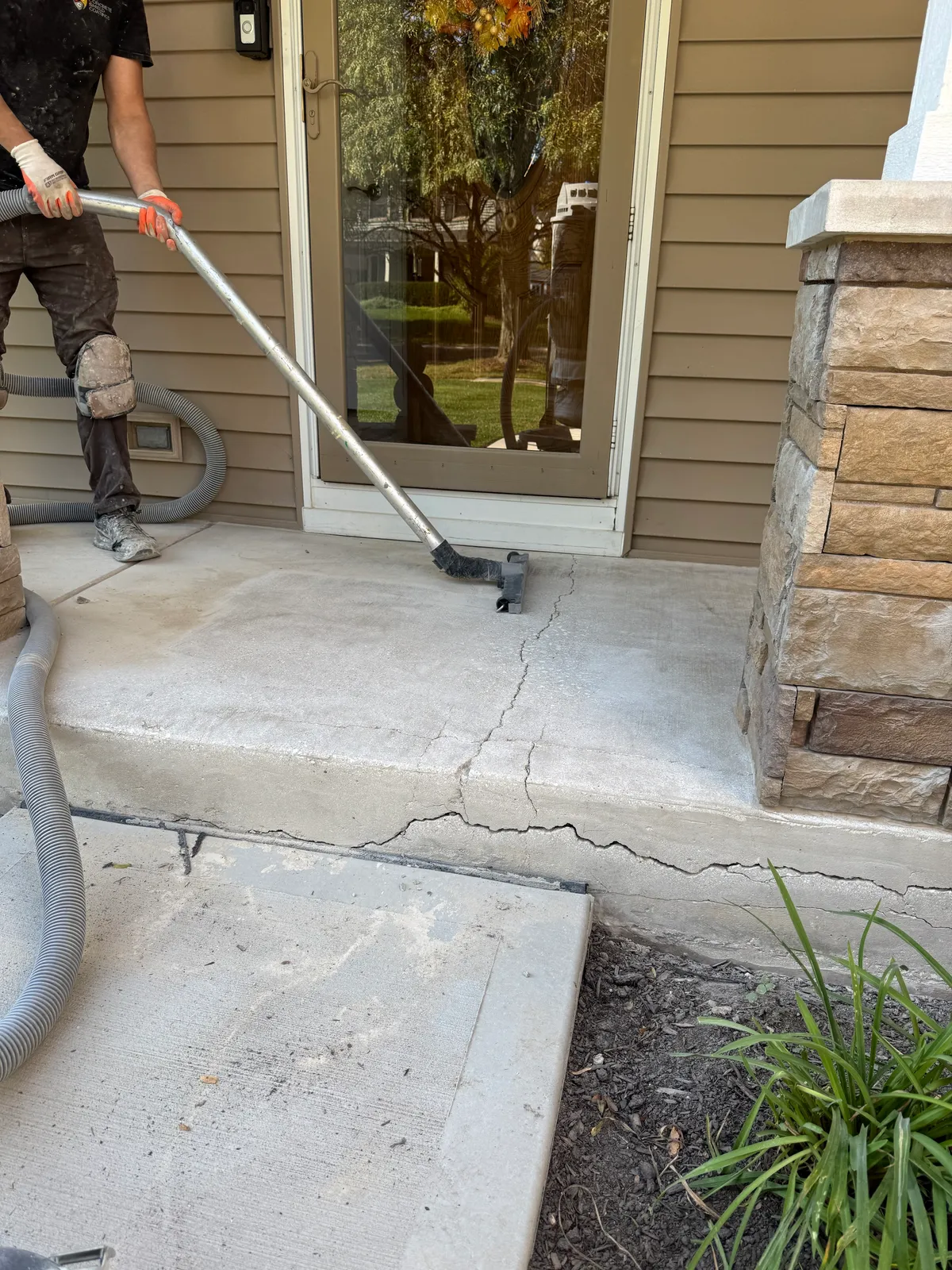
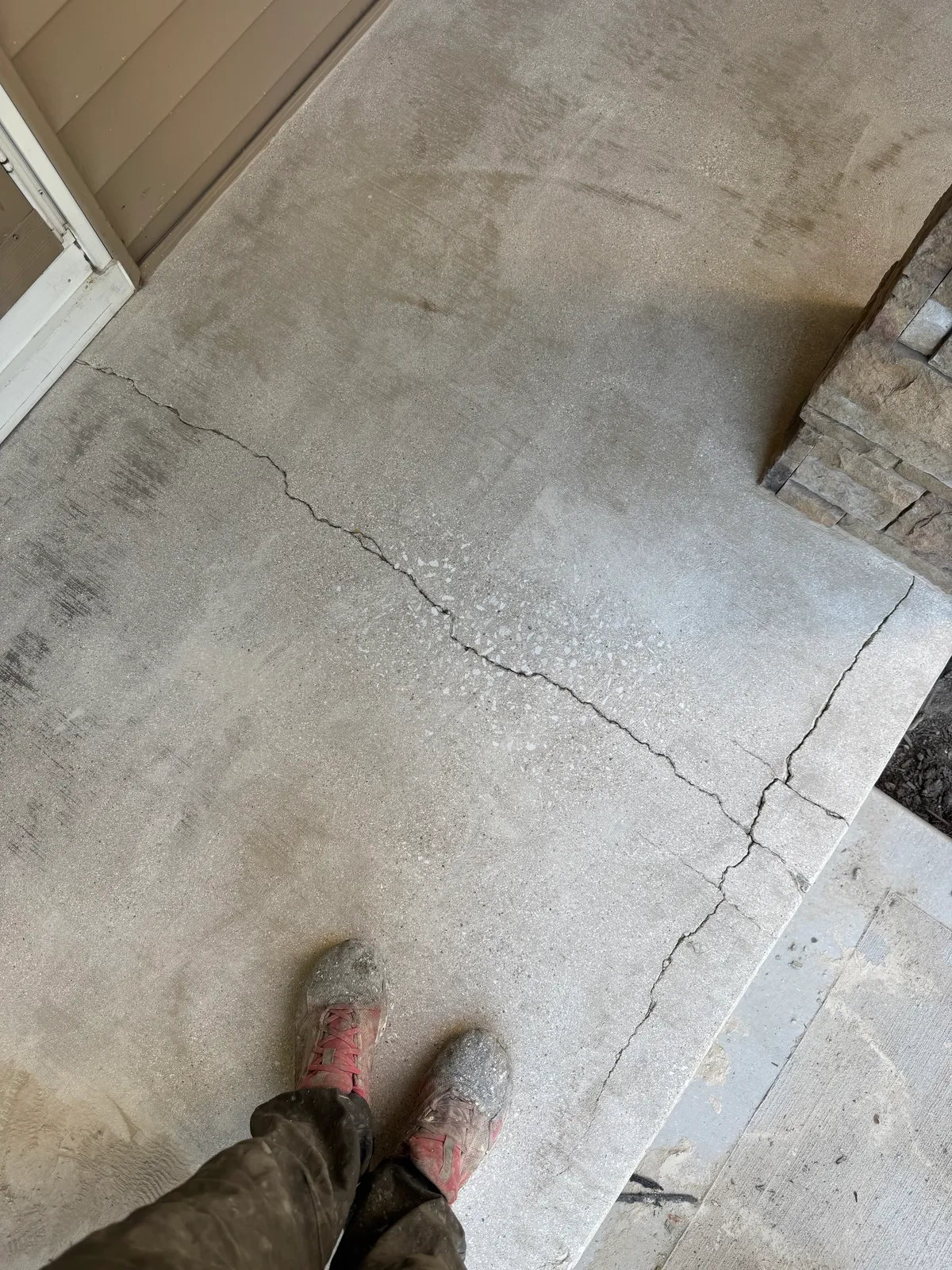
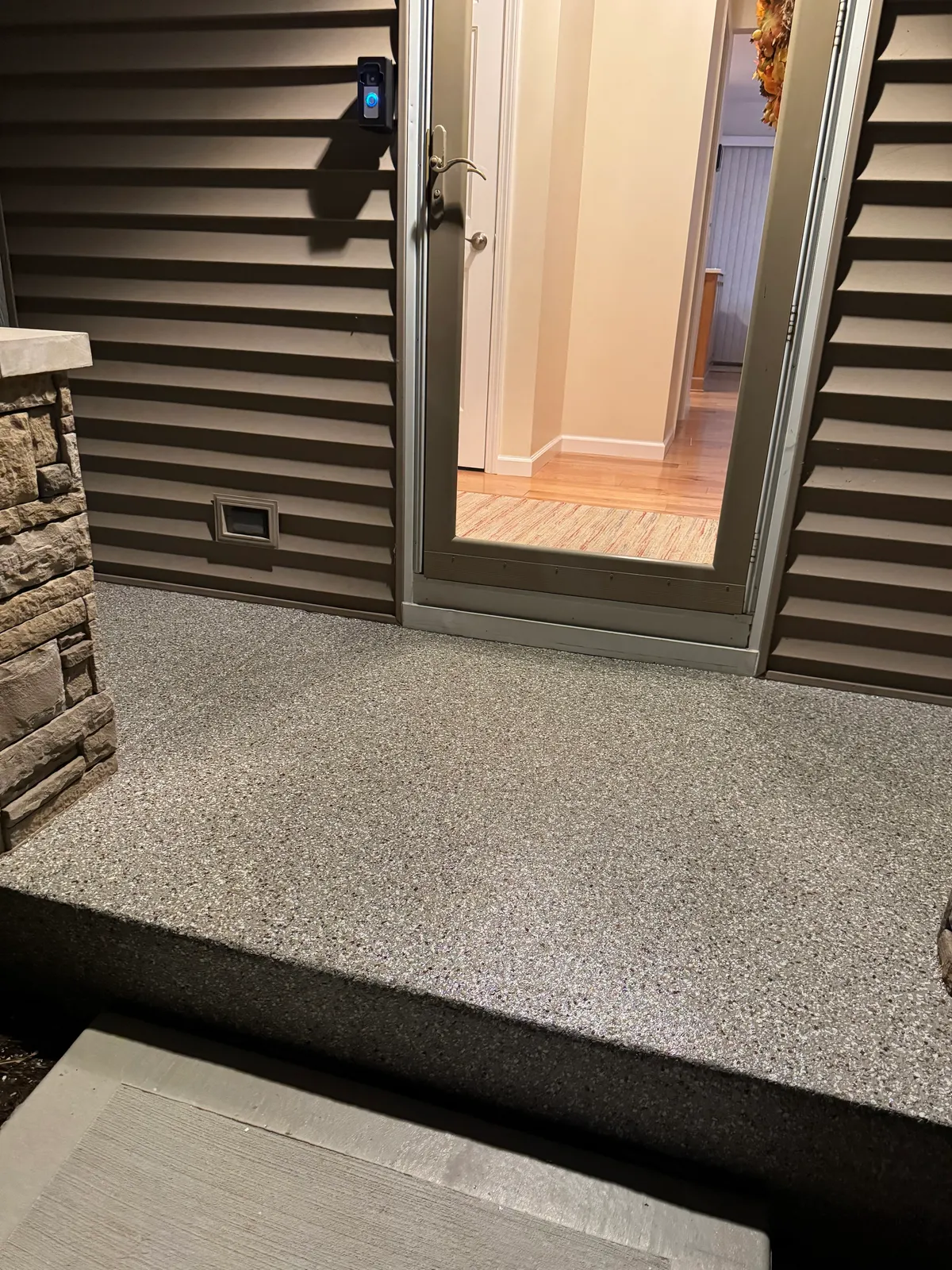
This one was a front porch, about 140 square feet, and the concrete still had a coat of paint on it. Old paint is the weak spot on any coating job. If we'd laid new material over it, the new floor could only hold as well as that paint holds to the concrete, and it wouldn't take much to start lifting. So the plan from the start was to take the porch back to bare concrete before anything new went down.
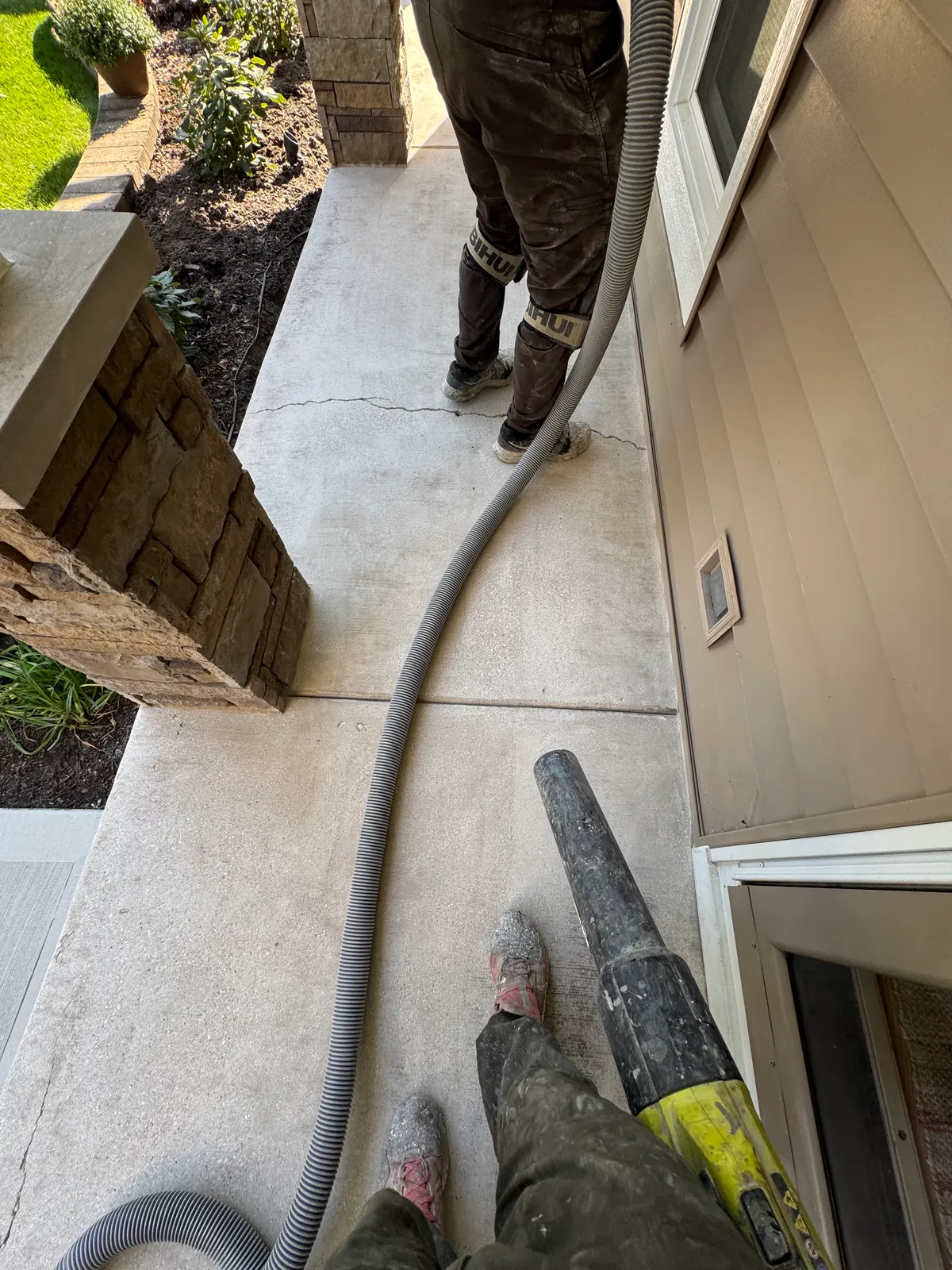
Our crew started with diamond grinding across the whole porch, which took off the existing paint and any loose coating with it. Grinding leaves the concrete with a slightly rough, open surface, almost like fine sandpaper, so the base coat can grip the slab itself instead of sitting on top. Acid etching can't reliably cut through paint, which is why we grind. After that we cleaned the surface thoroughly so nothing was left between the concrete and the first coat.
Next came the polyurea base coat, the layer that bonds to the concrete and holds everything above it. While it was still wet, we broadcast Creekbed vinyl flake in the 1/4-inch size at full coverage, meaning we kept tossing flake until no base coat showed through. Once it set, we scraped and swept off the loose flake. The finish was a UV-resistant polyaspartic clear topcoat made for outdoor use, with aluminum oxide grit mixed in so the porch has some texture underfoot instead of a slick surface.
The whole install took 1 day, and the porch was ready for light foot traffic after about 12 hours. The decorative flake floor now runs edge to edge in Creekbed, with no paint left underneath to fail. If your own front porch has an old painted finish you're tired of touching up, a small area like this is a single-day job, and taking the paint off first is what gives the new coating something solid to hold onto.