What we did
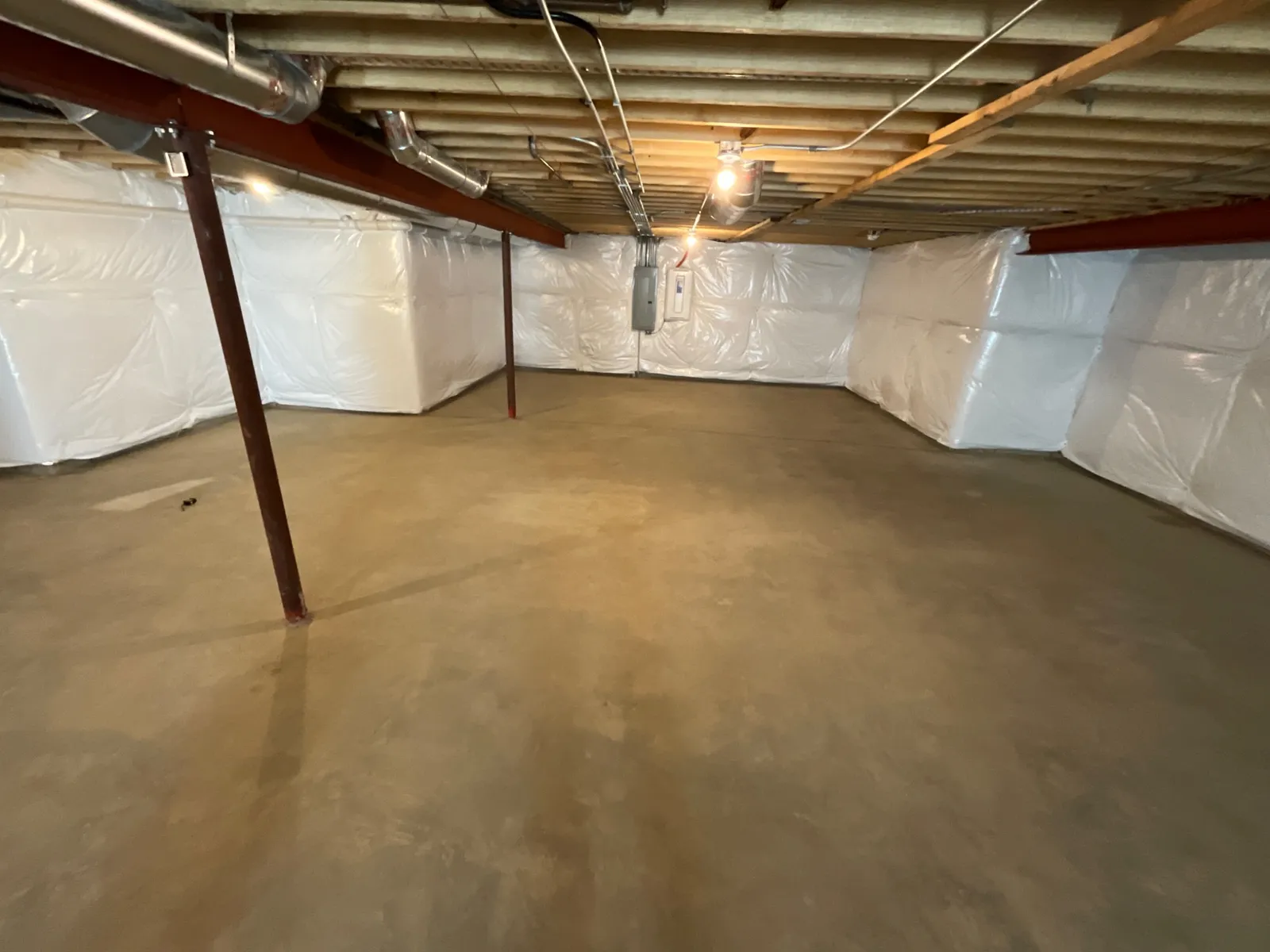
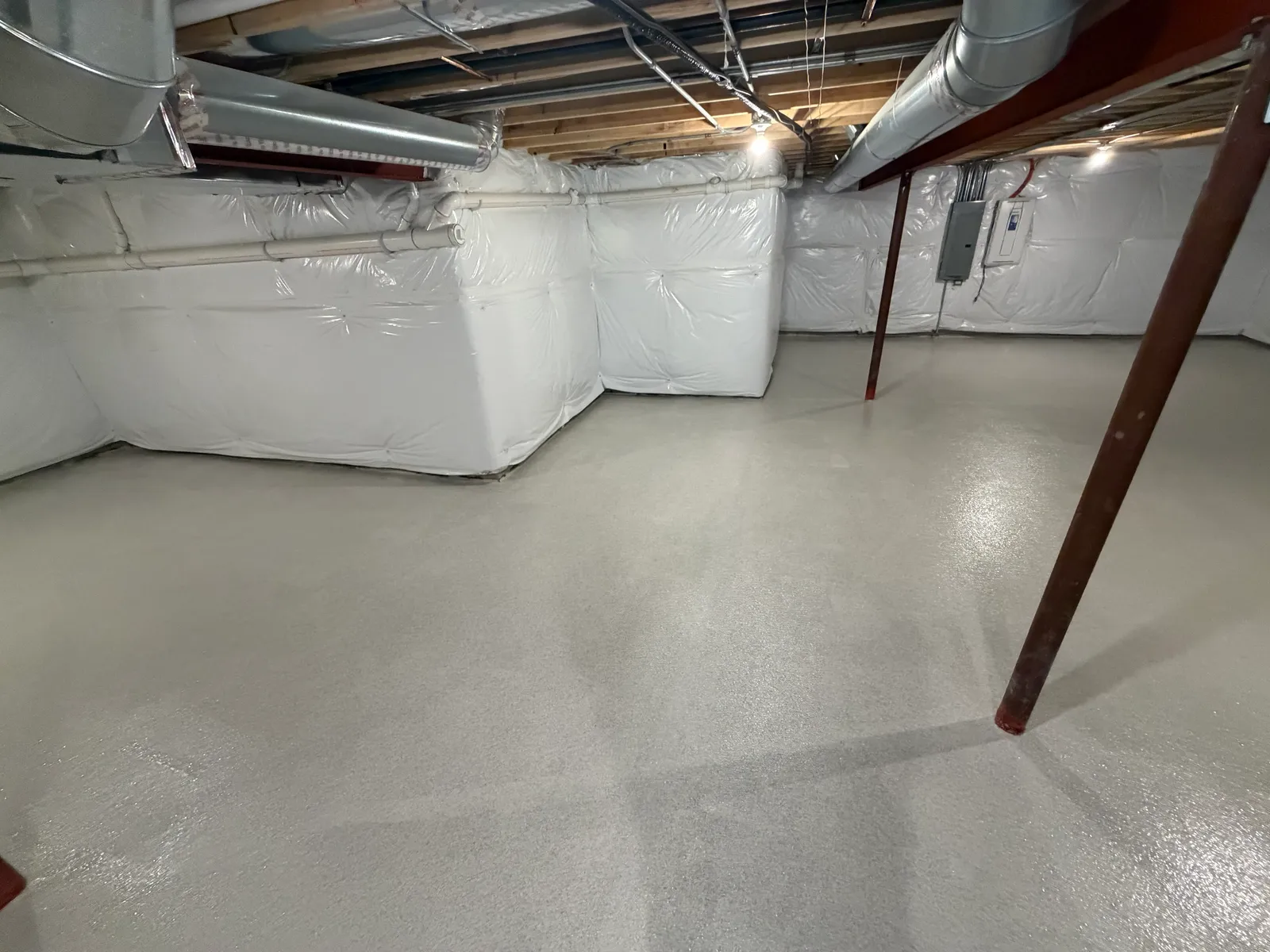
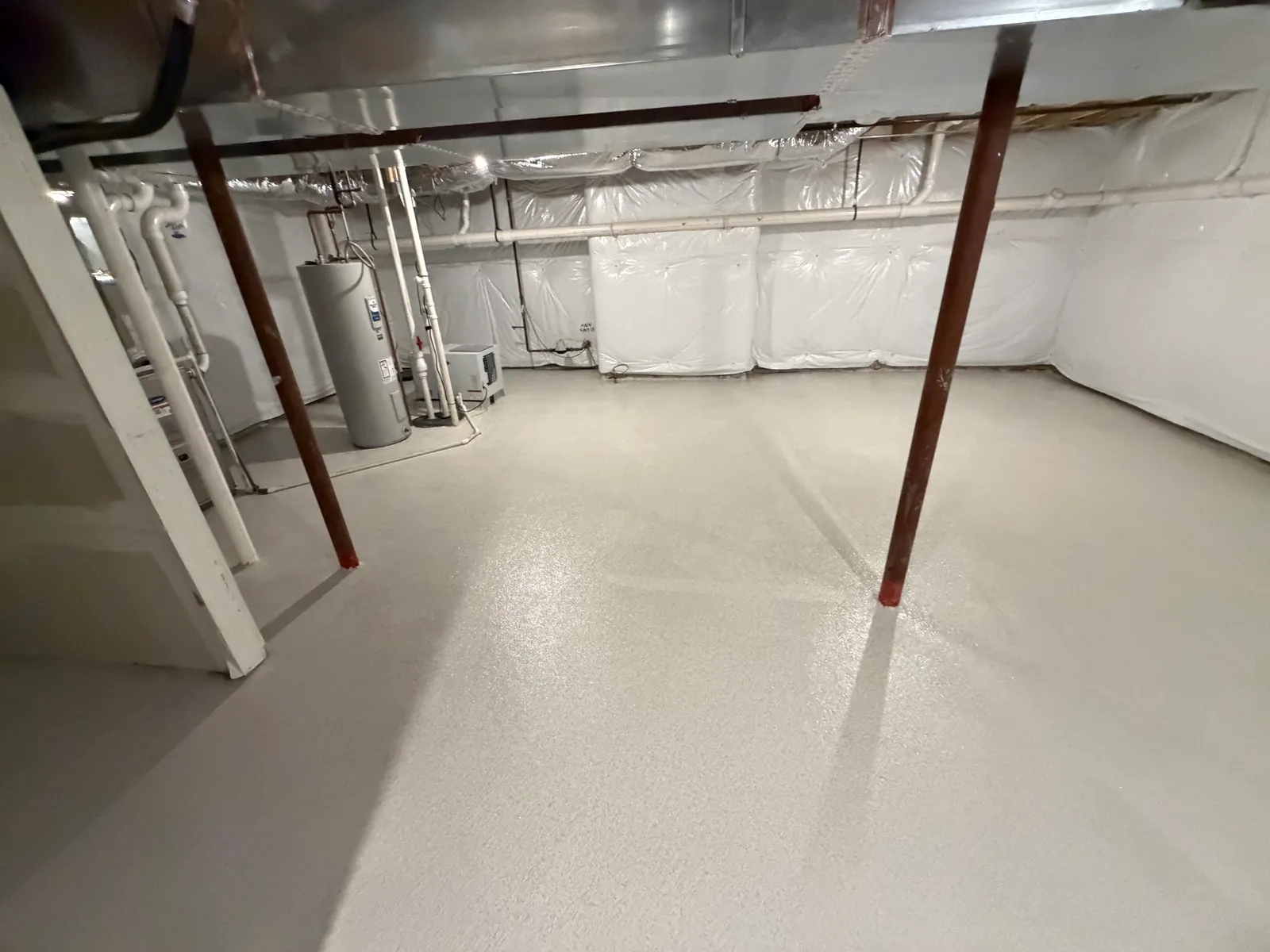
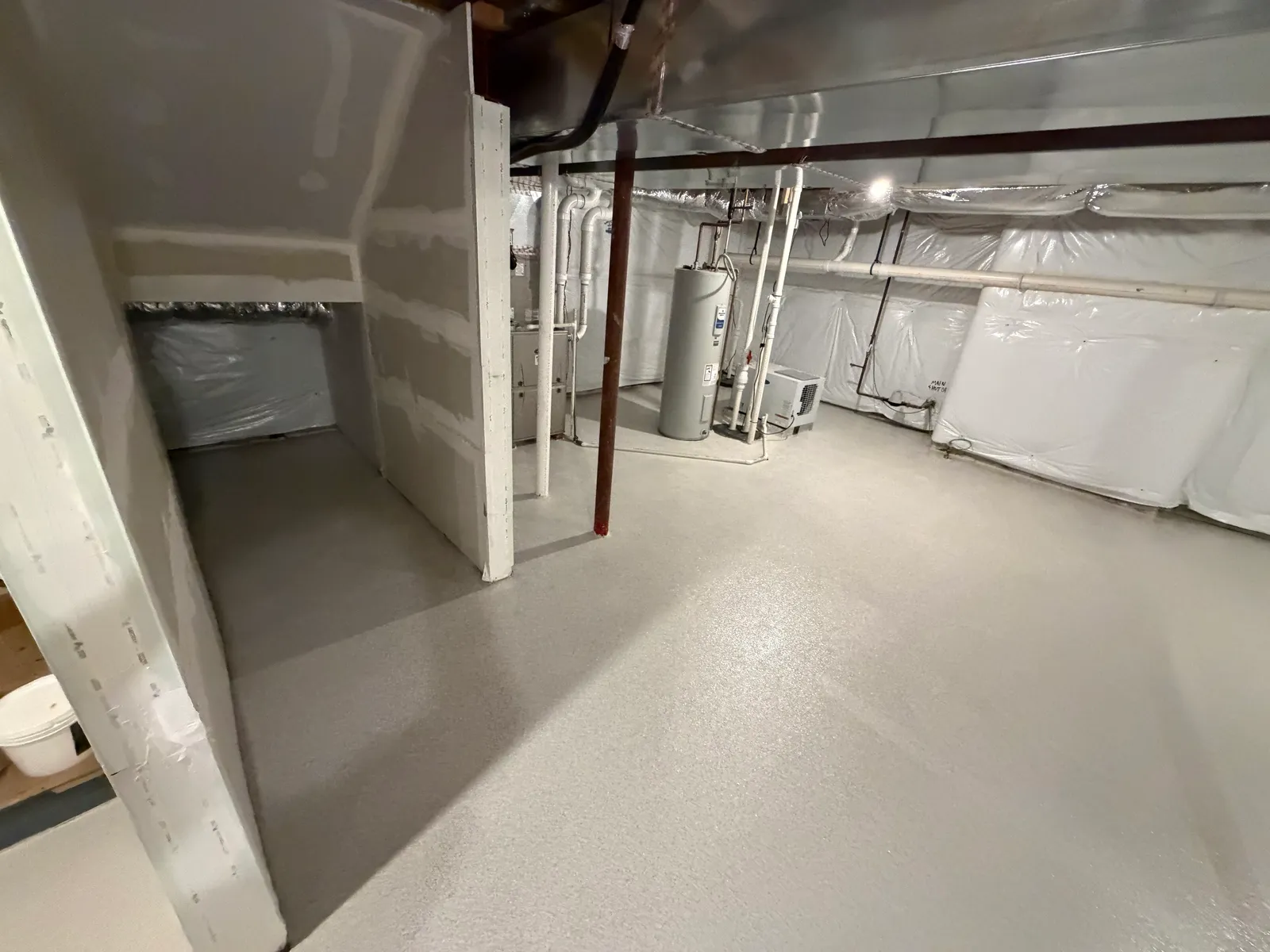
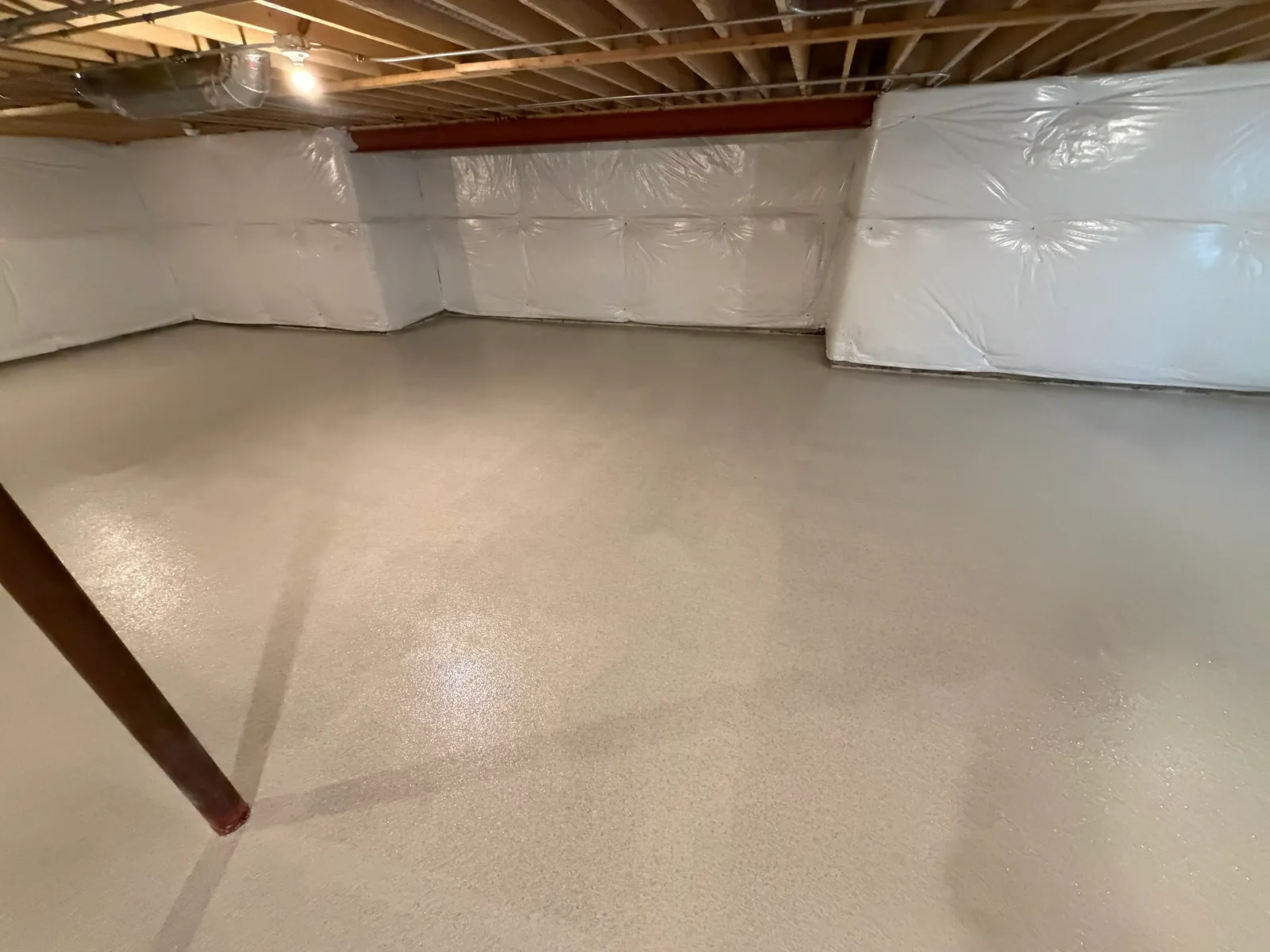
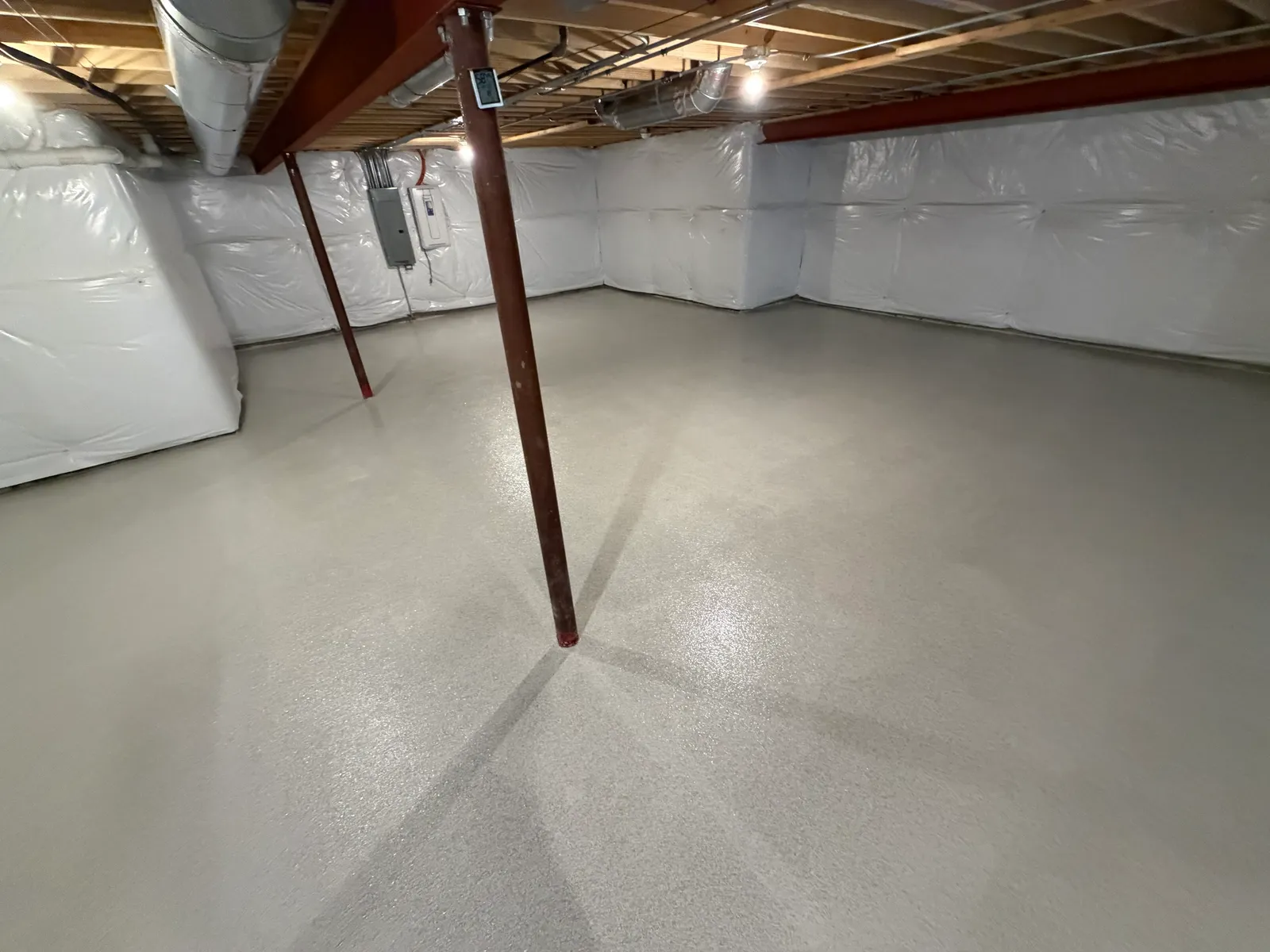
When our crew walked into this basement, we found new concrete with no cracks and no old coating to deal with. That's about as good a starting point as a floor gets. At 1,600 square feet it's a big room, but a clean, sound slab meant there was nothing to strip or repair, so we could put the whole effort into prep and the coating itself. The plan was a polyurea basement floor finished with a custom flake blend called OPAL.
Even new concrete needs prep before anything goes on it. We started by taking off the surface sheen and any contaminants, then ground the entire floor with diamond tooling to open up the surface. We use diamond grinding instead of acid-etching because it gives an even, consistent profile across the whole slab, and that rougher texture is what the base coat actually grips. Skip this step and a coating can sit on top of the concrete instead of bonding to it.
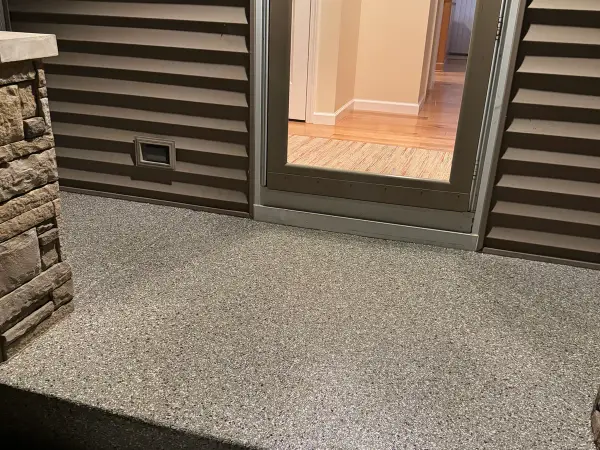
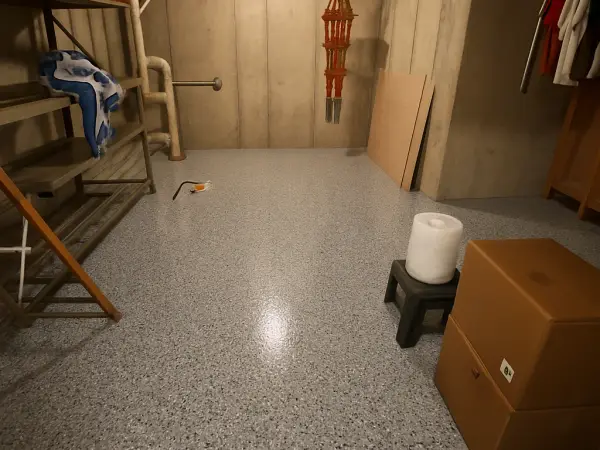
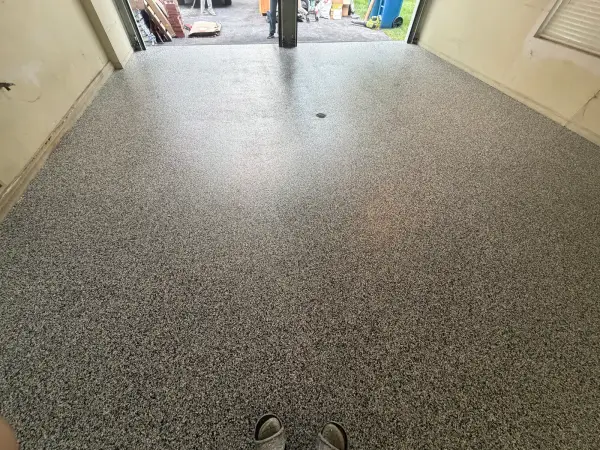
Next came the polyurea base coat. While it was still wet, we broadcast the OPAL flake to rejection, which means we kept adding flake until the base coat couldn't hold any more and the whole floor was fully covered. Once that set, we scraped and vacuumed off the loose flake so the surface was even. A clear polyaspartic topcoat went over everything to lock the flake in and give the floor its protective wear layer, and then we cleaned up the space.
The whole install took 1 day. The floor was walkable after about 12 hours and ready for full use after about 48 hours. If you've got a newer basement slab that's never been coated, this job shows how straightforward it can be: with no cracks or old coatings in the way, the work comes down to good grinding and a well-built coating system, and a large basement can still be finished in a single day.