What we did
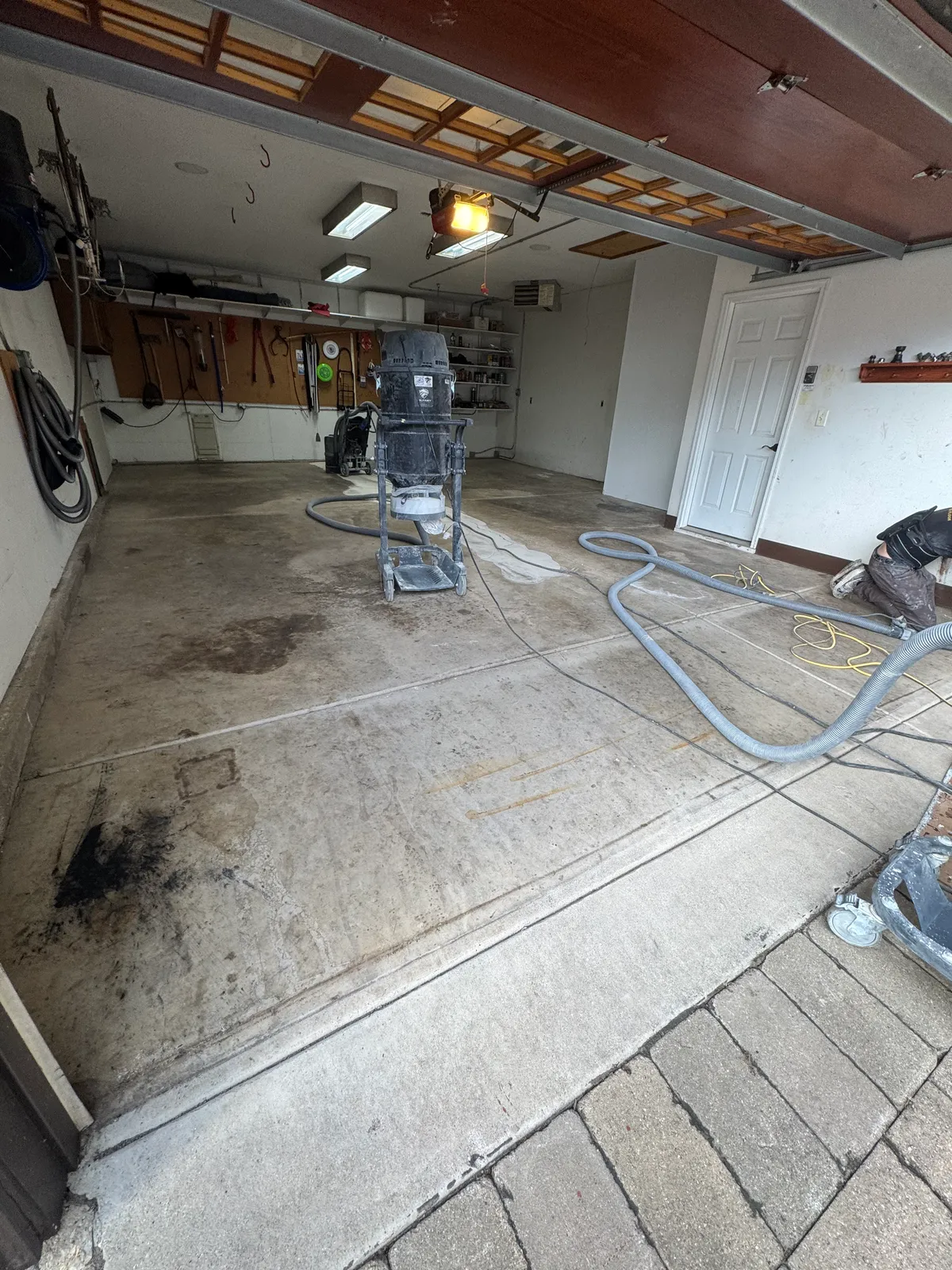
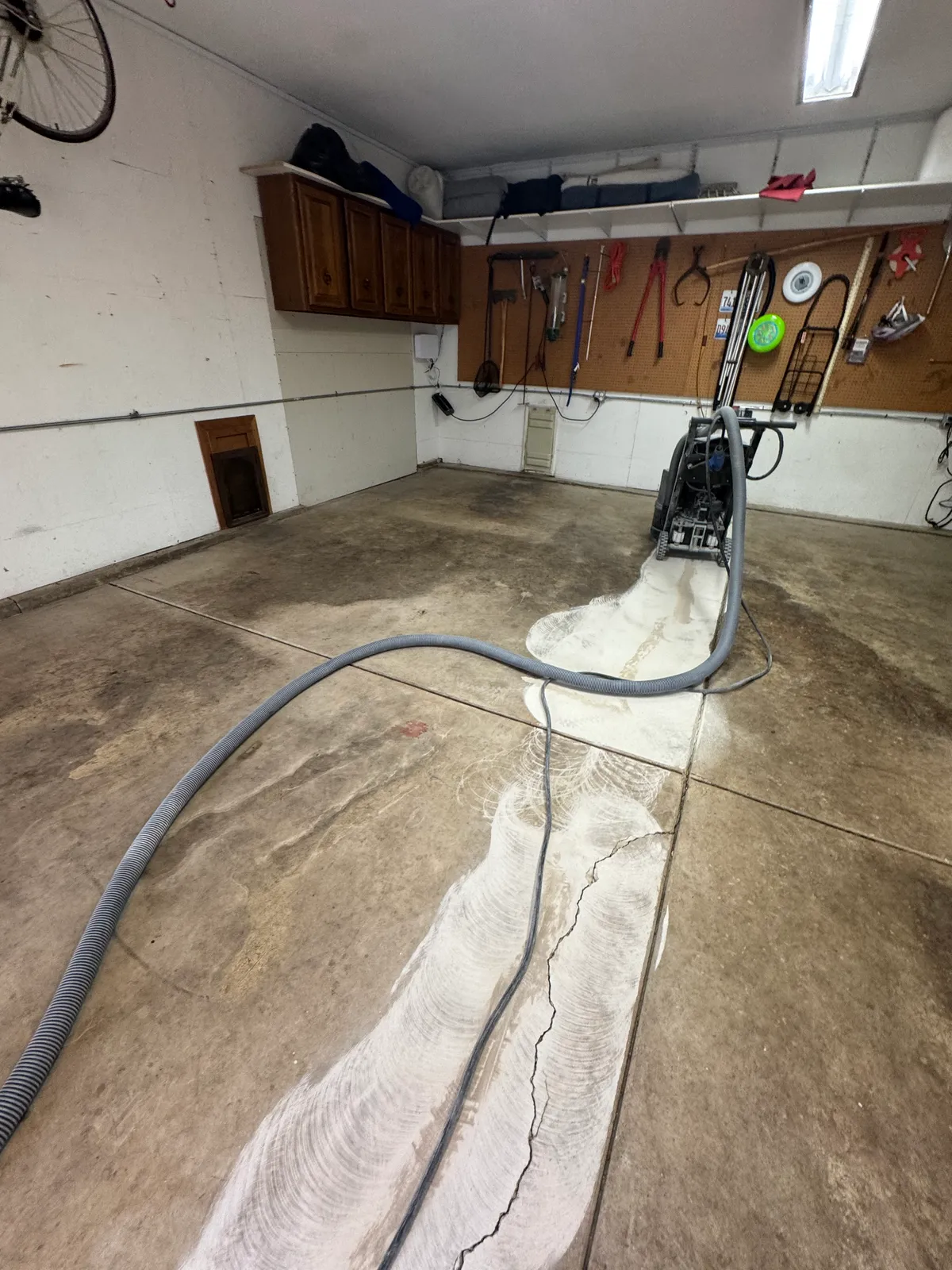
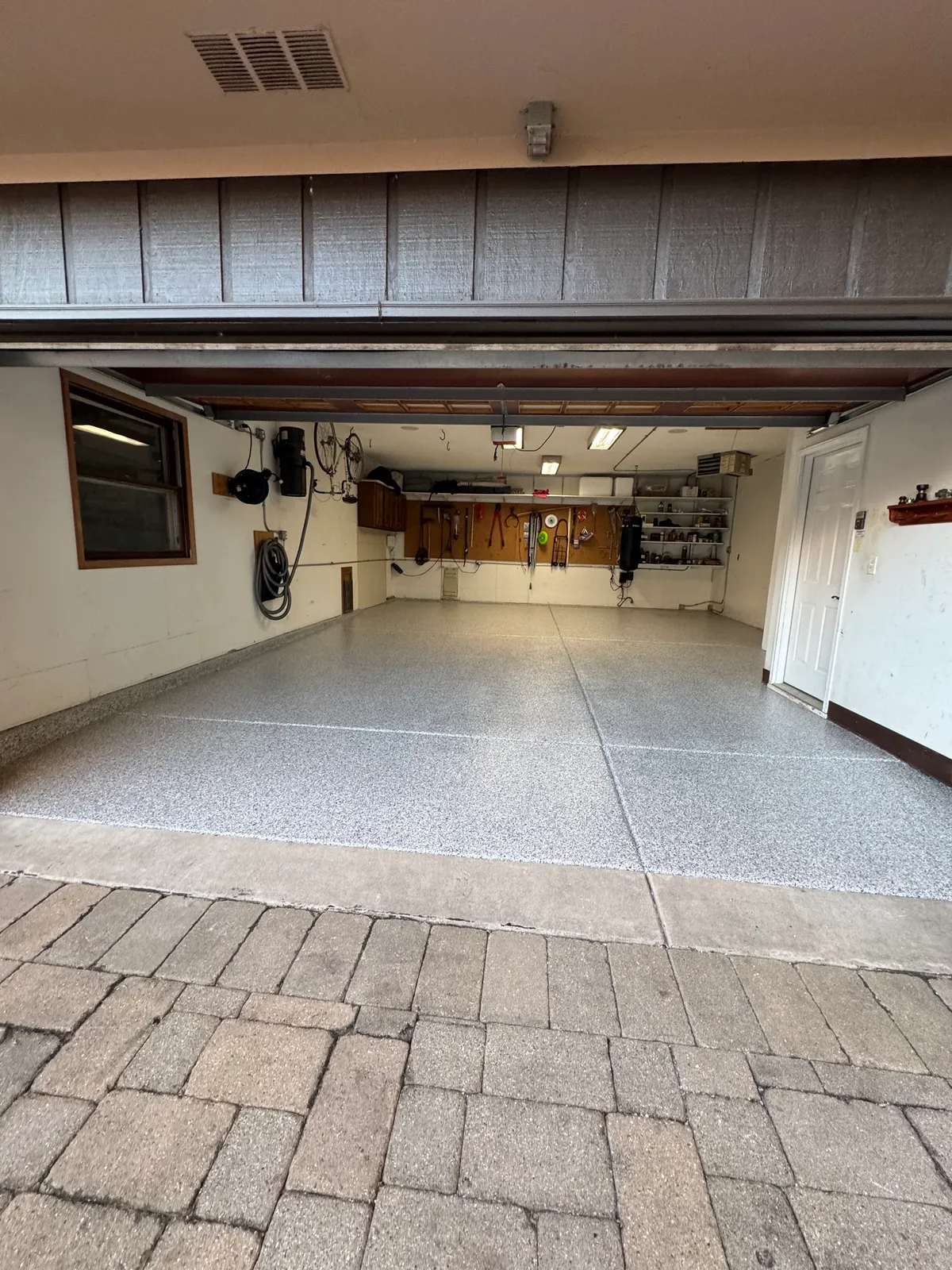
When our crew walked into this two-car garage, we found new concrete with no cracks and no old coating on it. That's about as clean a starting point as we get. We measured 600 square feet, including the outside edge of the slab at the door. With nothing to repair or strip off, the whole job came down to getting the surface ready to grip the coating and then laying the system down carefully.
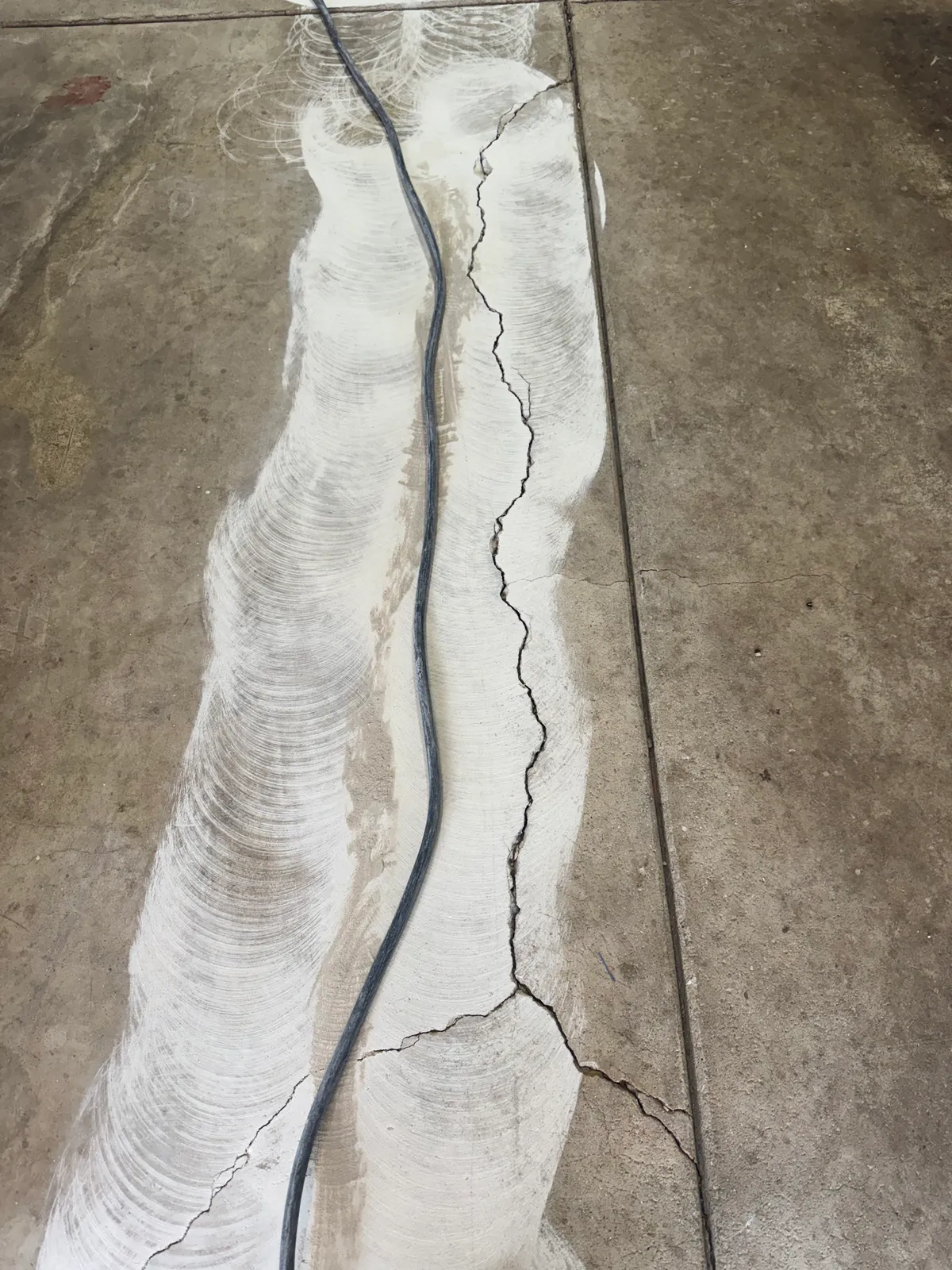
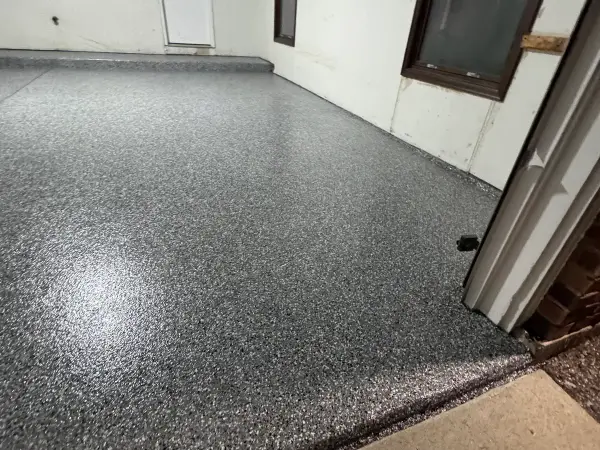
New concrete still needs prep. Fresh slabs tend to have a smooth, dense skin on top, and a coating doesn't bond well to that. We started by taking off the surface sheen and any contaminants, then used diamond grinding across the floor to open up the concrete and give it a rough profile. That texture is what the base coat locks into. We also ground the 30 linear feet of vertical concrete faces where the slab meets the walls so they'd take the coating the same way.
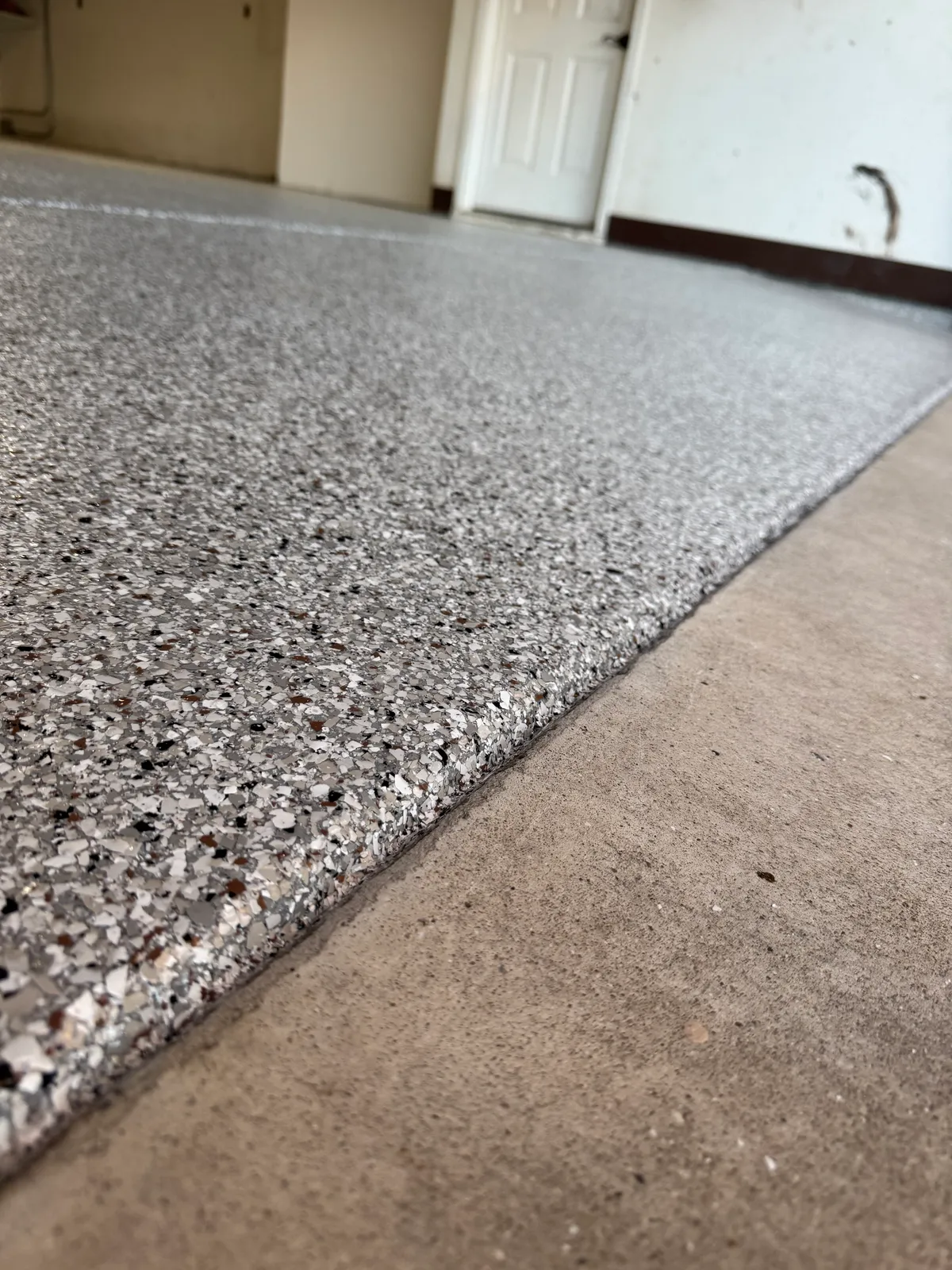
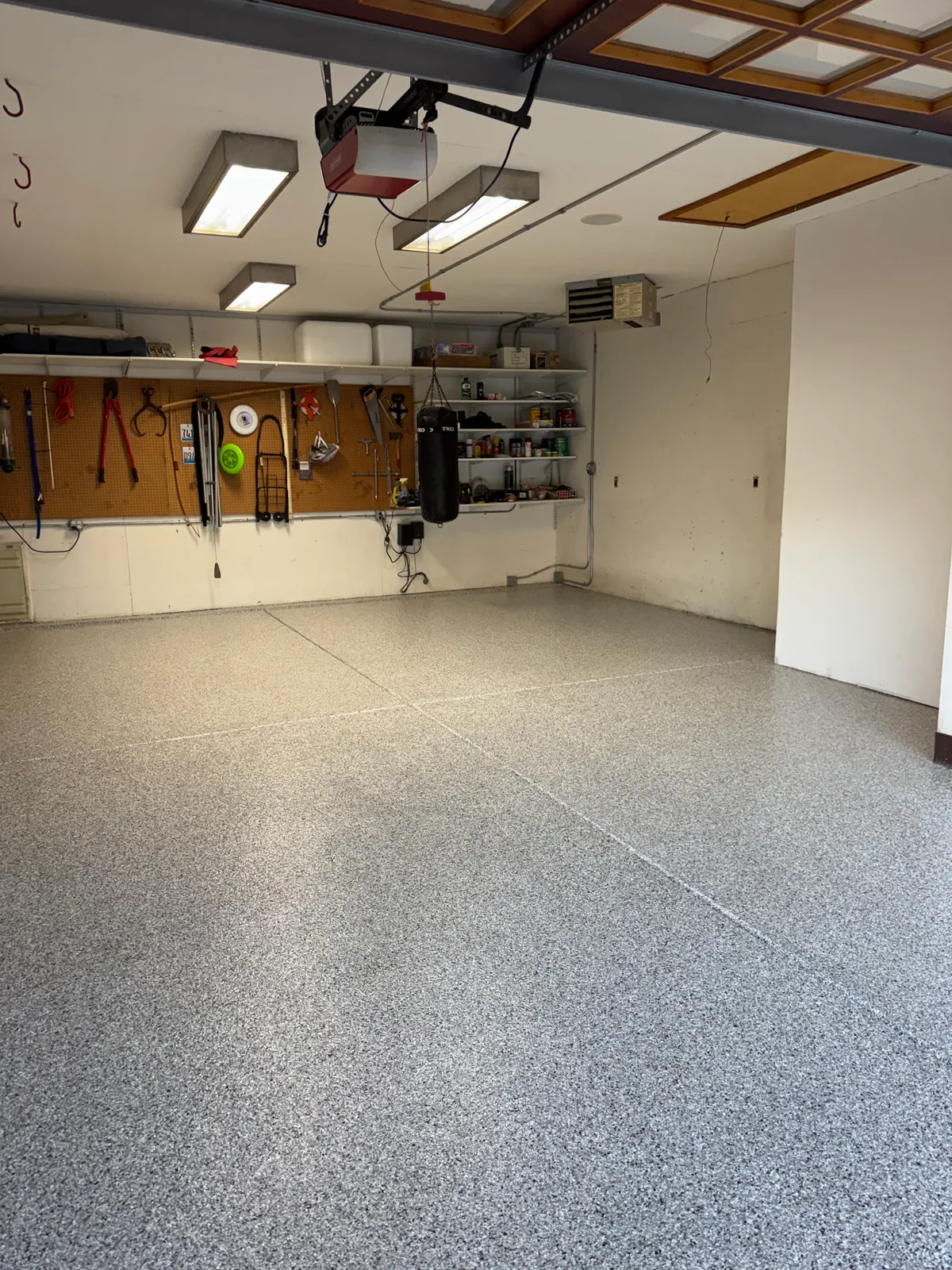
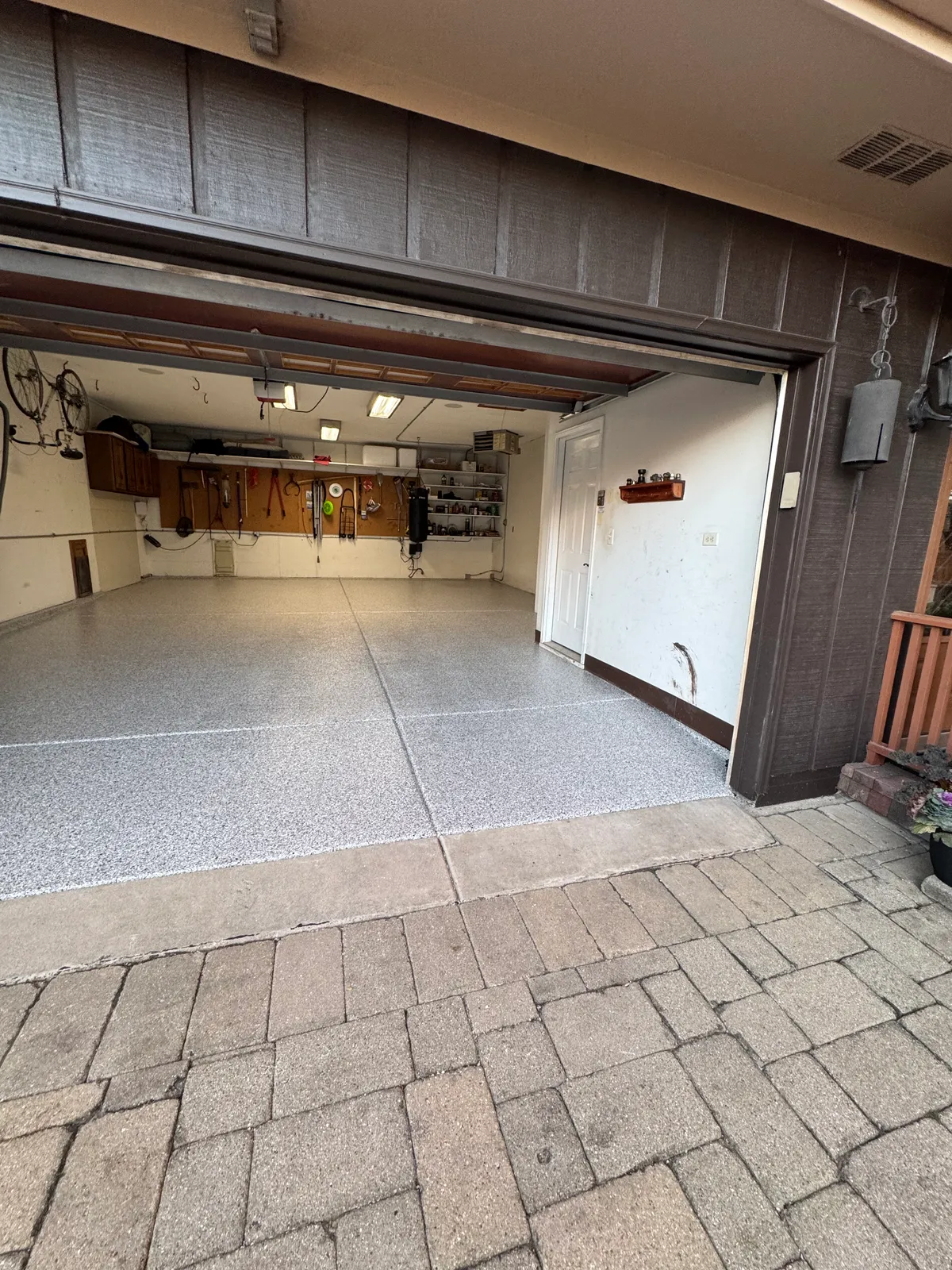
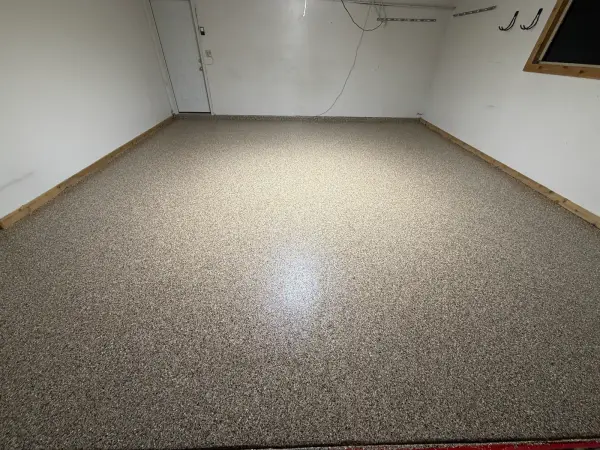
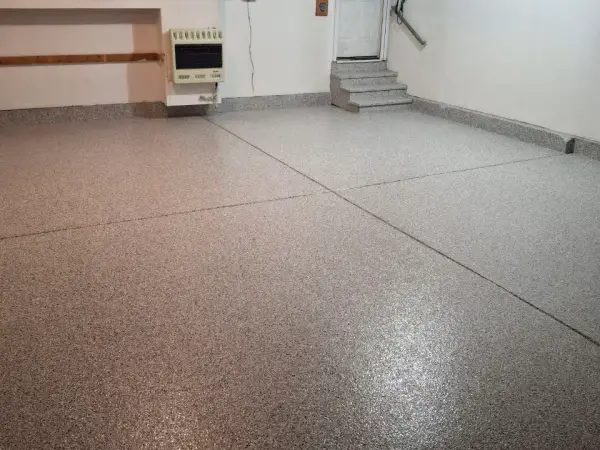
Next came the polyurea base coat, and while it was still wet we broadcast Feather Gray flake to rejection. That means we kept throwing flake until the base couldn't hold any more, so the floor ends up fully covered with no bare spots. Once it set, we scraped and vacuumed off the loose flake. The vertical faces got the same system, which gives one continuous seal from floor to wall. Our clear polyaspartic topcoat went on last, with aluminum-oxide grit mixed in across all 600 square feet for better traction. It's the same polyurea garage coating we put down in a lot of homes around here.
The whole install took one day. The floor was walkable after about 12 hours and ready for full use, cars included, after about 48 hours. We cleaned up the site before we left. If you've got a newer garage slab with no cracks, this job is a good picture of what to expect: most of the effort goes into the grind, and the rest goes quickly.