What we did
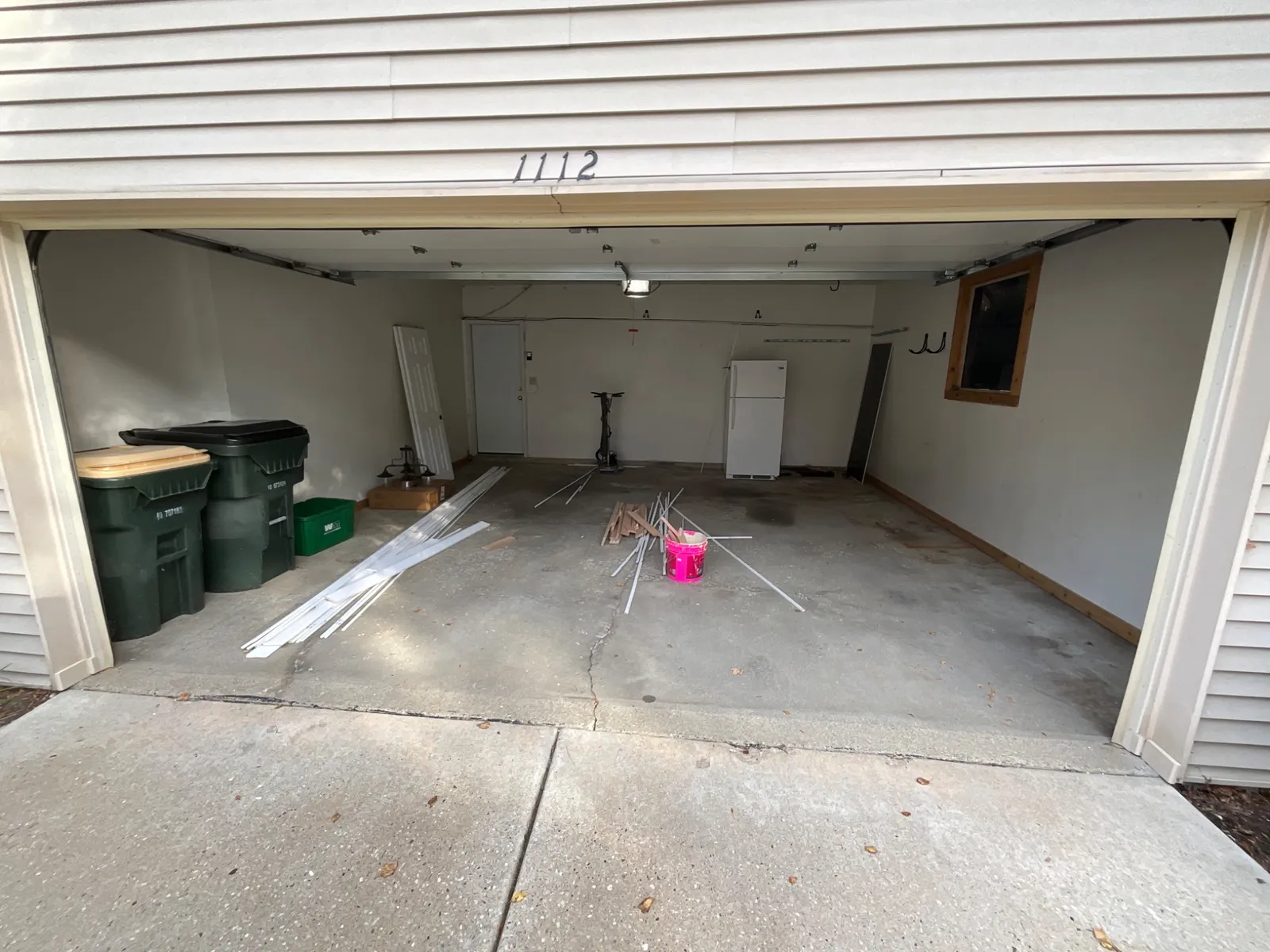
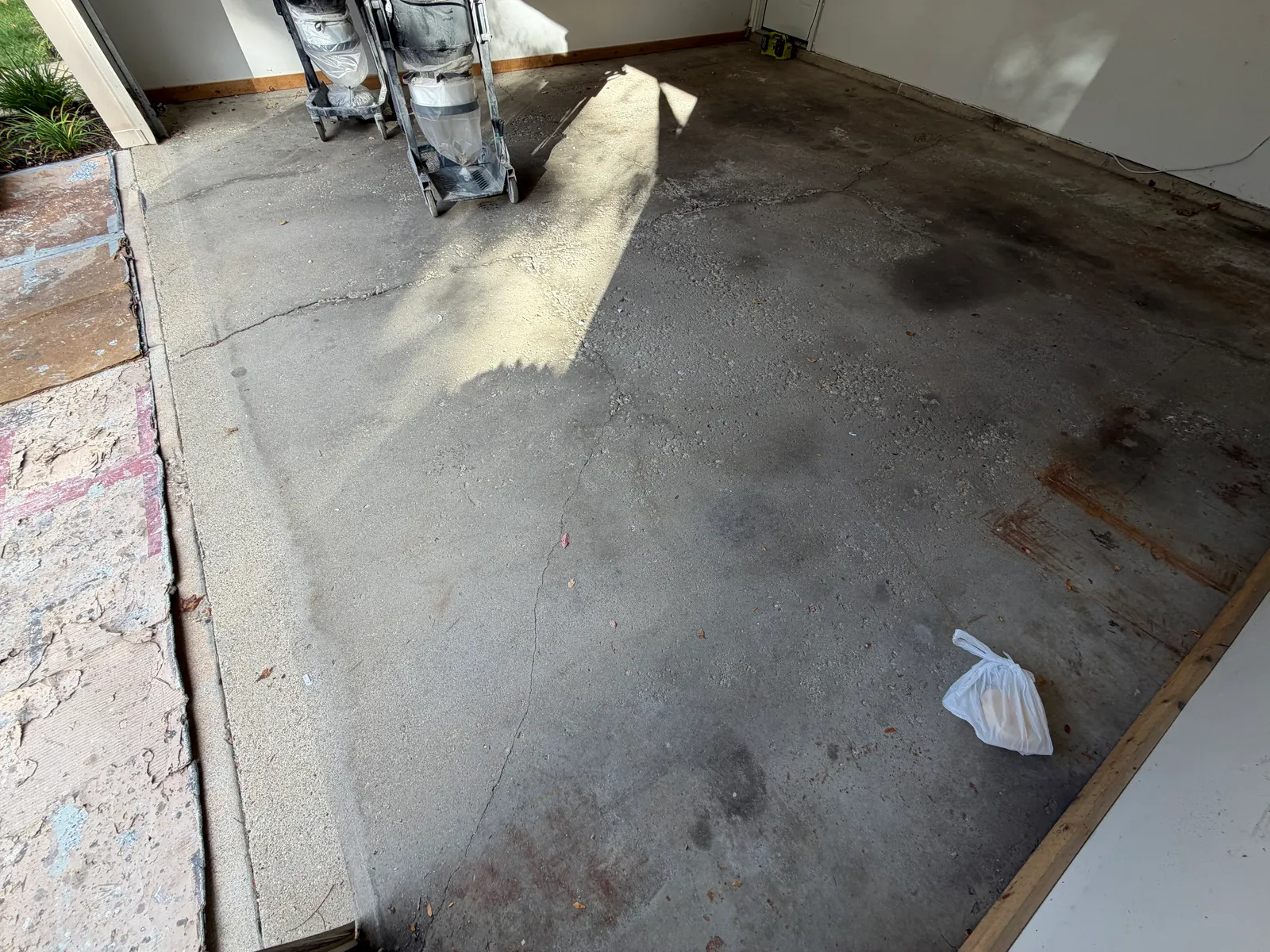
The garage was a standard 2-car space with older concrete that had never been coated. We found a few cracks and some etching on the surface, but no old paint or sealer to deal with. That was good news, since there was nothing to strip. It meant the job came down to opening up the concrete properly and taking care of the cracks before any coating went down. The floor measured 400 square feet, including the outside edge of the slab.
Prep started with diamond grinding across the whole floor to take off the surface sheen and any contaminants. Grinding opens up the top of the concrete so the base coat can bite into it, which is why we choose diamond grinding over acid etching for floors like this one. Next, the few cracks were cleaned of loose concrete and filled. We do that before the base coat because an open crack under a coating can show through the finish or become a weak spot where the bond lets go.
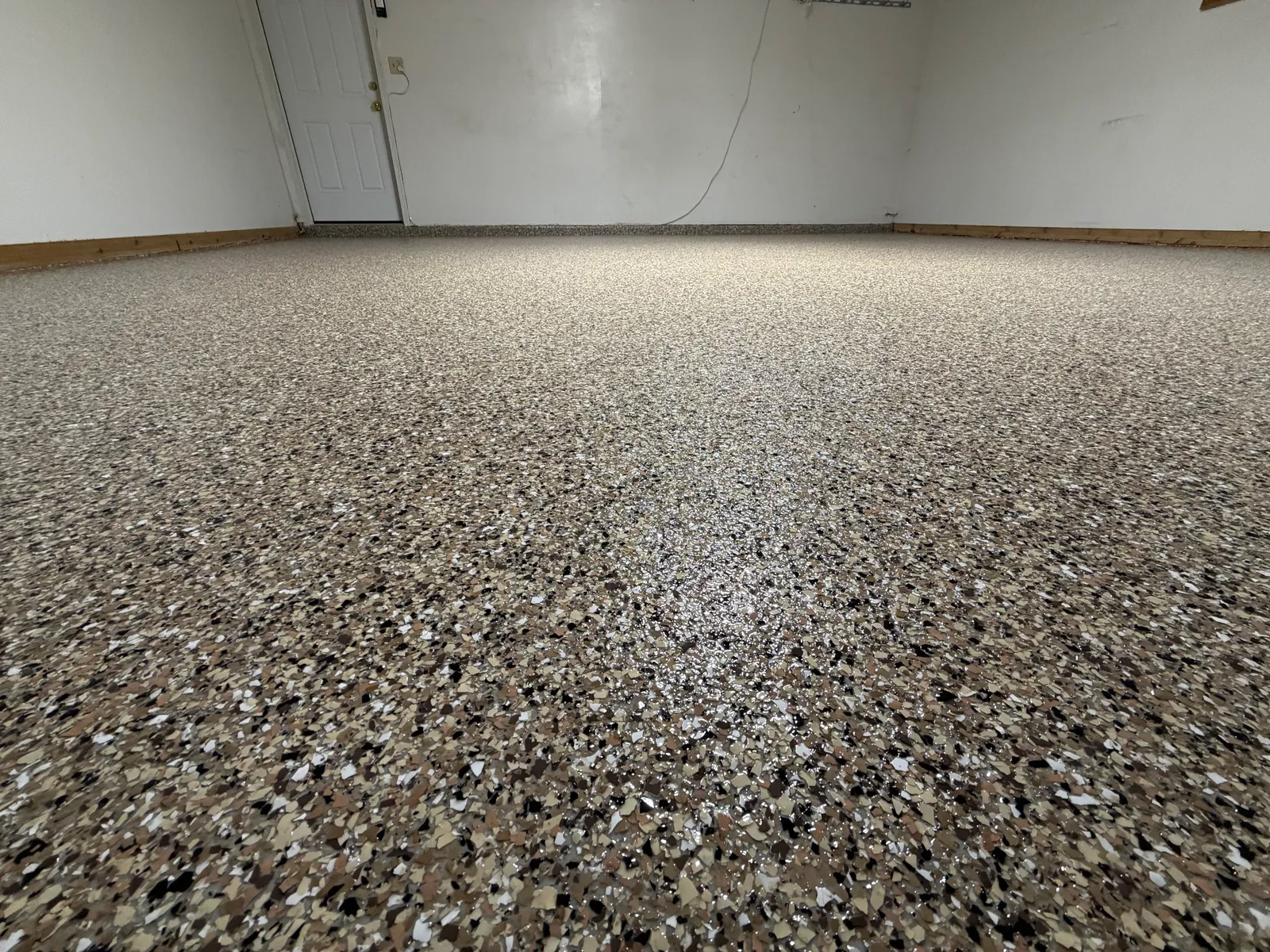
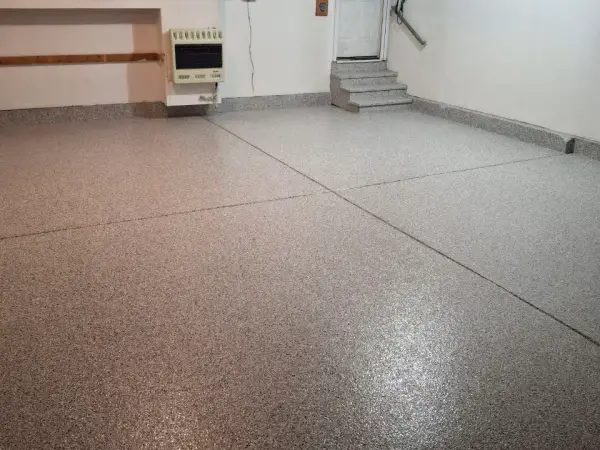
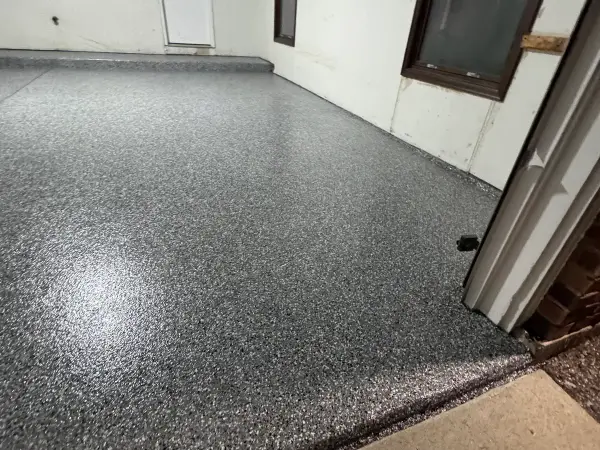
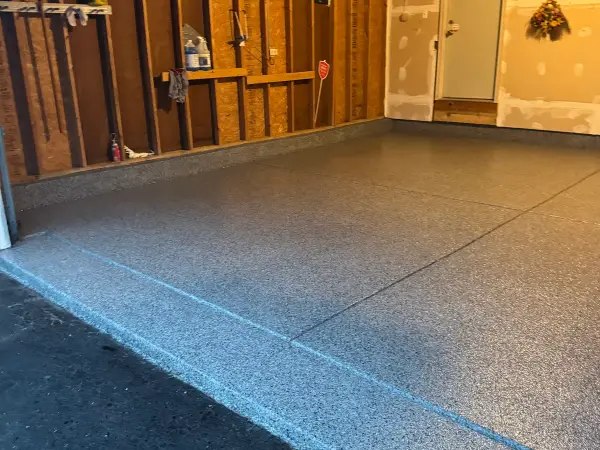
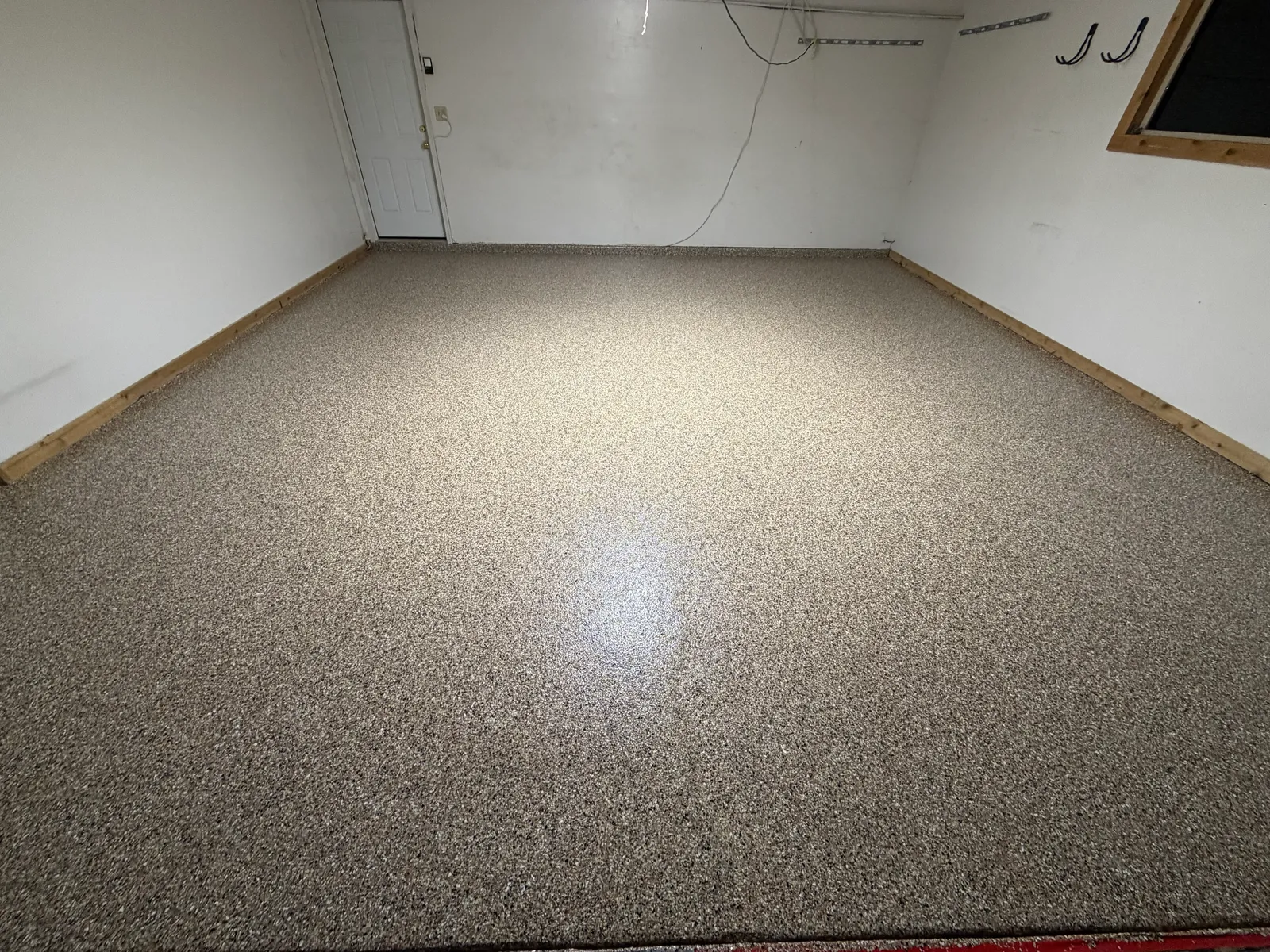
With the slab ready, the polyurea garage floor coating went down as the base coat, and we broadcast Outback flake into it until the floor wouldn't take any more. Installers call that broadcasting to rejection, and it gives full, even color. We scraped and vacuumed the loose flakes, then put on the clear polyaspartic topcoat with aluminum oxide grit broadcast into it across all 400 square feet for better traction. We also coated 20 linear feet of vertical concrete with the same system, so the floor and those edges are sealed as one continuous surface.
The whole install took 1 day. The floor was walkable after about 12 hours and ready for full use, cars included, after about 48 hours. If your garage has older concrete with a few cracks and some surface wear but has never been coated, this job is a fair picture of what's involved. You don't need a perfect slab to start with, just proper grinding, the cracks dealt with, and the system built up in the right order.