What we did
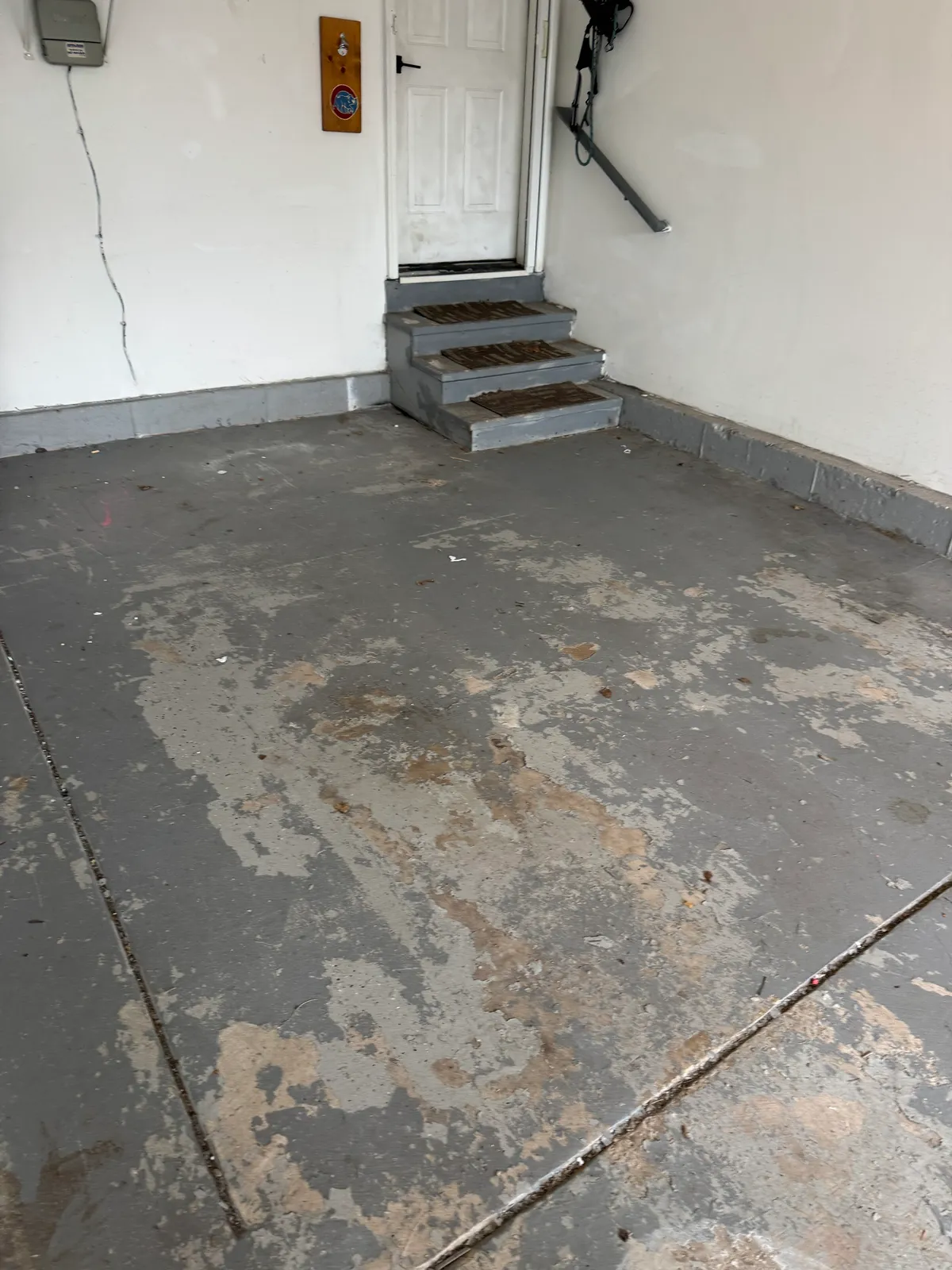
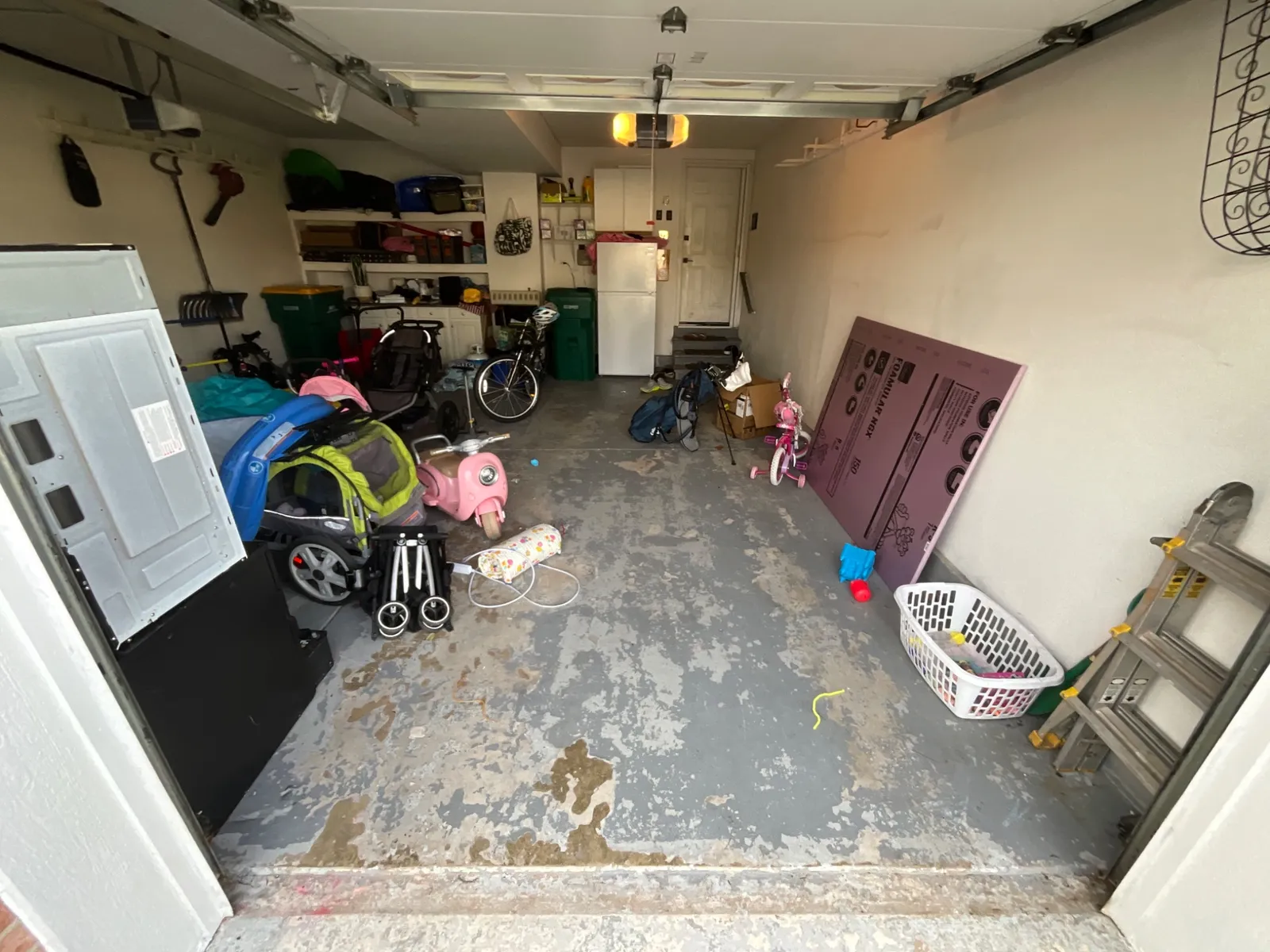
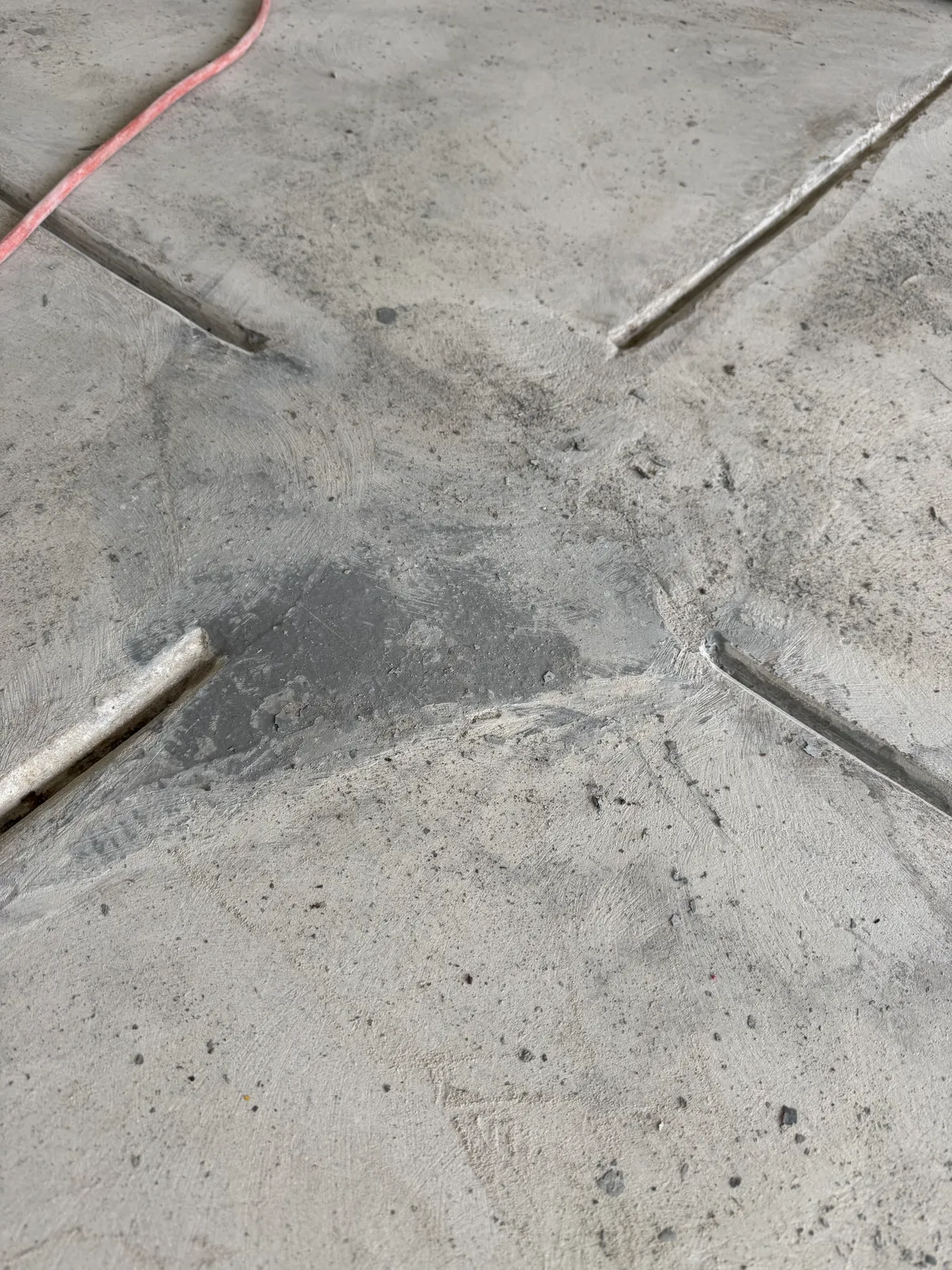
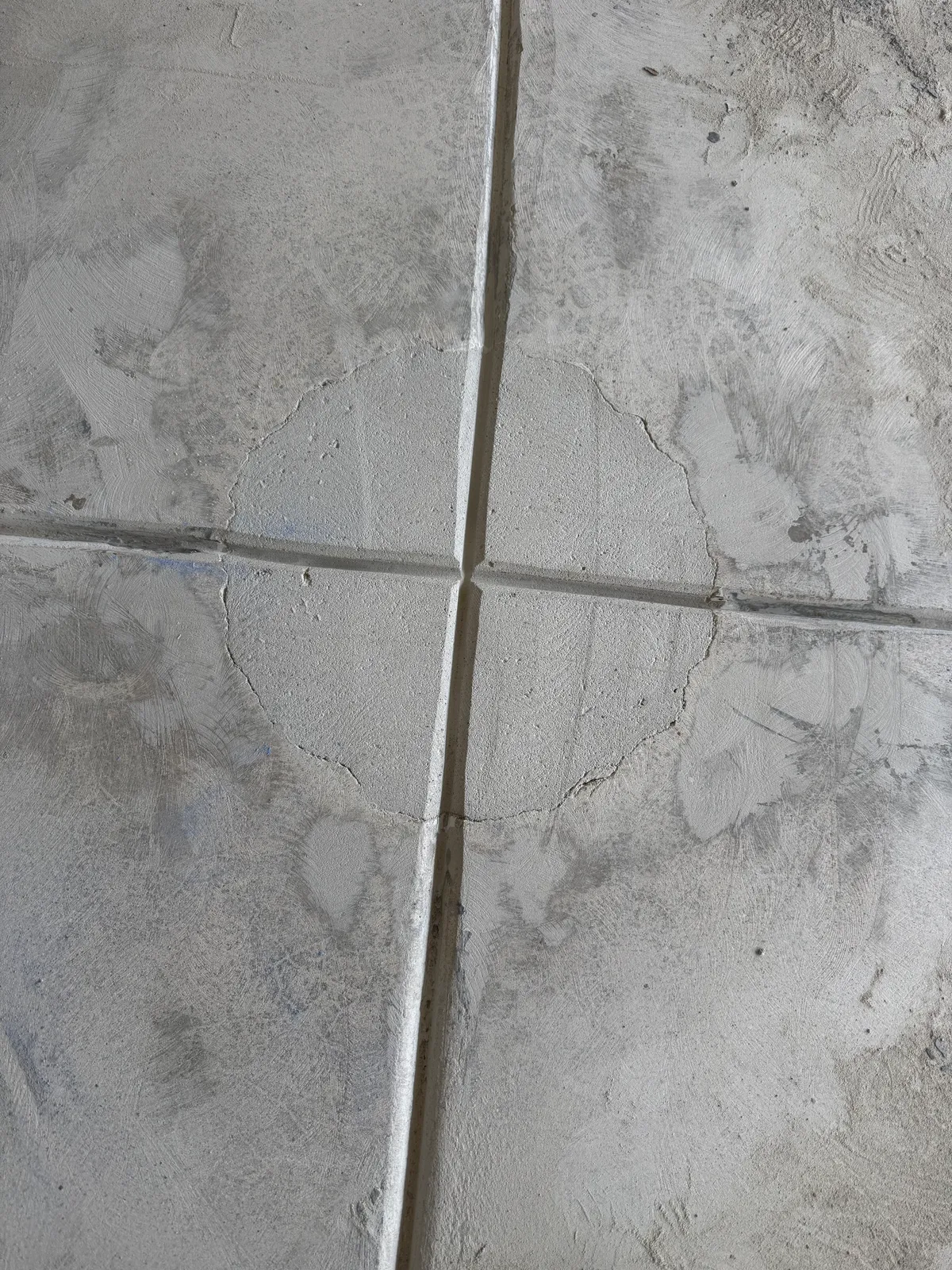
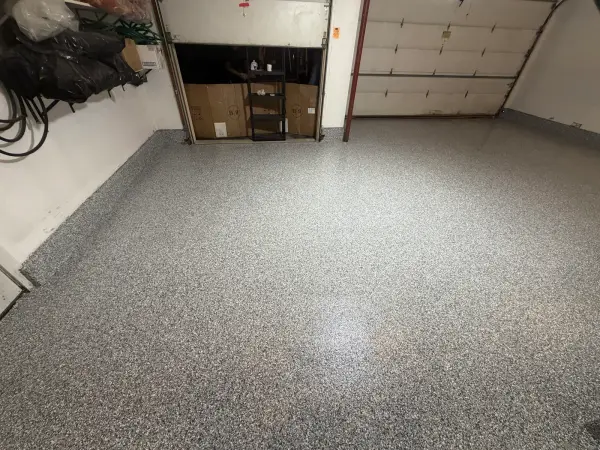
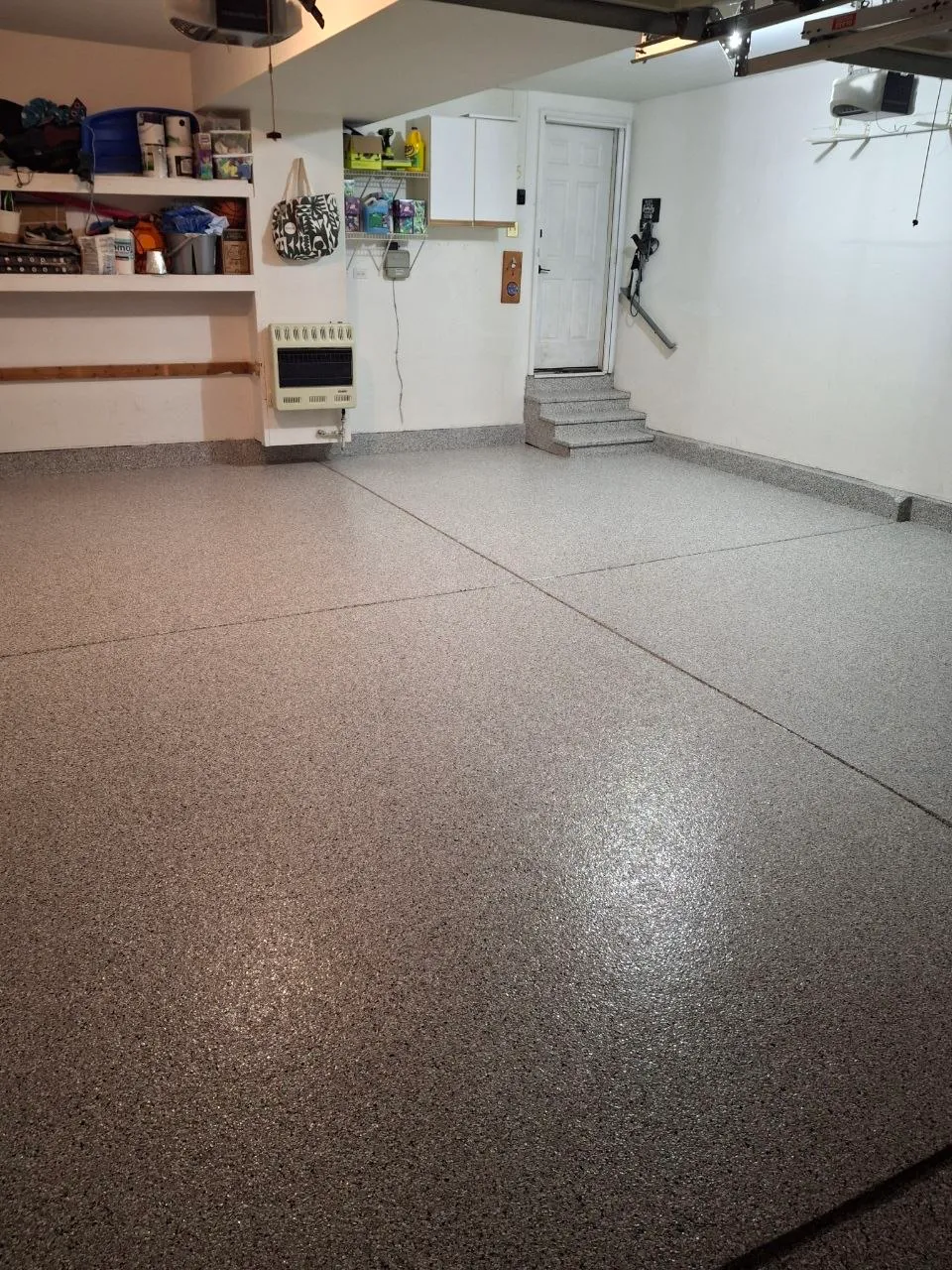
This was a two-car garage on new concrete: no cracks, no old coating to strip, nothing to patch. That's about as clean a starting point as we get. It meant the whole day could go into prep and the coating itself instead of repairs. The floor came to 440 square feet, and that number included the outside edge of the slab, so the finish would carry right out to the front of the garage rather than stopping short of it.
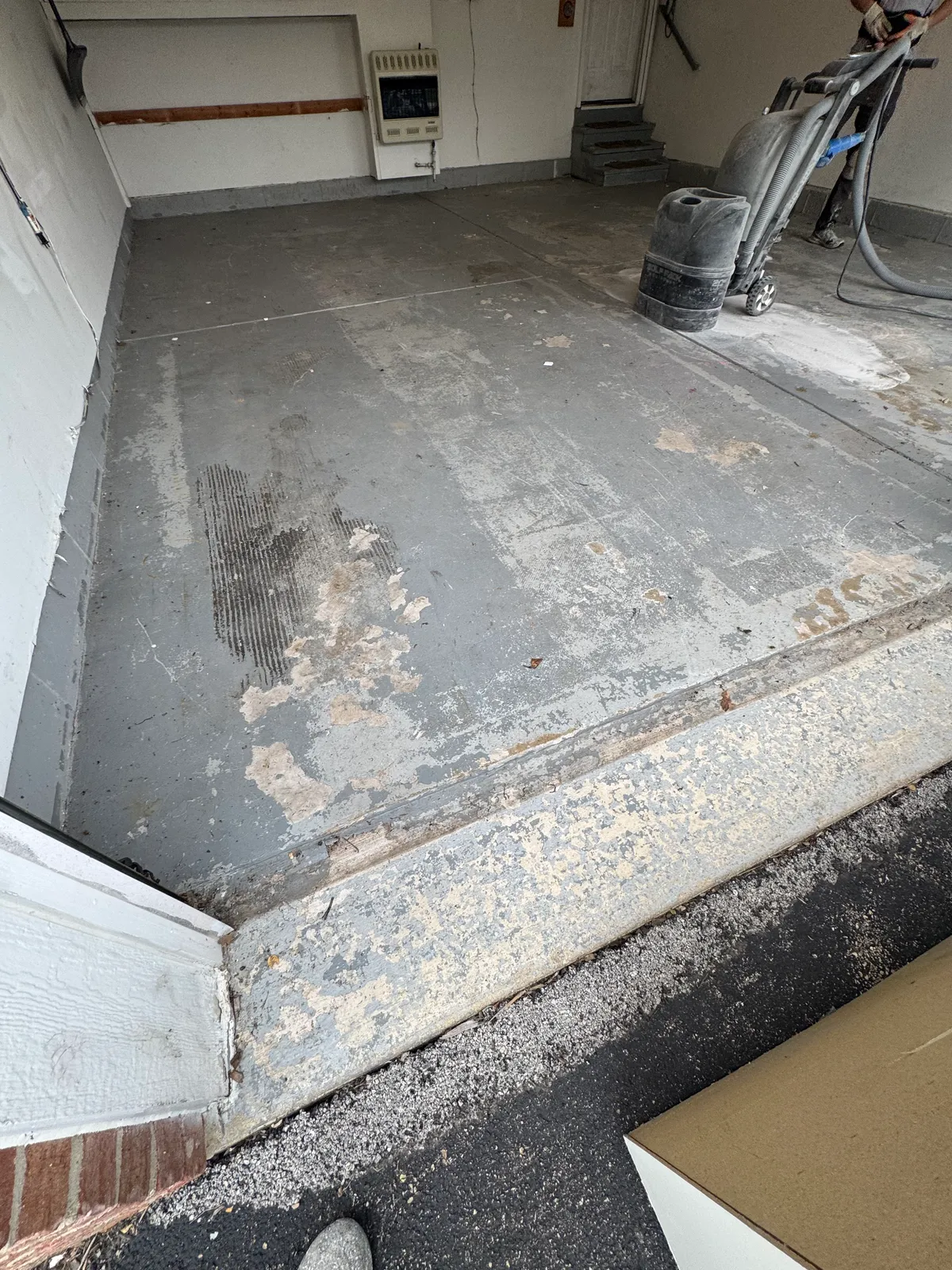
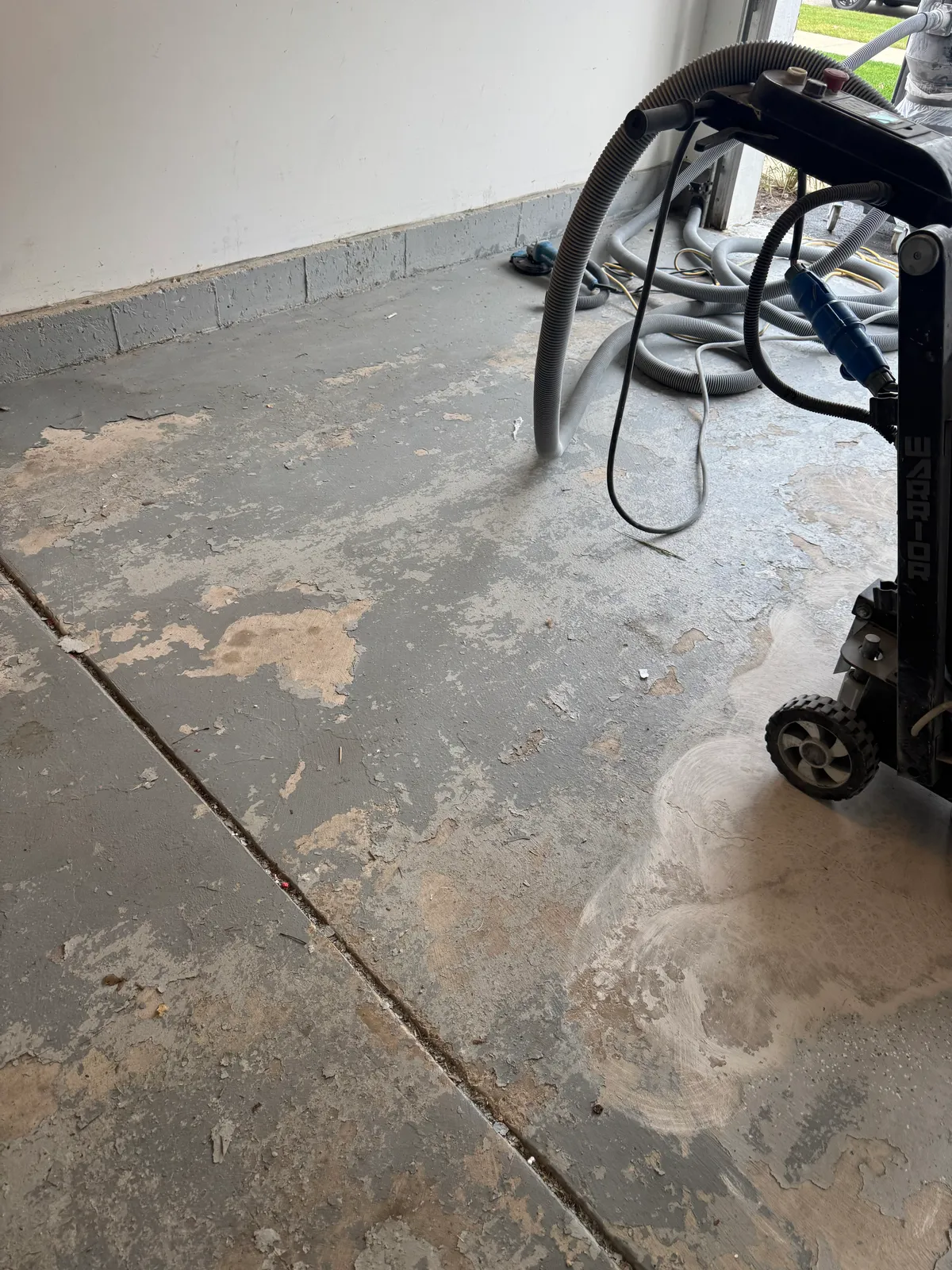
New concrete still gets ground. A fresh slab usually has a smooth, slick top layer left from finishing, and a coating sitting on that has very little to hold onto. We took off the surface sheen and any contaminants with diamond grinding, which opens up the concrete and leaves a profile, a slightly rough texture the base coat can grip. We also profiled 60 linear feet of vertical concrete, the low faces where the slab meets the walls, so they could take the coating too.
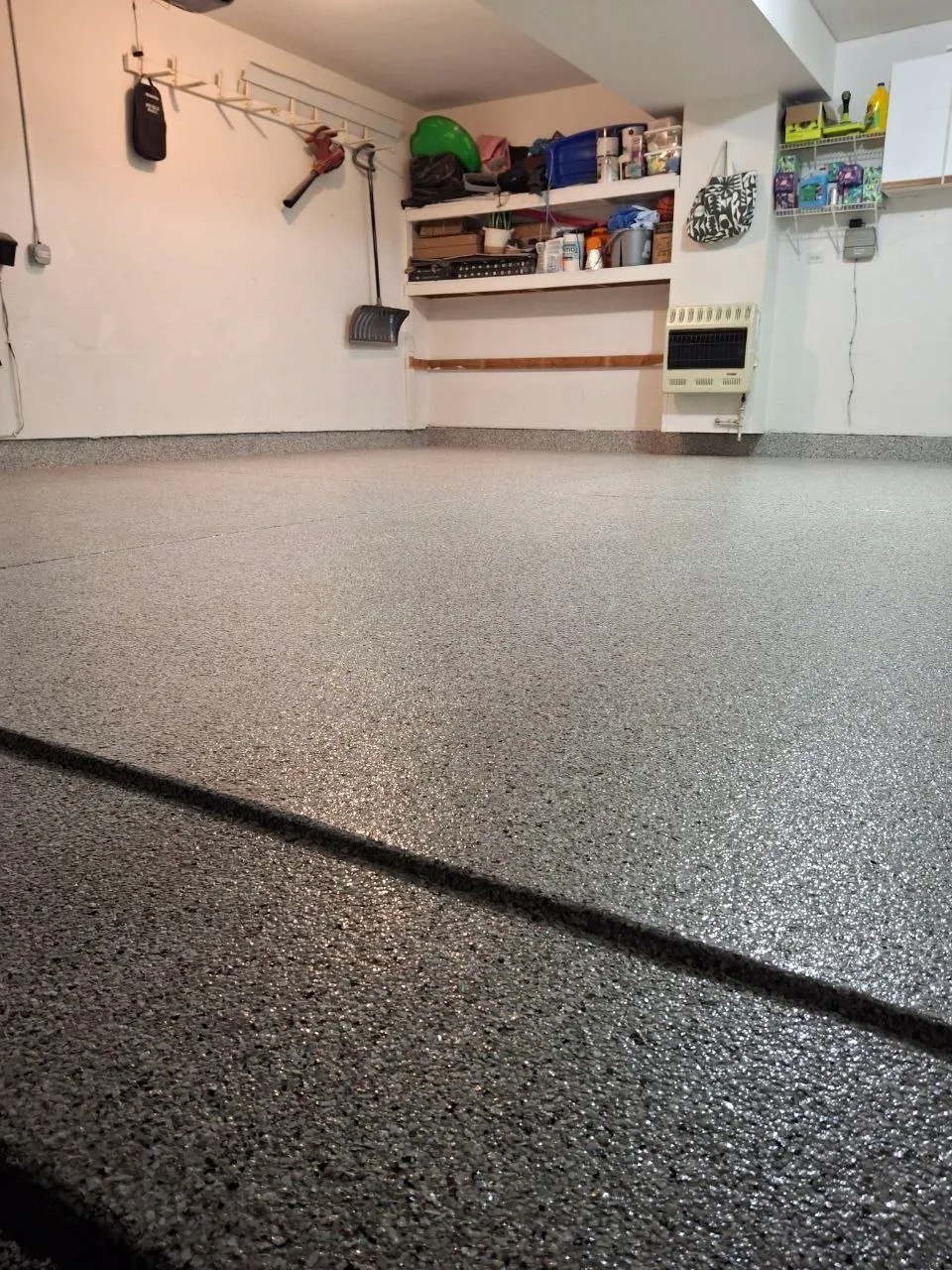
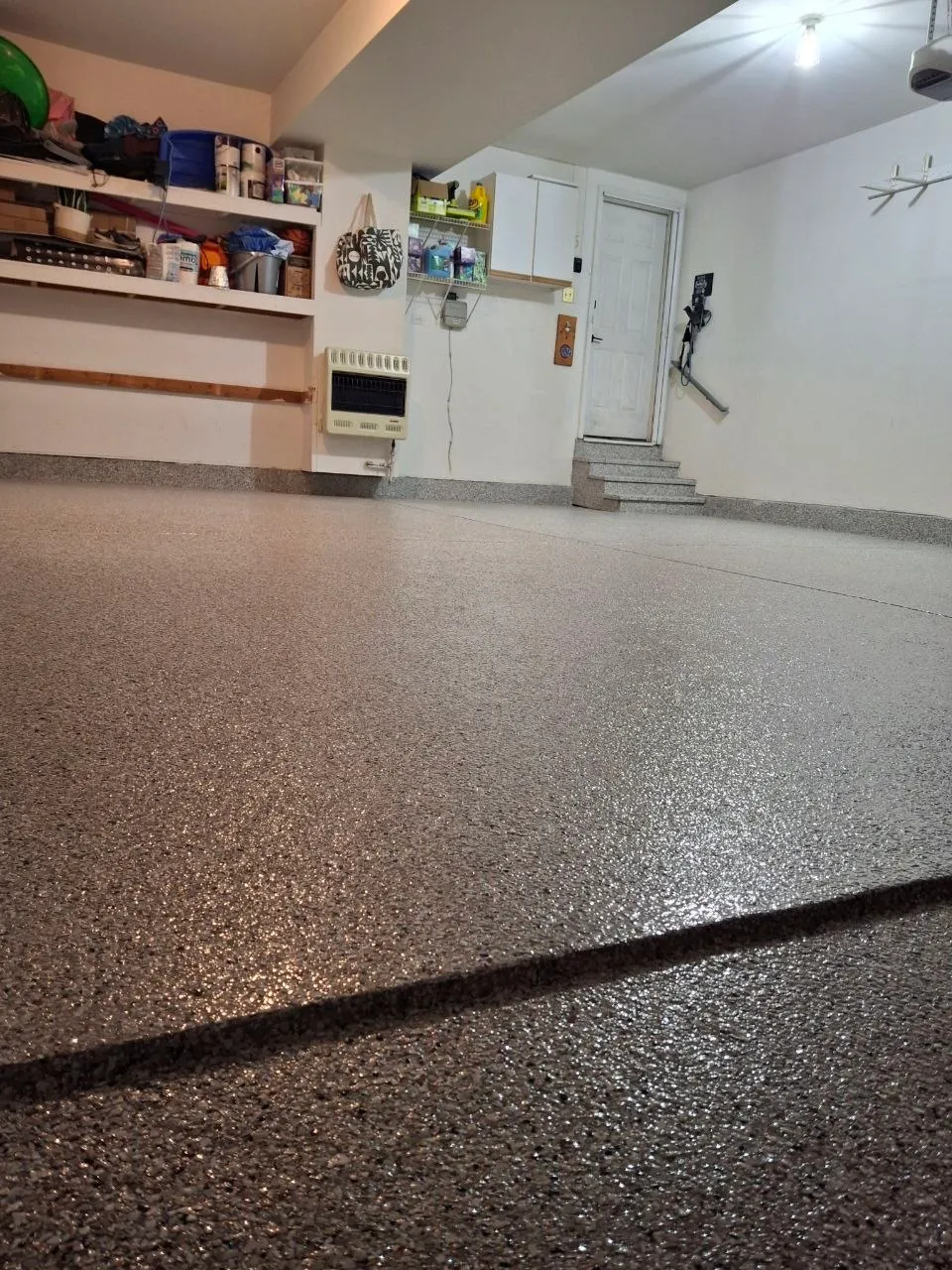
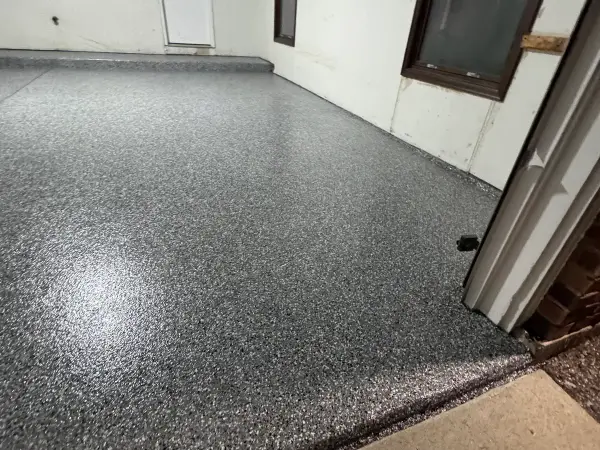
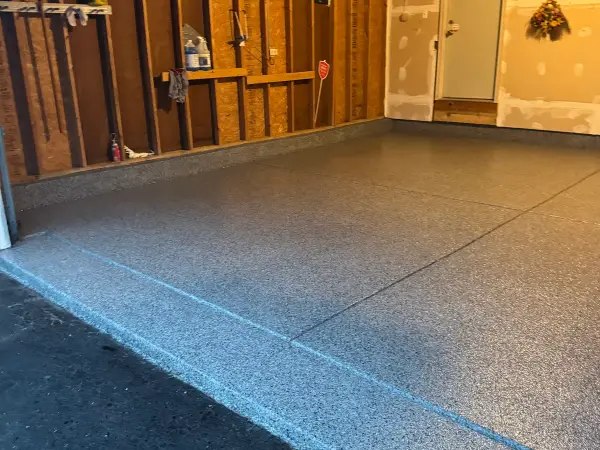
The system was our polyurea garage coating: a polyurea base coat, decorative flake, then a clear polyaspartic topcoat. The flake blend was Coyote, and we broadcast it to rejection, meaning we kept adding flake until the wet base couldn't hold any more and the concrete was fully covered. Once it set, we scraped and vacuumed off the loose flake. Aluminum oxide, a fine grit, went into the topcoat across all 440 square feet for better traction. The vertical faces got the same system, so floor and edge form one continuous seal.
Start to finish, the install took one day. The floor was walkable after about 12 hours and ready for full use after about 48 hours. The added grit makes the surface less slick underfoot, though a wet or oily floor still calls for normal care. If your garage is newer concrete with no cracks or old coating, this job is a good picture of what to expect: the time goes into grinding and coating rather than fixing, and a two-car floor can be done in a single day.