What we did
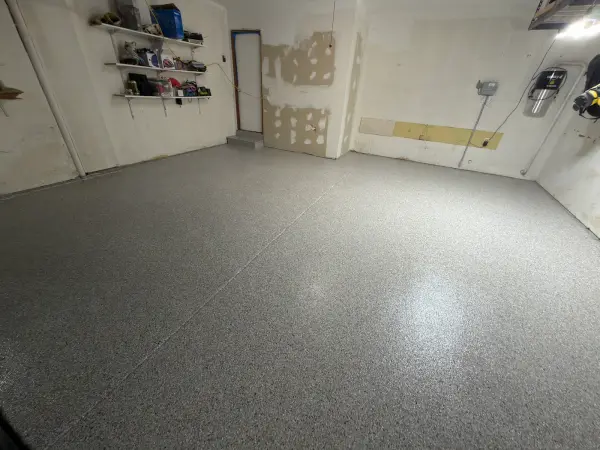
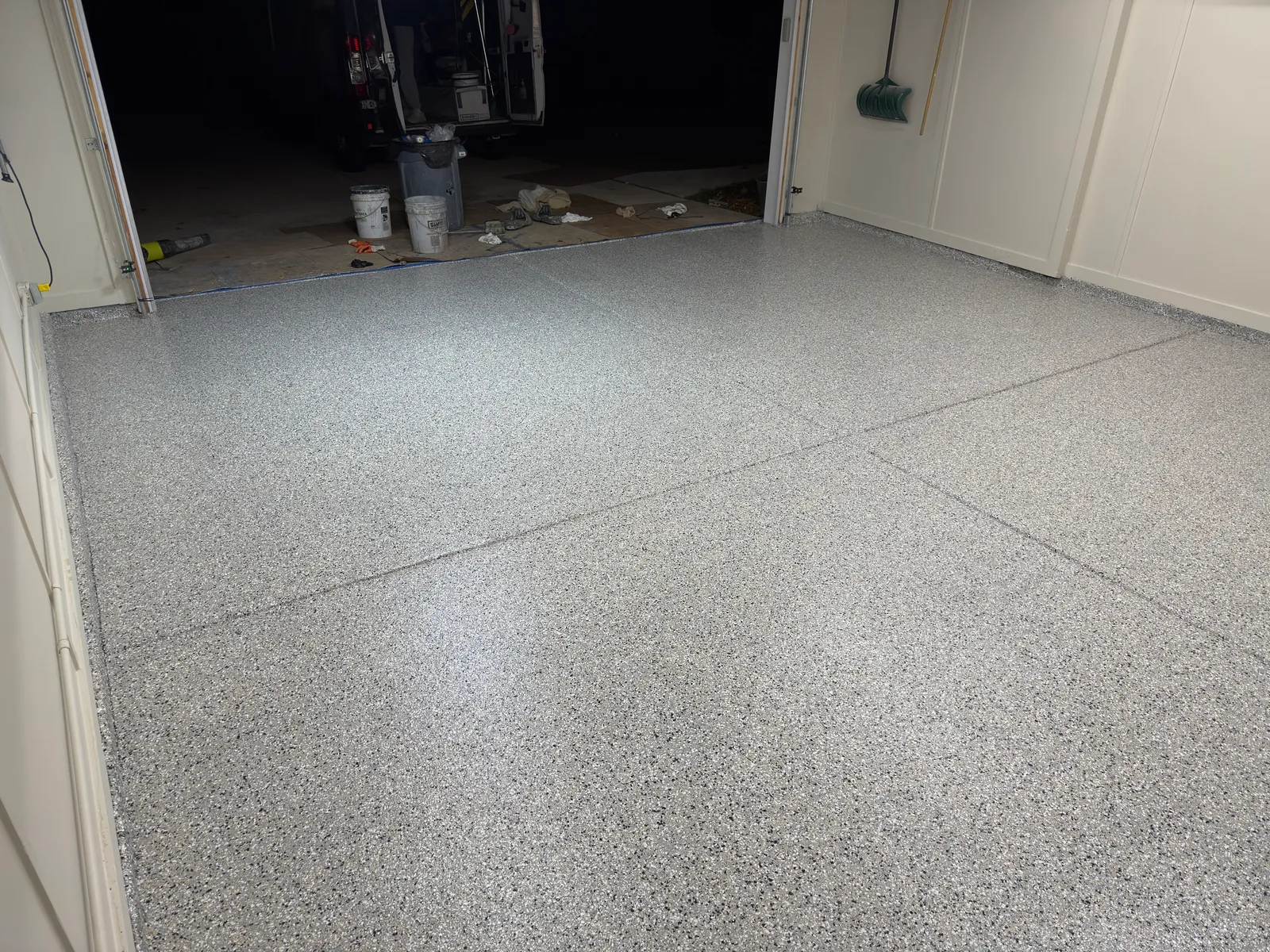
This garage belonged to a friend of Dan's, and it was about as good a starting point as we ever see. The concrete was new, with no cracks and no old coating to strip off. That meant no patching and no removal work, so the whole day could go into getting the bond right and laying down the floor. We measured 420 sq ft, and that figure includes the outside edge at the door, which gets coated along with the rest.
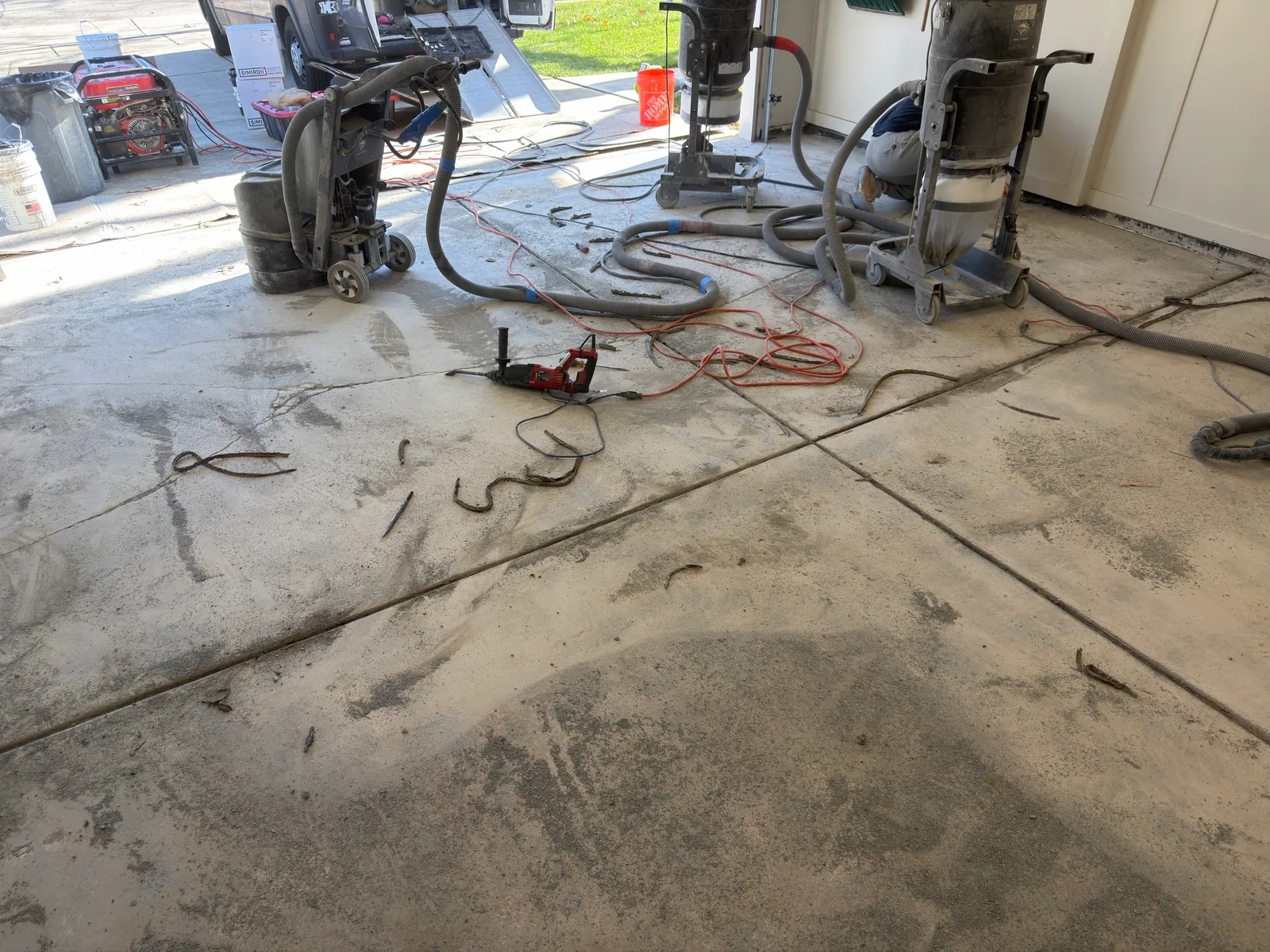
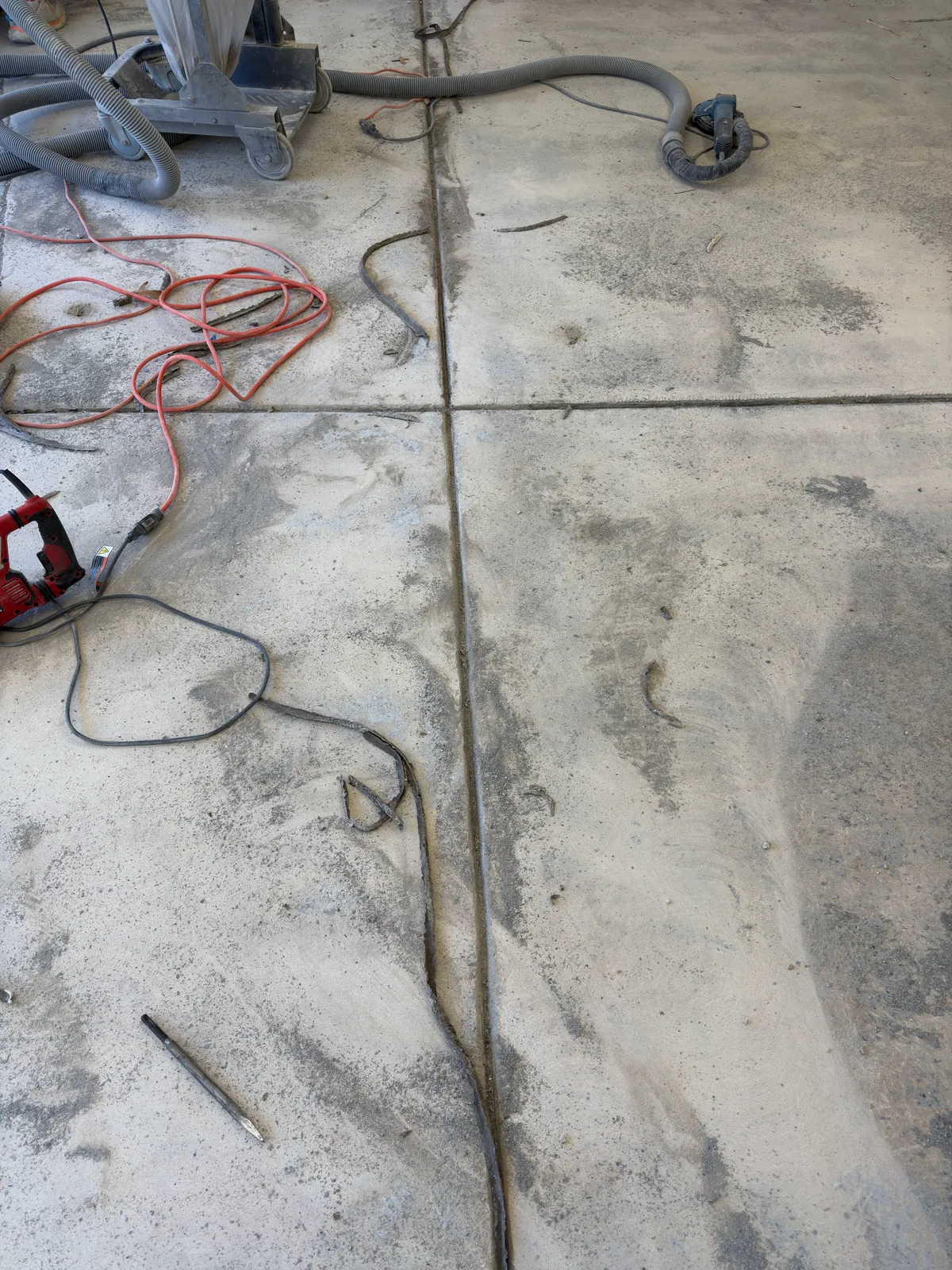
New concrete still needs prep. Fresh slabs often have a smooth surface sheen that a coating can't grab onto well, so we ran our diamond grinding equipment over the whole floor to take that sheen off and open up the surface. Grinding gives us a consistent profile (the slightly rough texture a coating locks into) and pulls up contaminants at the same time. It's the step that decides whether a floor holds up for years or starts lifting, so we don't skip it just because the concrete looks clean.
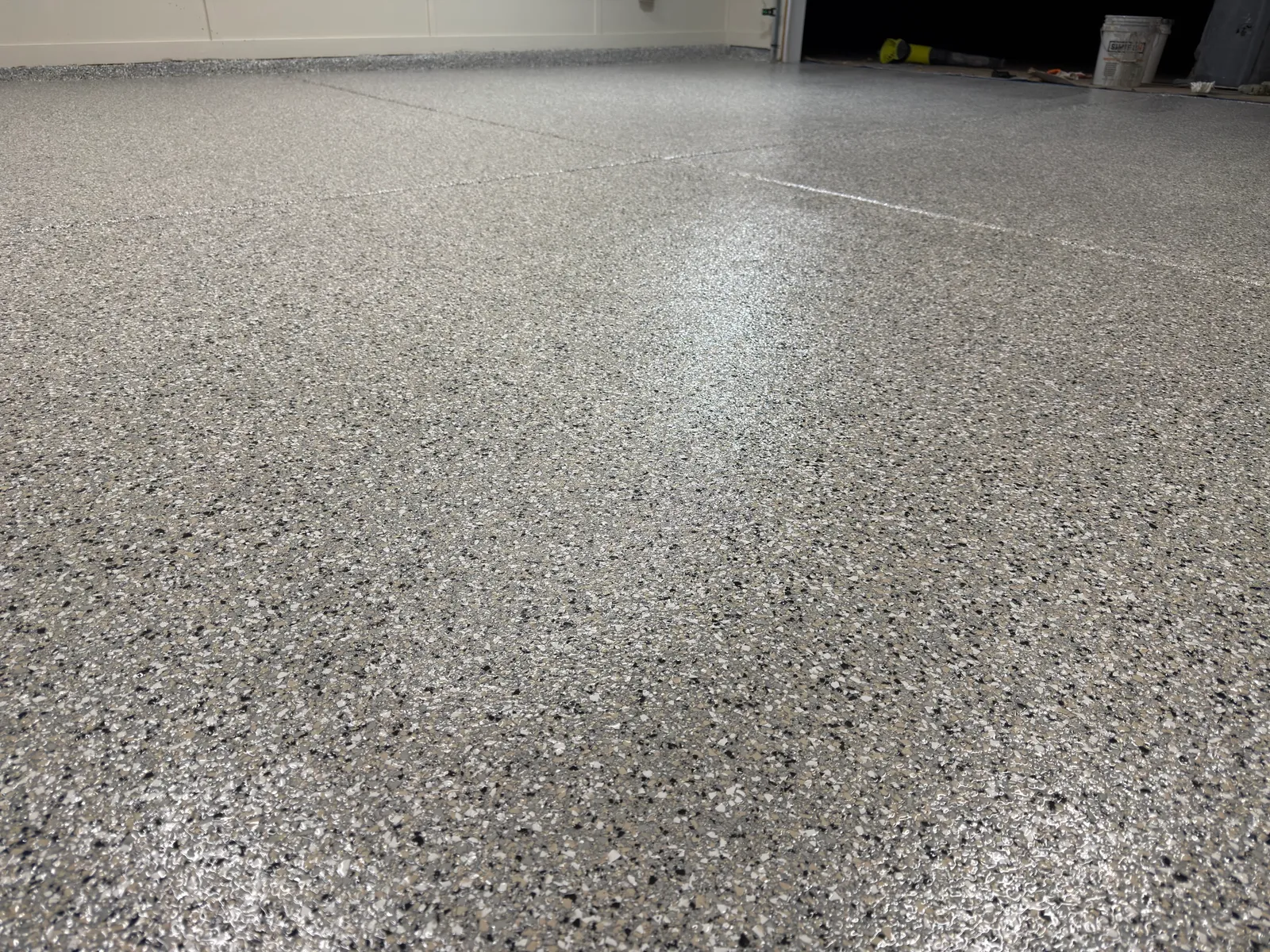
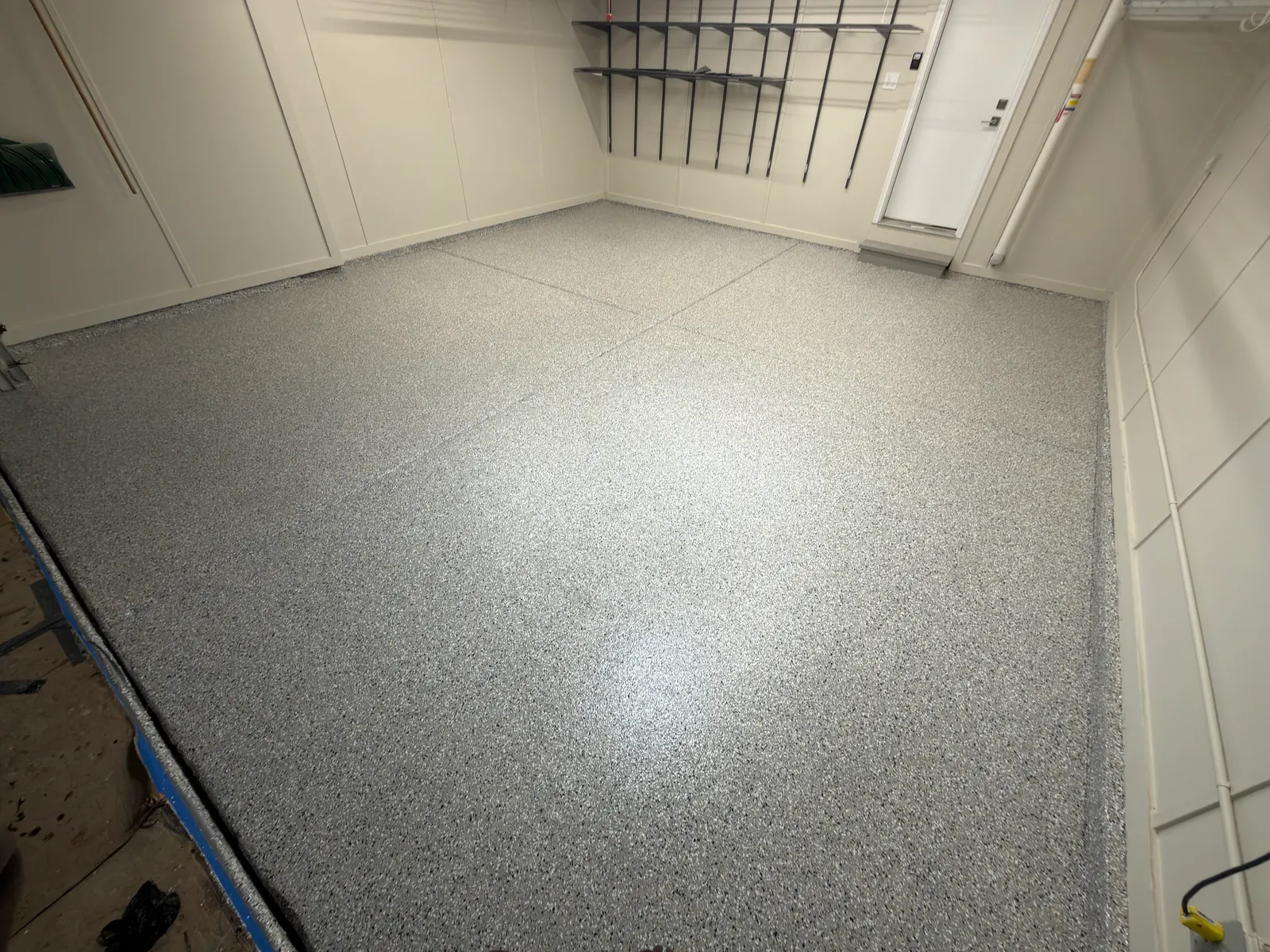
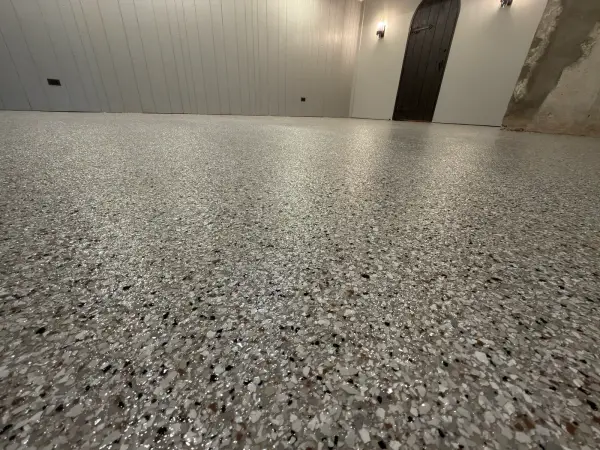
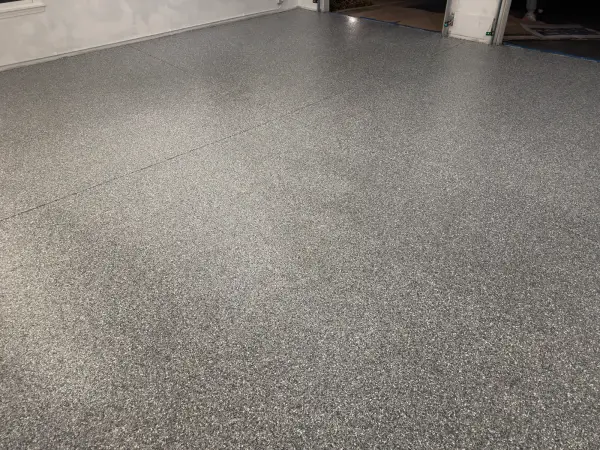
Next came the polyurea base coat, and we broadcast the Cabin Fever flake into it until the surface wouldn't take any more, which is what full coverage means in our trade. Once that set up, we scraped and vacuumed off the loose flake so the surface was even. The clear polyaspartic topcoat went on last, with aluminum-oxide grit mixed in across all 420 sq ft for better traction underfoot. If you want to see how this system compares, our polyurea garage coating page walks through it.
The whole install took one day. The floor was walkable after about 12 hours and ready for full use, cars included, after about 48 hours. If you've just poured a new garage slab or moved into a new build, this job is a good picture of what to expect: with no repairs in the way, it's mostly prep and coating, and you get your garage back within a couple of days.