What we did
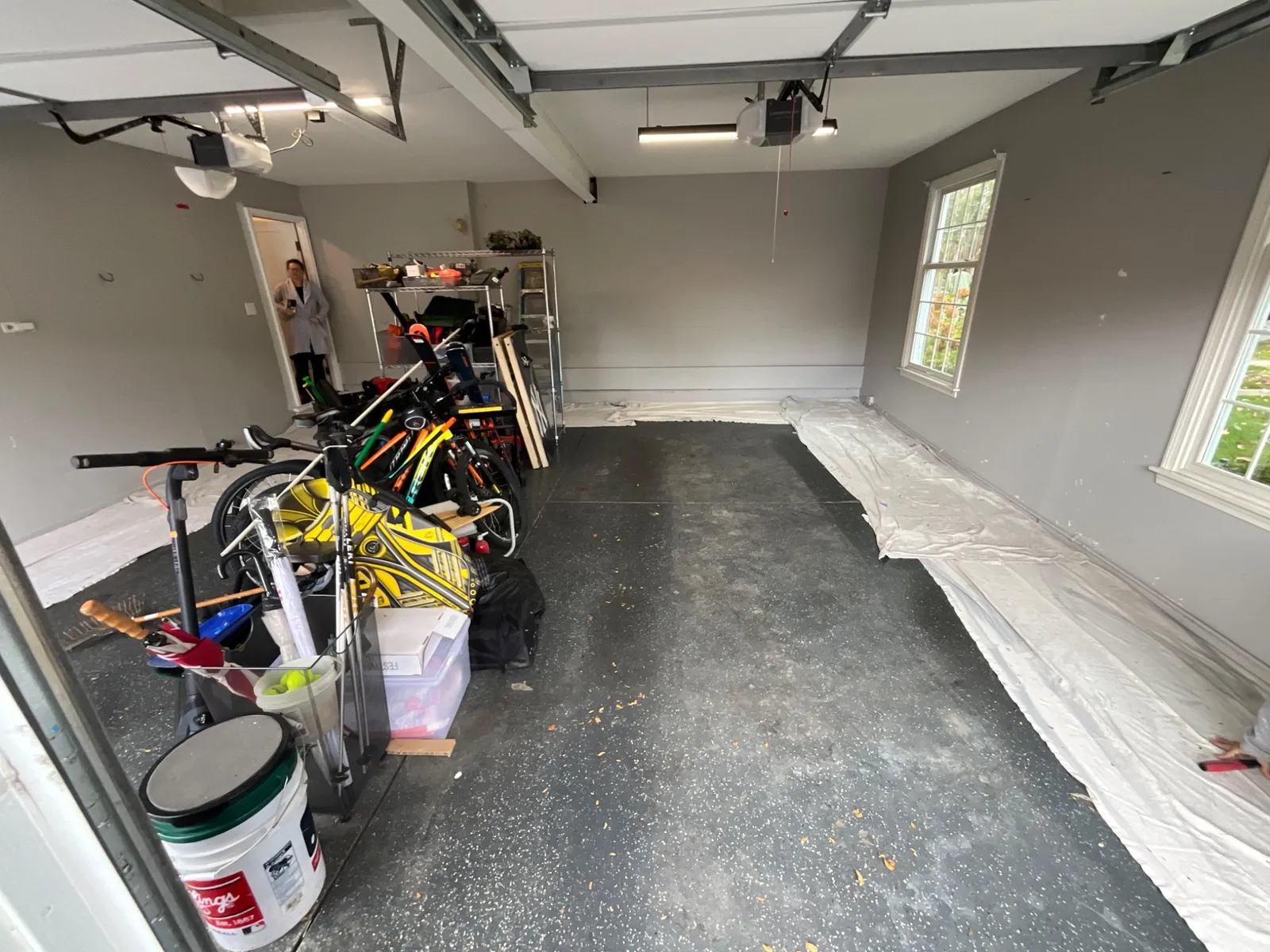
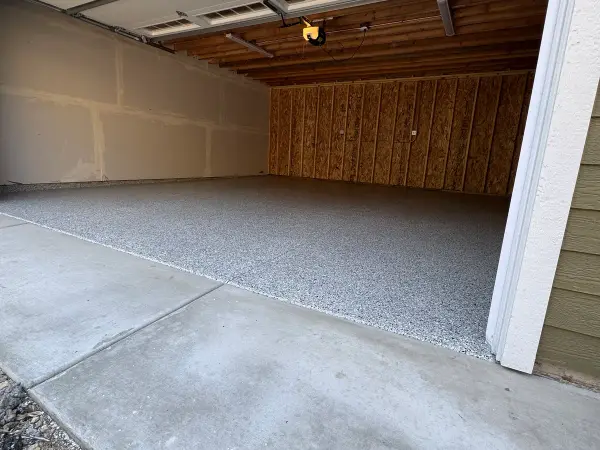
This one started with a clean slate. The two-car garage had new concrete with no cracks and no old coating to strip, which is about as good as it gets when our crew walks in. With 480 square feet to cover and nothing to repair, we could put all our attention on prep and the coating itself. New concrete still needs real work before anything goes on it, though, and that's where we began.
Fresh concrete usually has a smooth, dense top layer that looks fine but gives a coating very little to hold onto. So we started with diamond grinding to take off the surface sheen and any contaminants and open up the slab. That slightly rough texture, which installers call a profile, is what lets the base coat grip the concrete instead of just sitting on top of it. We'd rather grind than acid-etch because grinding gives a consistent profile across the whole floor.
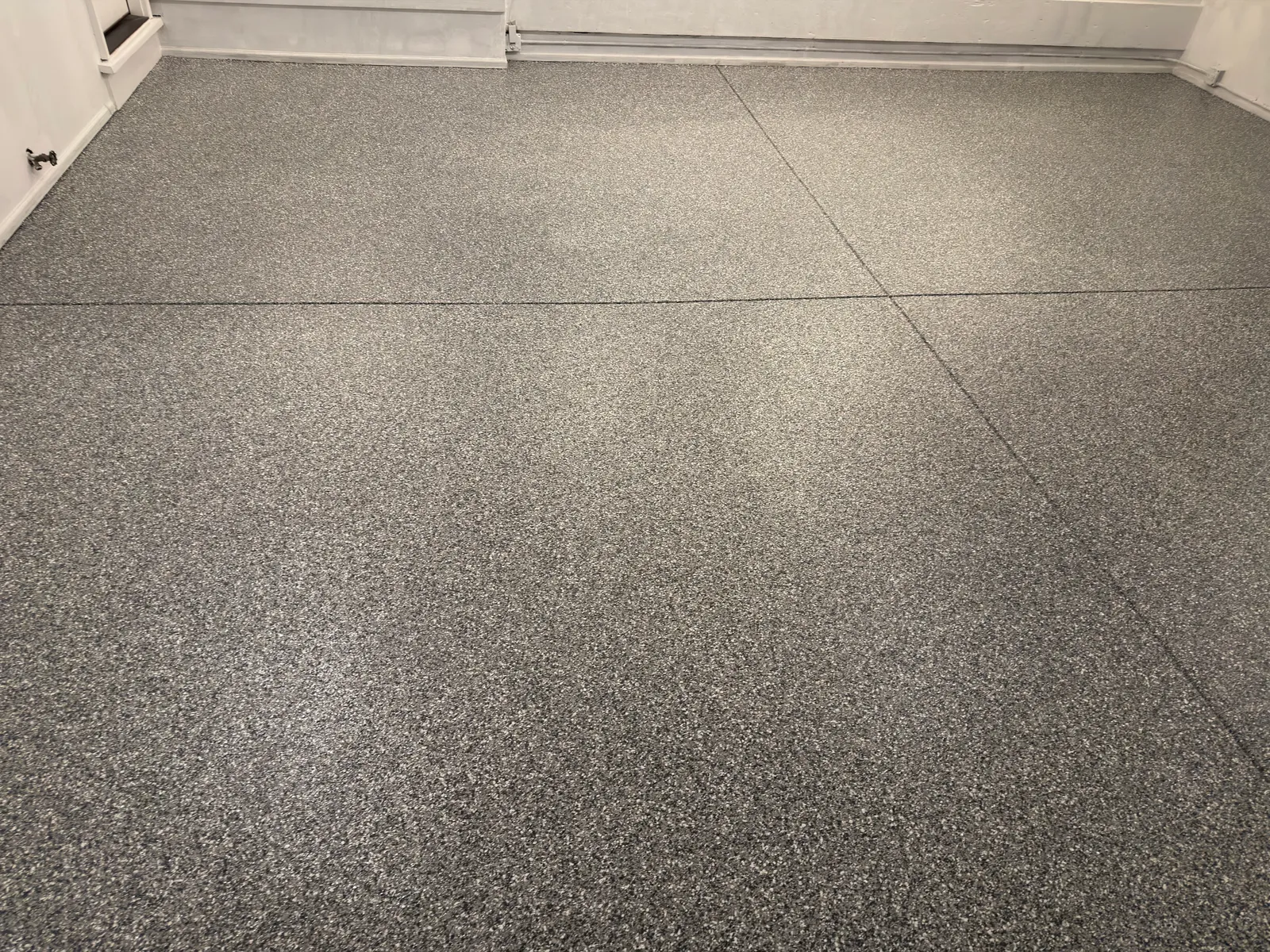
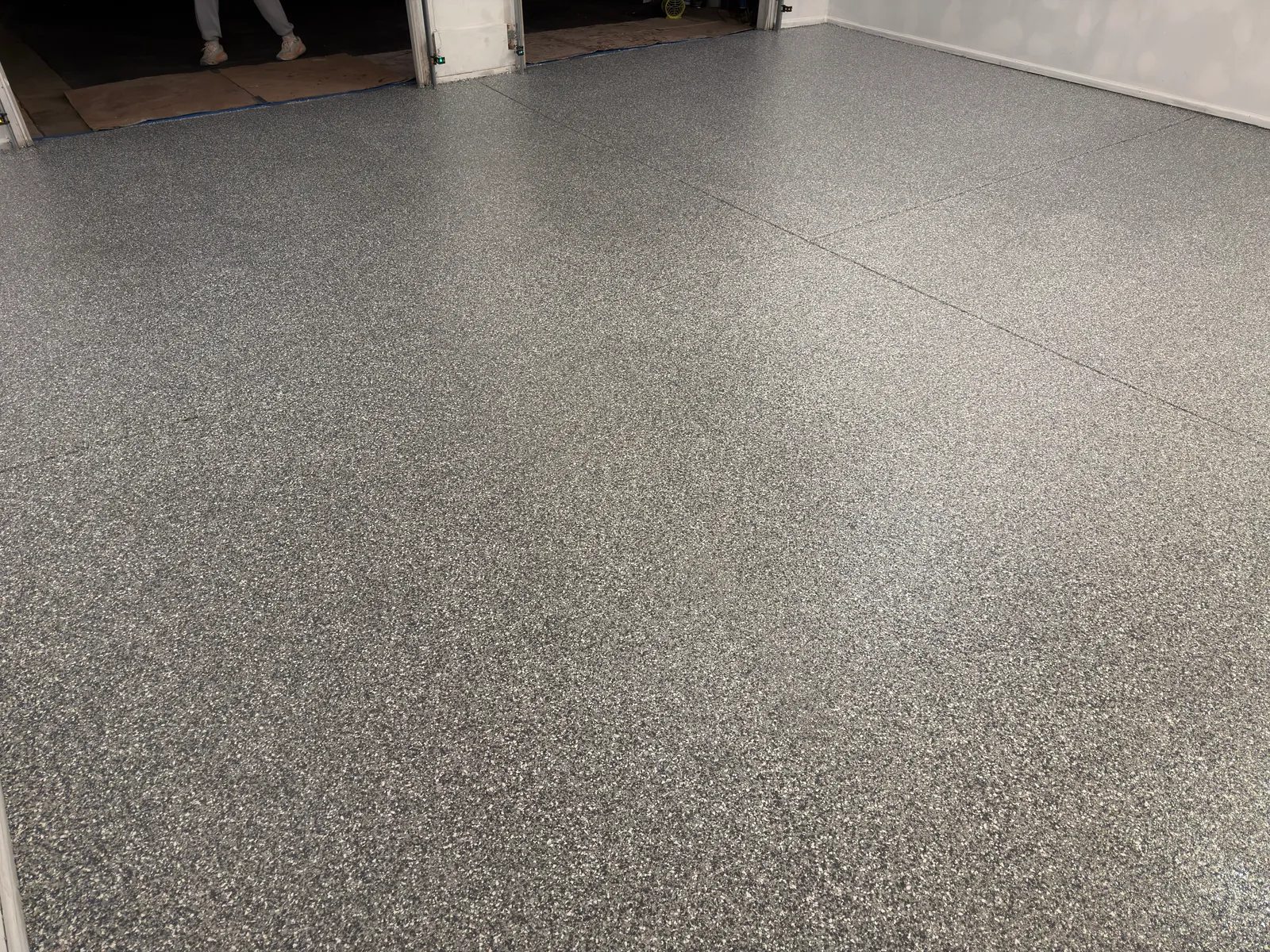
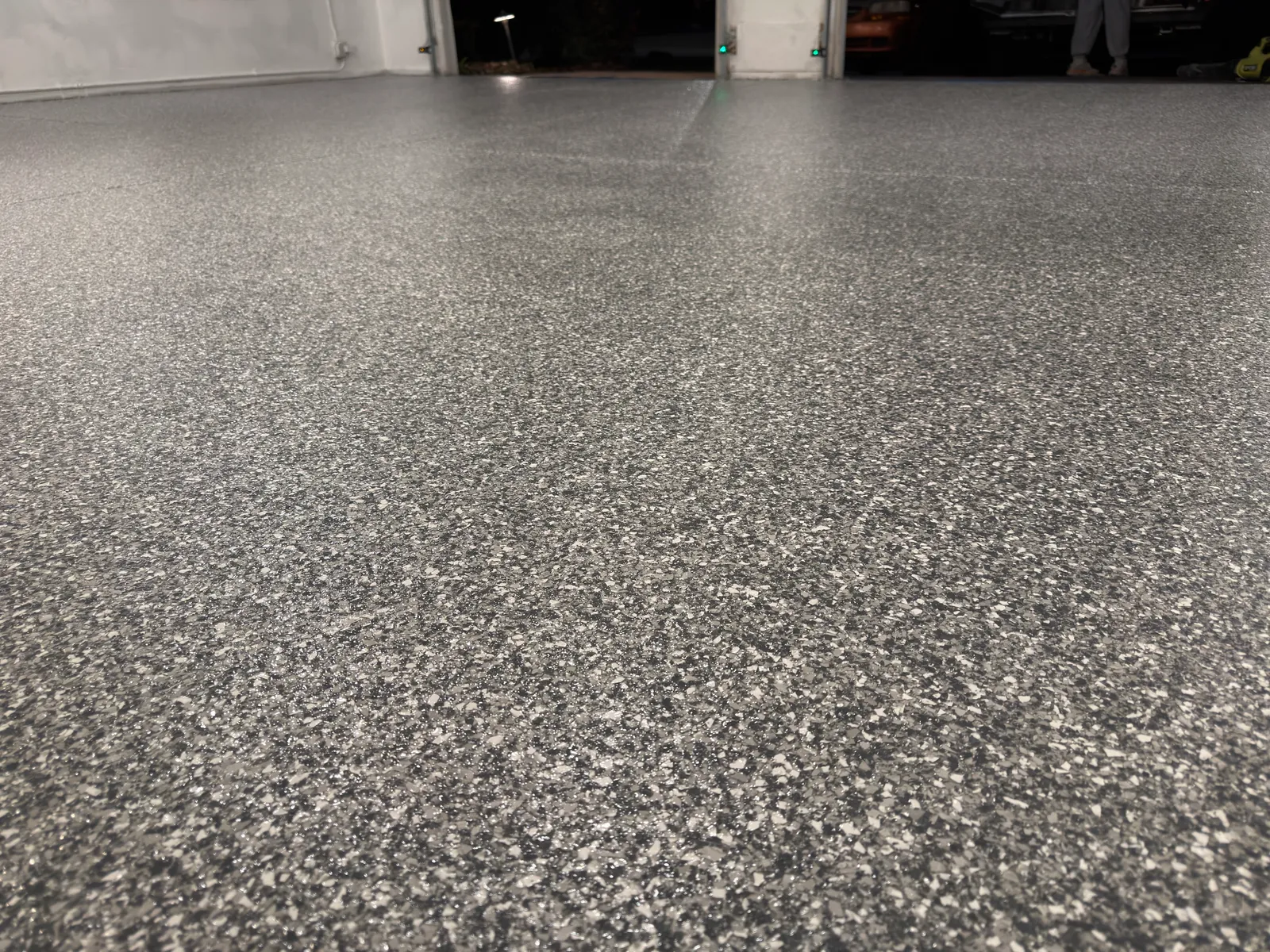
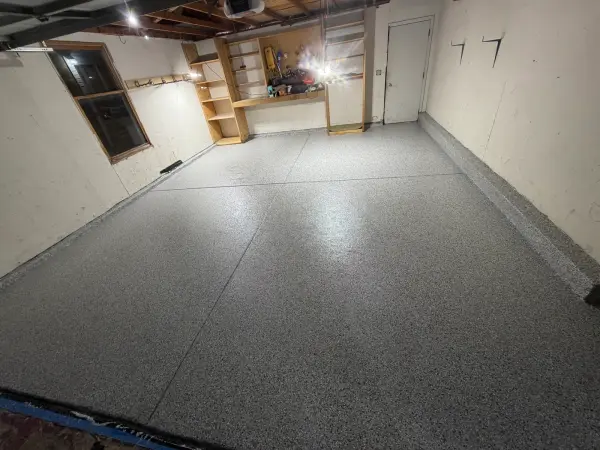
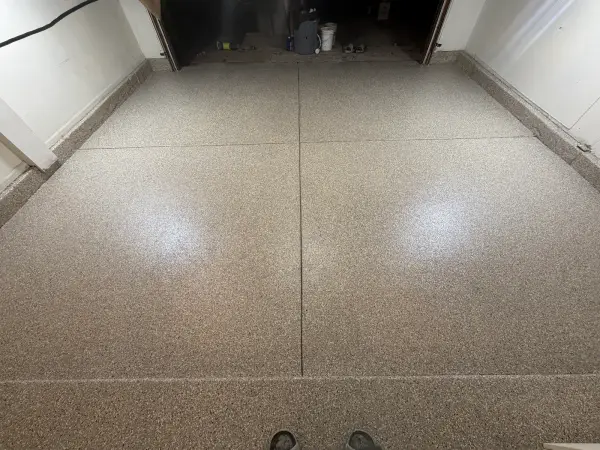
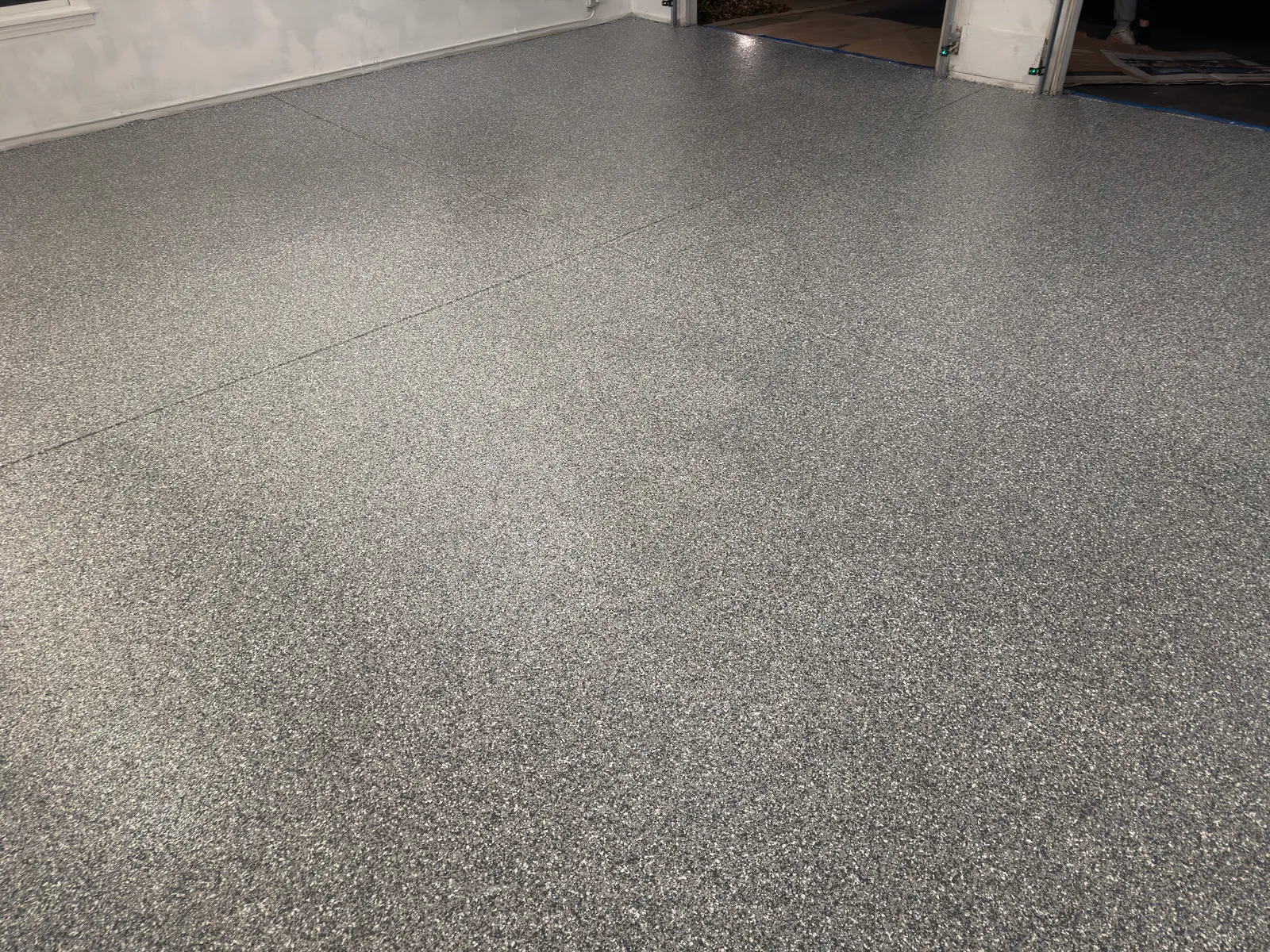
Next came the polyurea base coat. Polyurea is a fast-curing coating that bonds tightly to properly ground concrete, and that speed is a big part of why a garage like this can be done in one day. We broadcast the Gravel flake blend into the base coat to rejection, meaning we kept adding flakes until it couldn't hold any more. After that we scraped and vacuumed off the loose flakes and applied a clear polyaspartic topcoat, with aluminum-oxide grit broadcast into it across all 480 square feet for better traction underfoot.
The whole install took one day. The homeowner could walk on the floor after about 12 hours, and the garage was ready for full use, cars included, after about 48 hours. What's left is a fully flaked floor in a mixed, stone-toned Gravel blend under a clear, slightly textured topcoat. If your garage slab is new and free of cracks, this job shows how straightforward it can be: good grinding up front, then one day of coating work.