What we did
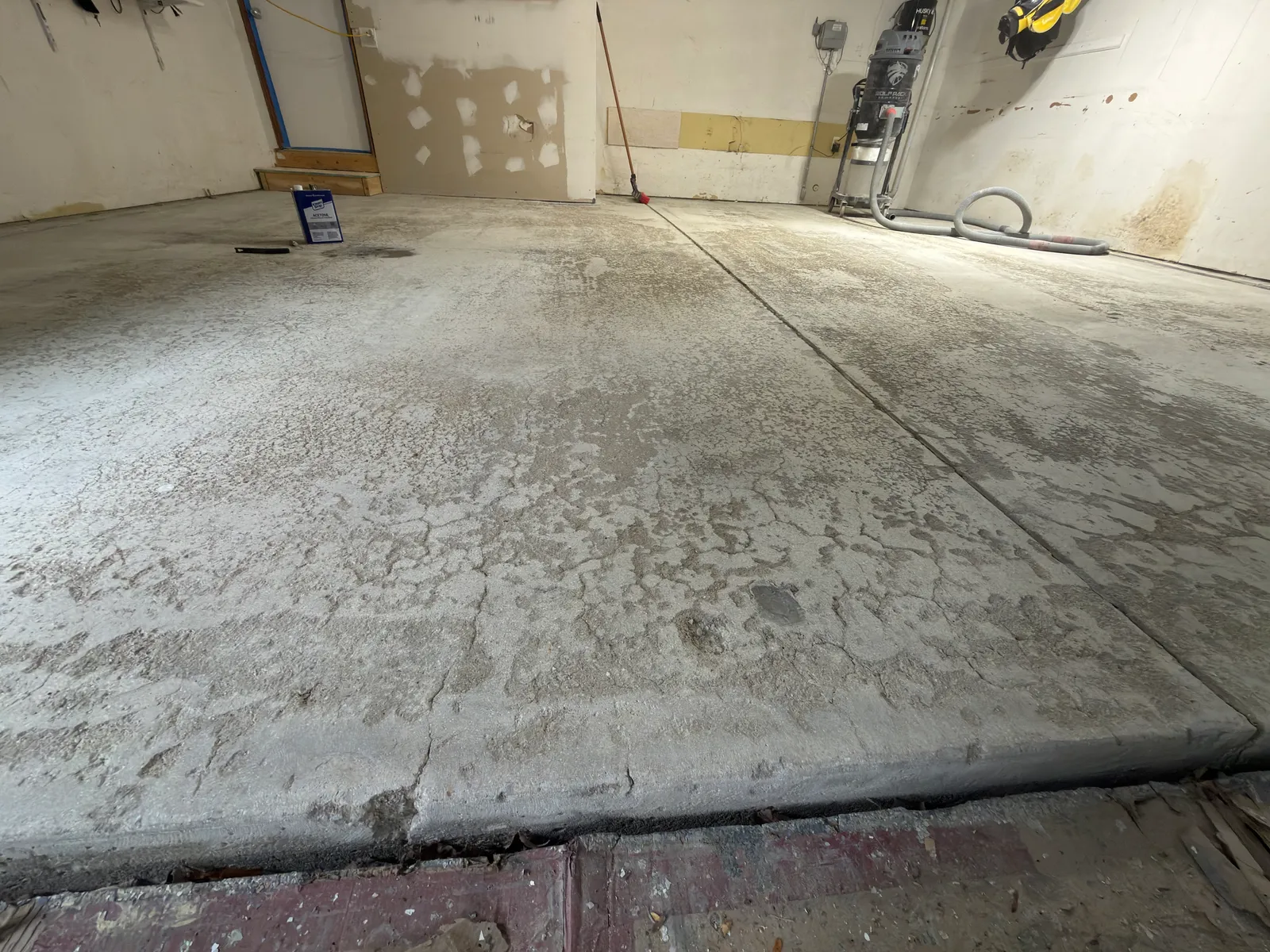
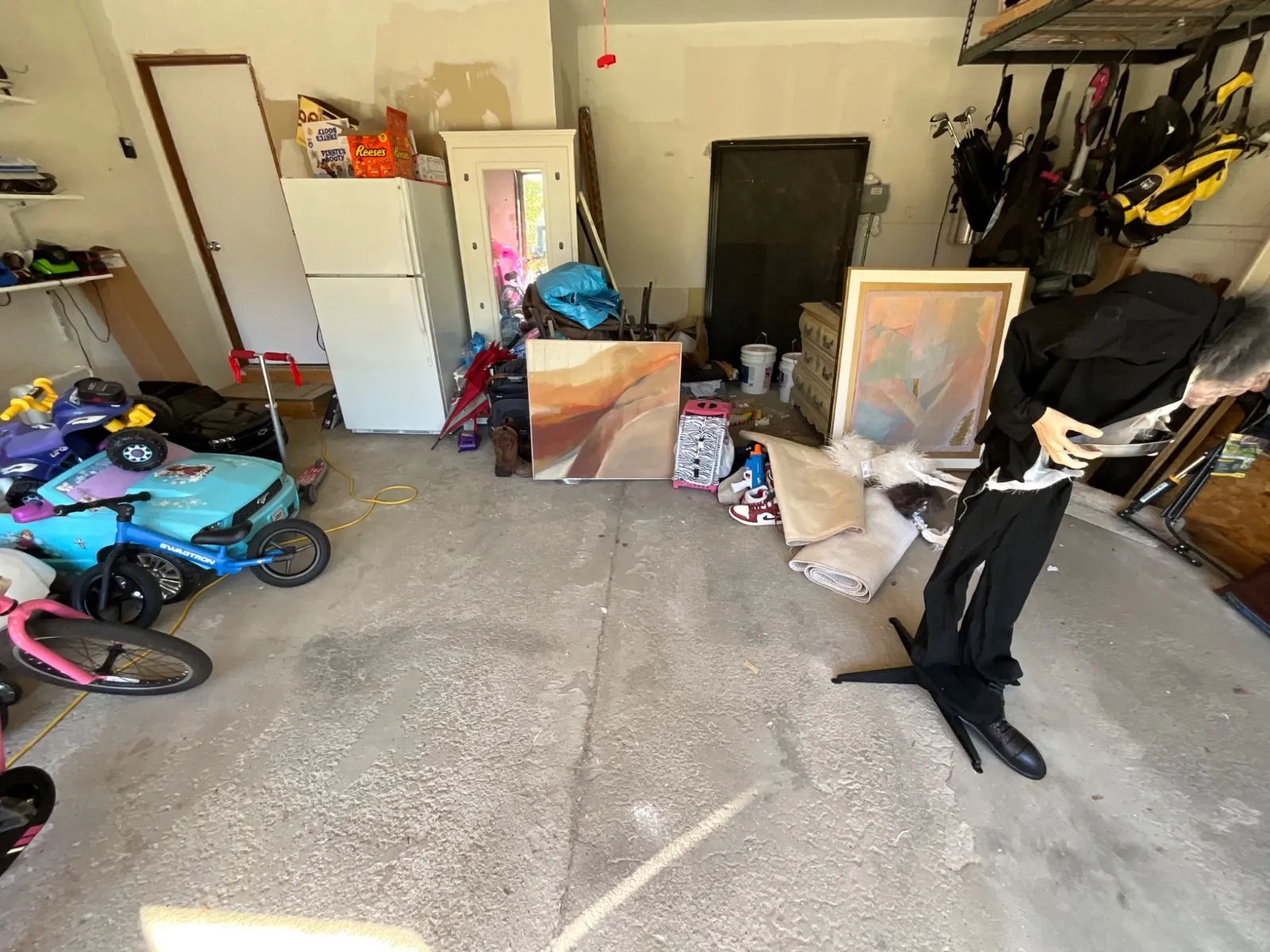
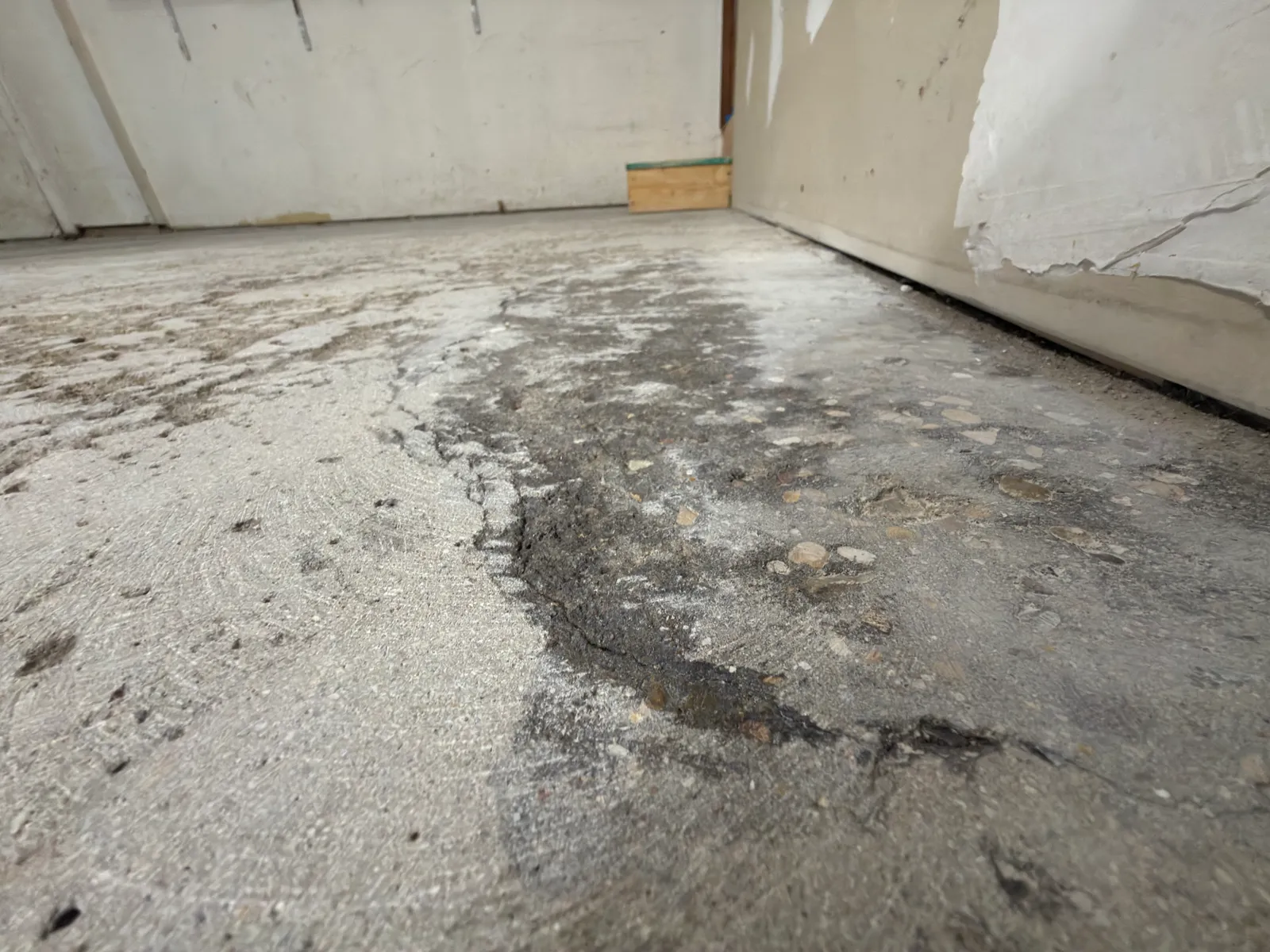
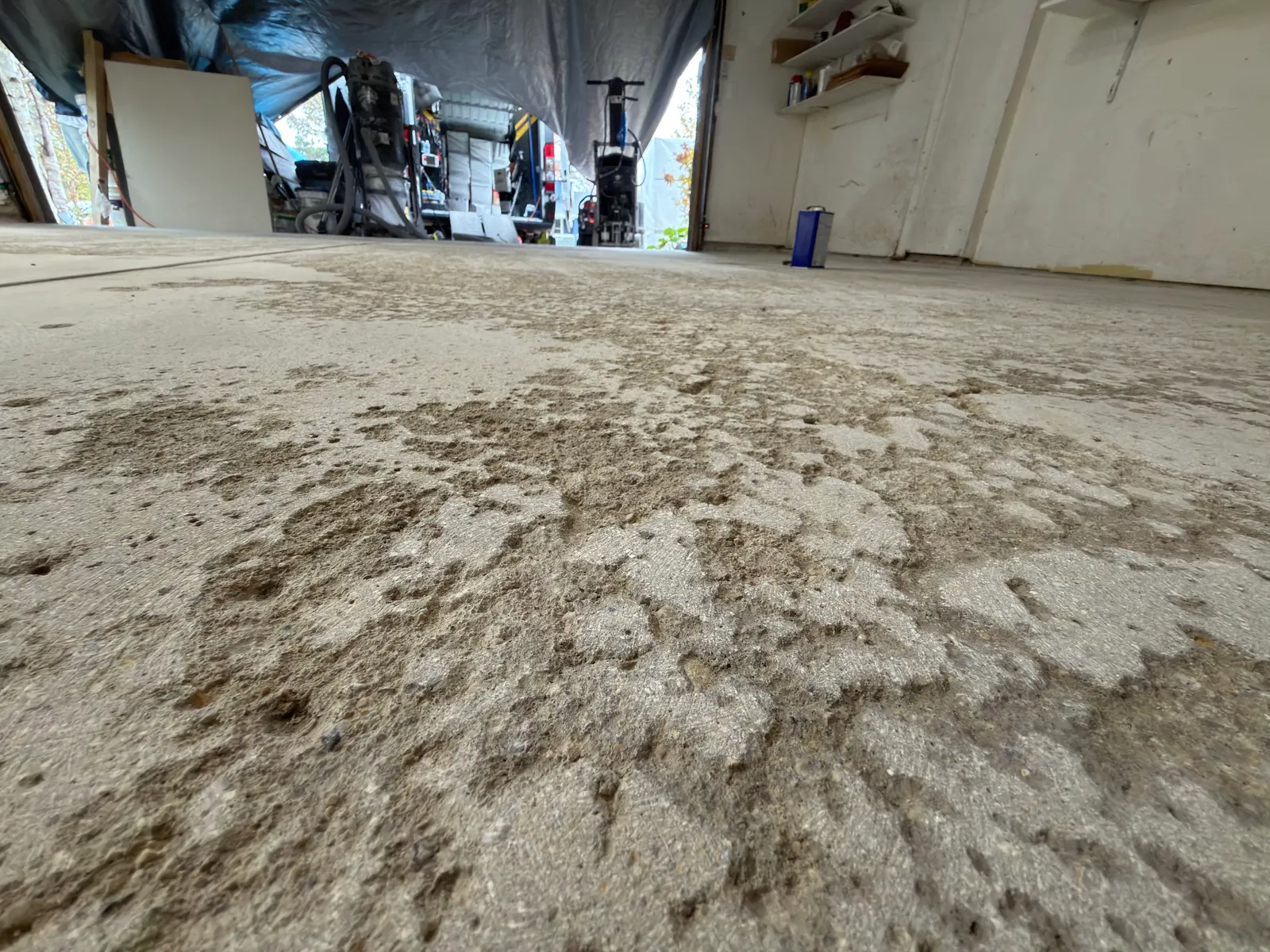
When our crew pulled up, we found older concrete with a few cracks and some etching across the surface, but nobody had ever put a coating on it. That bare slab was good news in one way, since there was nothing old to strip off before we could start. The etching and cracks still told us prep would carry this job, because a coating only grips as well as the surface under it. The floor came to 440 square feet, including the outside edge of the slab.
We started with diamond grinding, which takes off the worn top layer, sheen and contaminants and leaves a rough profile the base coat can really bite into. We'd rather grind than acid-etch because grinding gives an even profile across the whole slab, etched spots included. The few cracks were cleaned of loose concrete and filled before any coating went down. Filling them first keeps them from telegraphing through the finish or soaking up the base coat unevenly.
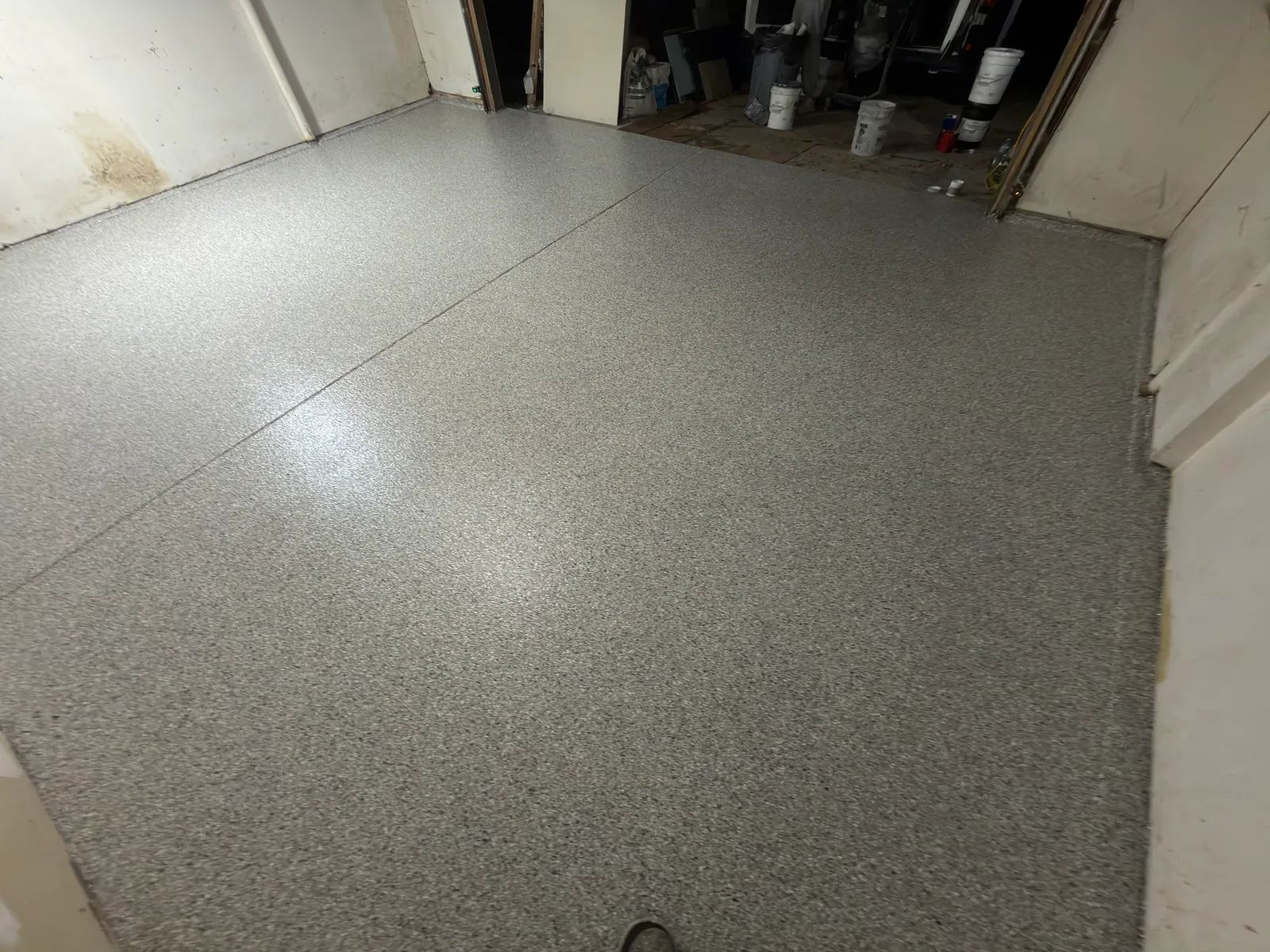
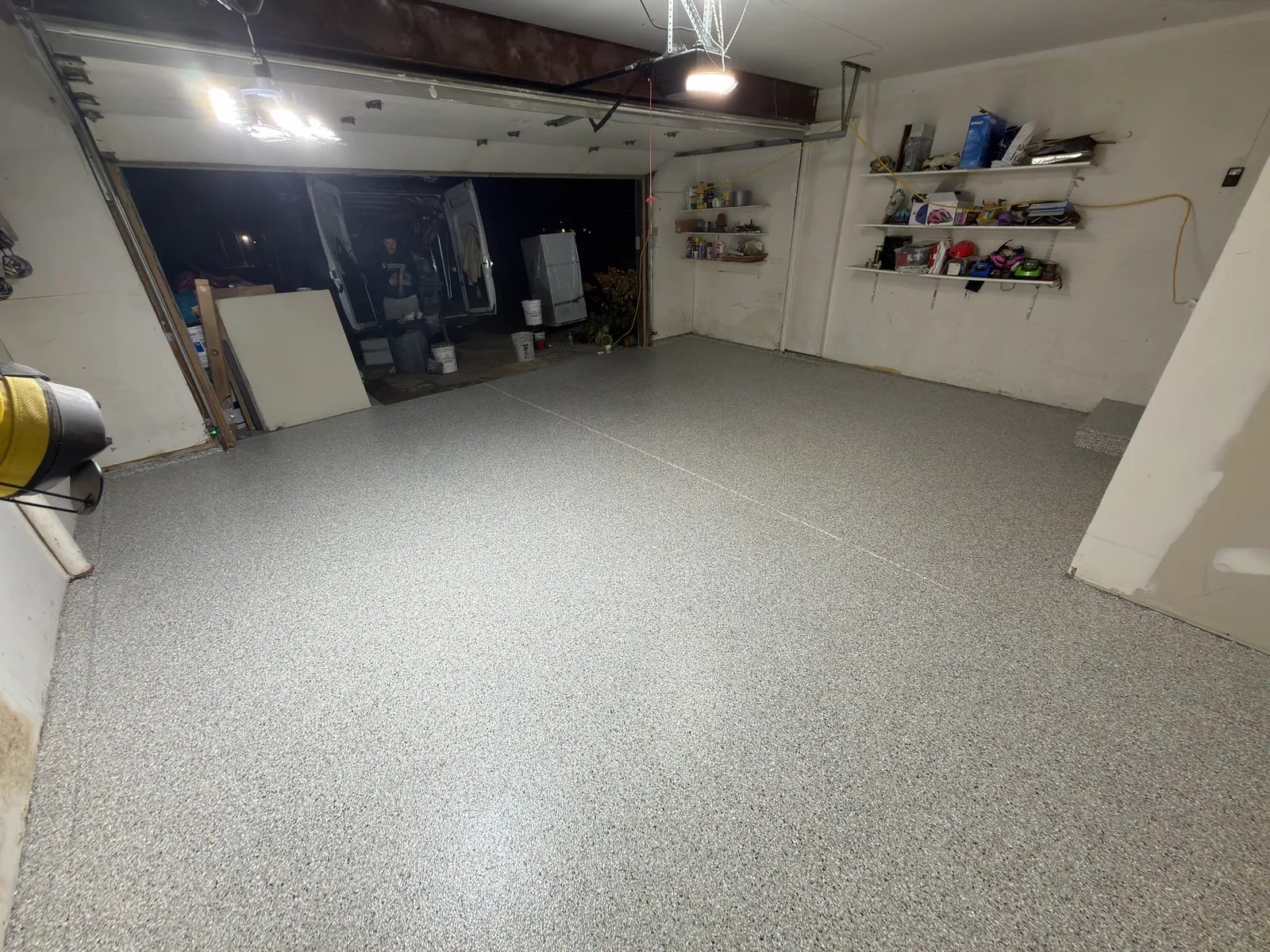
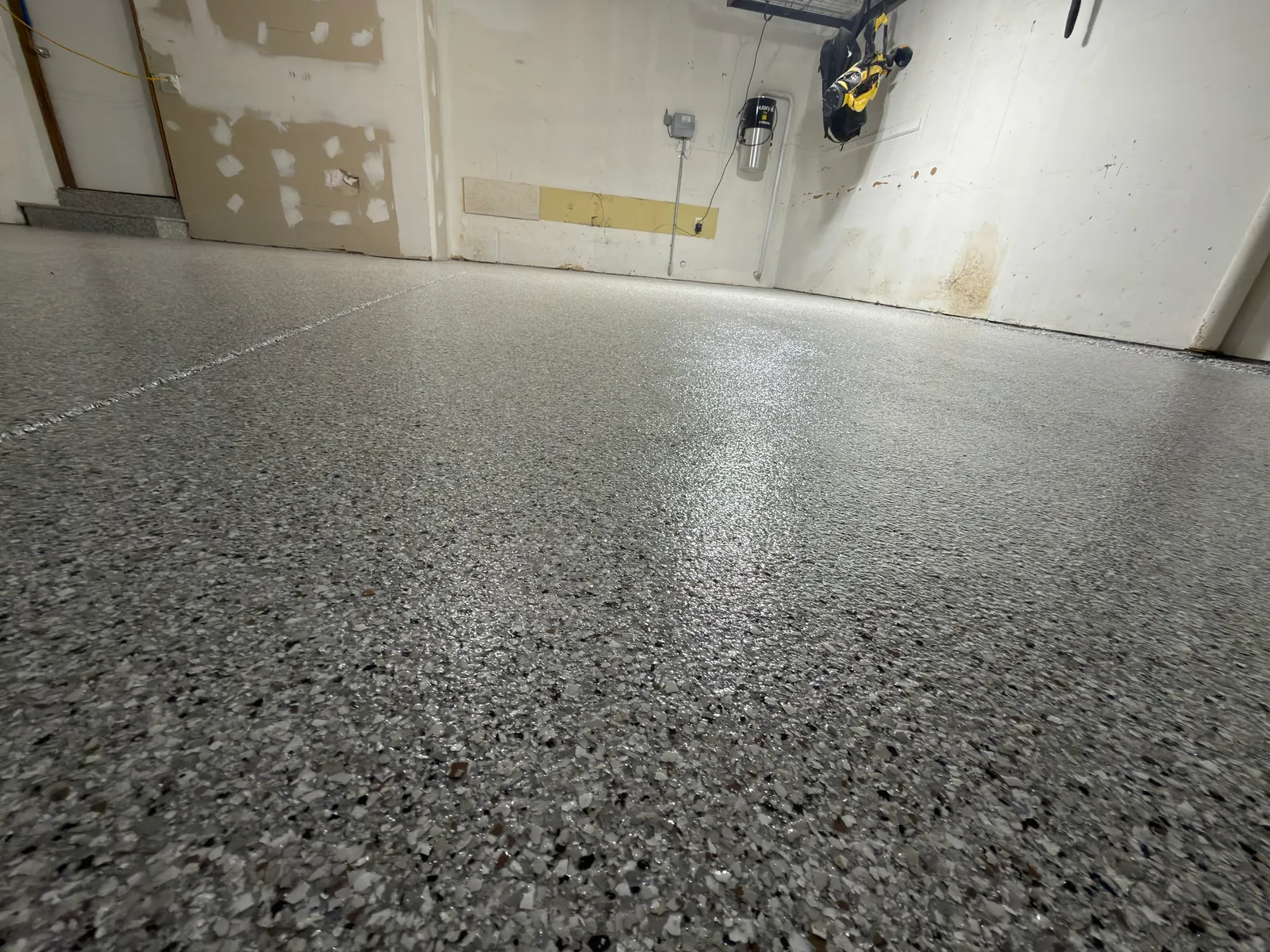
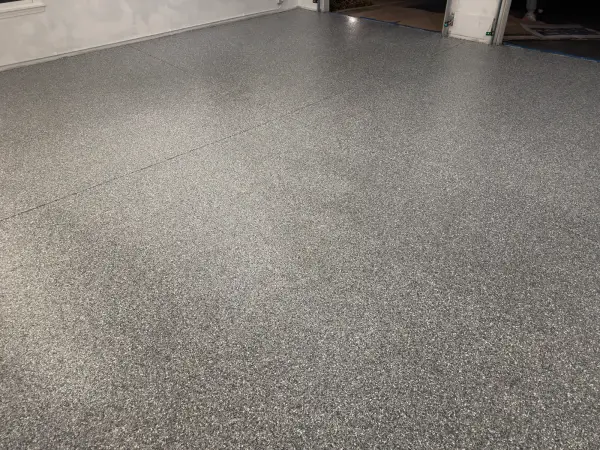
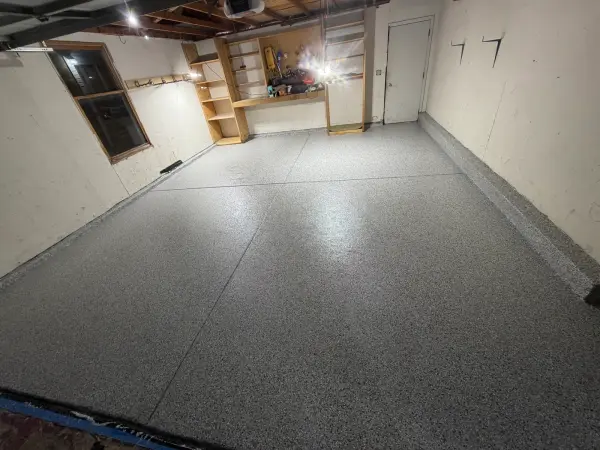
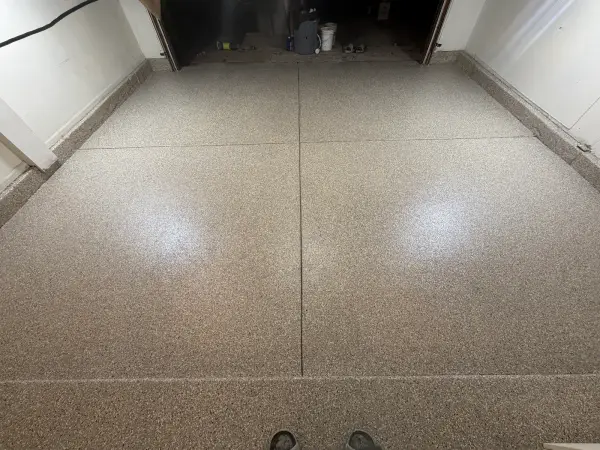
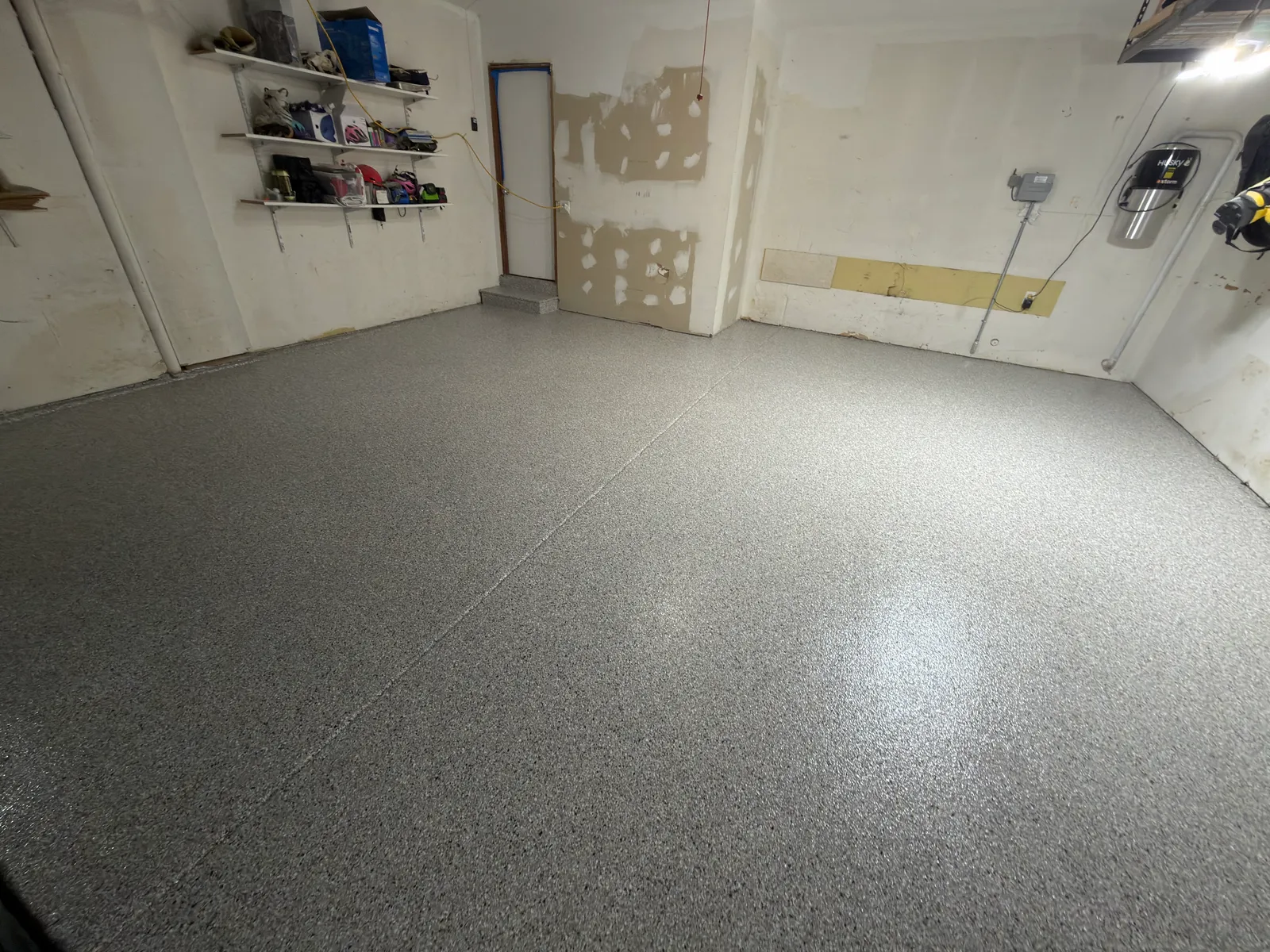
Then the polyurea garage coating itself went down. Over the polyurea base coat we broadcast the Coyote flake blend to rejection, meaning we kept adding flake until the wet base couldn't hold any more and no gray concrete showed. Once it set, we scraped and vacuumed off the loose flake and applied a clear polyaspartic topcoat. Aluminum-oxide grit went into that topcoat over all 440 square feet for better traction underfoot. We coated the steps as well, so they match the floor.
The whole install took 1 day. The floor was walkable after about 12 hours and ready for full use, cars included, after about 48 hours. If your garage has older concrete with some etching and a handful of cracks but no old coating, this is a pretty typical starting point for us. Once a slab like that is ground and the cracks are filled, it takes a flake system well.