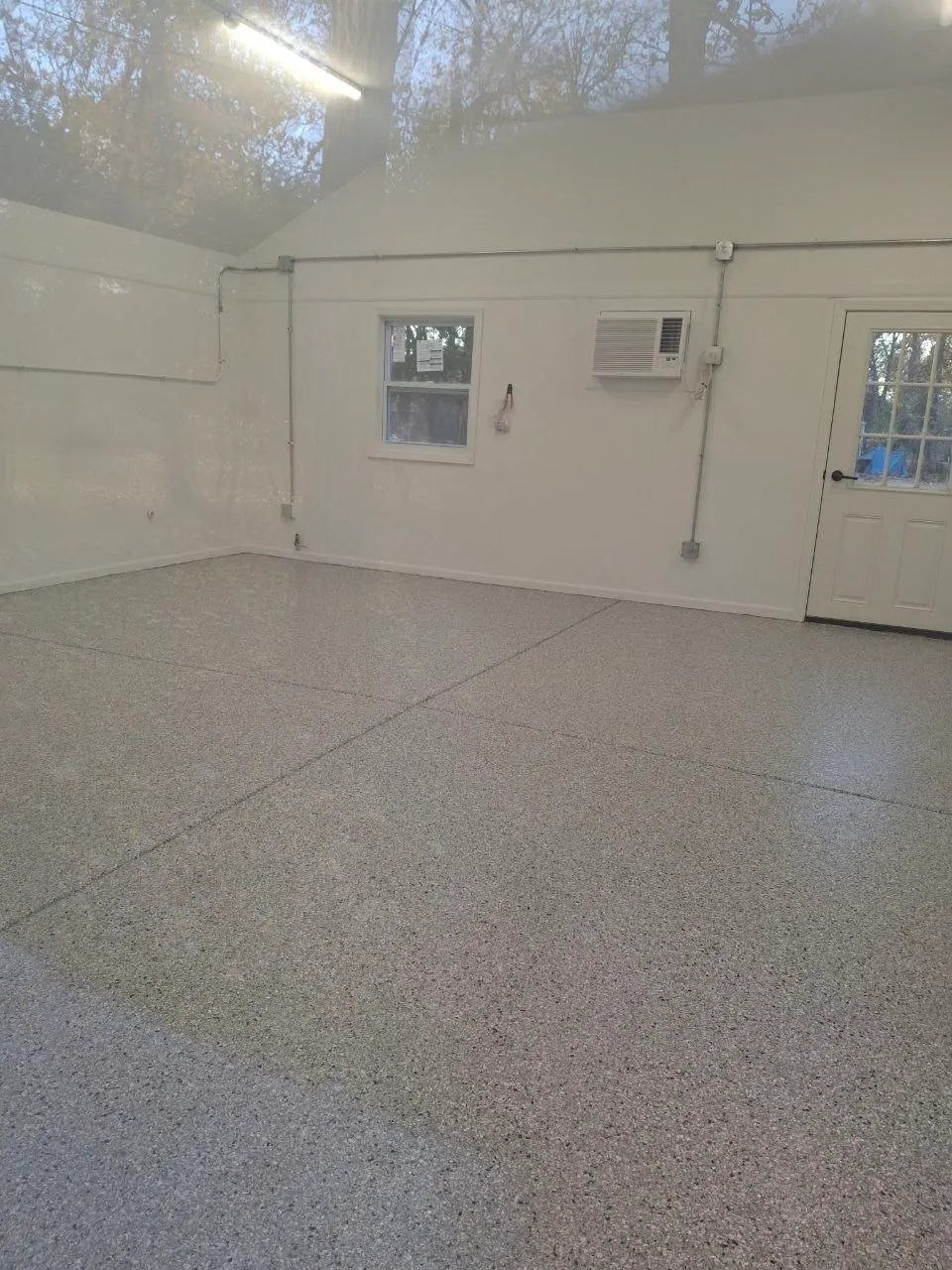
What we did
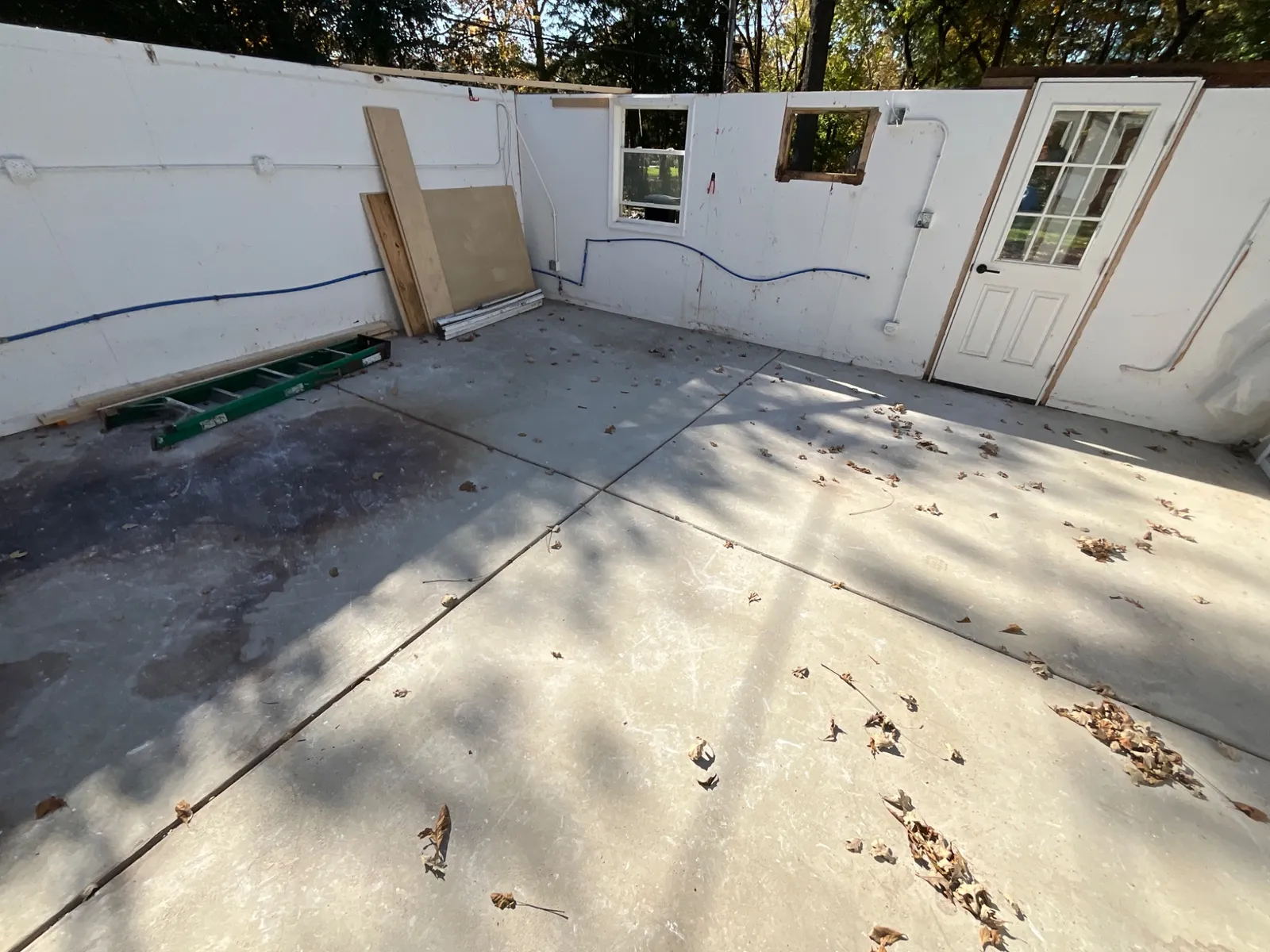
This one started with something we don't see every day: brand-new concrete. The two-car garage floor measured 440 square feet, with no cracks to chase and no old coating to strip off. That made our side of the job simpler, since there was no repair work to plan around and nothing to remove before we could get to the slab itself. What it didn't mean was skipping prep. New concrete still has a smooth, tight surface that a coating has a hard time gripping.
So the work started with the grinders. We took off the surface sheen and any contaminants, then used diamond grinding to open up the slab and give it a rough profile, a texture a bit like fine sandpaper. That texture is what the base coat locks into. Grinding gives an even profile across the whole floor, which acid etching can't promise, and it leaves no acid residue behind. With no cracks or pits to fill, we cleaned up the dust and moved on to coating.
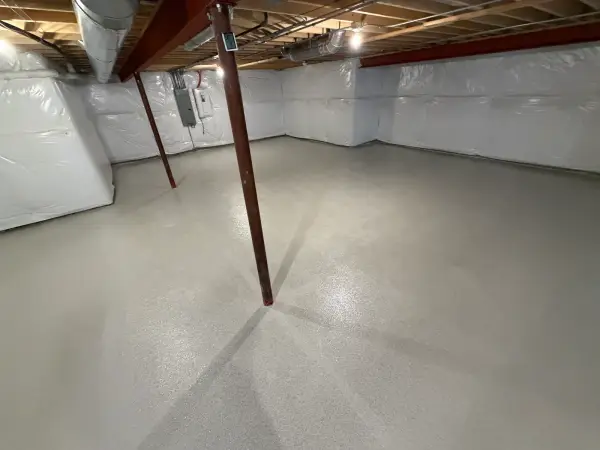
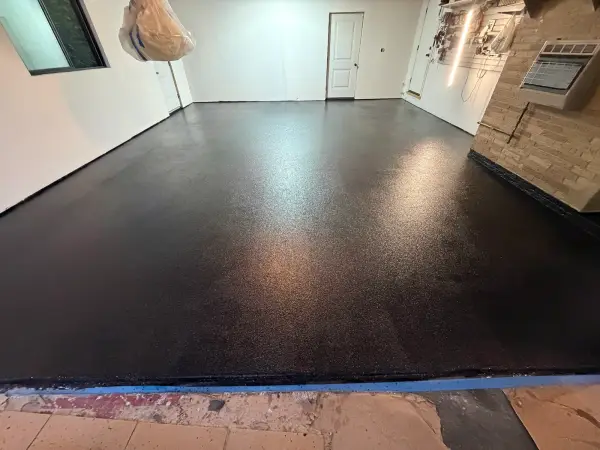
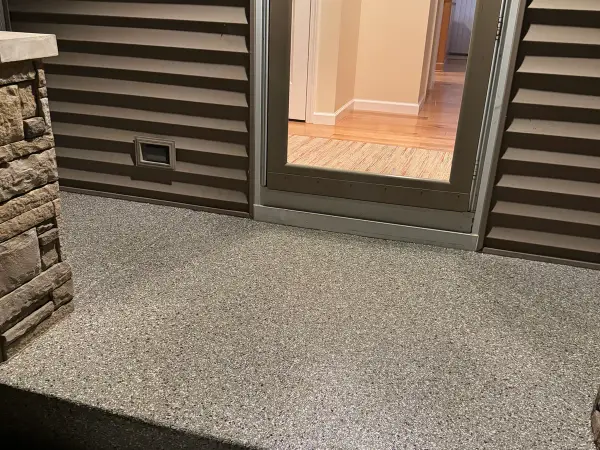
Next came the polyurea garage coating system. We put down the polyurea base coat and broadcast the Coyote flake blend to rejection, which means we kept adding flake until the wet base couldn't hold any more. Full coverage hides the base coat and gives the floor its texture and grip. Once it set, we scraped and vacuumed off the loose flake, then applied a clear polyaspartic topcoat to seal the flake in and protect the surface. We finished with a cleanup of the garage.
The whole install took 1 day. The floor was walkable after about 12 hours and ready for full use, cars included, after about 48 hours. If you've just had a new garage slab poured, this job is a fair picture of what coating it involves. There's no repair work, just a careful grind and a three-layer system, and the concrete gets covered while it's still clean and sound, before oil drips and road salt have had a chance to soak in.