What we did
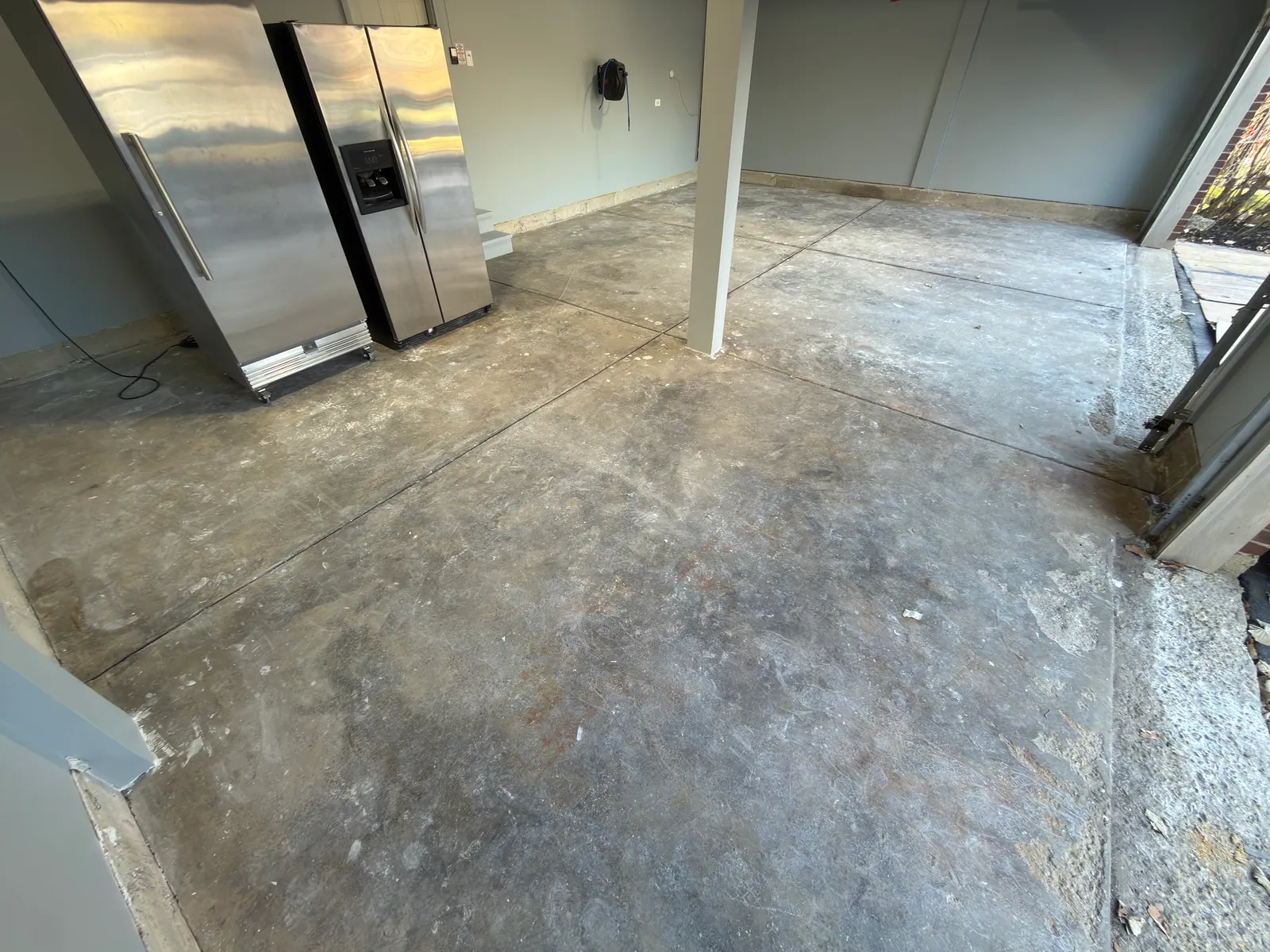
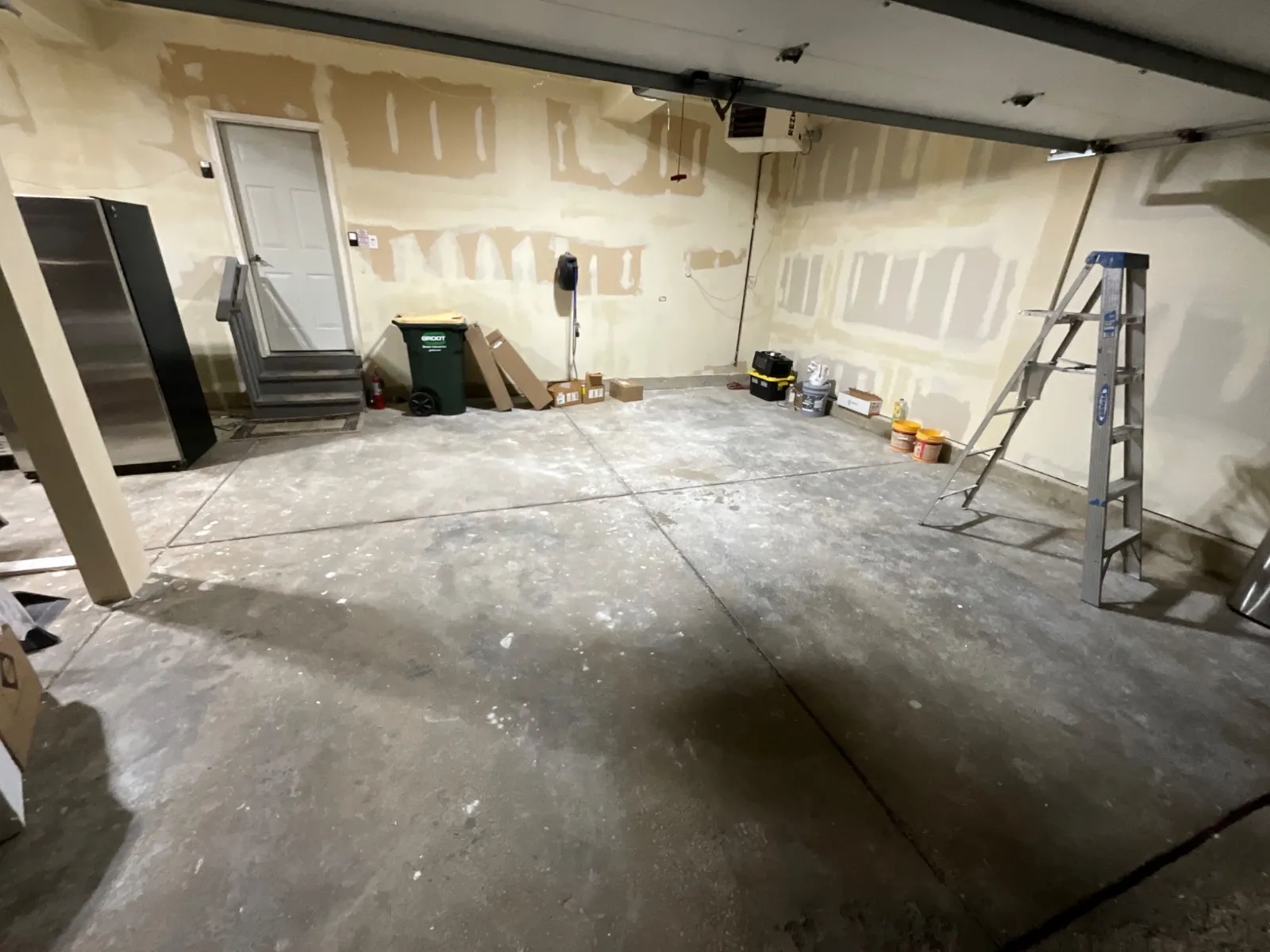
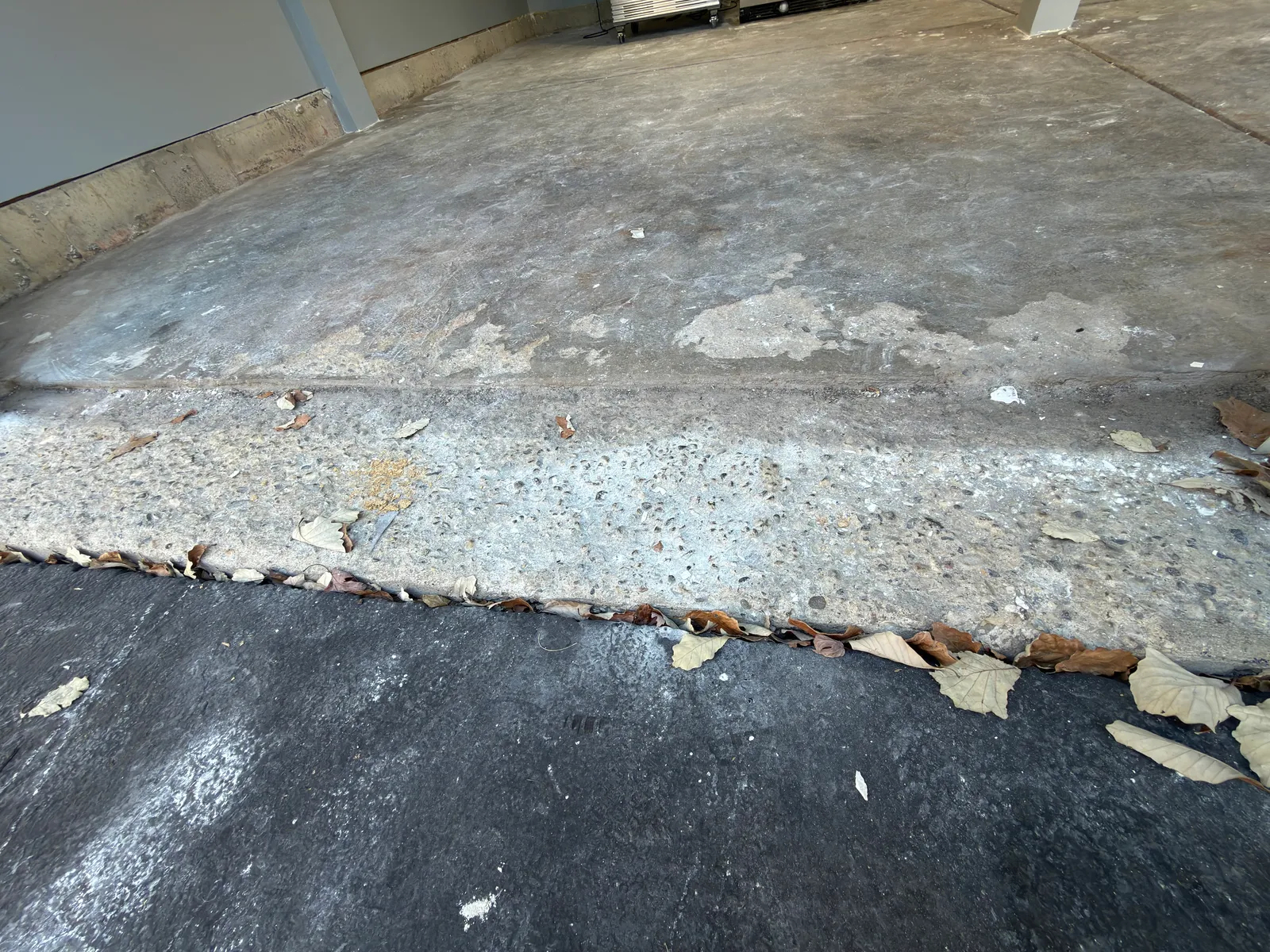
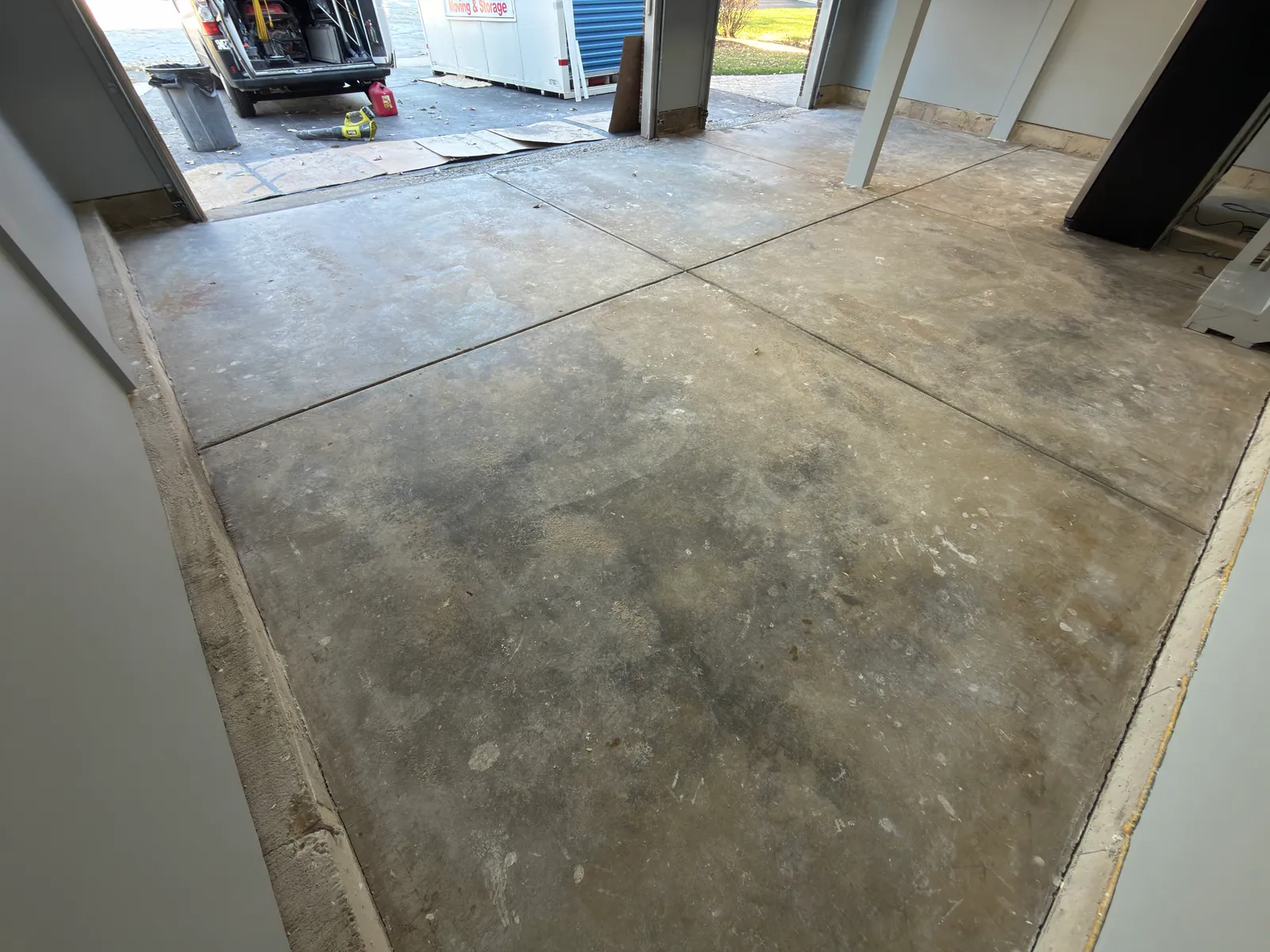
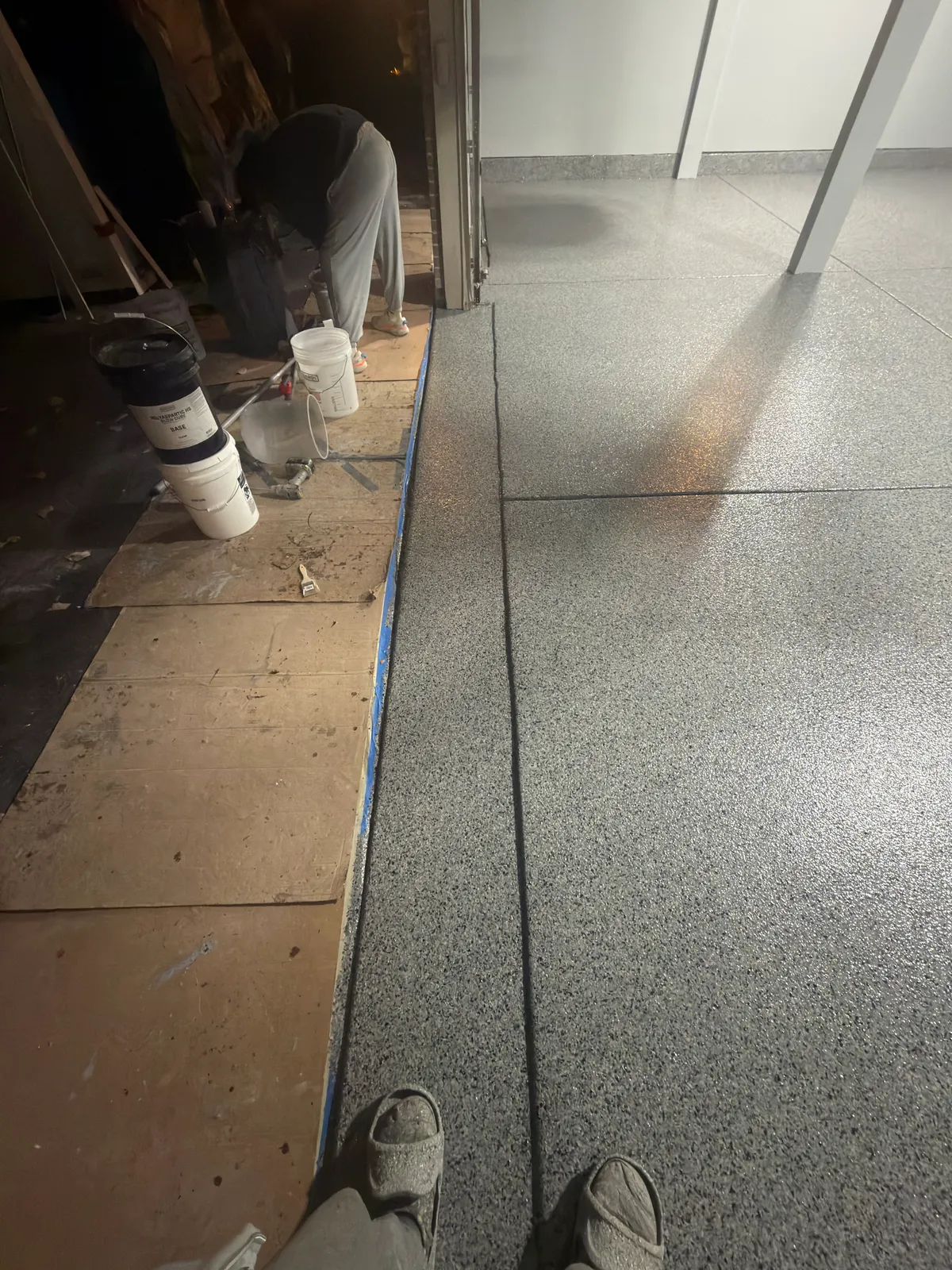
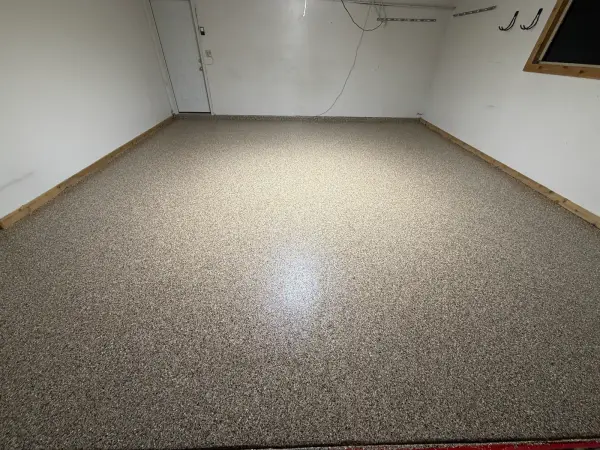
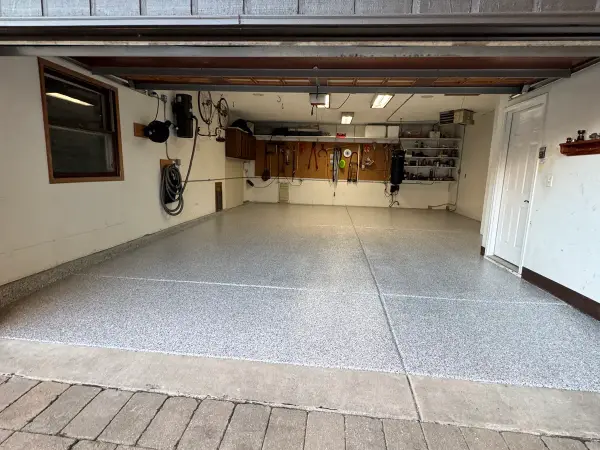
This was a 3-car garage with older concrete that had never been coated. There were a few cracks and some etching across the surface, which is the rough, worn texture concrete picks up over years of use. Bare concrete with no old coating is good news for us, since there's nothing to strip off. Still, the cracks and the uneven surface told us the prep would carry a lot of weight. Our measurement came to 650 square feet, and that included the outside edge of the slab.
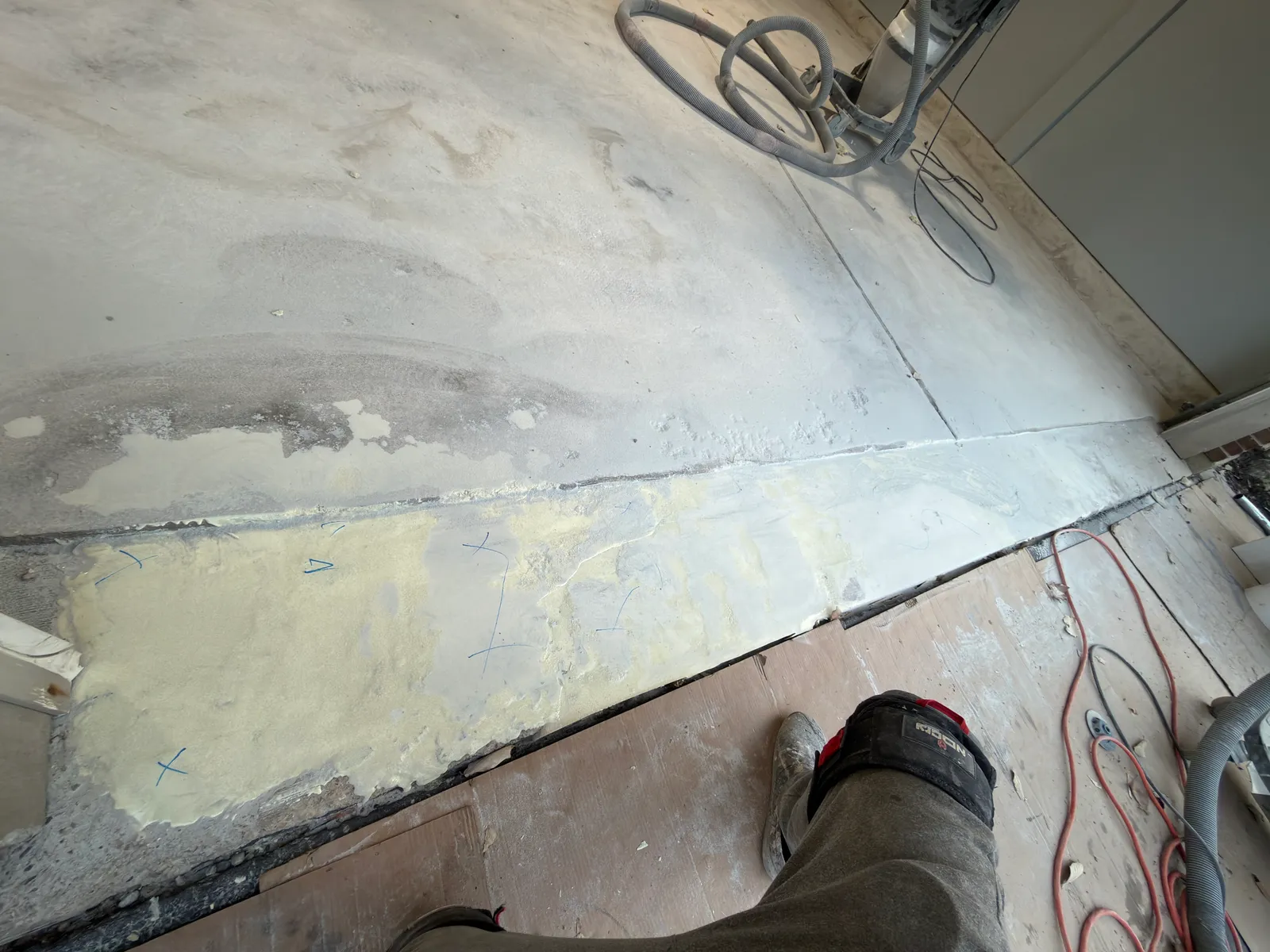
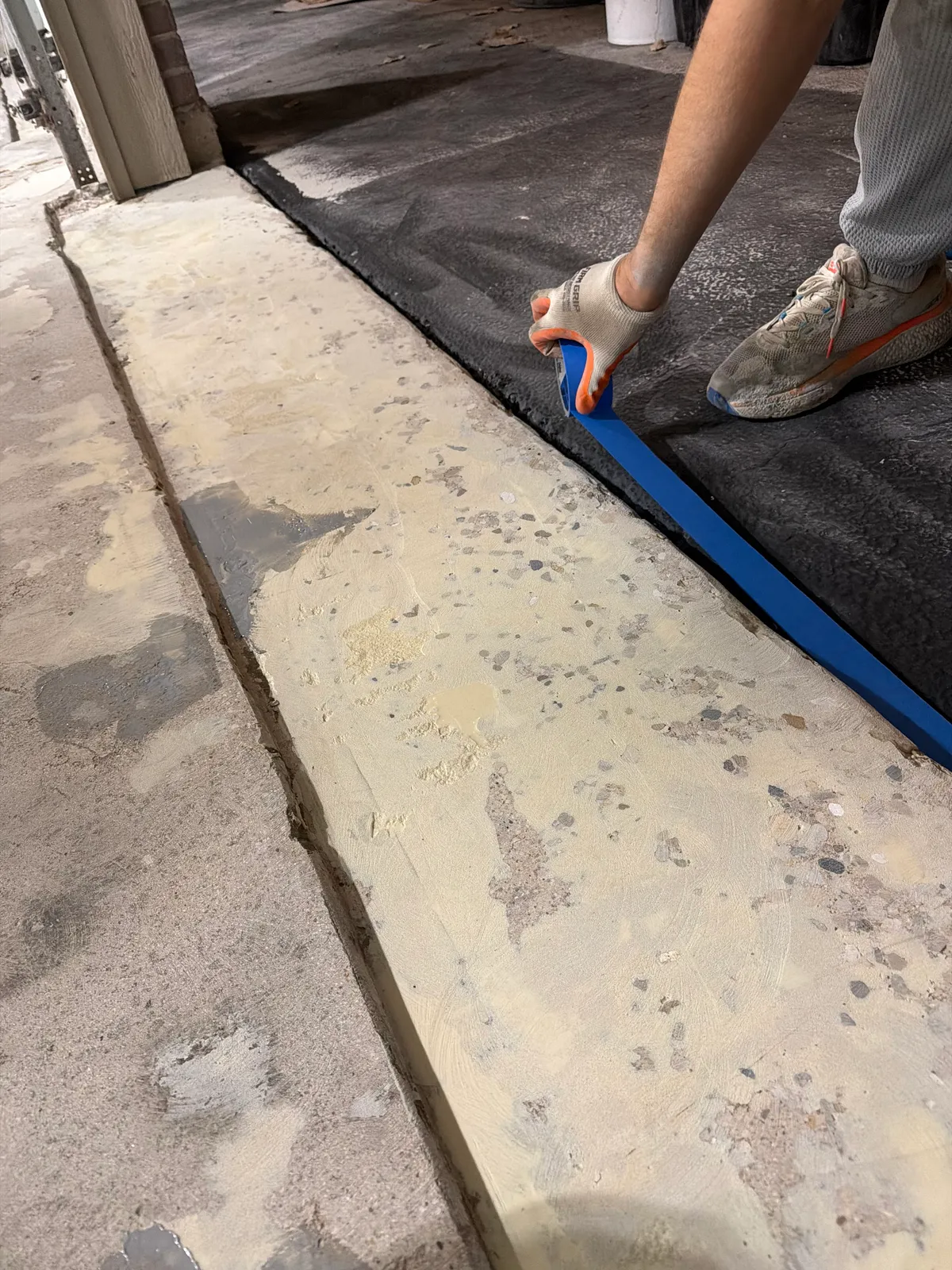
Prep started with removing the surface sheen and any contaminants, then diamond grinding the whole floor. We use diamond grinding instead of acid etching because it opens the concrete to an even, consistent profile the coating can grip, without leaving acid residue behind. The few cracks were cleaned of loose concrete and filled before any coating went down. Filling them first keeps the base coat from sinking into the gaps and leaves a level surface for everything above it.
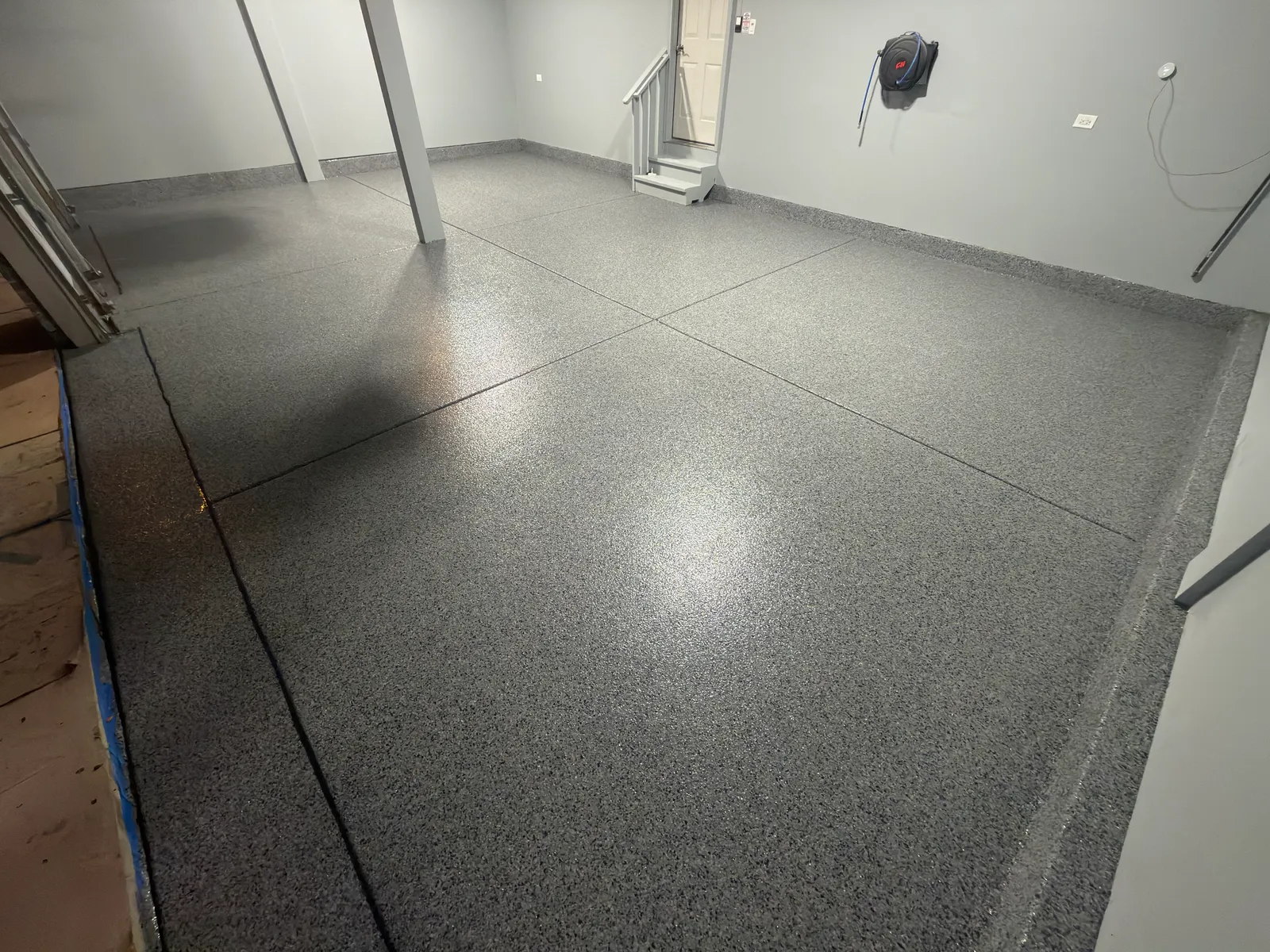
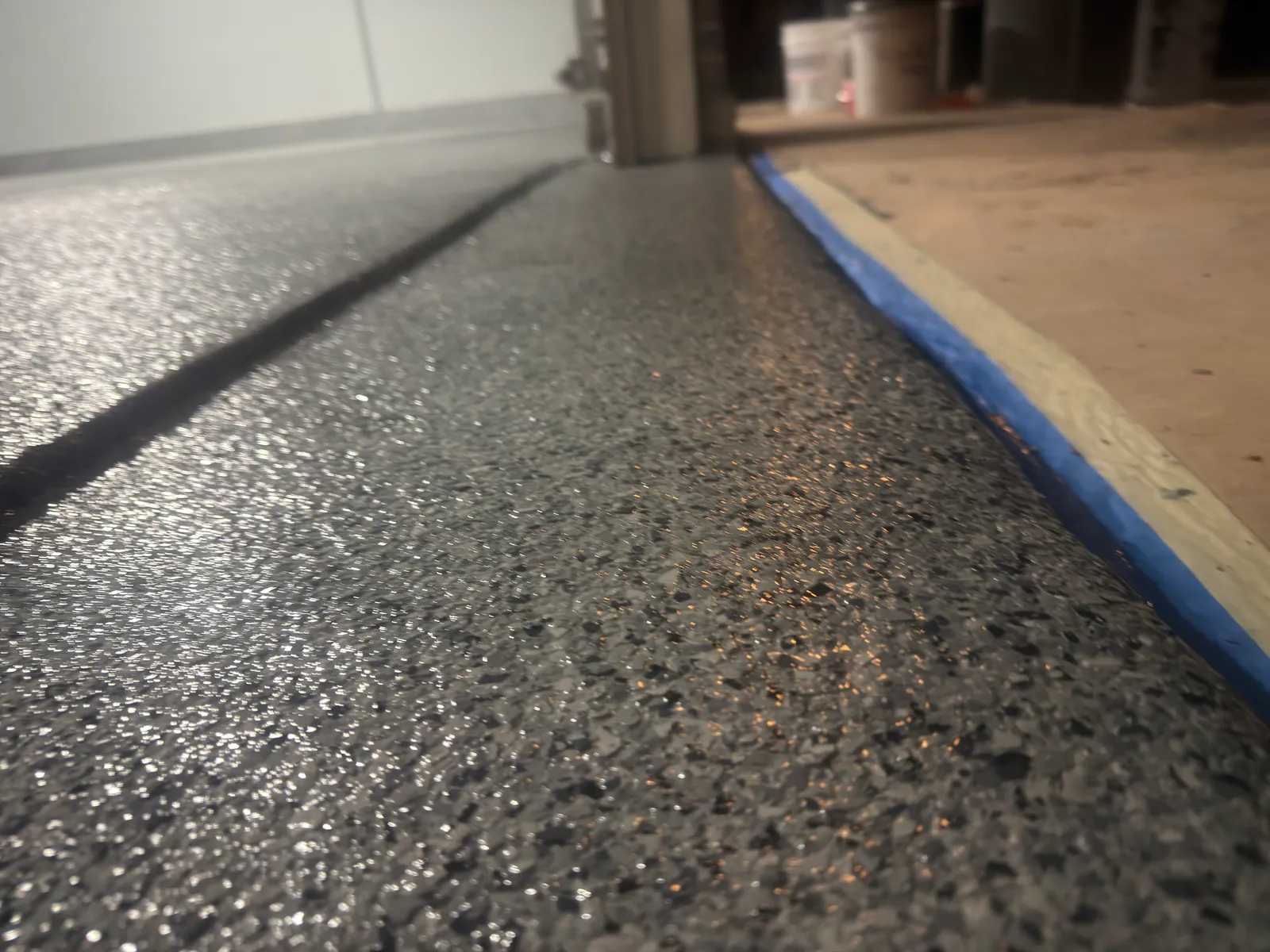
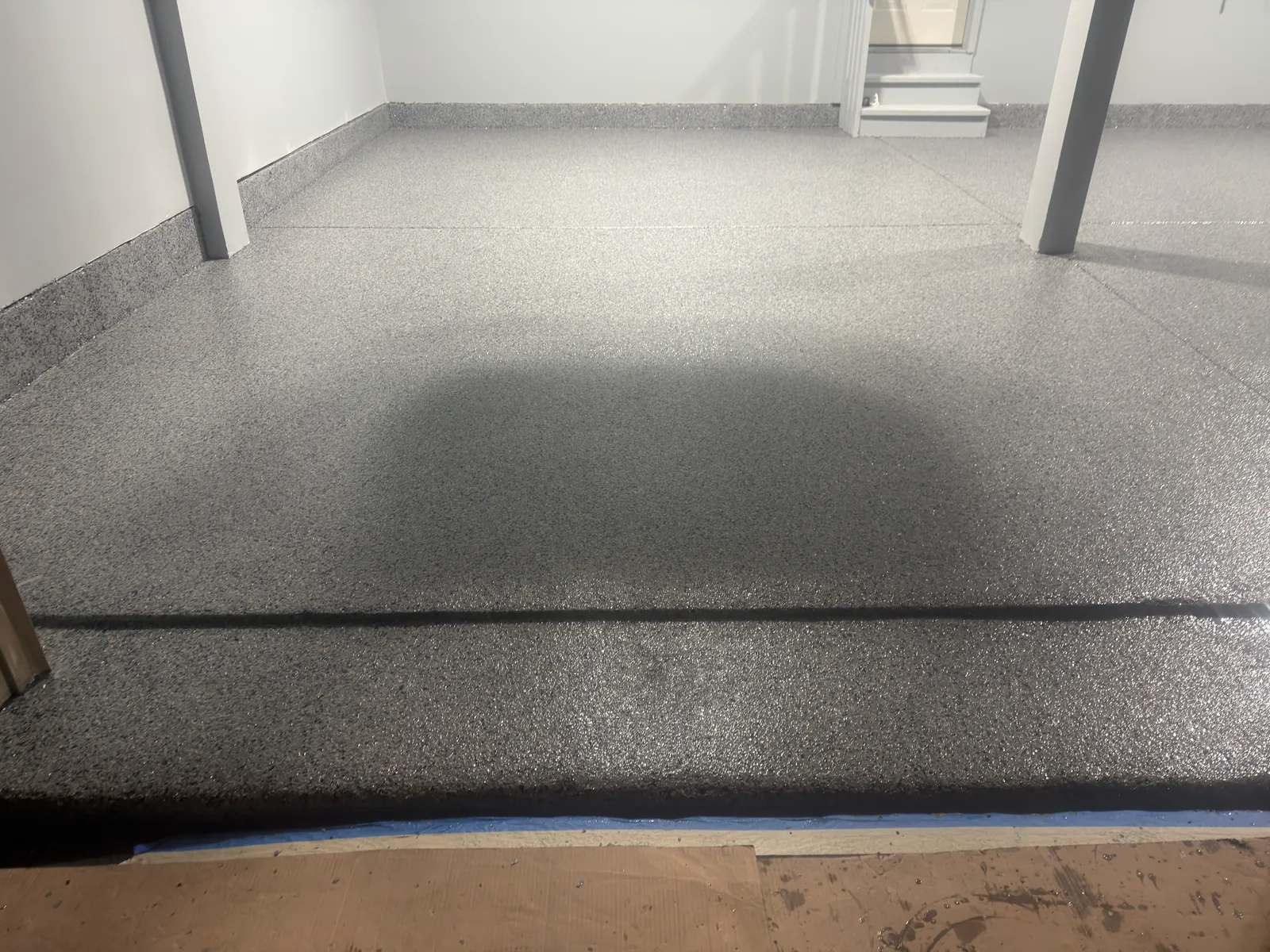
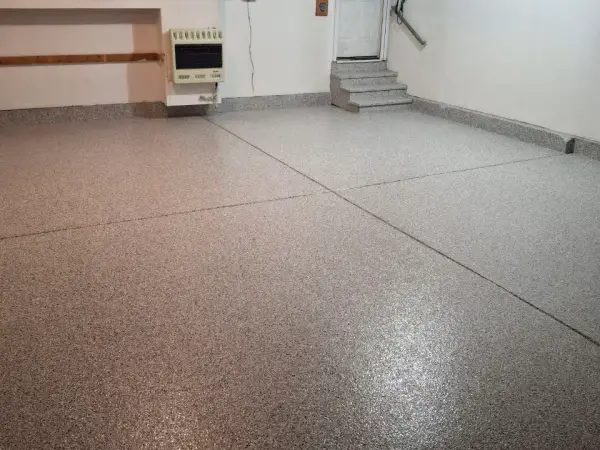
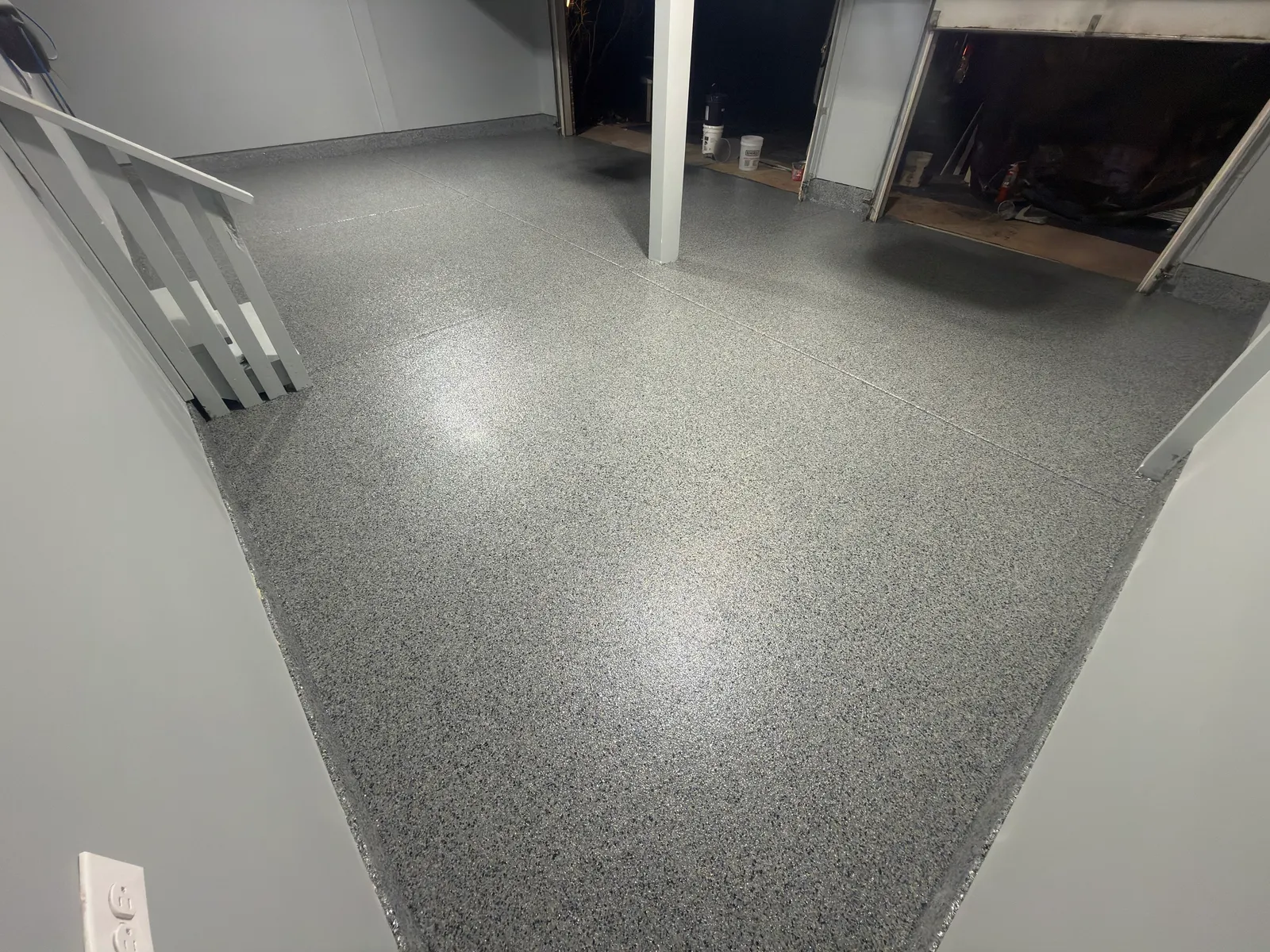
Next came the polyurea base coat, and we broadcast decorative flake into it until the floor wouldn't take any more, which is what we mean by broadcasting to rejection. Once it set, we scraped and vacuumed the loose flake and rolled on a clear polyaspartic topcoat. This is the polyurea garage coating system we install most often. We also coated 60 linear feet of vertical surfaces with the same system so the floor and those edges seal as one piece, and broadcast aluminum oxide into the topcoat across all 650 square feet for better traction underfoot.
Start to finish, the install took one day. The floor was walkable after about 12 hours and ready for full use, cars included, after about 48 hours. If your garage has older concrete with a few cracks and some surface wear, this job is a fair picture of what to expect: bare, worn concrete like this usually needs good grinding and crack repair more than anything dramatic, and a three-car space can still be coated in a day.