What we did
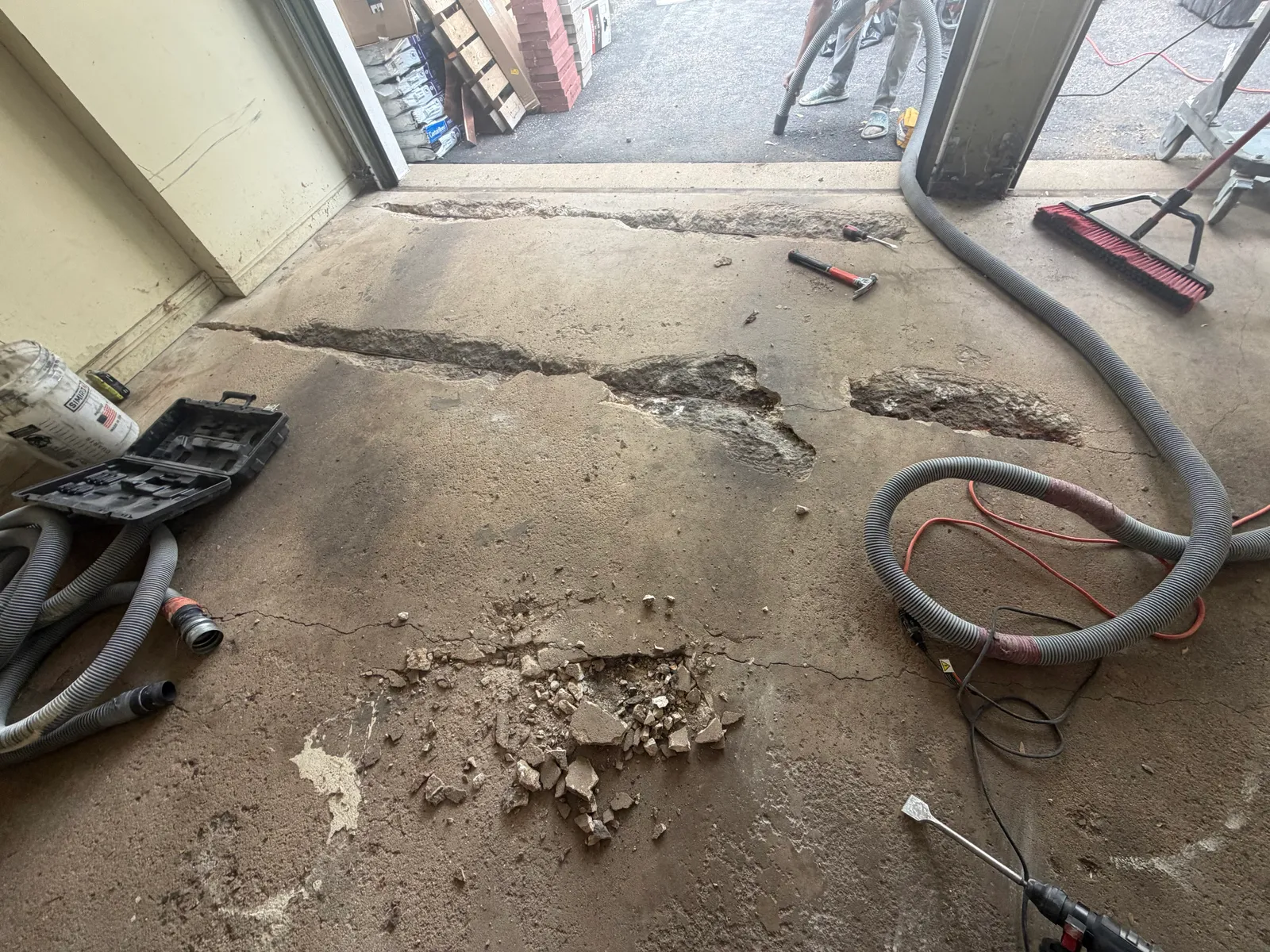
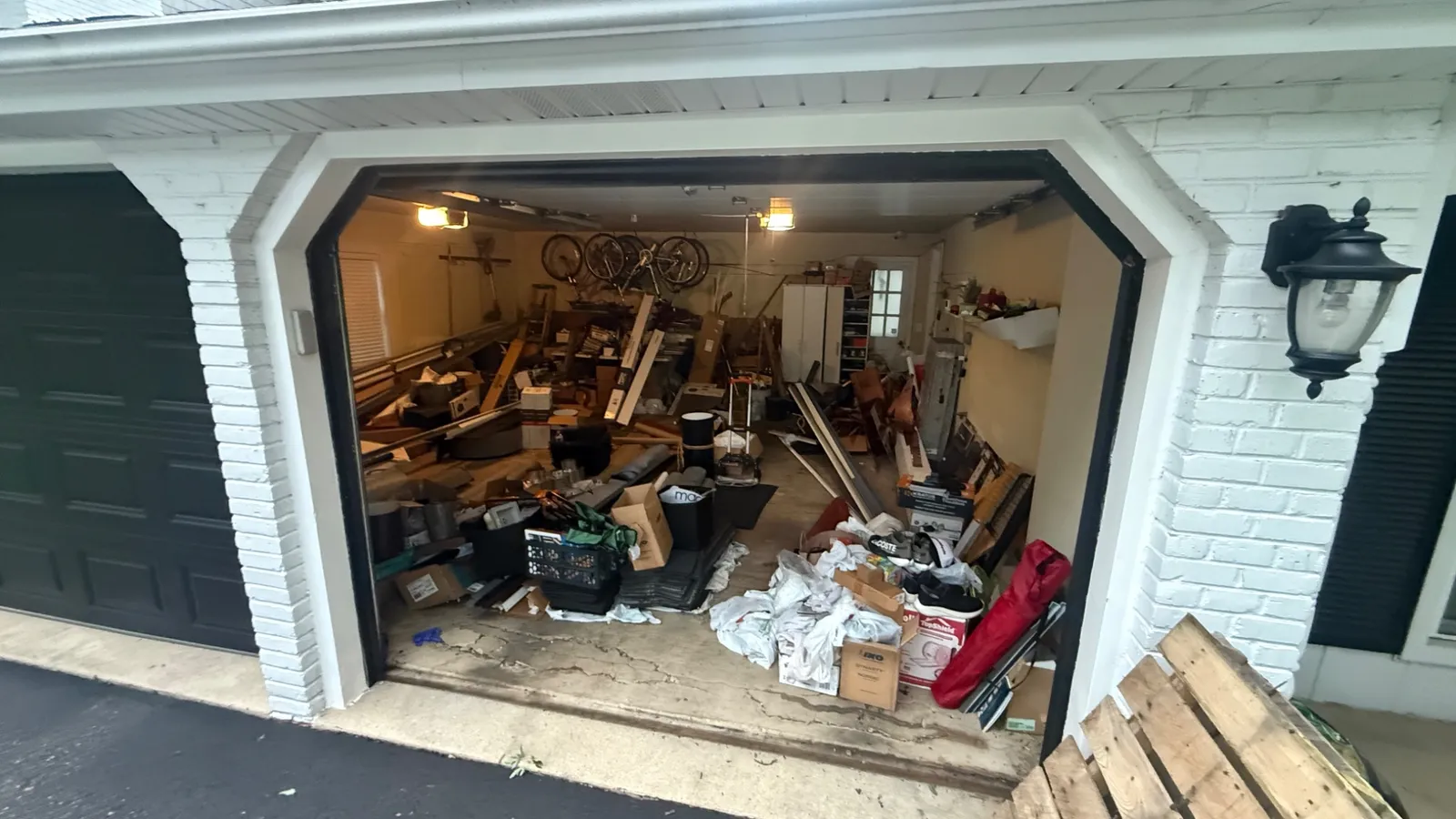
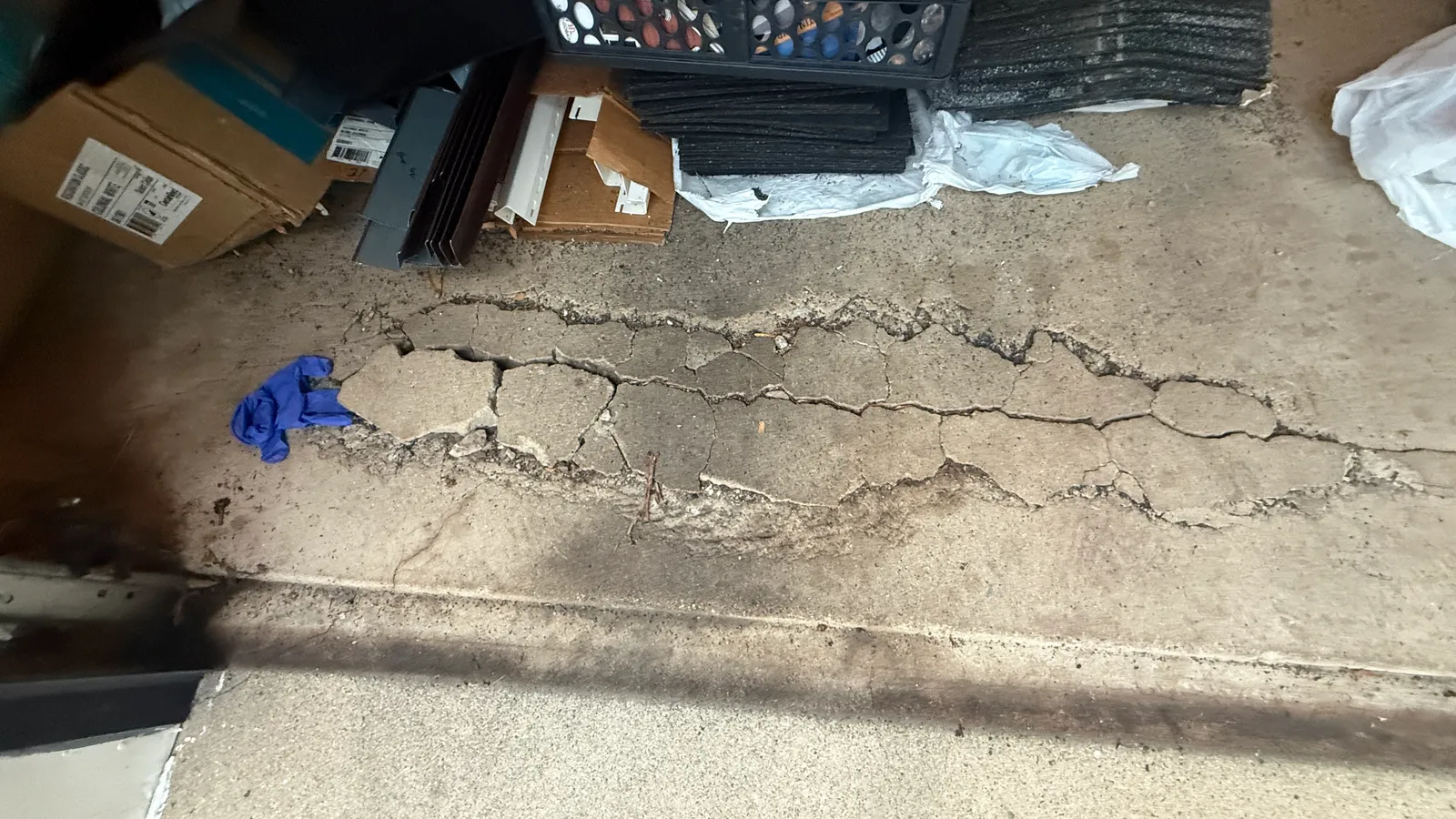
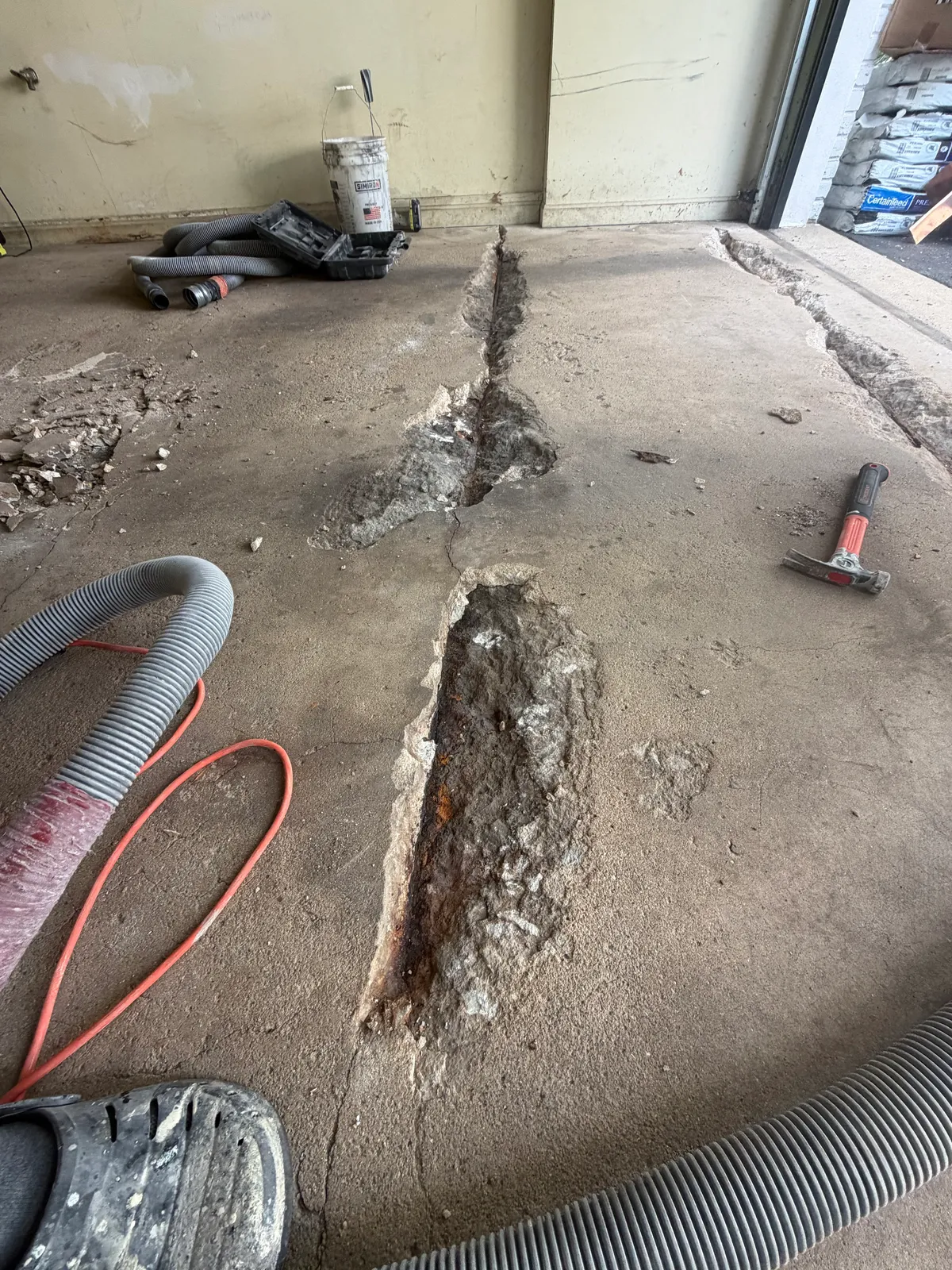
This was a 460-square-foot, two-car garage, and the slab showed its age. The concrete was old, with lots of cracking and deep deterioration. A floor like that can still take a coating, but only if the damaged concrete gets repaired first, so concrete restoration was part of the job from the start. If you're wondering whether your own slab is too far gone, our write-up on coating a cracked garage floor walks through a similar case.
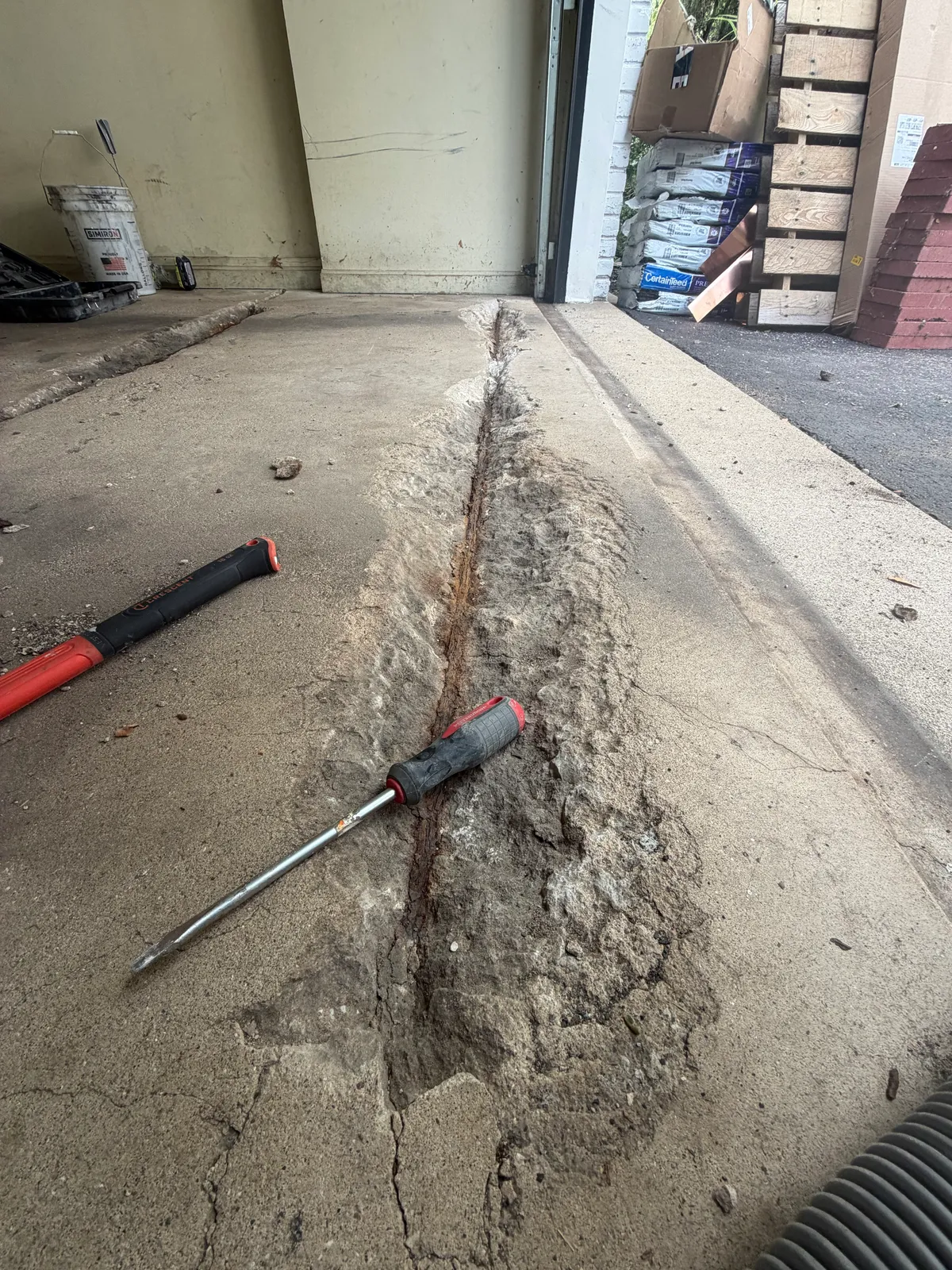
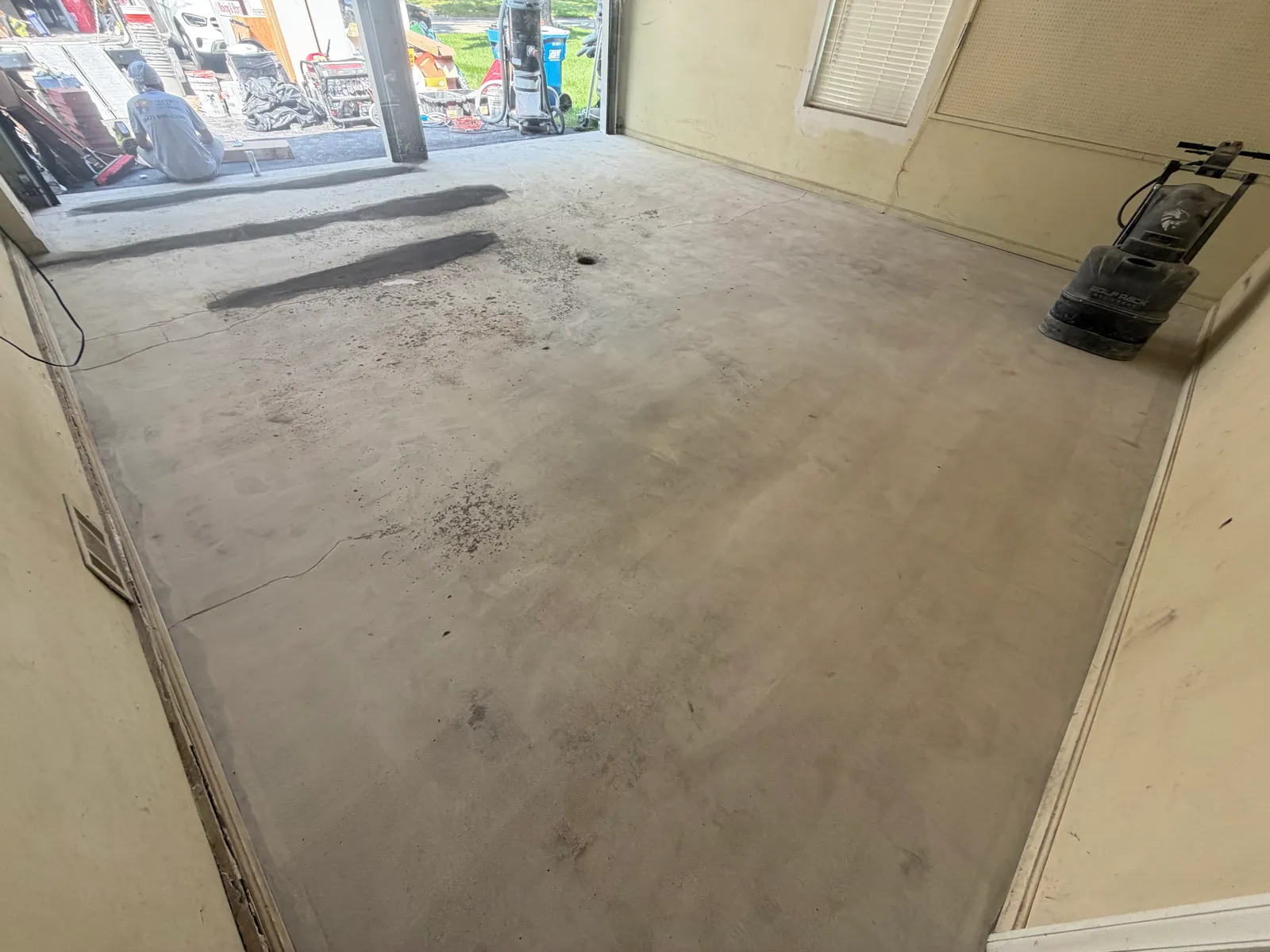
We started by diamond grinding the whole floor to take off the surface sheen and any contaminants. Grinding opens up the concrete's surface texture, which we call its profile, so the base coat can grip the slab instead of just sitting on top of it. Then came the cracks. We cleaned the loose concrete out of them, filled each one with the right filler for its size, and patched the other imperfections. Cracks get filled before the base coat because coating over an open crack leaves a weak spot that tends to show through later.
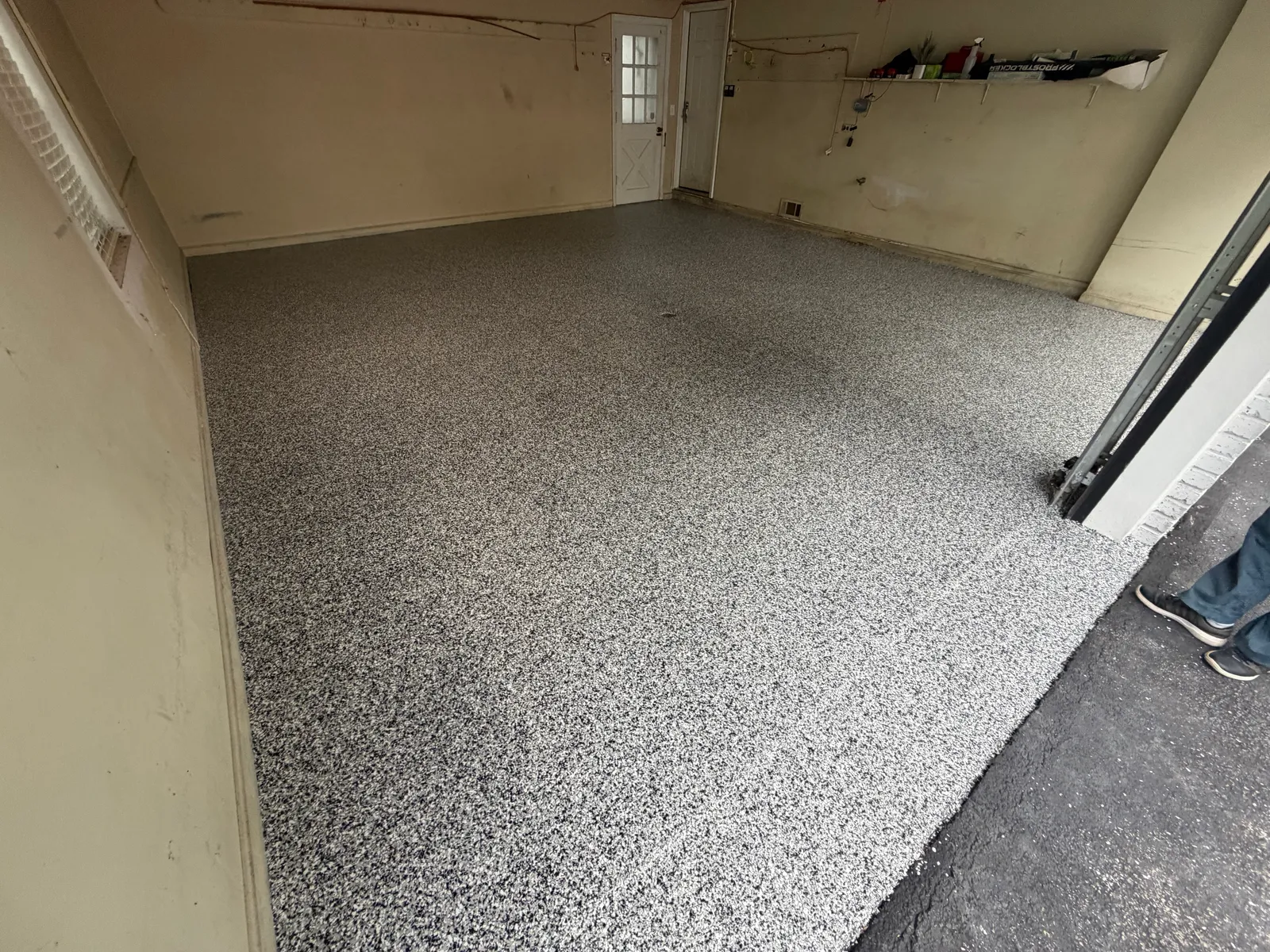
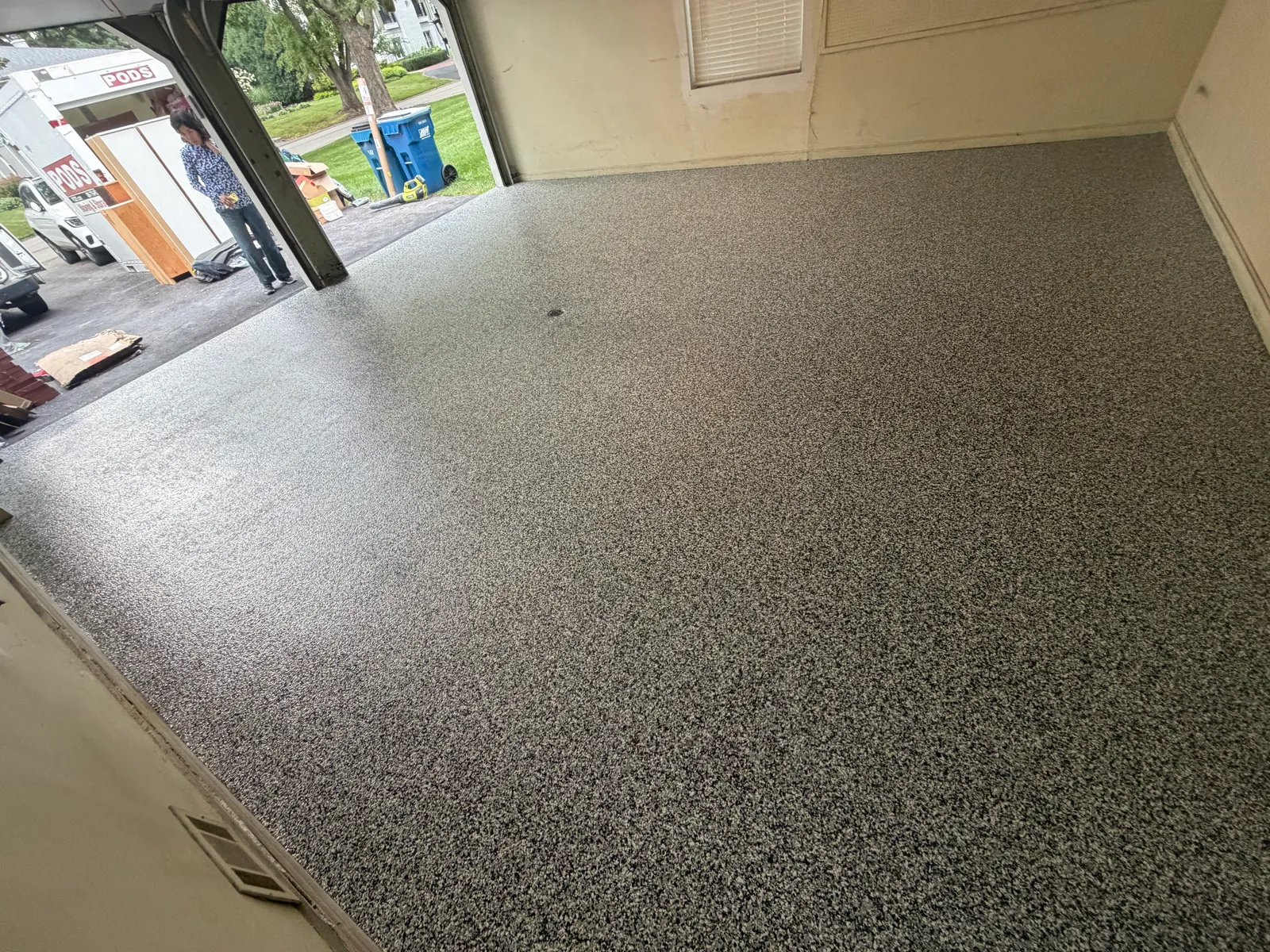
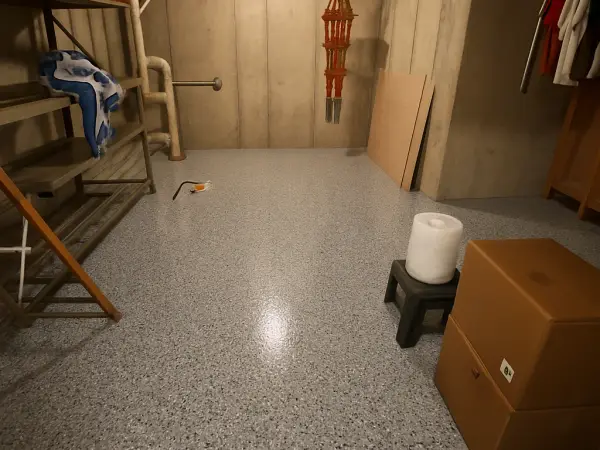
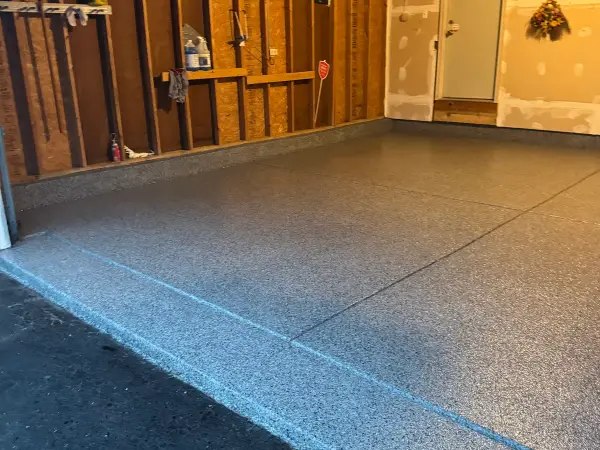
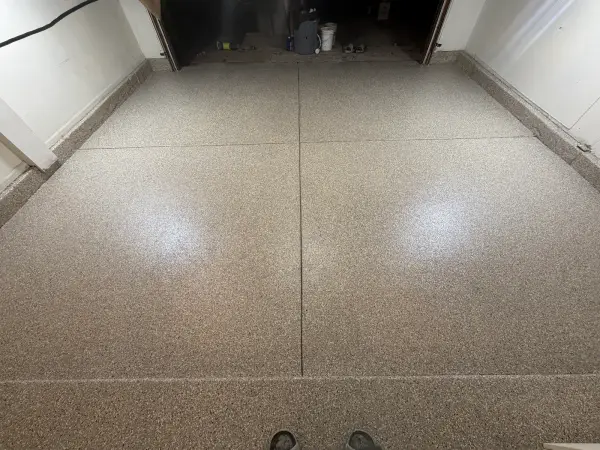
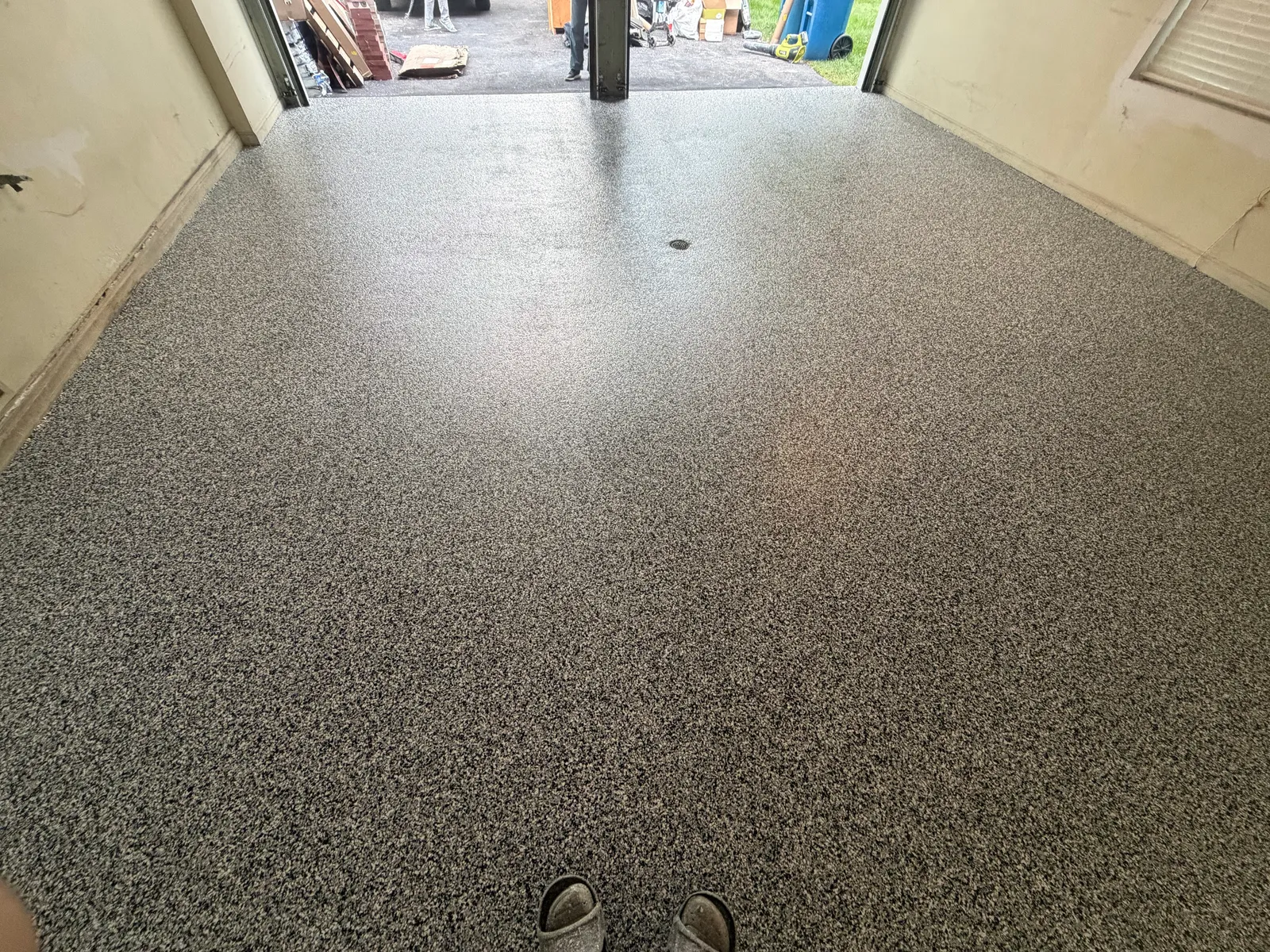
With the slab repaired, we put down the polyurea base coat and broadcast Domino flake into it until the surface wouldn't hold any more, which is what we mean by broadcasting to rejection. After that we scraped and vacuumed off the loose flake. The clear polyaspartic topcoat went on next, and we added aluminum-oxide grit to it across all 460 square feet for better traction underfoot. That layering is our standard polyurea garage coating system.
The whole install took one day, cleanup included. The floor was walkable after about 12 hours and ready for full use, cars included, after about 48 hours. If your garage has old concrete with a lot of cracking, this job shows it doesn't have to be torn out before it's coated. It just needs the repair work done first, and done carefully, so the coating has something solid to bond to.