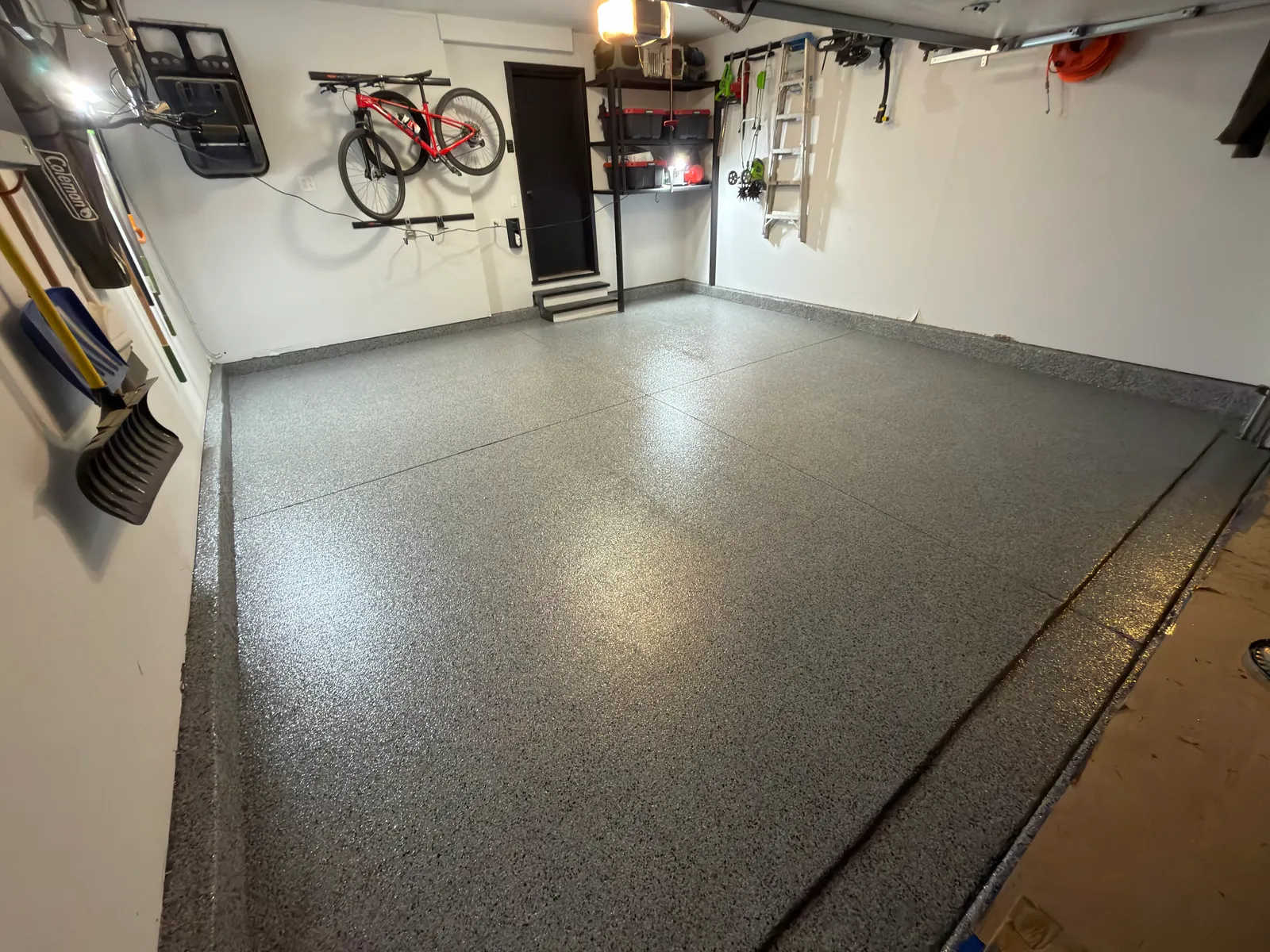
What we did
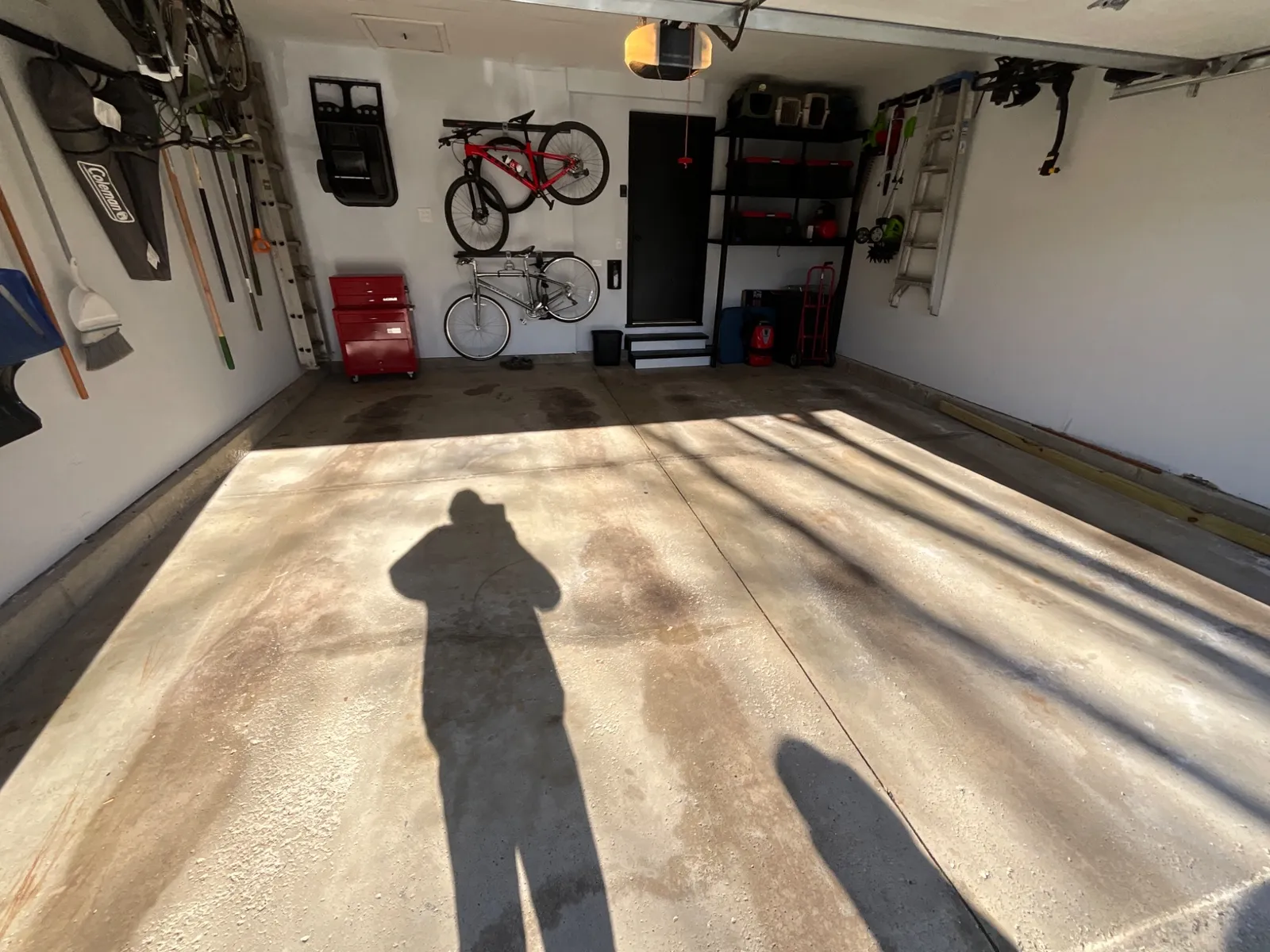
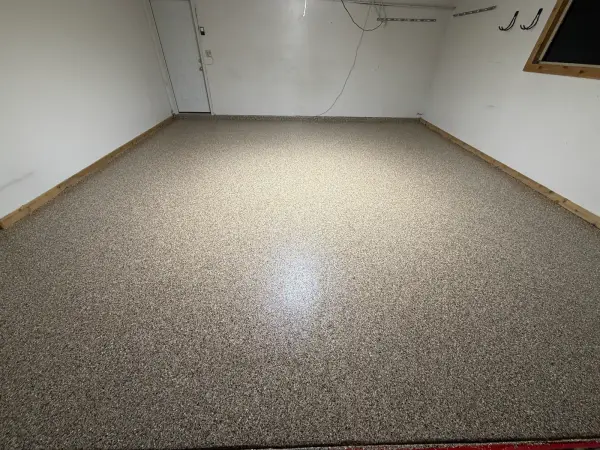
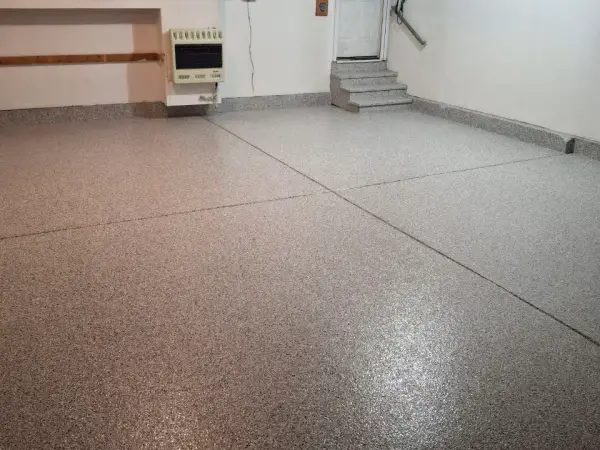
This two-car garage sat on new concrete. There were no cracks to fill and no old coating to strip off, so the slab gave us a clean starting point. The area came to 400 square feet, and that number included the outside edge of the slab. Still, new concrete isn't something you coat straight away without prep. Its top surface tends to be smooth and tight, and a coating needs an open, textured surface to hold onto.
Prep started with removing the surface sheen and anything sitting on top of the slab. Then we went over the whole floor with diamond grinding, which cuts a fine, even profile into the concrete. We grind instead of acid-etching because grinding gives a consistent texture across the entire floor, and the base coat soaks into that opened surface rather than resting on top of it. We also profiled 50 linear feet of vertical concrete at the floor-to-wall transition so the coating would grip there too.
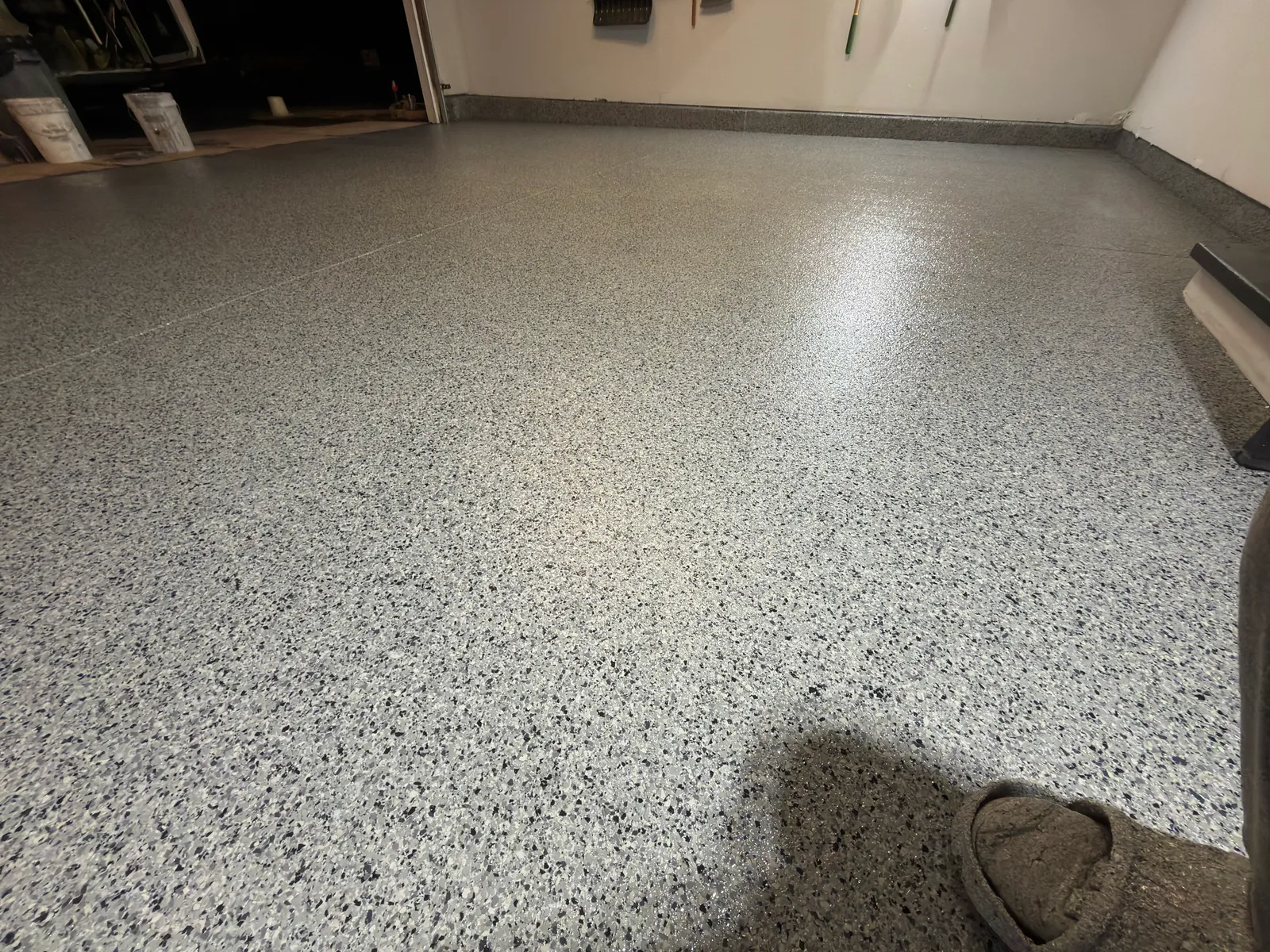
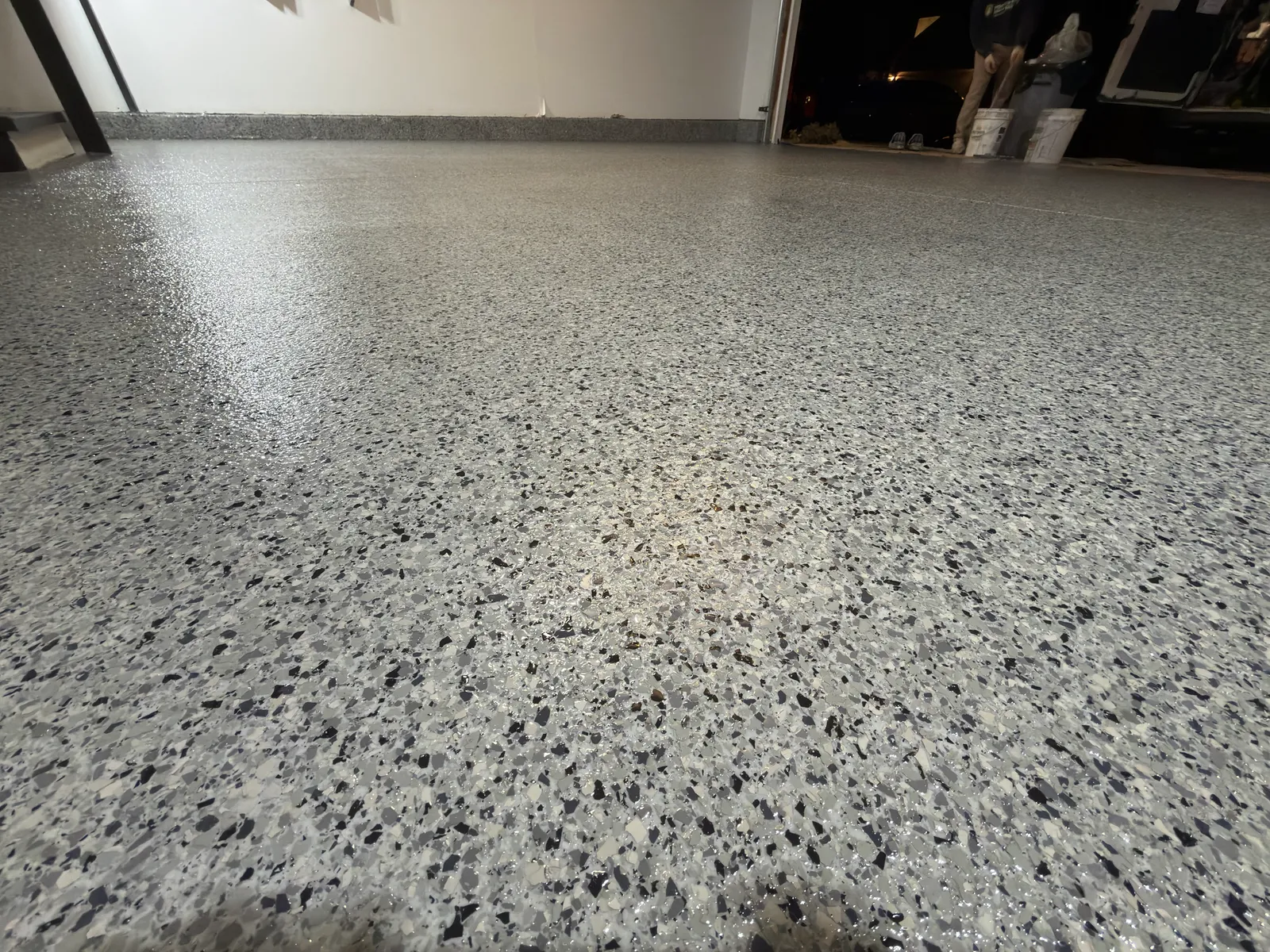
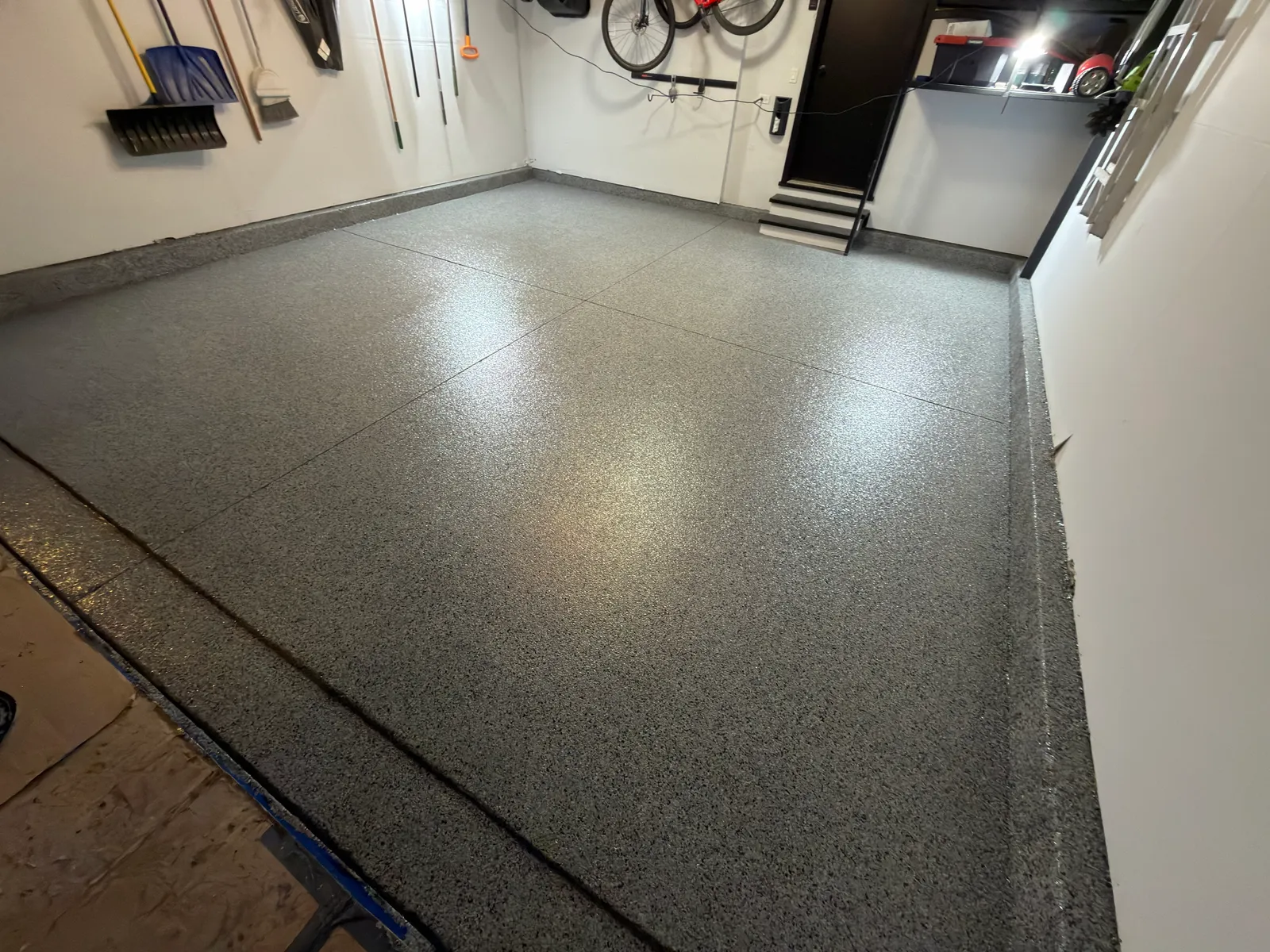
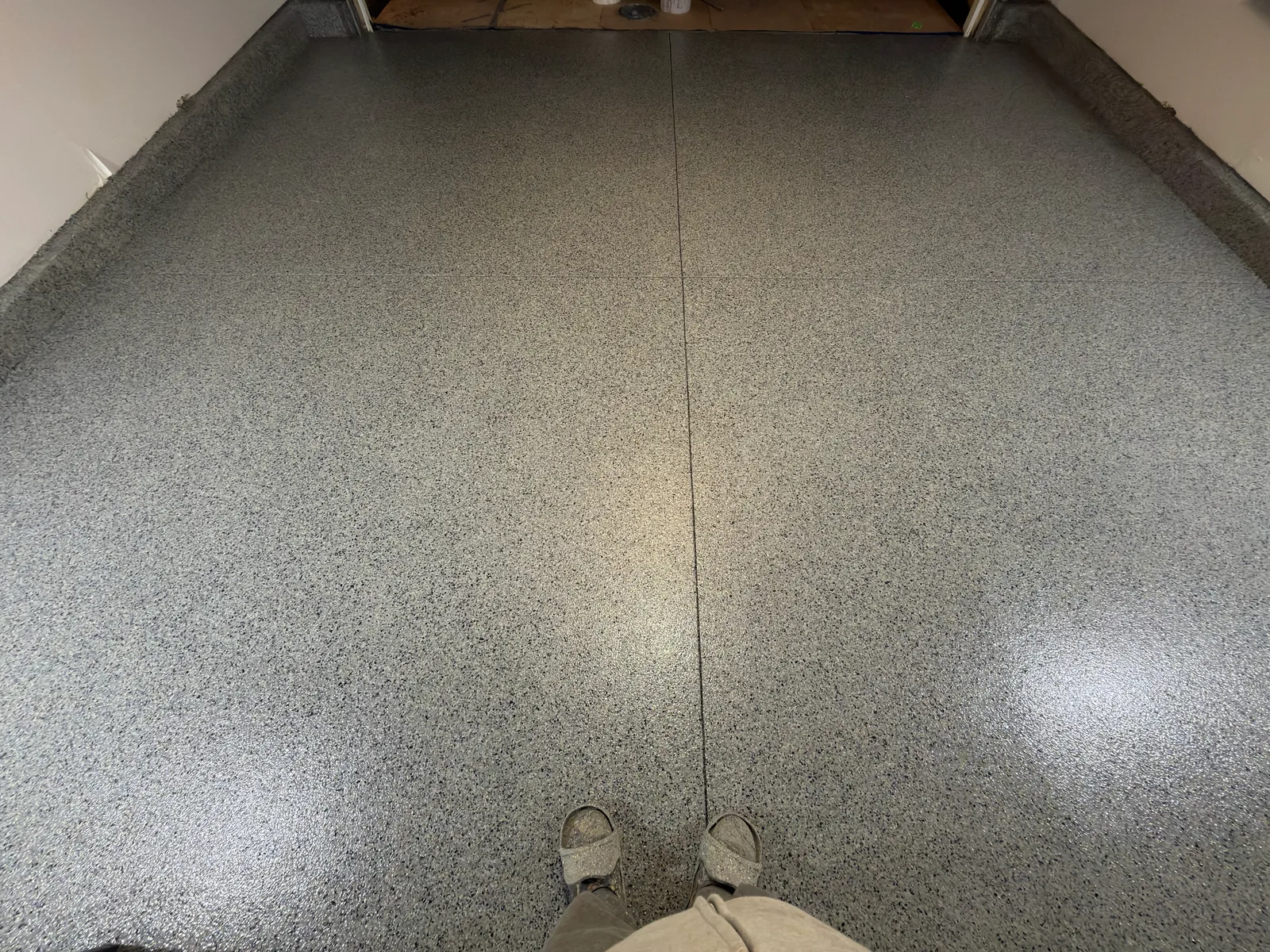
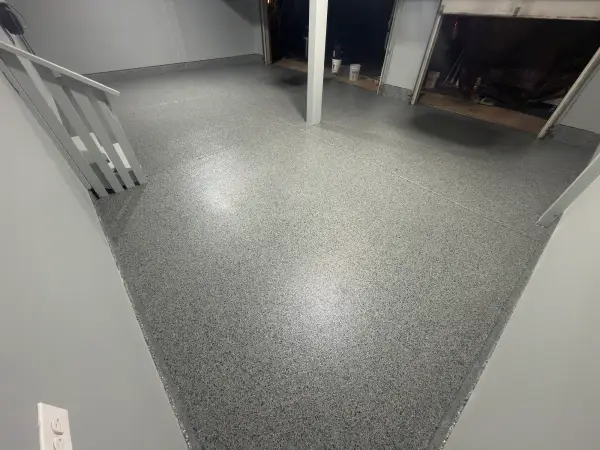
Next came the polyurea base coat. While it was still wet, we broadcast the Nightfall flake to rejection, which means we kept adding flake until the base couldn't take any more. Full coverage like that hides the gray concrete completely and builds up the floor. Once it set, we scraped and vacuumed the loose flake, then applied the clear polyaspartic topcoat with aluminum oxide grit broadcast into it for better traction. The same system went onto those 50 feet of vertical surfaces, giving one continuous seal where floor meets wall. It's our standard polyurea garage coating build.
The whole install took one day. The floor was walkable after about 12 hours and ready for full use after about 48 hours. With grit in the topcoat, it has more bite underfoot than a plain clear finish, though no floor is slip-proof when it's wet, oily or icy. If your garage slab is new and sound like this one, the effort goes into grinding and coating rather than repairs, and a two-car space like yours can be done in a single day.