What we did
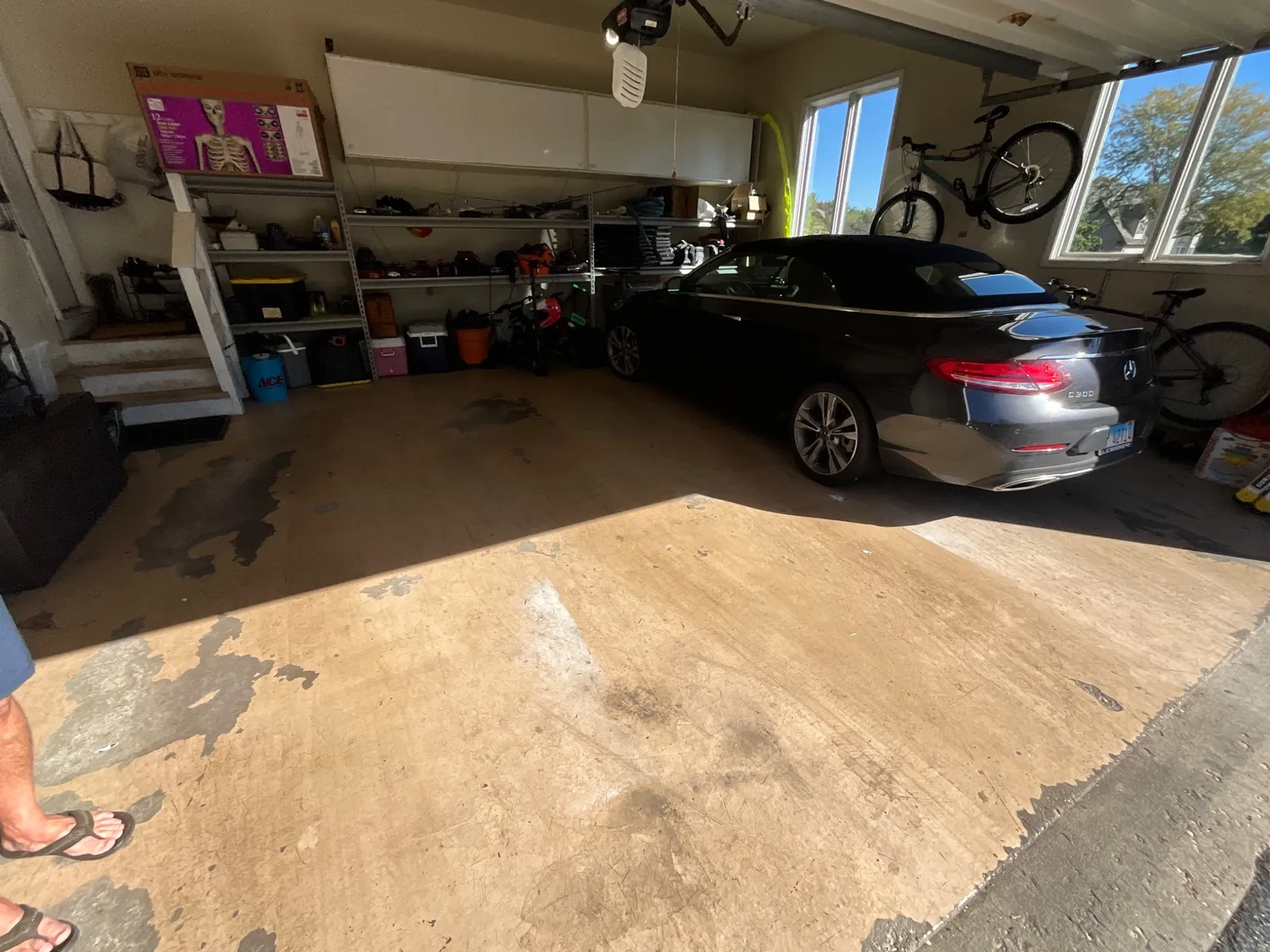
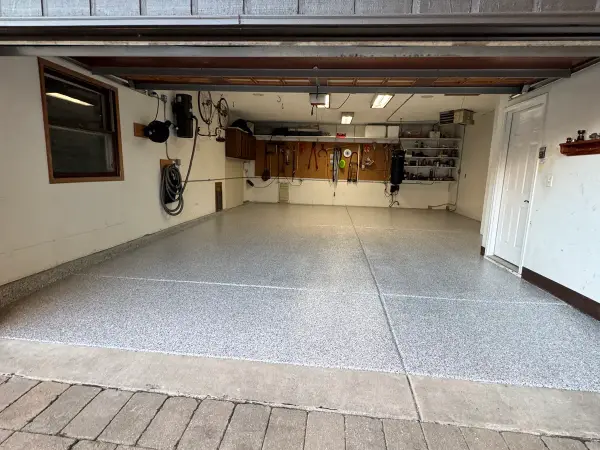
This was a two-car garage with brand-new concrete, about 550 square feet of slab with no cracks and no old coating on it. That's about as clean a starting point as we ever get. With nothing to strip off and nothing to repair, the job came down to two things: getting the bare slab ready to grip a coating, and then putting each layer of the system down carefully.
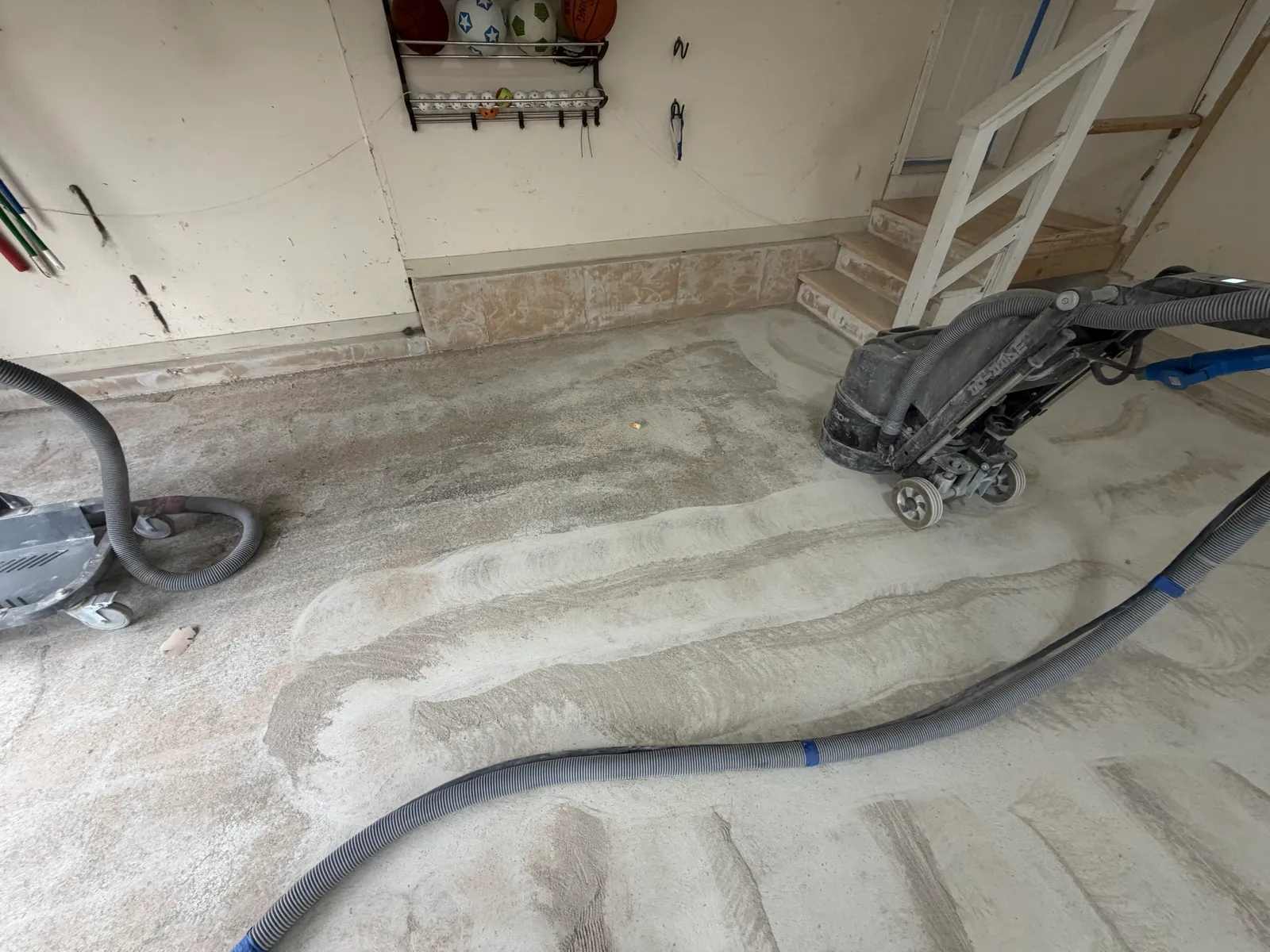
New concrete still needs real prep, though. A fresh slab has a smooth, slightly glossy top layer, and a coating laid over that sheen has very little to hold on to. We removed the sheen and any contaminants, then used diamond grinding to profile the surface, which means roughening it to a texture a bit like fine sandpaper. Grinding gives the same profile across the whole floor, while acid-etching tends to be uneven and can leave residue behind in the pores.
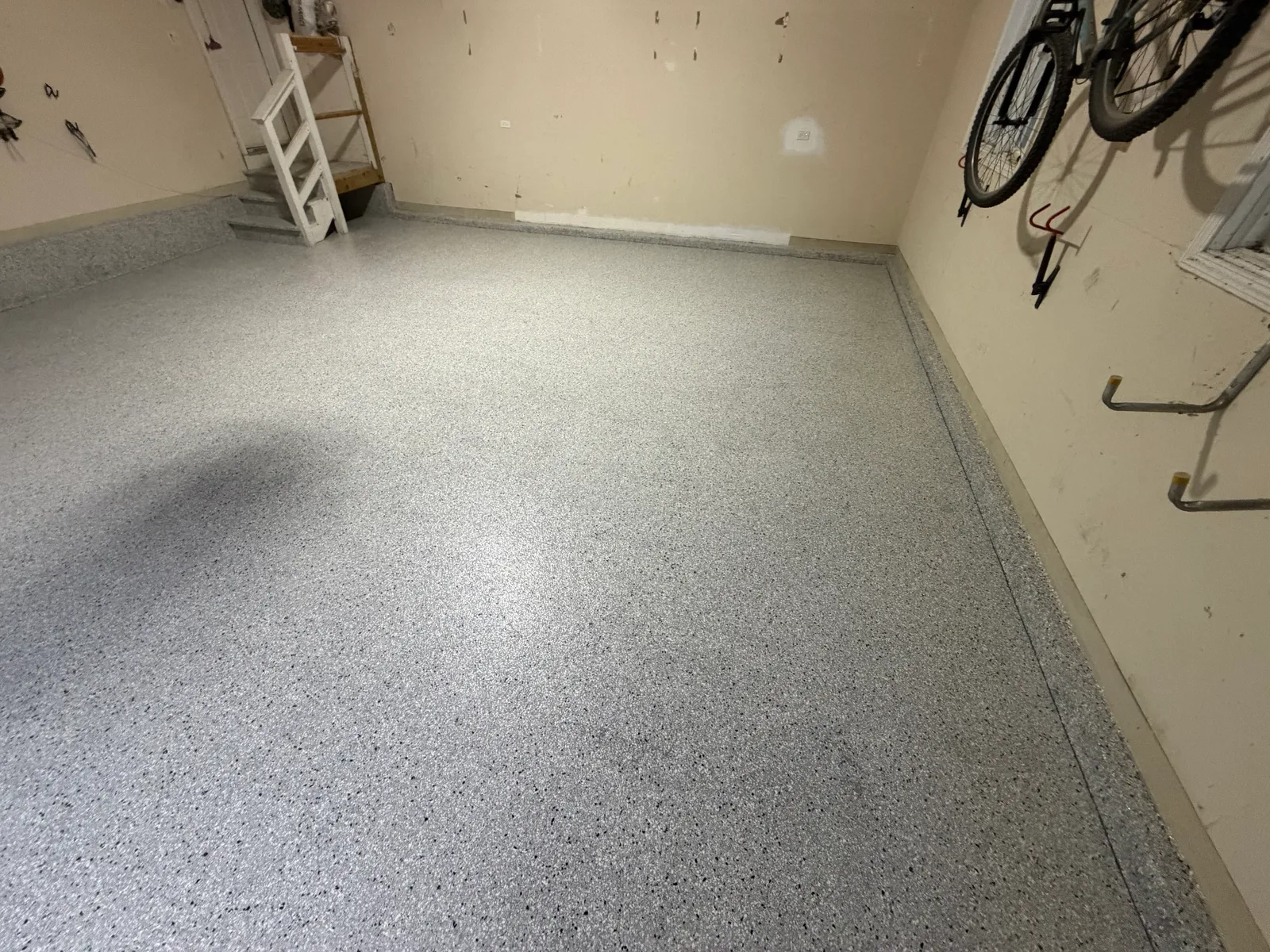
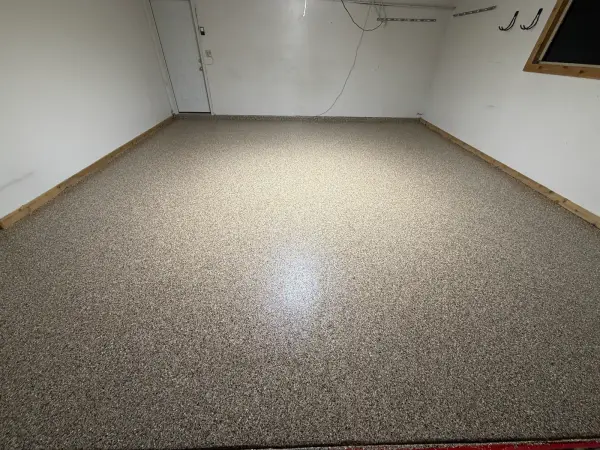
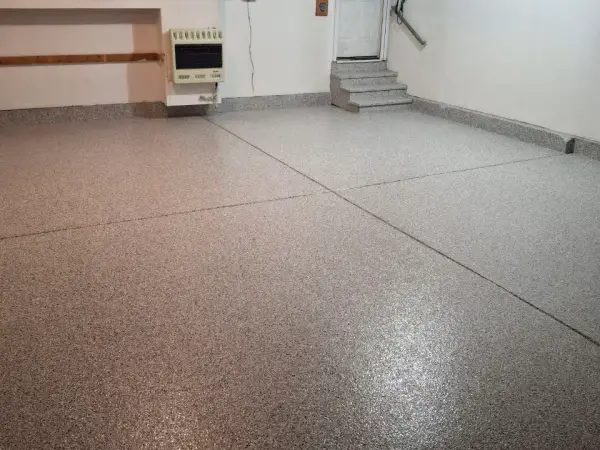
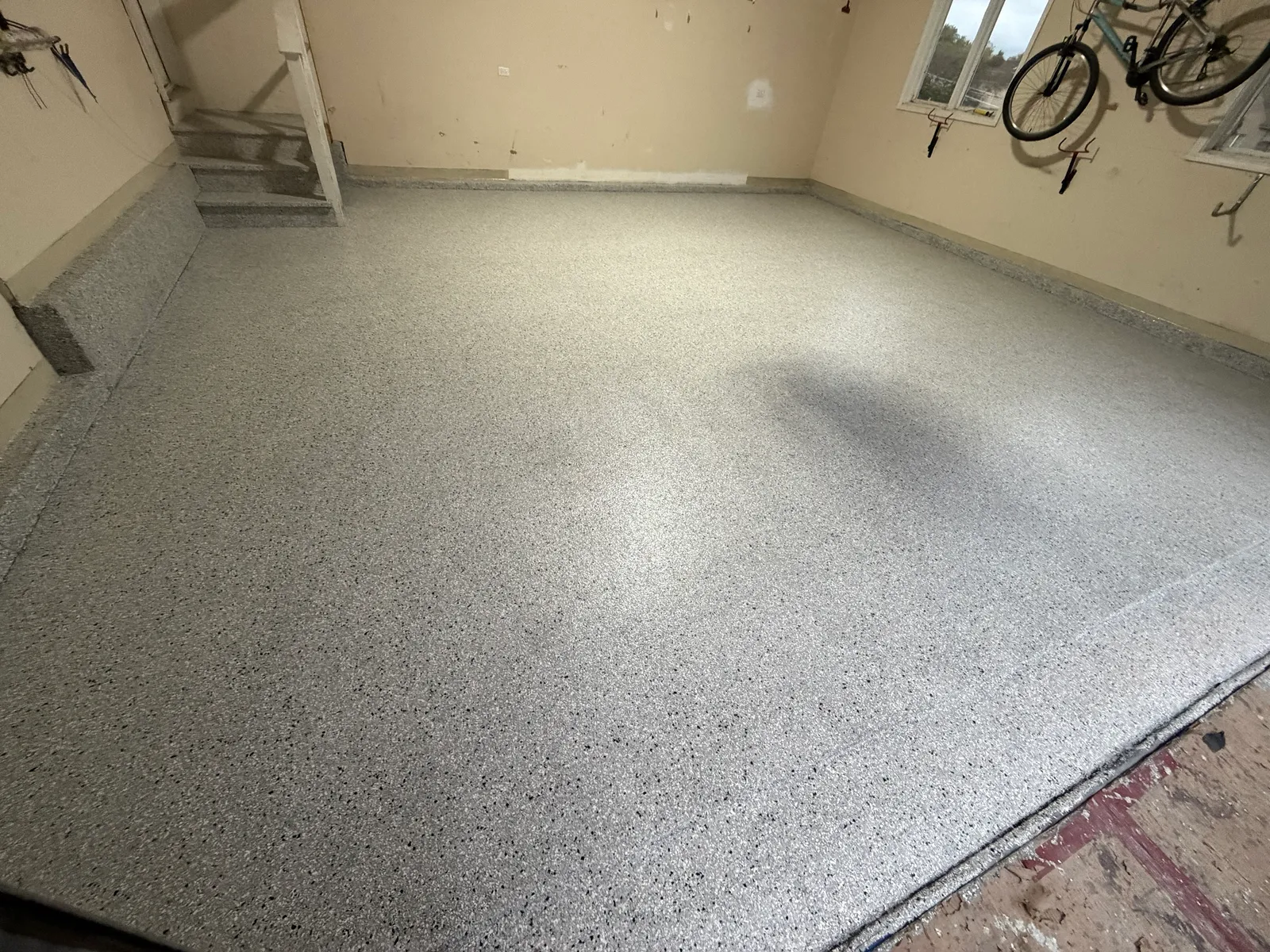
Our polyurea garage coating went down in layers. First came the polyurea base coat, then Feather Gray flake broadcast to rejection, meaning we kept adding flake until the base couldn't take any more. After scraping and vacuuming off the loose flake, we applied the clear polyaspartic topcoat with aluminum oxide grit broadcast into it for better traction underfoot. We also carried the same system up 60 linear feet of vertical surfaces, so floor and wall meet in one continuous seal, and the wooden steps were part of the job too.
The whole install took one day. The floor was walkable after about 12 hours and ready for full use, cars included, after about 48 hours. If your garage slab is new as well, this job is a fair picture of what to expect: no repair work, a straightforward prep, and a finished floor in a single day. Just don't let anyone tell you fresh concrete can skip the grinding, because that step matters as much on a new slab as on an old one.