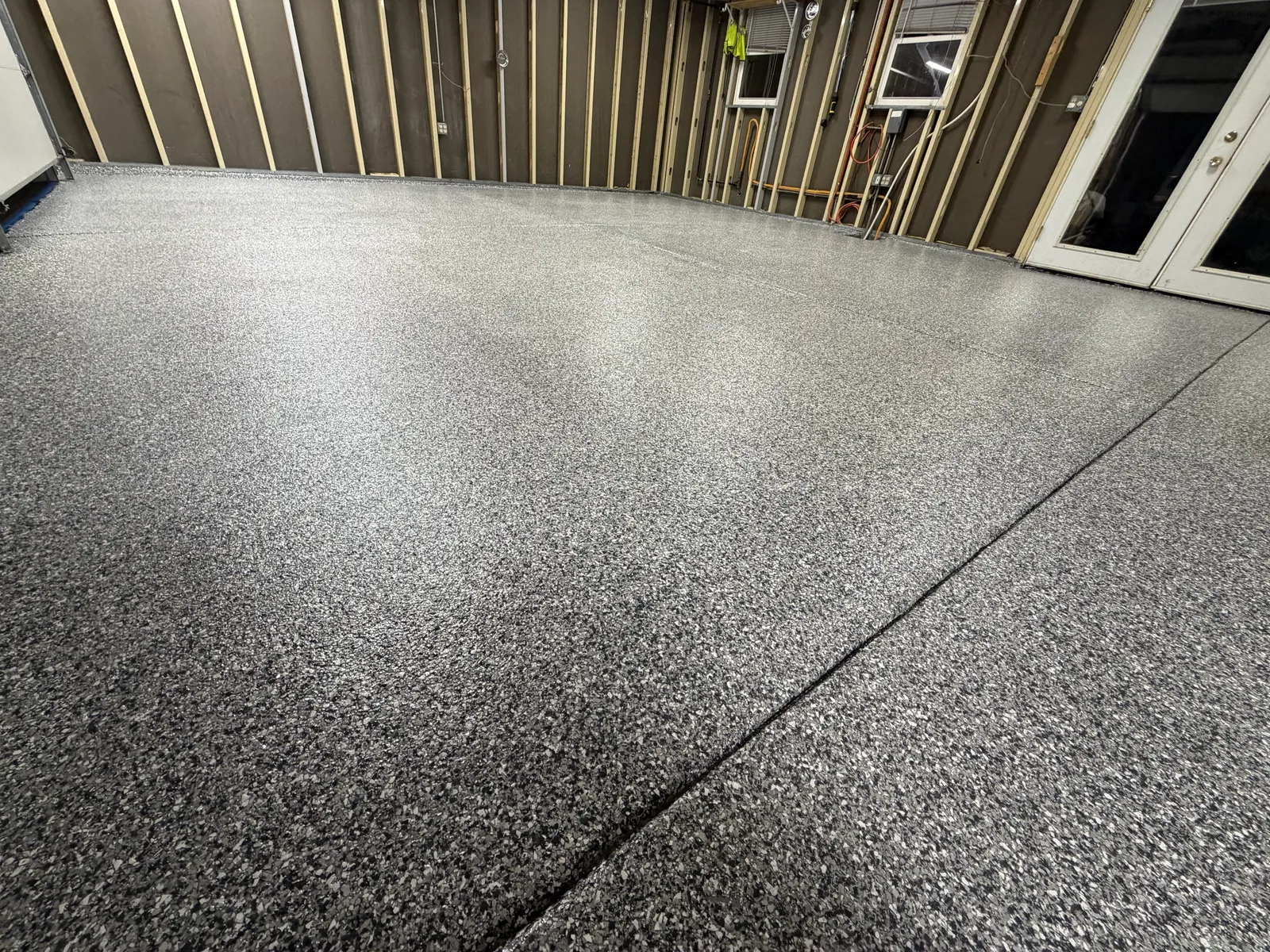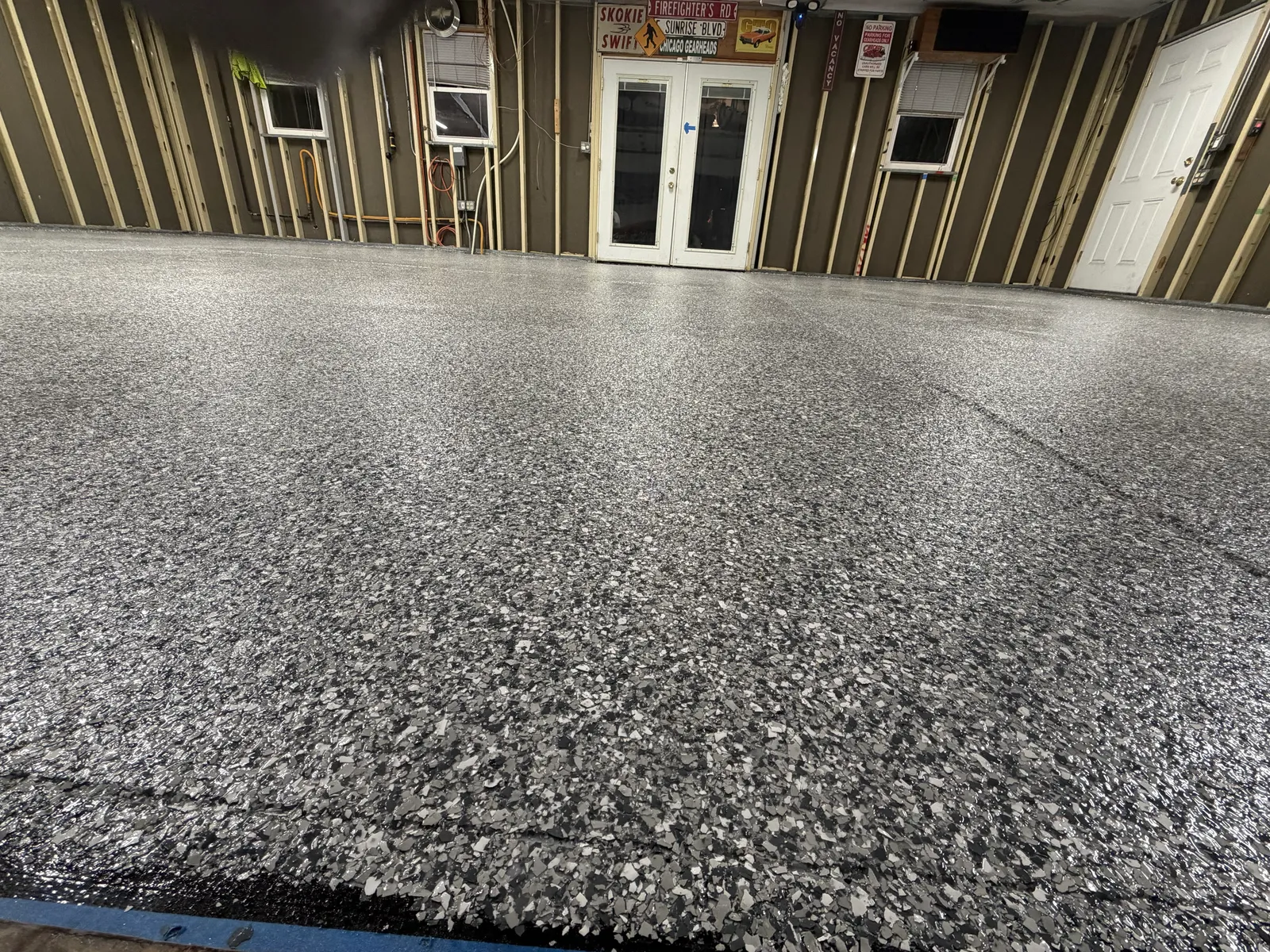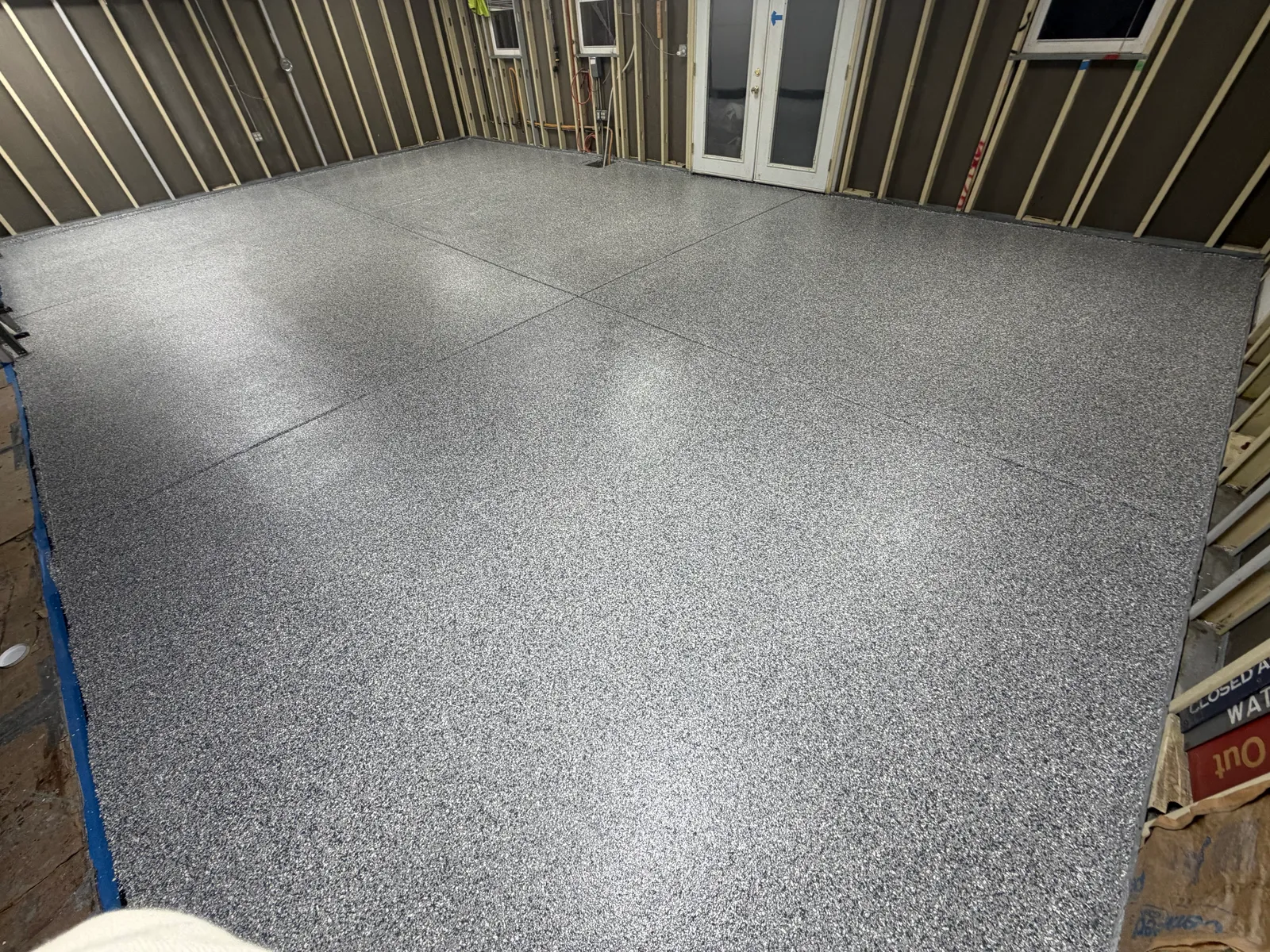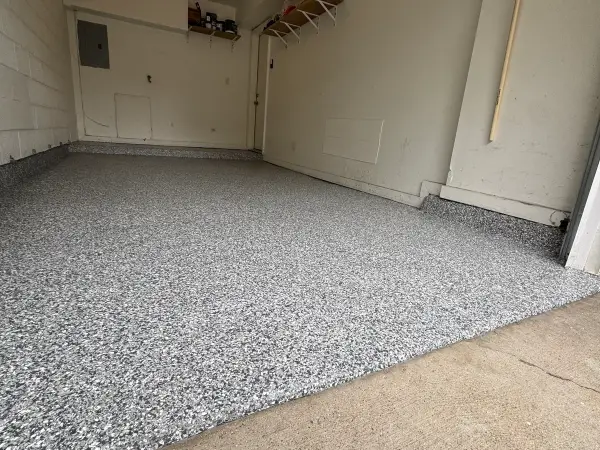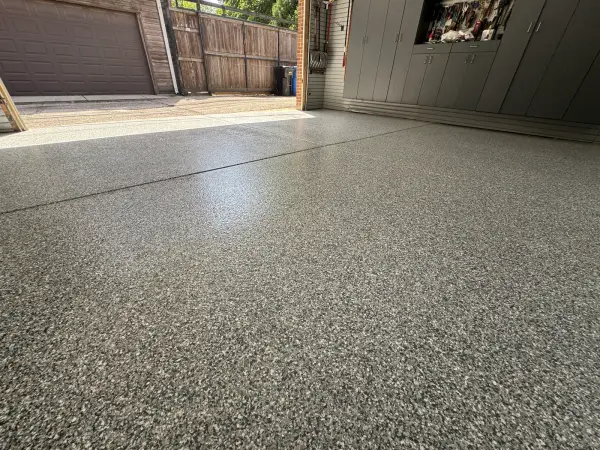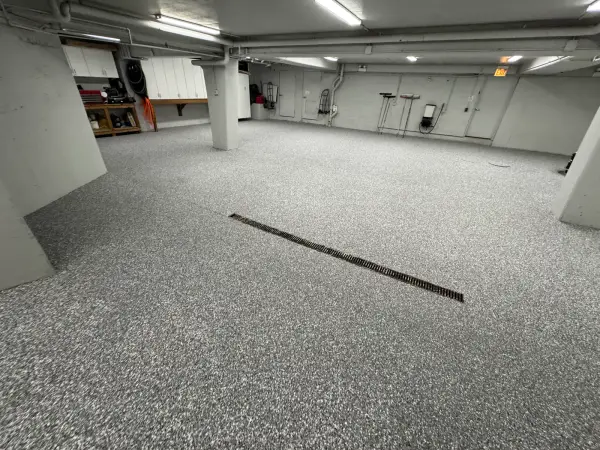
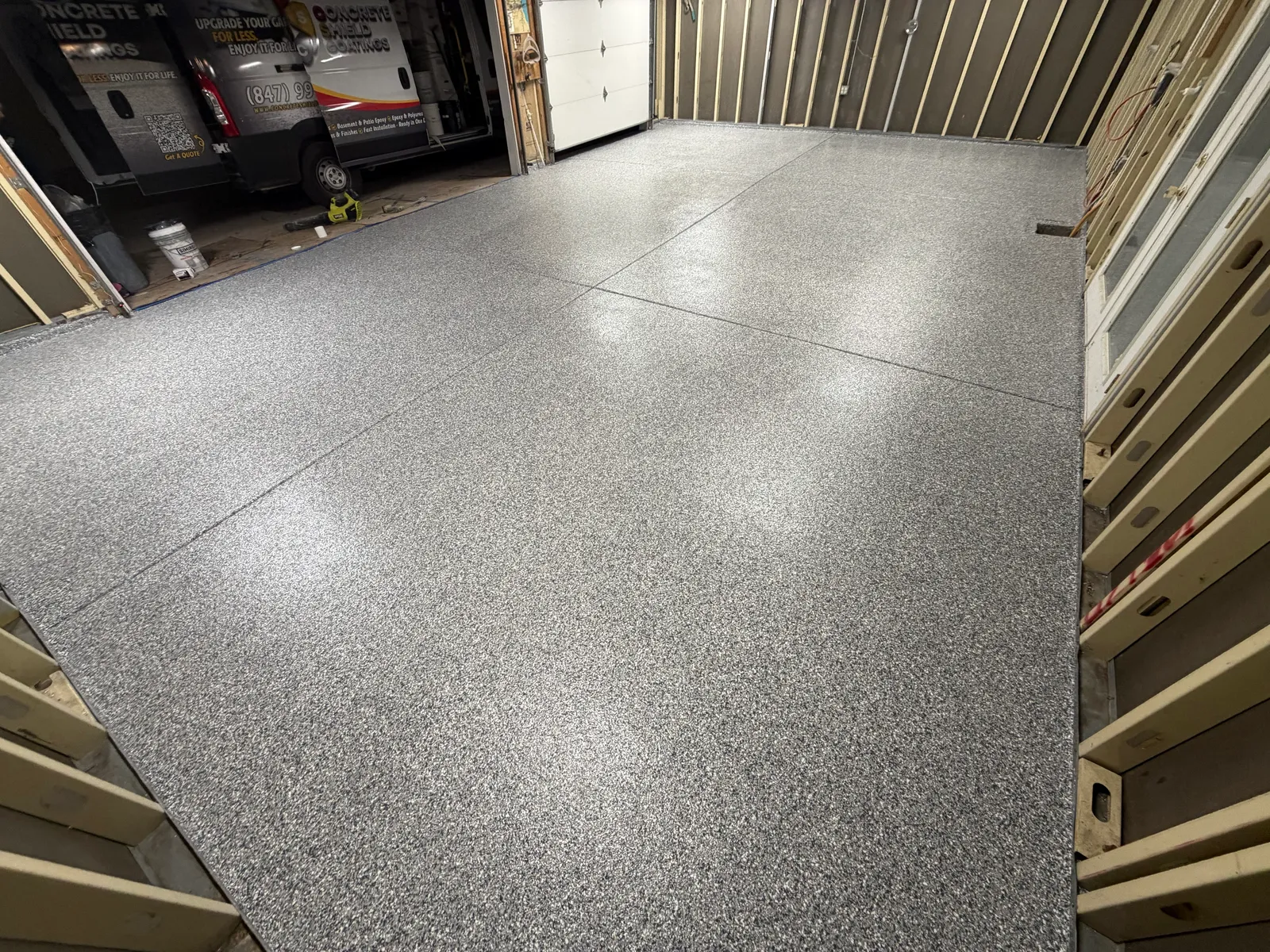
What we did
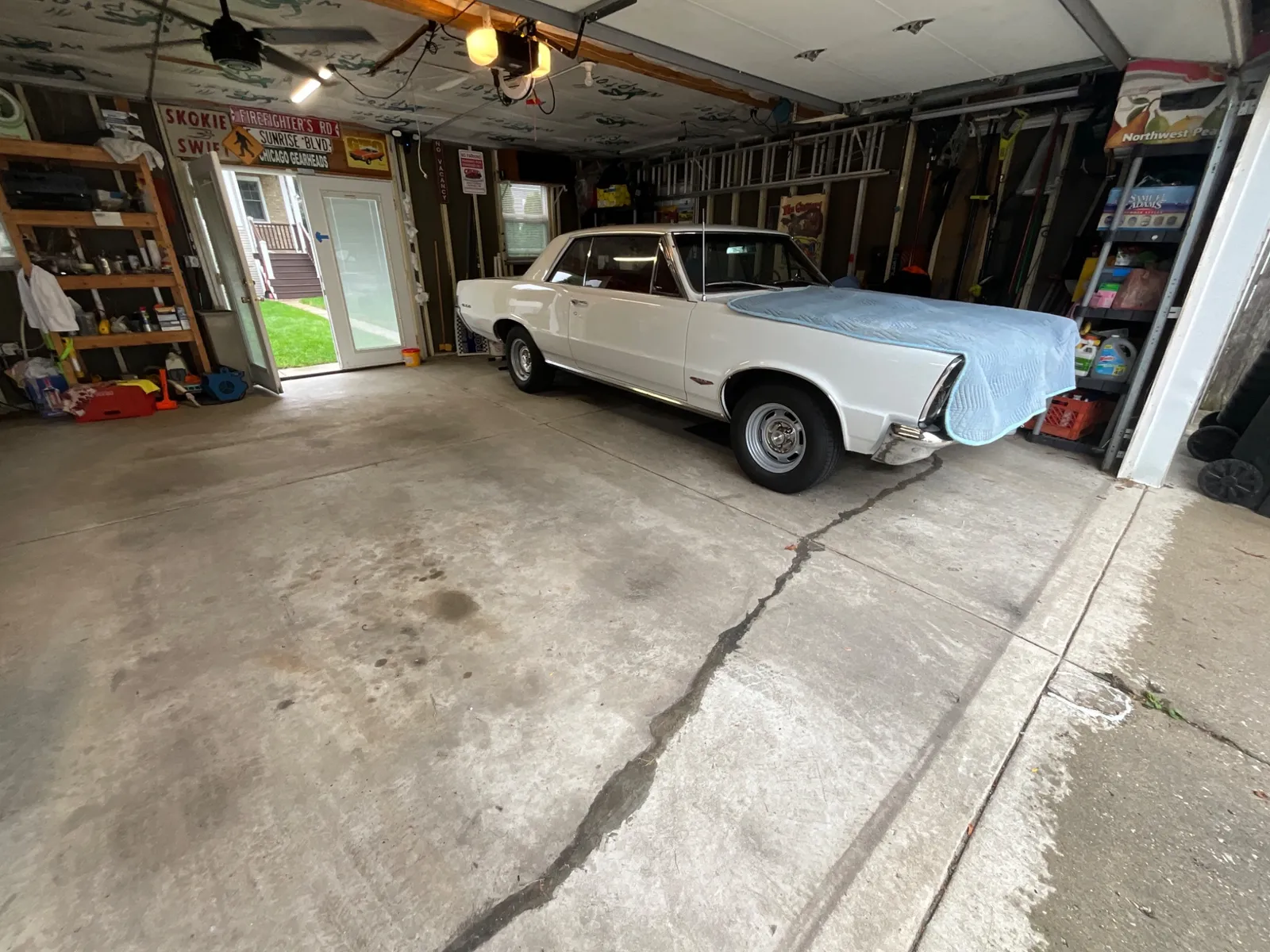
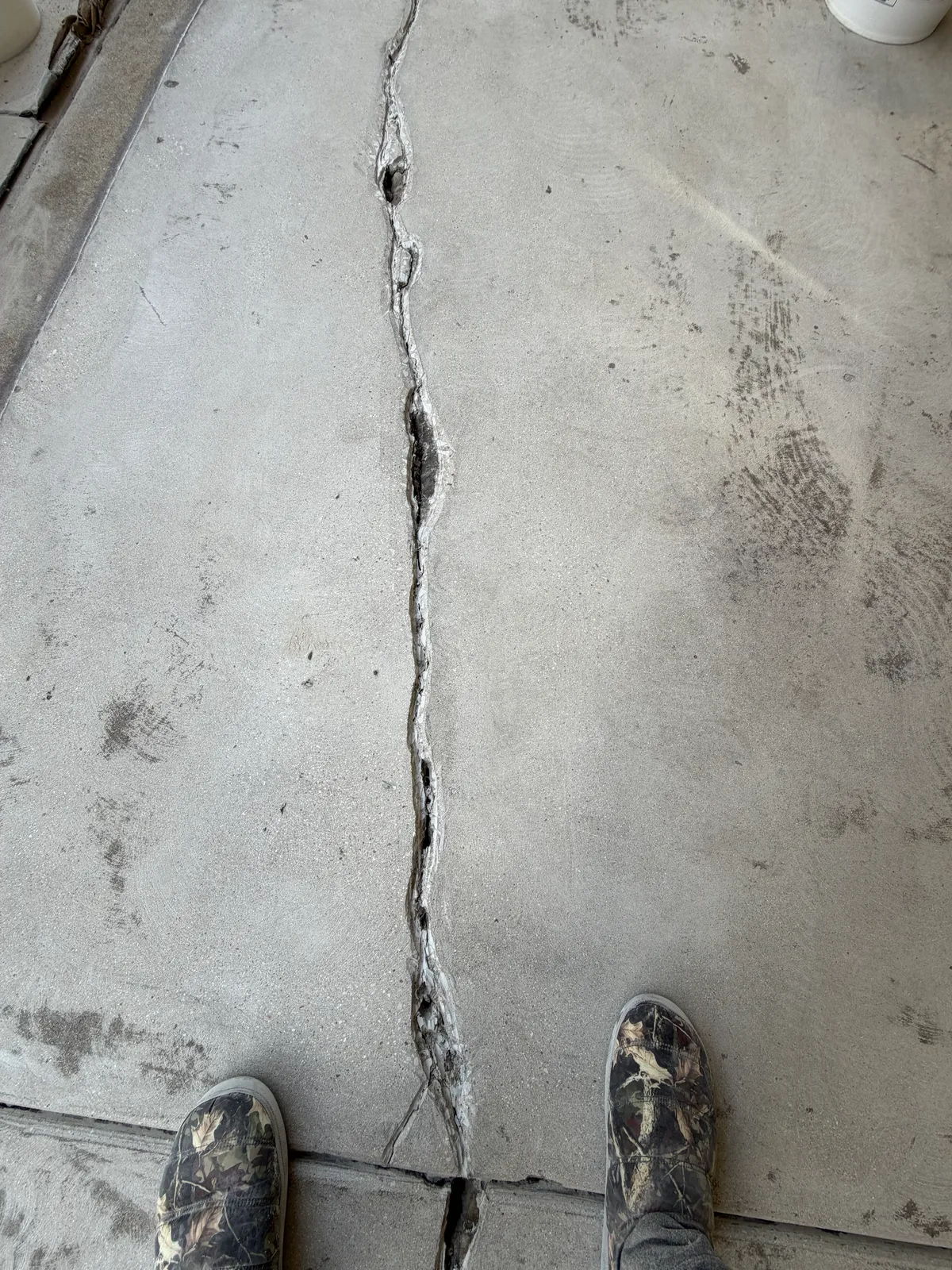
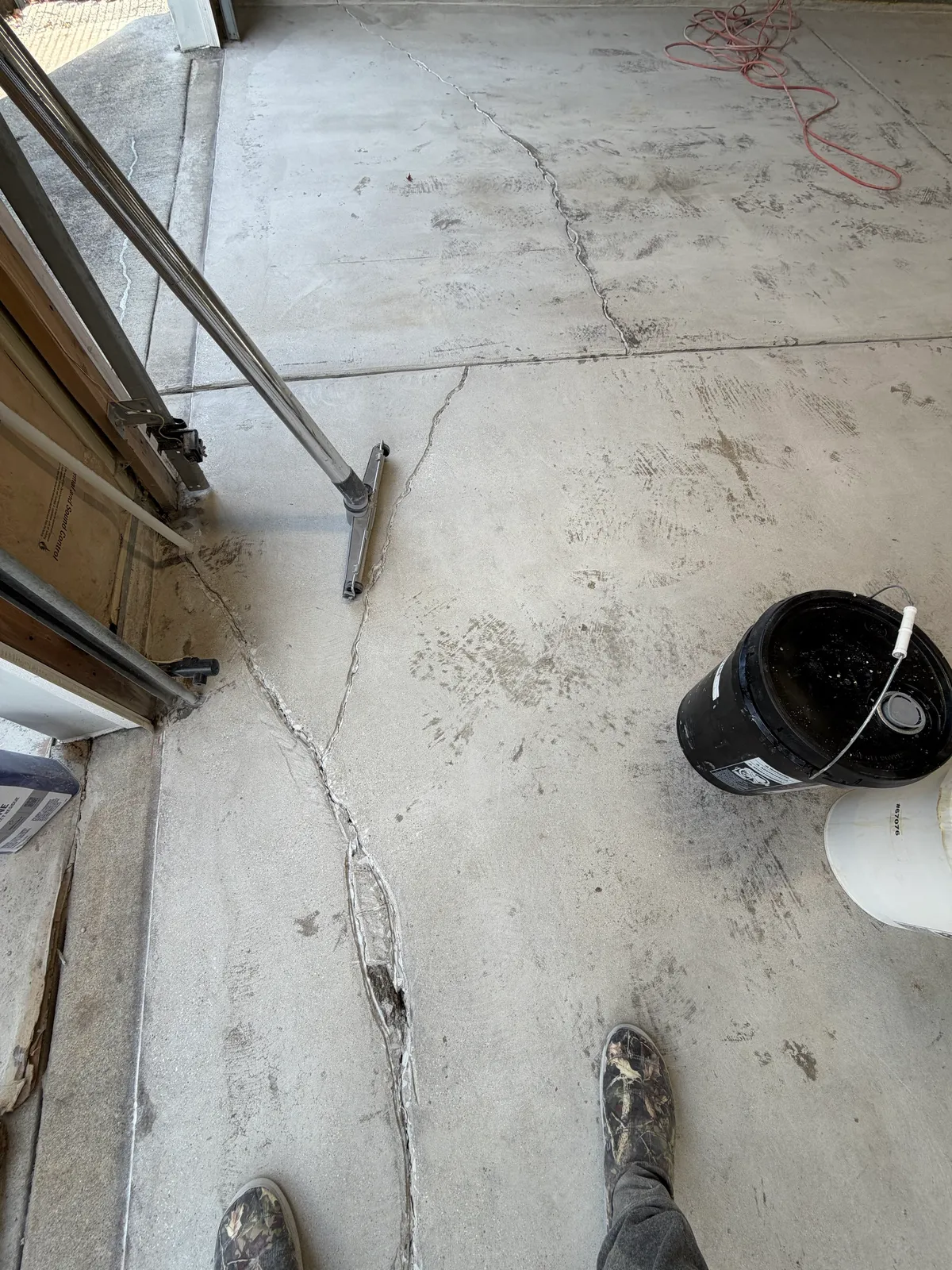
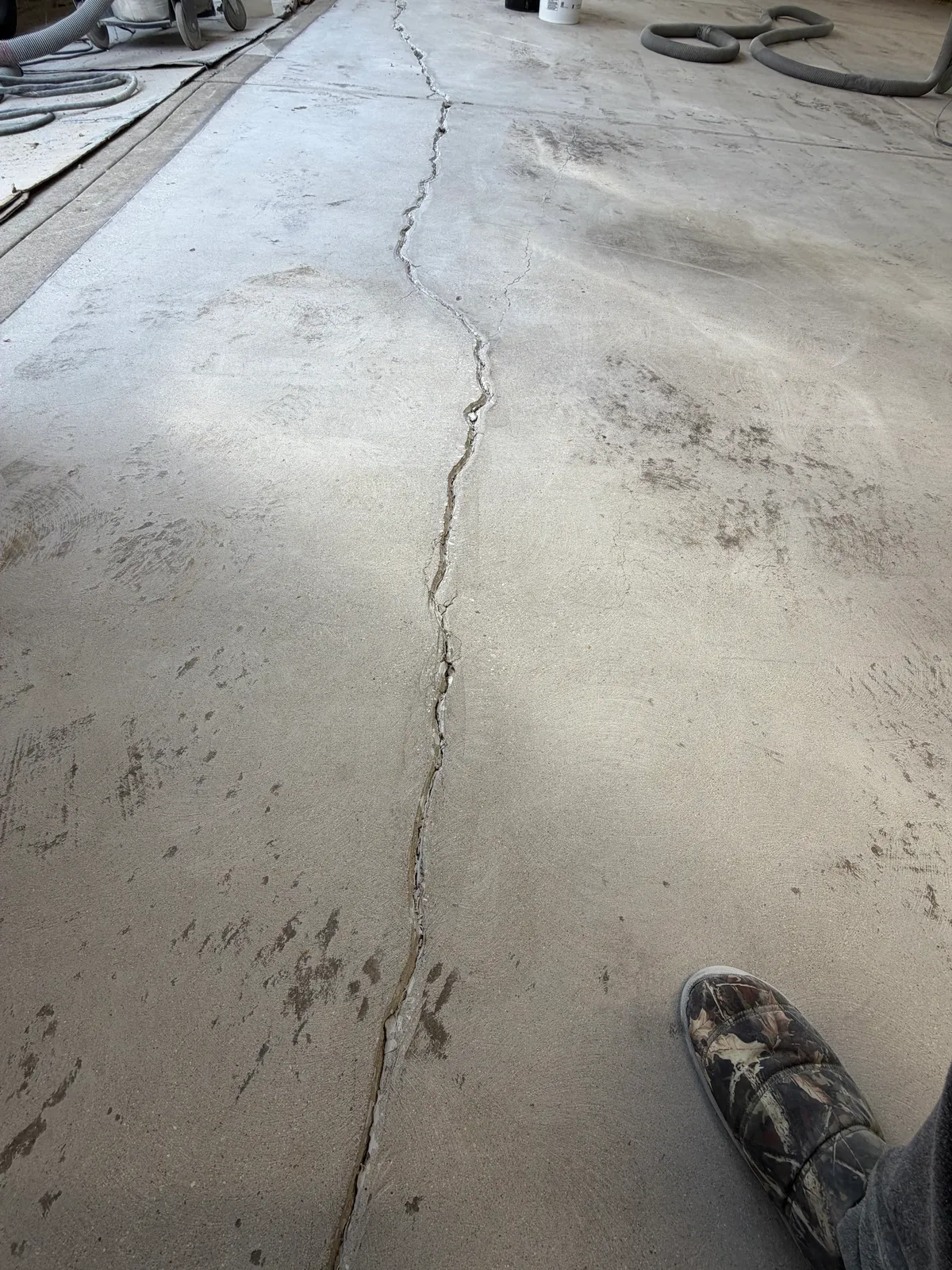
This was a 3-car garage with older concrete and no coating on it, so we were starting from a bare slab. The floor had a few cracks and some etching across the surface, the kind of wear you'd expect on concrete that's been in use for years. None of it was serious, but it told us the prep would carry this job. The cracks needed filling, and the worn surface had to be opened up evenly so the base coat would bond across the whole 700 square feet.
We started by diamond grinding the entire floor. A grinder with diamond tooling takes off the surface sheen and any contaminants and leaves a rough, even profile, which is what a coating needs to grip. We choose diamond grinding over acid etching because it gives us a consistent surface we can see and check as we go. Then we cleaned the few cracks of loose concrete and filled them. Cracks left open under a base coat tend to show through later or give the coating a weak edge to lift from.
For the coating itself we used our polyurea garage coating system. The polyurea base coat went down first, and while it was still wet we broadcast the Gravel flake blend to rejection, which means we kept adding flake until the base couldn't hold any more. Once that set, we scraped and vacuumed off the loose flake. The clear polyaspartic topcoat went on next, and we broadcast aluminum oxide, a fine grit, into it across all 700 square feet for better traction underfoot.
The whole install took one day. The floor was walkable after about 12 hours and ready for full use after about 48 hours. If your garage has older concrete with a few cracks and some surface wear but no old coating to strip, this job is a fair picture of what yours would involve. Most of the effort goes into getting the slab ready, and the coating goes down in a single day.