What we did
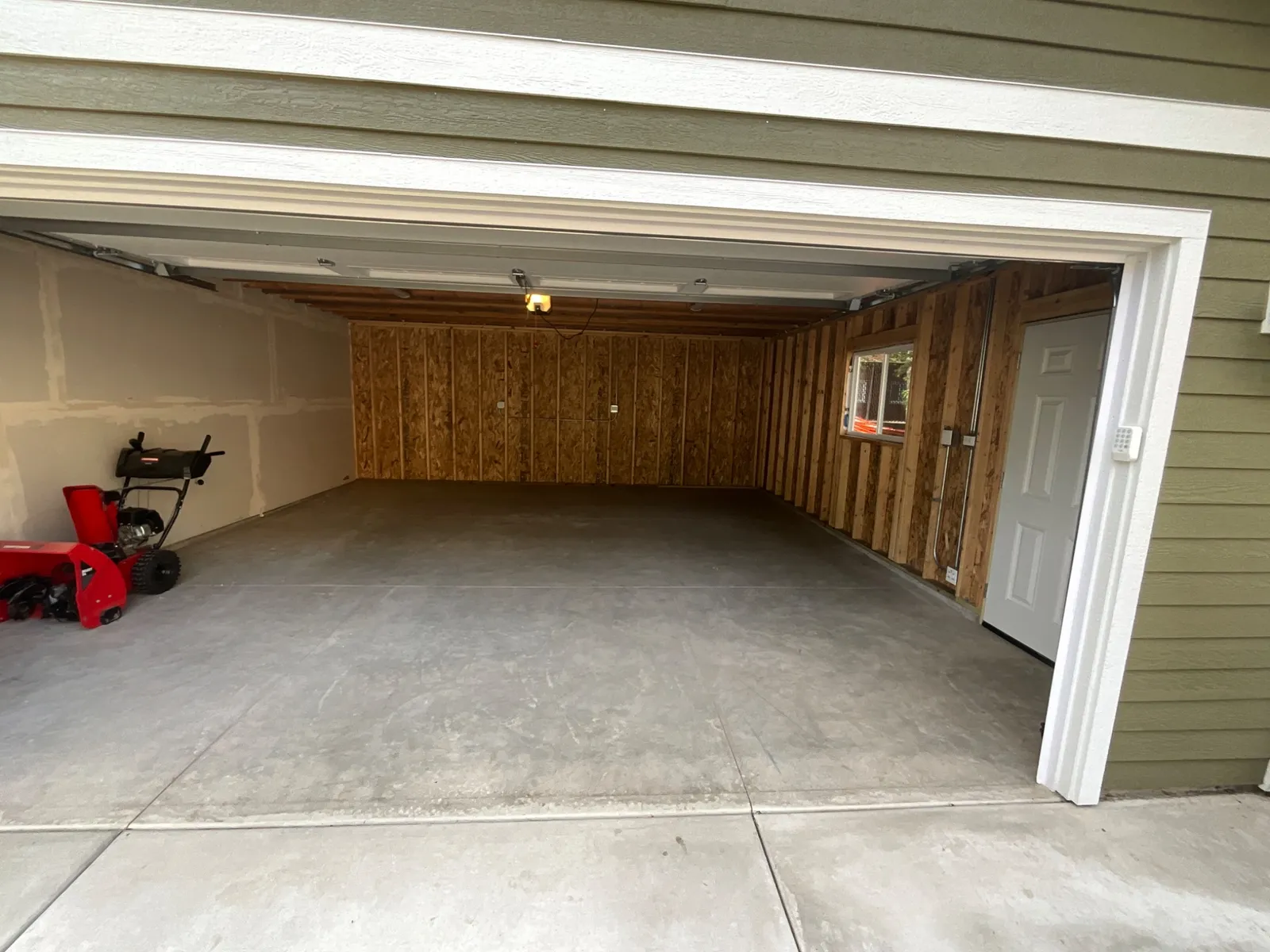
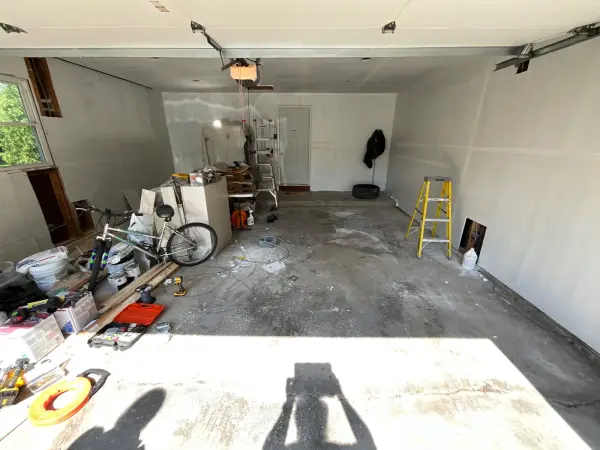
This one was about as clean a start as we get. The two-car garage had new concrete with no cracks and no old coating on it, so there was nothing to strip and nothing to patch. That doesn't mean we could skip ahead, though. Fresh concrete usually has a smooth, slightly glossy surface that looks ready for a coating but doesn't give one much to hold onto. The job came down to opening up that surface properly across all 480 sq ft, outside edge included.
Our crew started by diamond grinding the whole slab to take off the surface sheen and any contaminants. Grinding cuts a fine, even texture into the concrete, which gives the base coat something to bite into. We prefer diamond grinding over acid etching because it's controlled and consistent and doesn't leave acid residue behind in the slab. With no cracks or pits to repair, we vacuumed up the dust and moved straight on to coating.
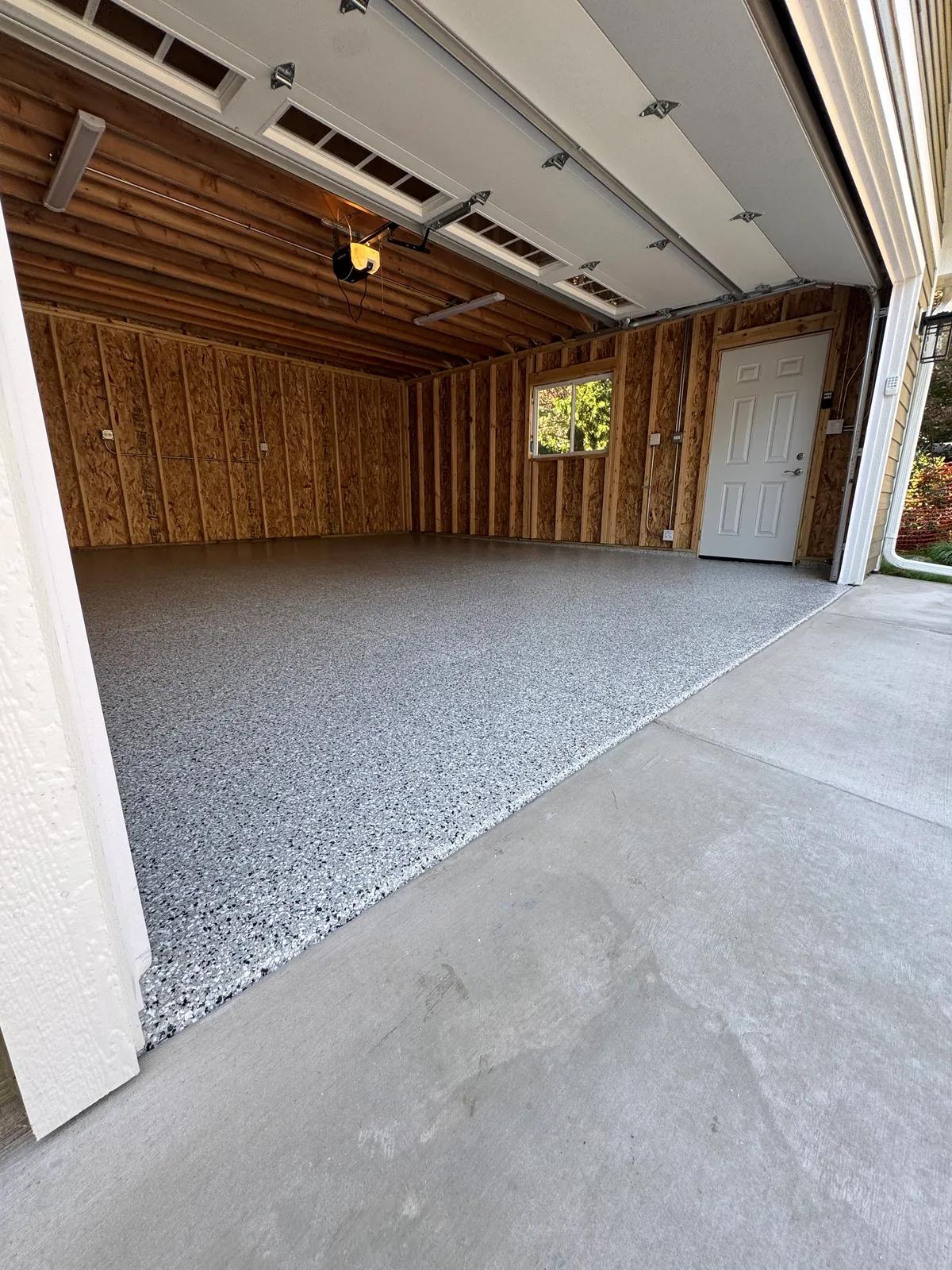
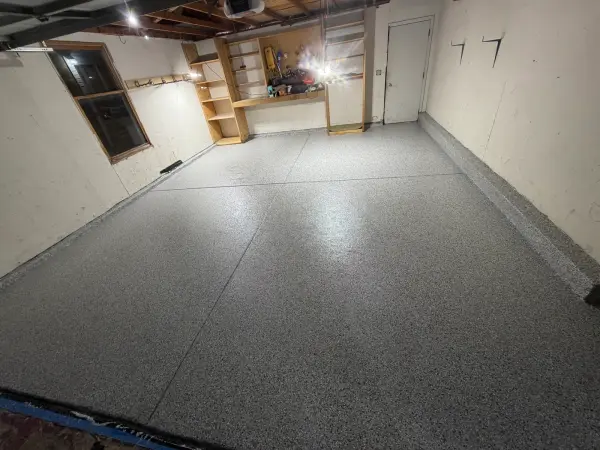
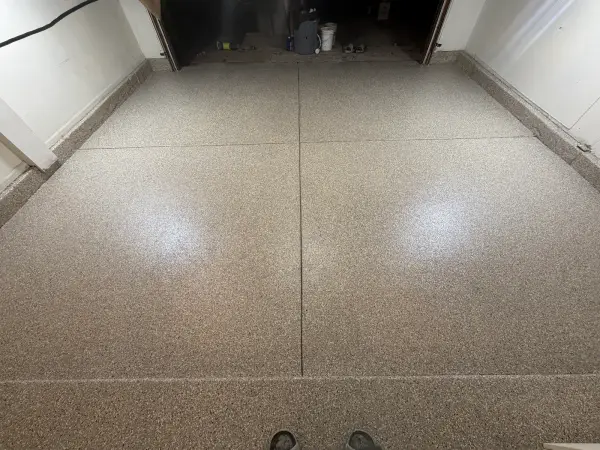
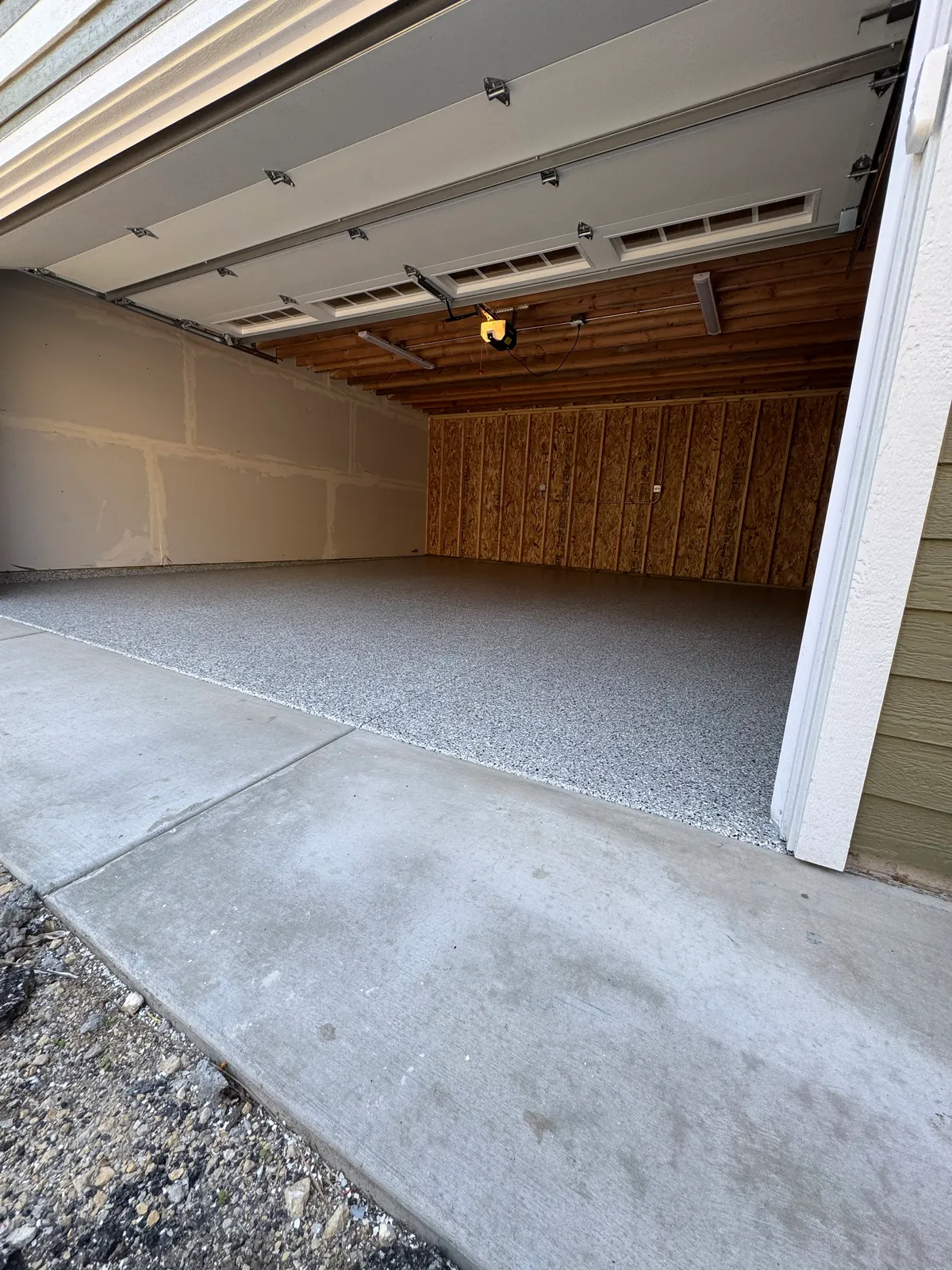
Next came the polyurea base coat, and while it was still wet we broadcast the Cabin Fever flake to rejection. That means we kept adding flake until the base coat couldn't take any more, so the whole floor is covered edge to edge. Once it set, we scraped and vacuumed off the loose flake and rolled on a clear polyaspartic topcoat. We also broadcast aluminum oxide into the topcoat over the full 480 sq ft to add traction underfoot. It's the same layered approach we use on every polyurea garage coating we install.
The whole install took one day. The floor was walkable after about 12 hours and ready for full use, cars included, after about 48 hours. If you've just poured a new garage slab, this job shows that new concrete still needs real prep, but it also means the work goes quickly when there's no damage to fix first.