What we did
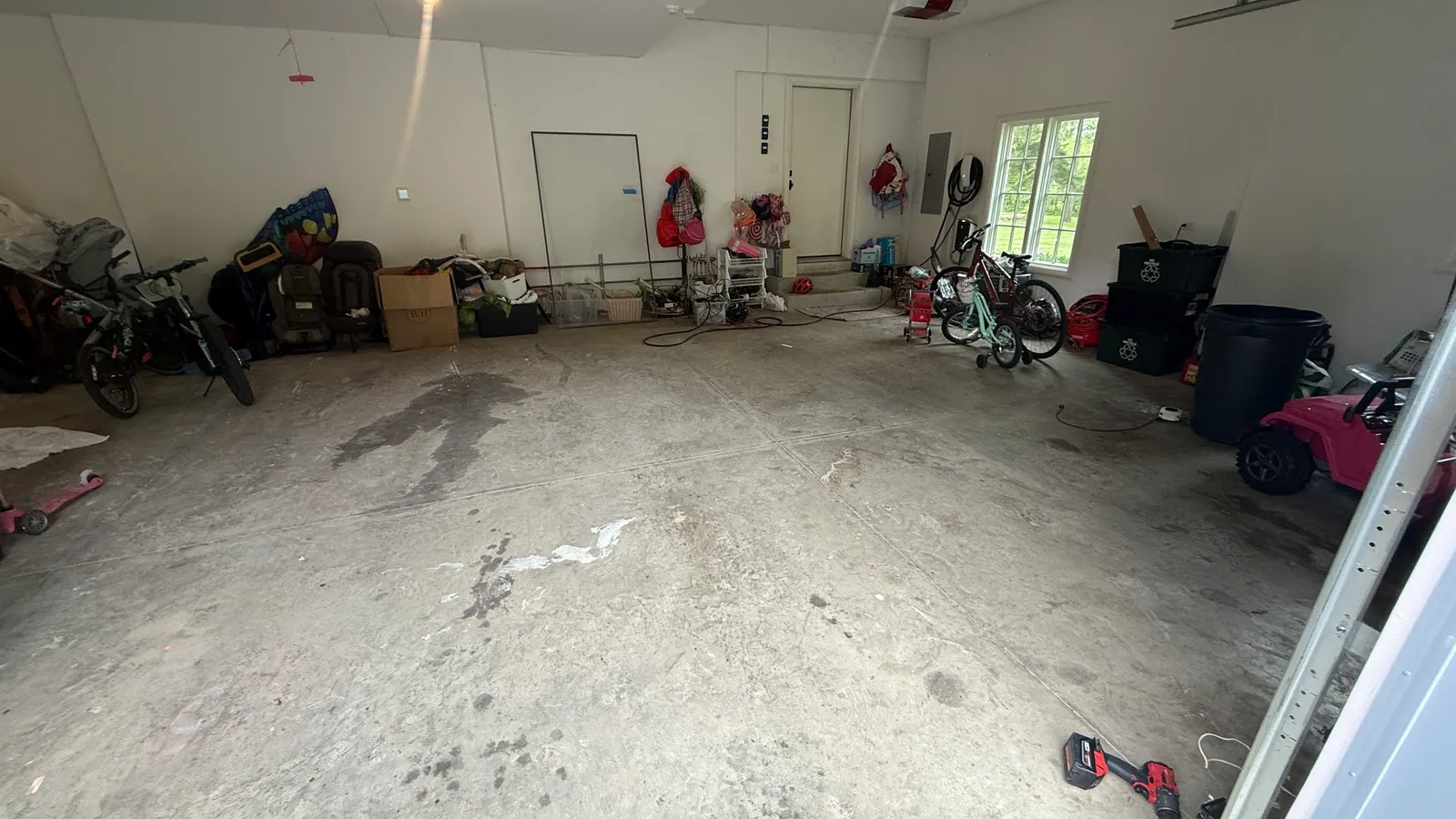
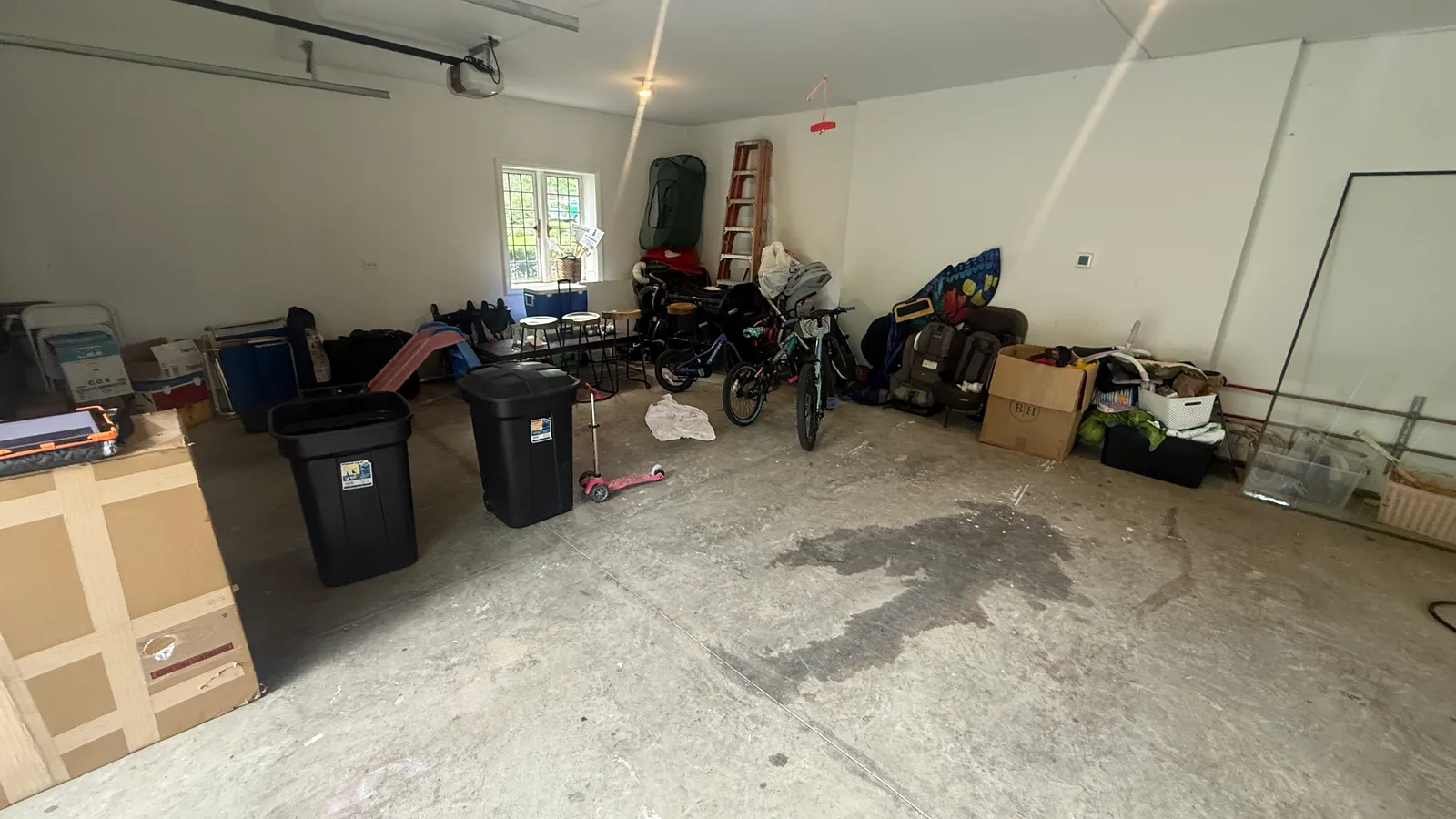
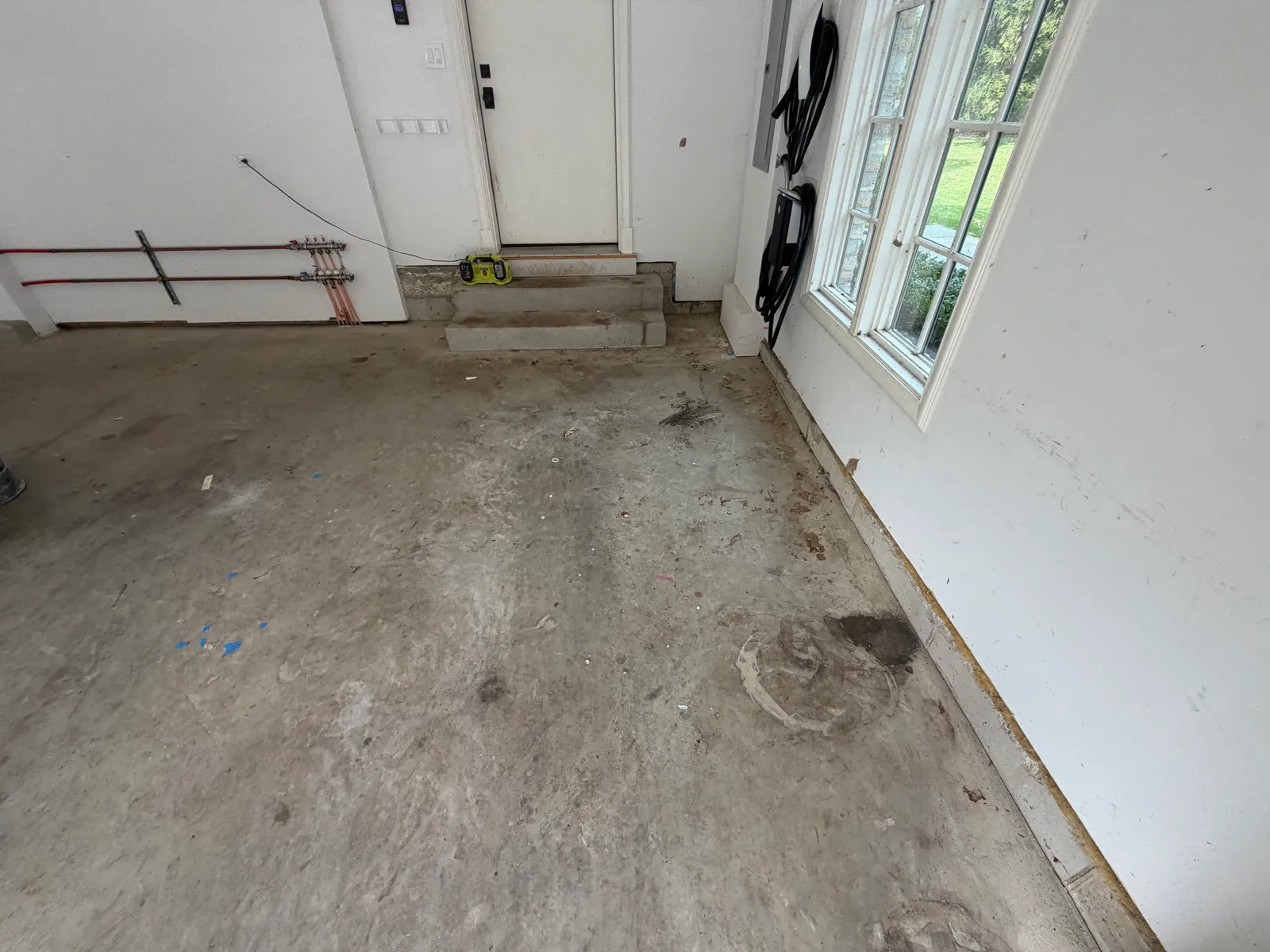
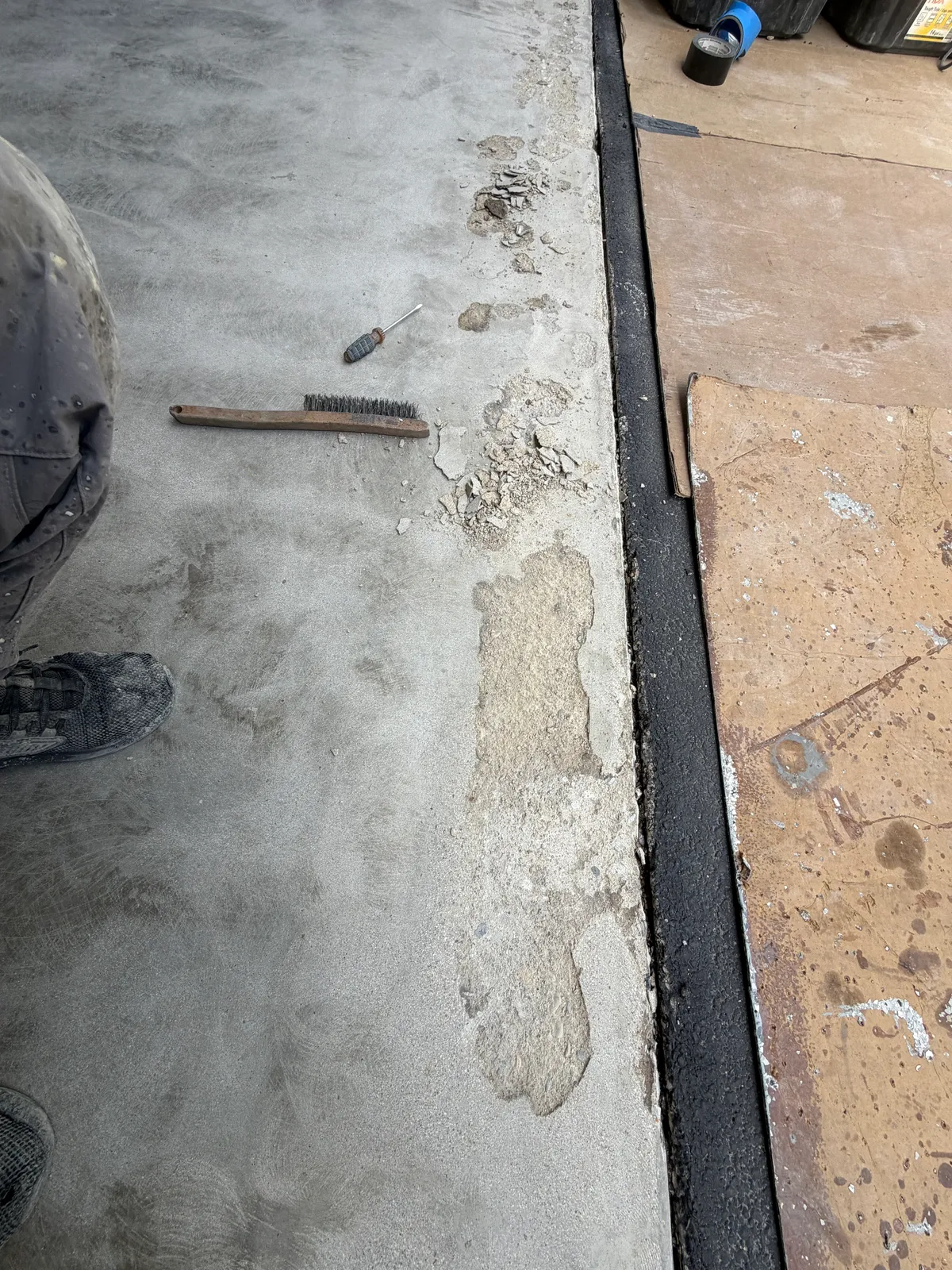
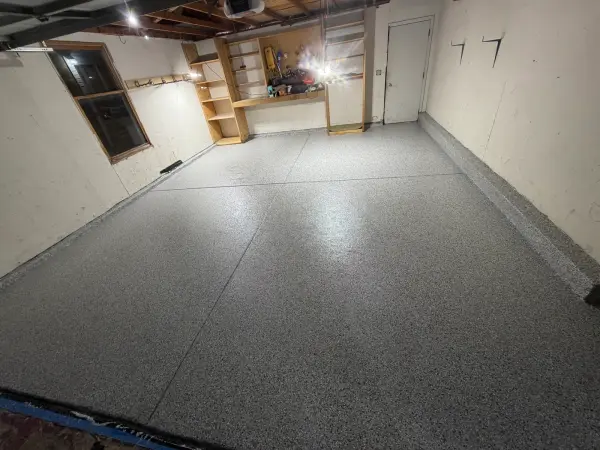
When our crew walked into this three-car garage, we found new concrete with no cracks and no old coating on it. That's about as clean a starting point as we get. A fresh slab still needs work, though, because new concrete tends to have a smooth, slightly shiny surface that coatings don't grab onto well. With 800 square feet of floor plus the outside edge, our plan was to open up that surface properly and get the whole system down in a single day.
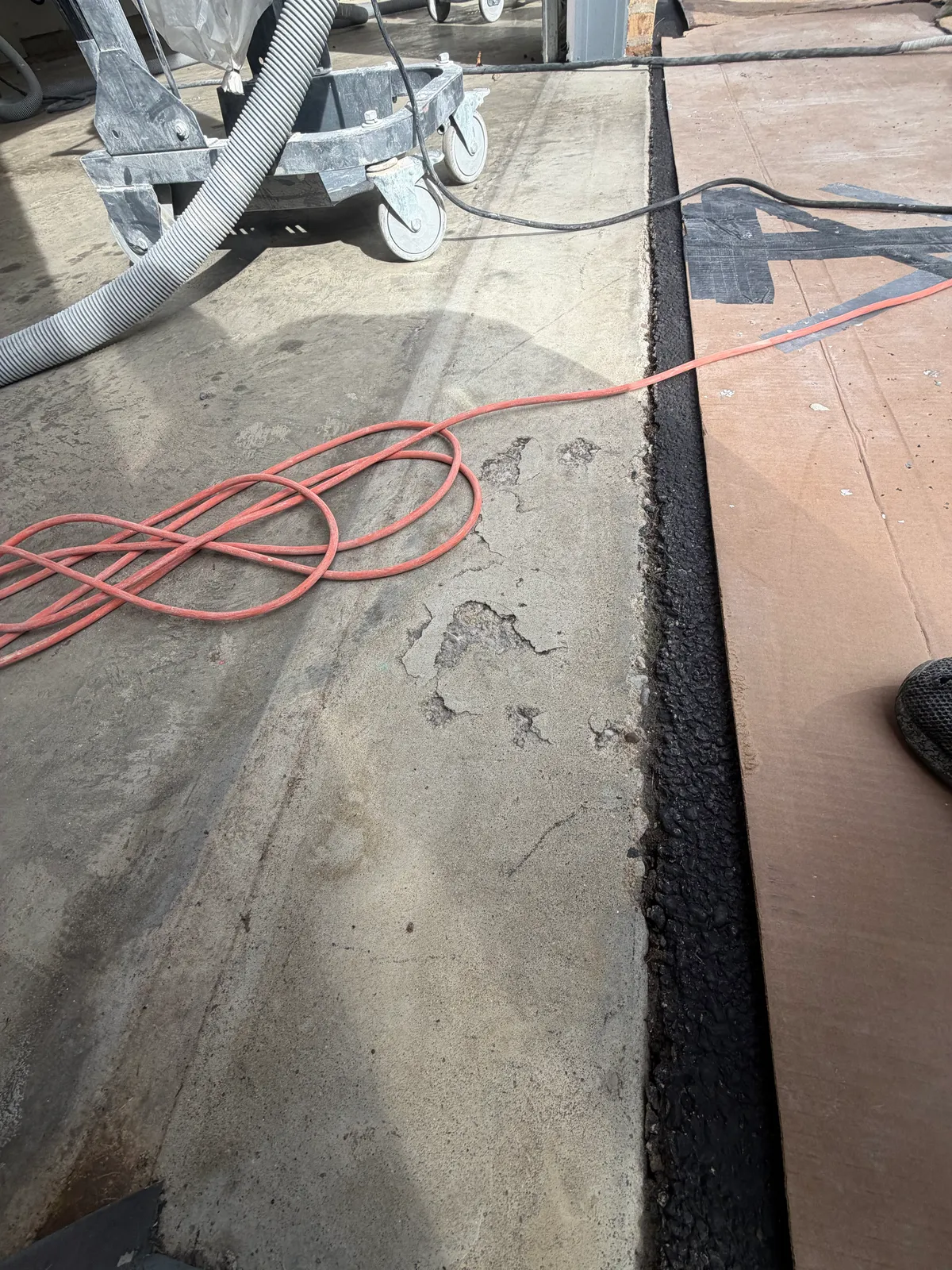
Prep started with taking off the surface sheen and any contaminants, then diamond grinding the full slab. Grinding cuts a fine, even texture into the top of the concrete, called a profile, so the base coat can bite in instead of just sitting on top. We'd rather grind than use acid, and our write-up on diamond grinding vs. acid etching explains why. On a new slab like this one, that profile is what keeps the coating bonded for the long haul.
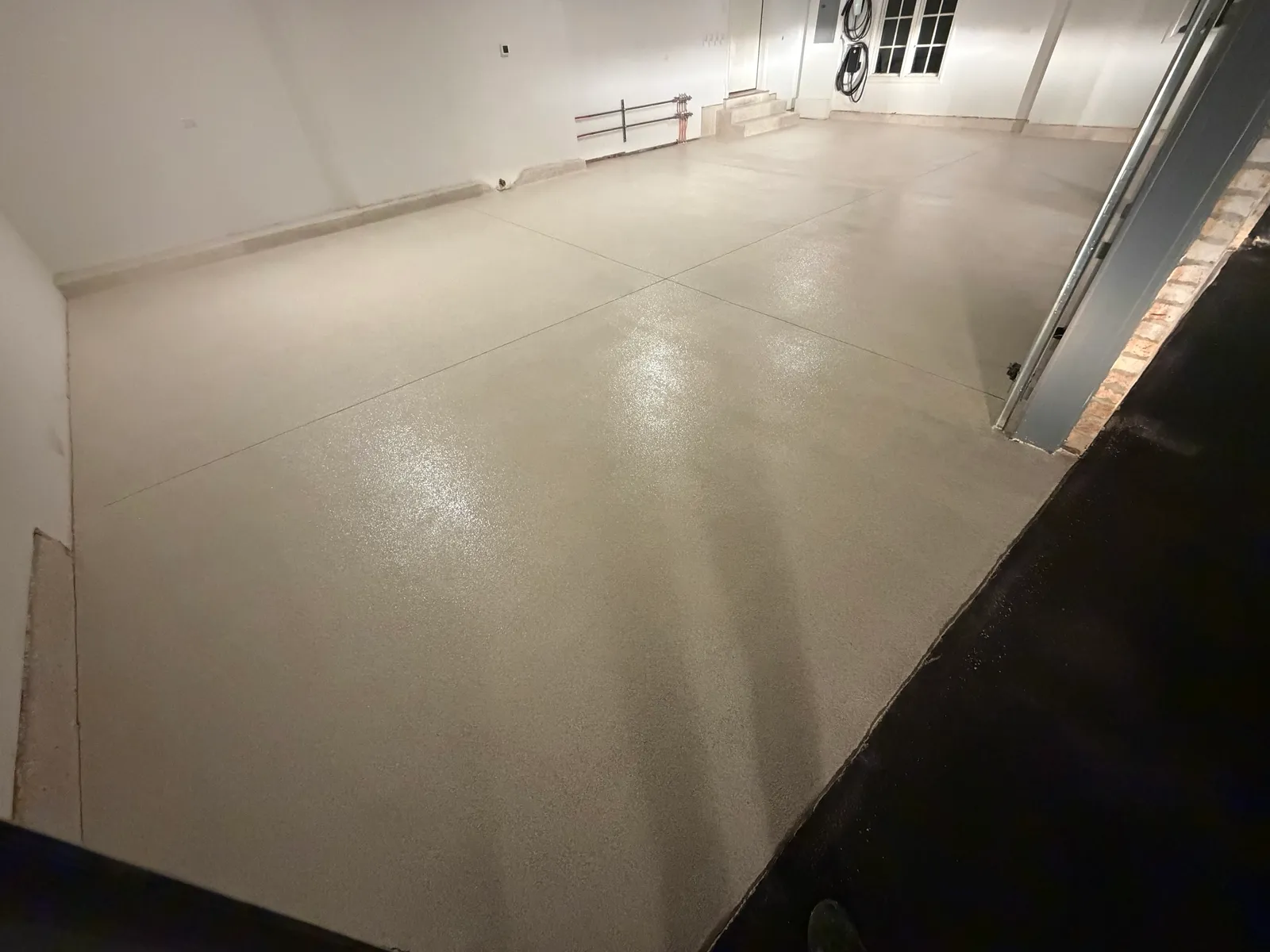
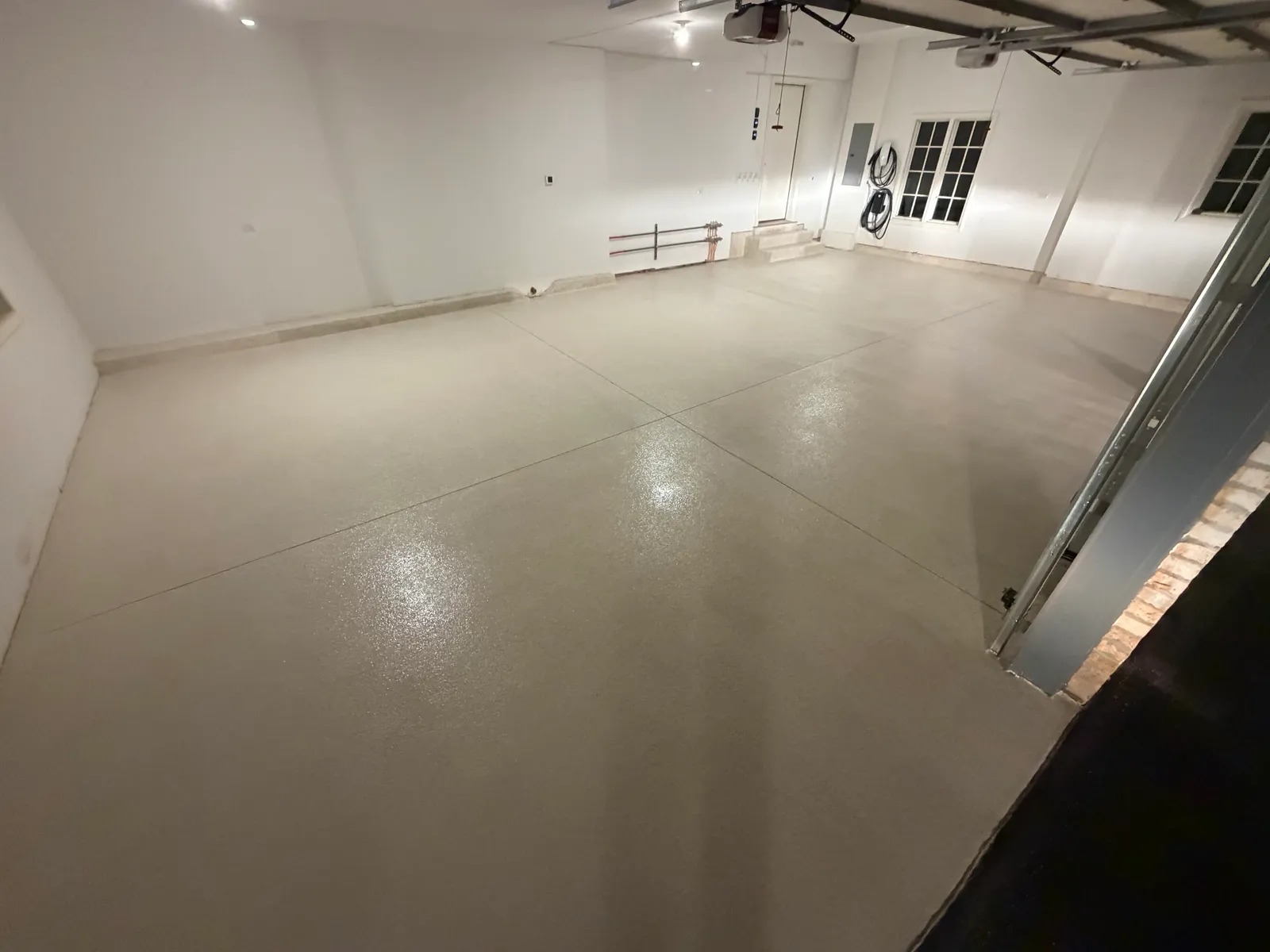
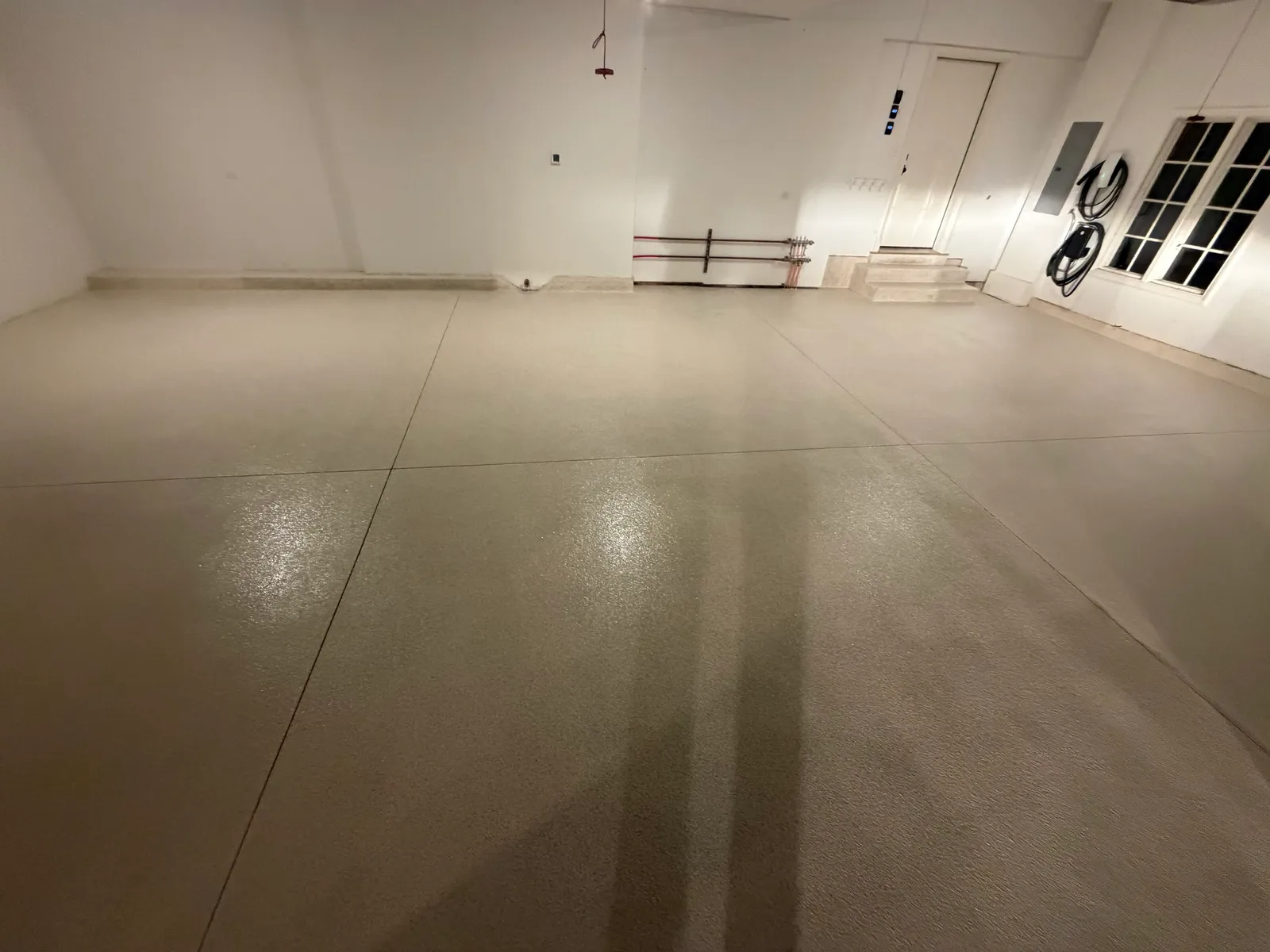
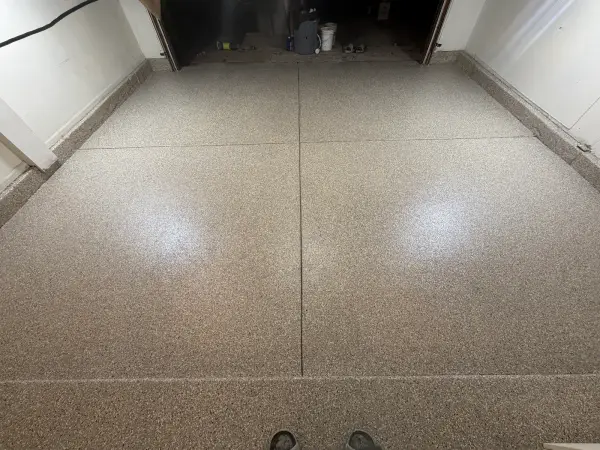
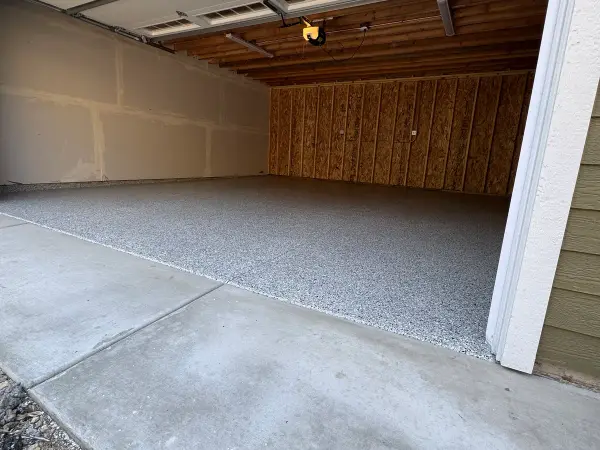
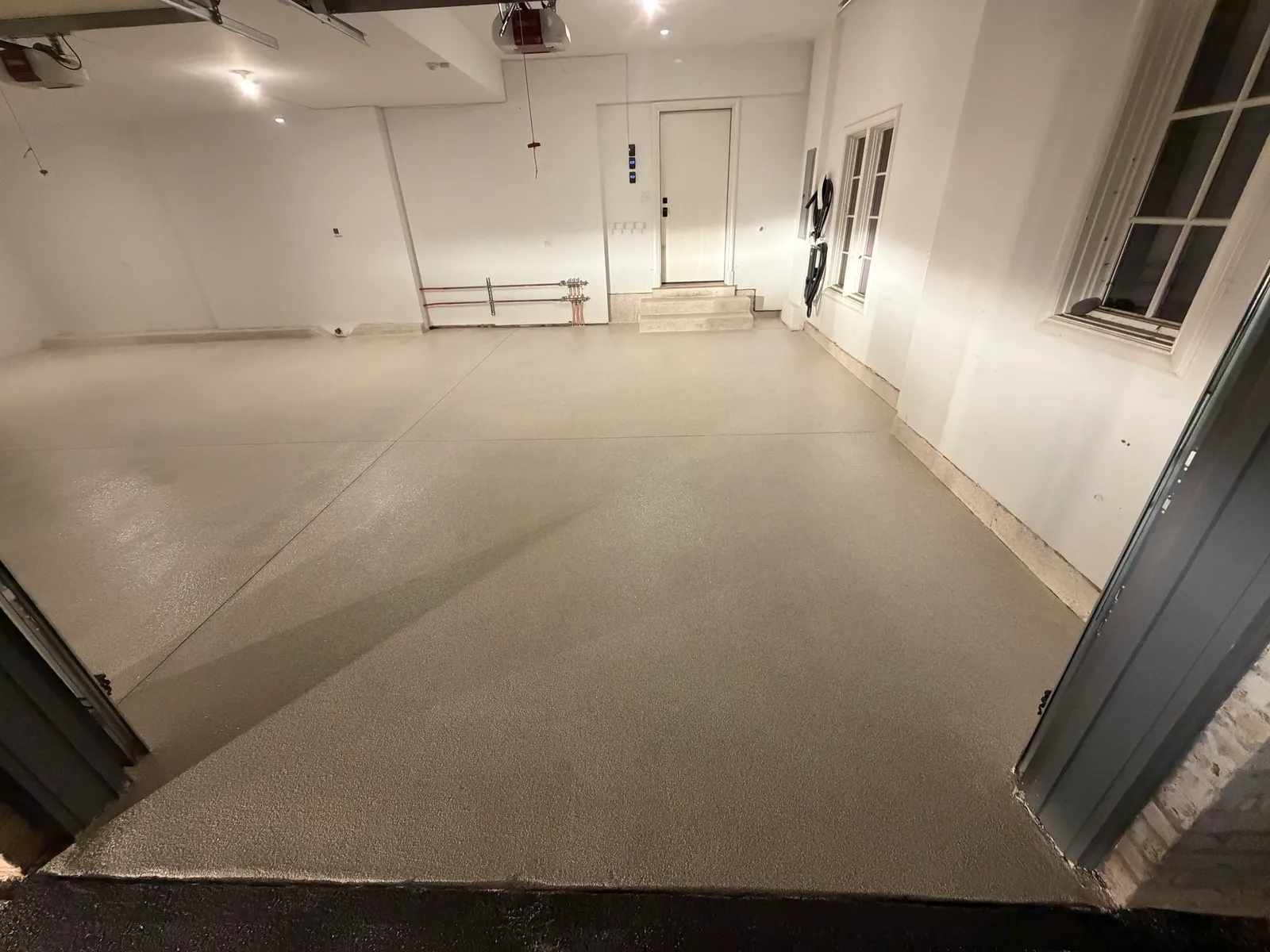
Next came the polyurea base coat, and into it we broadcast FB-951 Sand Dollar in a 1/8-inch flake, 200 pounds of it across the floor. We broadcast to rejection, which means we keep throwing flakes until the wet base can't hold any more. We also carried the same coating up 80 linear feet of vertical concrete where the slab meets the walls, so the floor and edges are sealed as one piece. After scraping and vacuuming the loose flakes, we rolled on a clear polyaspartic topcoat with aluminum oxide grit mixed in for better traction underfoot. You can read more about how our polyurea garage coating system is built.
The whole install took one day. The floor was walkable after about 12 hours, and the homeowner could park cars on it after about 48 hours. If you've got a newer garage with clean concrete, this job is a good picture of what to expect: the slab still gets ground, the edges can be coated with the floor, and the grit in the topcoat is worth considering if the floor sees snow and water coming in on tires.